
Loading, please wait...
_900x900.jpg "Greek Gold Diadem with Glass Gem")
_200x200.jpg "Greek Gold Diadem with Glass Gem")
.jpg "Greek Gold Diadem with Glass Gem")
LOT 0058
Greek Gold Diadem with Glass Gem
1ST MILLENNIUM B.C.
11 3/4 in. (14 1/8 in.) (76.87 grams total, 30 cm (36 cm including stand)).
Sheet-gold with tapering finials, central raised cell set with a two-tone glass insert imitating banded agate; mounted on perspex backing.
Provenancewith Galerie Rhéa, Zurich, Switzerland.
CONDITIONTimeLine Auctions follows a vetting process to ensure the authenticity and legality of all items, reinforcing our commitment to integrity and responsible trading. Each antiquity, antique, and coin lot undergoes thorough examination by a vetting committee of at least ten external specialists, professional trade association members, scientists, and archaeologists: Our Vetting Process
AUCTIONS:
TimeLine is a leading auction house specialising in antiquities, ancient art, collectables, natural history, coins, medals, and books. Our auctions offer museums, collectors, historians, and enthusiasts the opportunity to acquire unique and historically significant pieces.
-
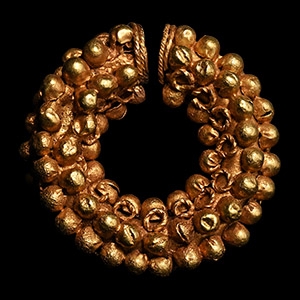
Etruscan Gold Leech Earring
3rd century B.C.Sold for (Inc. bp): £936
Formed with a hollow c-shaped body adorned with five rows of hollow spheres and a double filigree ropework band, two rows of filigree hoops to the inner face. 7.61 grams, 30 mm
From the collection of a North American gentleman, formed in the 1990s. -
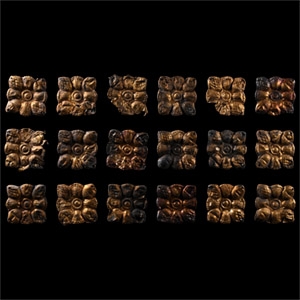
Greek Gold Applique Group
7th-5th century B.C.Sold for (Inc. bp): £2,340
Comprising eighteen repoussé plaques, each with a central boss and a flower bud to each side, the corners with alternating pinecones and acorns, pierced through the corners; mounted on a perspex backing. 91 grams total, 22 mm each
From the estate of Dr Jacob Hirsch. Acquired by Galerie Rhéa, Zurich, from the above in 1999. -
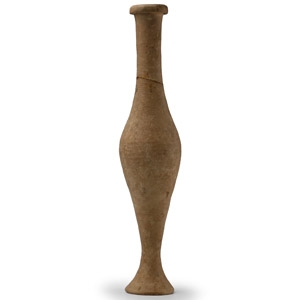
Large Hellenistic Terracotta Spindle Flask
4th-3rd century B.C.Sold for (Inc. bp): £169
With a long narrow neck and carinated mouth, developing to a biconical body and flared foot. 120 grams, 19.7 cm
From an old London archaeological collection, acquired 1980s. From the property of a late Lincolnshire, UK, gentleman.
