
Loading, please wait...
LOT 0114
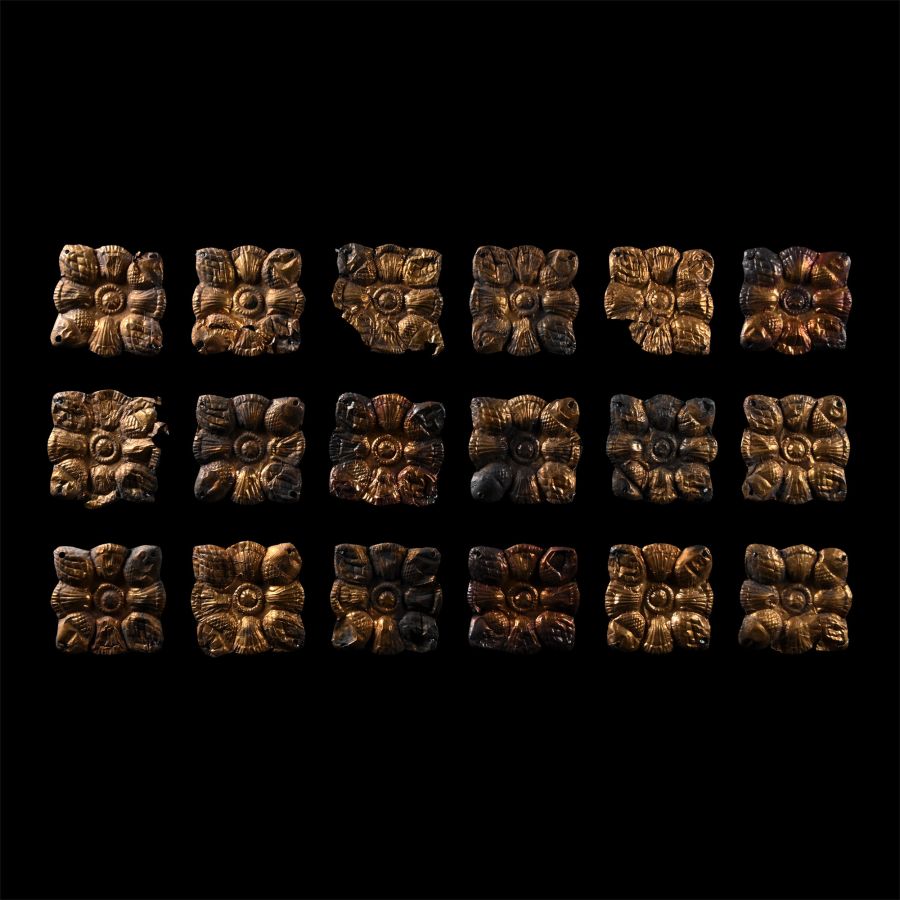
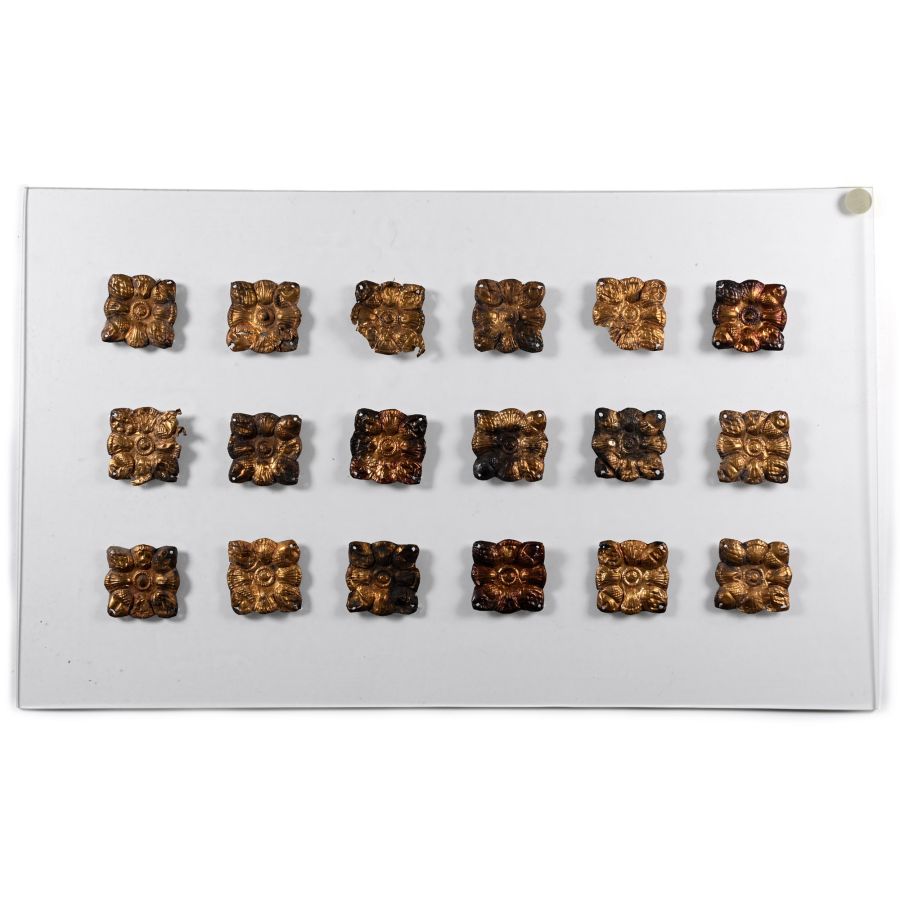
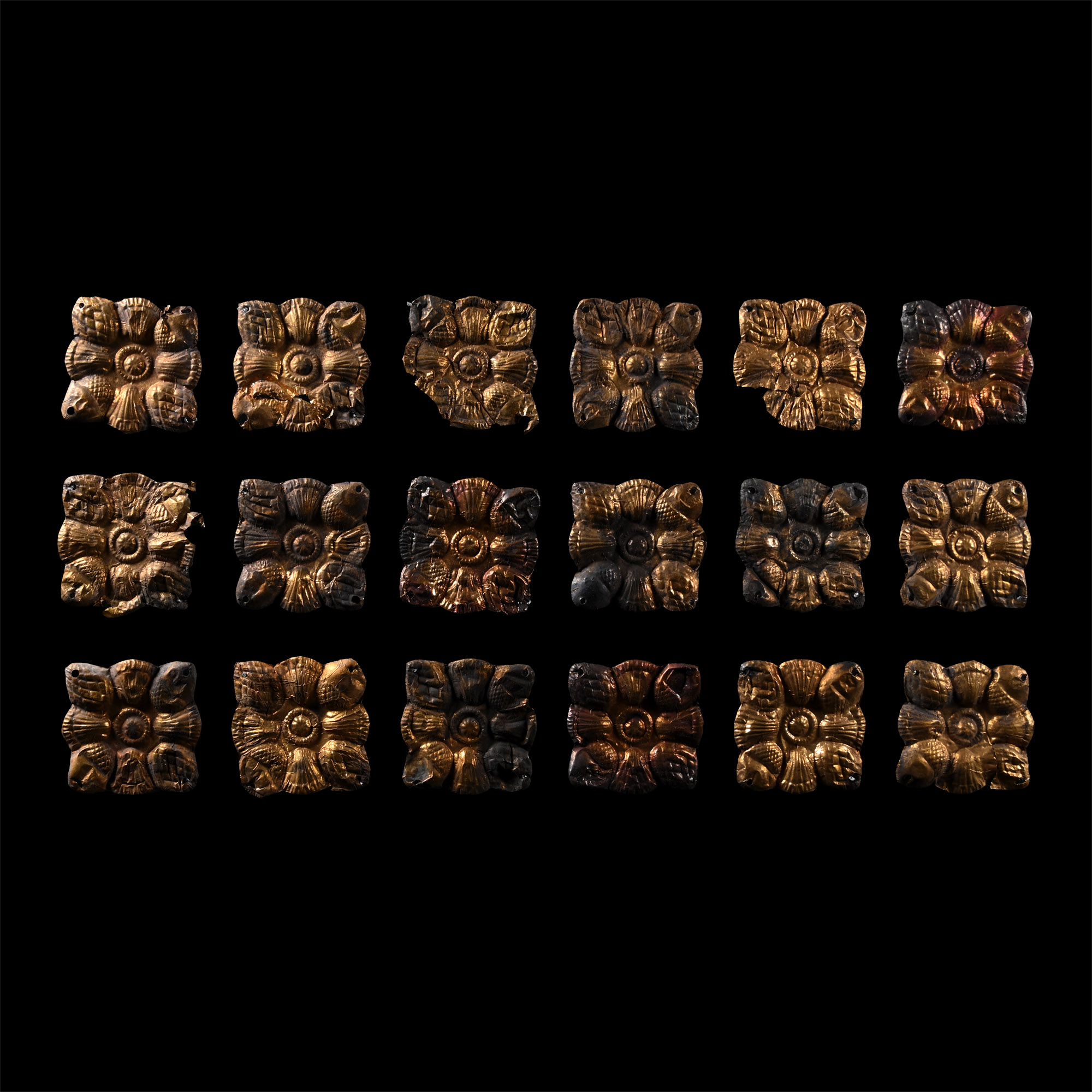
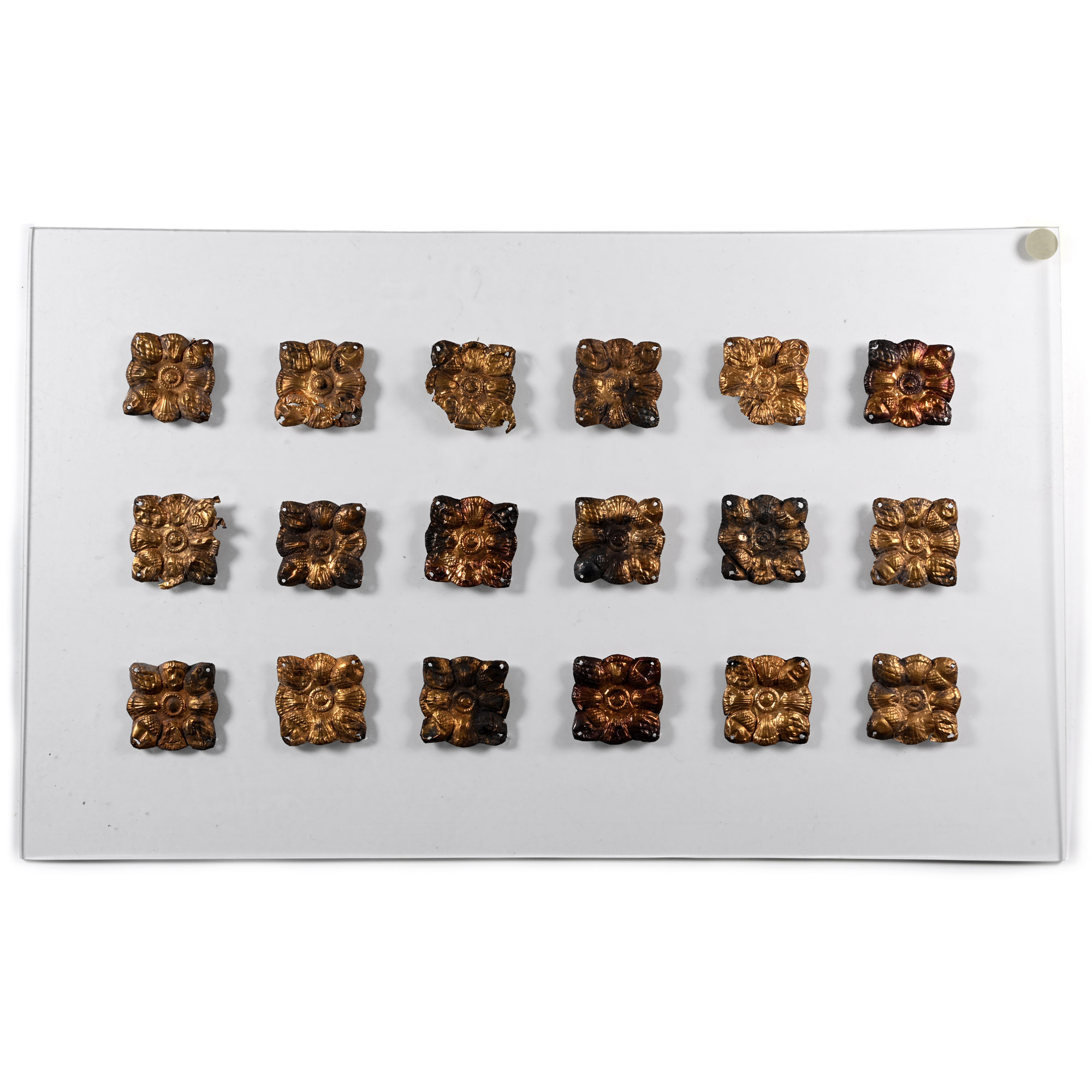
Greek Gold Applique Group
7TH-5TH CENTURY B.C.
7/8 in. (91 grams total, 22 mm each).
Comprising eighteen repoussé plaques, each with a central boss and a flower bud to each side, the corners with alternating pinecones and acorns, pierced through the corners; mounted on a perspex backing.
ProvenanceFrom the estate of Dr Jacob Hirsch.
Acquired by Galerie Rhéa, Zurich, from the above in 1999.
This lot has been cleared against the Art Loss Register database, and is accompanied by an illustrated lot declaration signed by the Head of the Antiquities Department, Dr Raffaele D'Amato.
TimeLine Auctions follows a vetting process to ensure the authenticity and legality of all items, reinforcing our commitment to integrity and responsible trading. Each antiquity, antique, and coin lot undergoes thorough examination by a vetting committee of at least ten external specialists, professional trade association members, scientists, and archaeologists: Our Vetting Process
AUCTIONS:
TimeLine is a leading auction house specialising in antiquities, ancient art, collectables, natural history, coins, medals, and books. Our auctions offer museums, collectors, historians, and enthusiasts the opportunity to acquire unique and historically significant pieces.
LOT 0114
Greek Gold Applique Group
Estimate £1,500 - 2,000€1,740 - 2,320 (for guidance only)$2,030 - 2,700 (for guidance only)
-
Greek Bronze Olpe
6th century B.C.Estimate: £800 - 1,000 (‡+bp*)
Opening Bid: £400
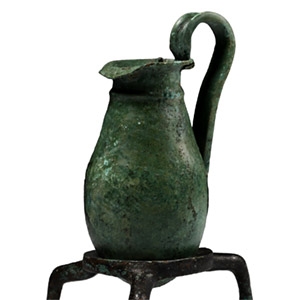
Pear-shaped body with rounded base, raised circumferential hoop at the neck and everted rim; applied high, ribbed handle with an engraved palmette at the base; accompanied by a stand. 145 grams, 12.5 cm (250 grams total, 15 cm including stand)
Private collection Dr L.M., Zurich, Switzerland. with Galerie Rhéa, Zurich, Switzerland. This lot is accompanied by an illustrated lot declaration signed by the Head of the Antiquities Department, Dr Raffaele D'Amato. -
.jpg)
Greek Gold Floral Diadem
2nd century B.C.Sold for (Inc. bp): £1,040
A triangular sheet-gold panel with repoussé flowers and tendrils; mounted on perspex backing. 45.56 grams total, 15 cm wide (18 cm wide including stand)
From the estate of Dr Jacob Hirsch. Acquired by Galerie Rhéa, Zurich, from the above in 1999. This lot is accompanied by an illustrated lot declaration signed by the Head of the Antiquities Department, Dr Raffaele D'Amato. -
.jpg)
Monumental Villanovan Impasto Kyathos
7th century B.C.Estimate: £4,000 - 6,000 (‡+bp*)
Opening Bid: £2,000
Fluted body tapering to a narrow foot, the shoulders decorated with tiered bosses, short neck with flared mouth; wide handle perforated with a triangle. 1.18 kg, 25 cm wide
Estate of Mr Bruno Fellinger (1926-2016), Küsnacht, Switzerland. with Galerie Rhéa, Zurich, Switzerland. This lot has been checked against the Interpol Database of stolen works of art and is accompanied by a search certificate number no.12648-236390. This lot has been cleared against the Art Loss Register database, and is accompanied by an illustrated lot declaration signed by the Head of the Antiquities Department, Dr Raffaele D'Amato.
