
Loading, please wait...
LOT 0077
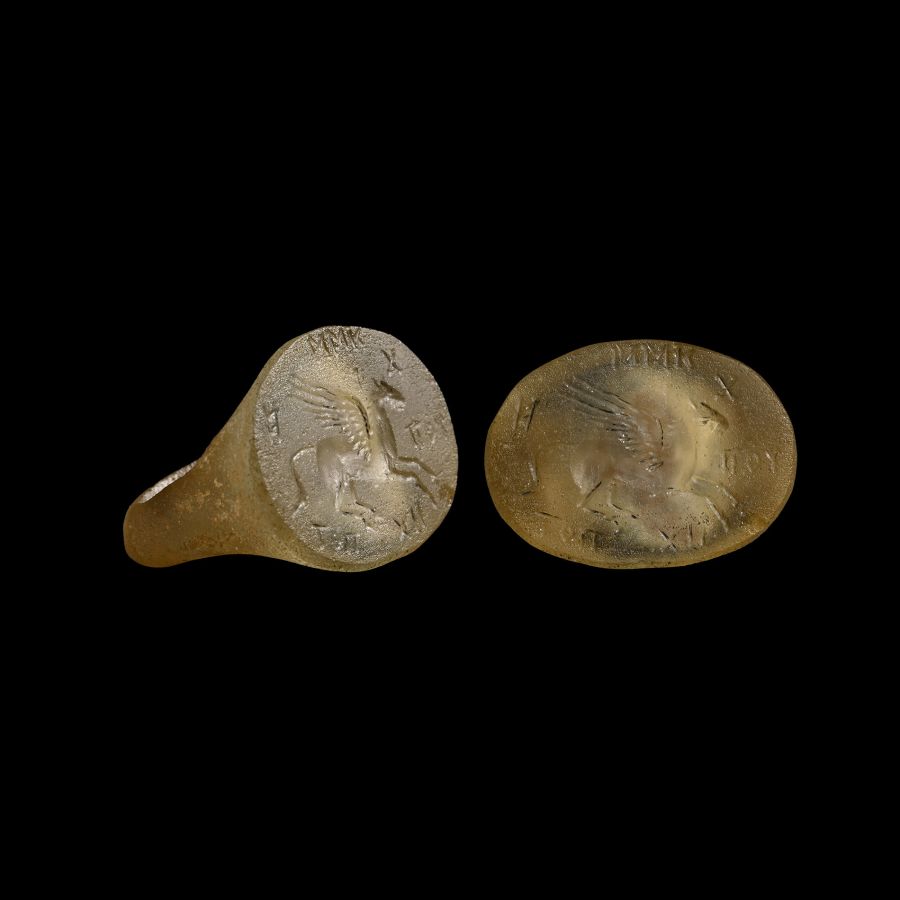
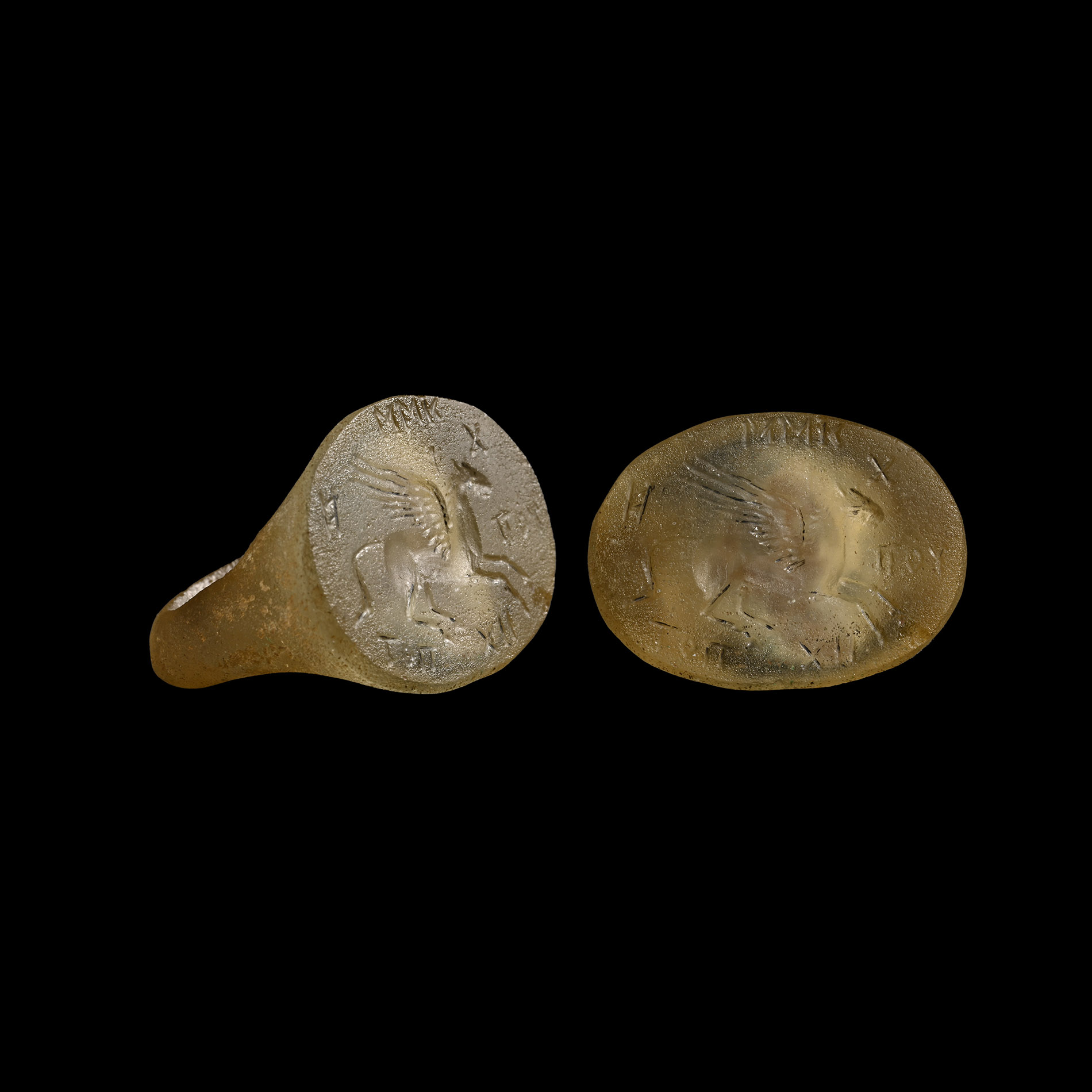
Greek Glass Ring with Pegasus
3RD-2ND CENTURY B.C.
1 in. (4.70 grams, 24.17 mm overall, 16.00 mm internal diameter (approximate size British I 1/2, USA 4 1/2, Europe 8.07, Japan 7)).
Aqua-coloured glass, flared shoulders and ellipsoid bezel with intaglio winged horse motif, surrounding enigmatic legend 'Η MMK ΠΟΥ TΠ XII'.
Provenancewith Daniels Collection, New York, 1970s-1980s.
Acquired by the present owner from the above.
This lot has been checked against the Interpol Database of stolen works of art and is accompanied by search certificate number no.12218-222158.
Cf. Chadour, A.B., Rings. The Alice and Louis Koch Collection, volume I, Leeds, 1994, item 68, for type.
CONDITIONTimeLine Auctions follows a vetting process to ensure the authenticity and legality of all items, reinforcing our commitment to integrity and responsible trading. Each antiquity, antique, and coin lot undergoes thorough examination by a vetting committee of at least ten external specialists, professional trade association members, scientists, and archaeologists: Our Vetting Process
AUCTIONS:
TimeLine is a leading auction house specialising in antiquities, ancient art, collectables, natural history, coins, medals, and books. Our auctions offer museums, collectors, historians, and enthusiasts the opportunity to acquire unique and historically significant pieces.
-
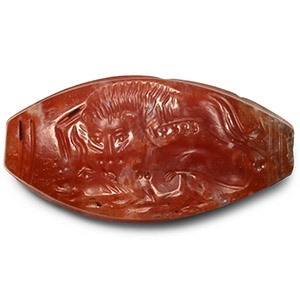
Minoan Stone Bead Seal
2nd millennium B.C.Sold for (Inc. bp): £6,240
Scaphoid in plan, plano-convex with stepped profile; intaglio scene with a lion attacking a prone ibex. 5 grams, 28 mm
From a London, UK, collection, 1980s. This lot has been checked against the Interpol Database of stolen works of art and is accompanied by search certificate number no.12216-222295. -
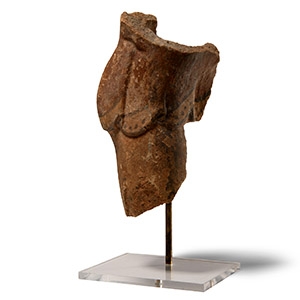
Etruscan Terracotta Warrior Statue Leg Fragment
Circa 6th century B.C.Sold for (Inc. bp): £338
Fragment of a hollow-formed statue of a warrior, the thigh and hip area with painted armour detailing; mounted on a custom-made stand. 535 grams total, 16 cm high (20.5 cm high including stand)
Ex private collection L.G., The Netherlands. Acquired from Treasuregate Art of the Ancients, Brussels, Belgium, in 2015. Property of a South Australian private collector, with collection reference 15.10. Accompanied by a copy of a Treasuregate Art of the Ancients certificate of authenticity with ref no.2015-11-22-03. Accompanied by detailed collector's catalogue pages including description and photographs.
The armour on the figure is the short-sleeved chitoniskos which was worn under the cuirass and protected the flexing areas around the groin and buttocks. The figure probably formed part of a frieze on a temple. -
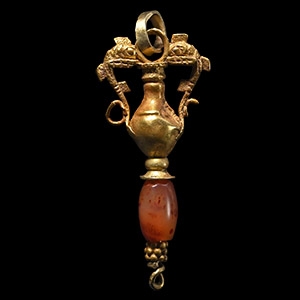
Hellenistic Gold Dolphin Amphora Pendant
2nd-1st century B.C.Estimate: £500 - 700 (+bp*)
Opening Bid: £250
Formed as an amphora with dolphin handles, oblate carnelian bead below with granulated collar; loop and suspension ring above. 2,2 grams, 32 mm
Ex property of a late Japanese collector, 1970s-2000s.
