
Loading, please wait...
LOT 0542
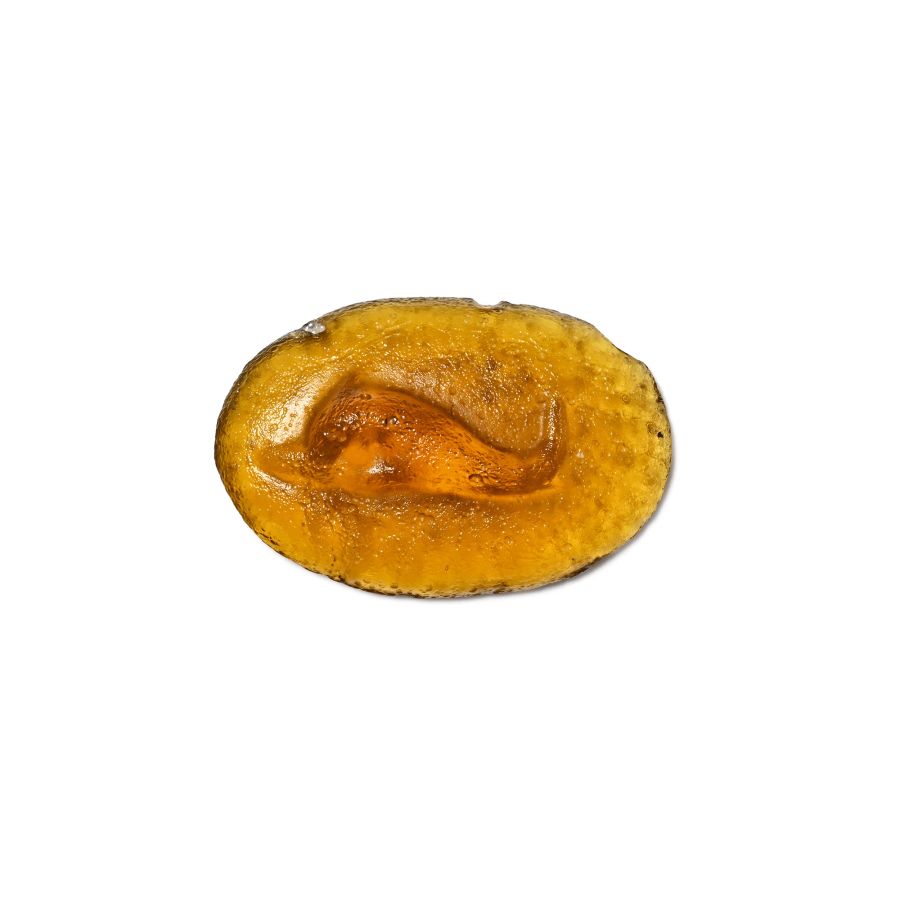
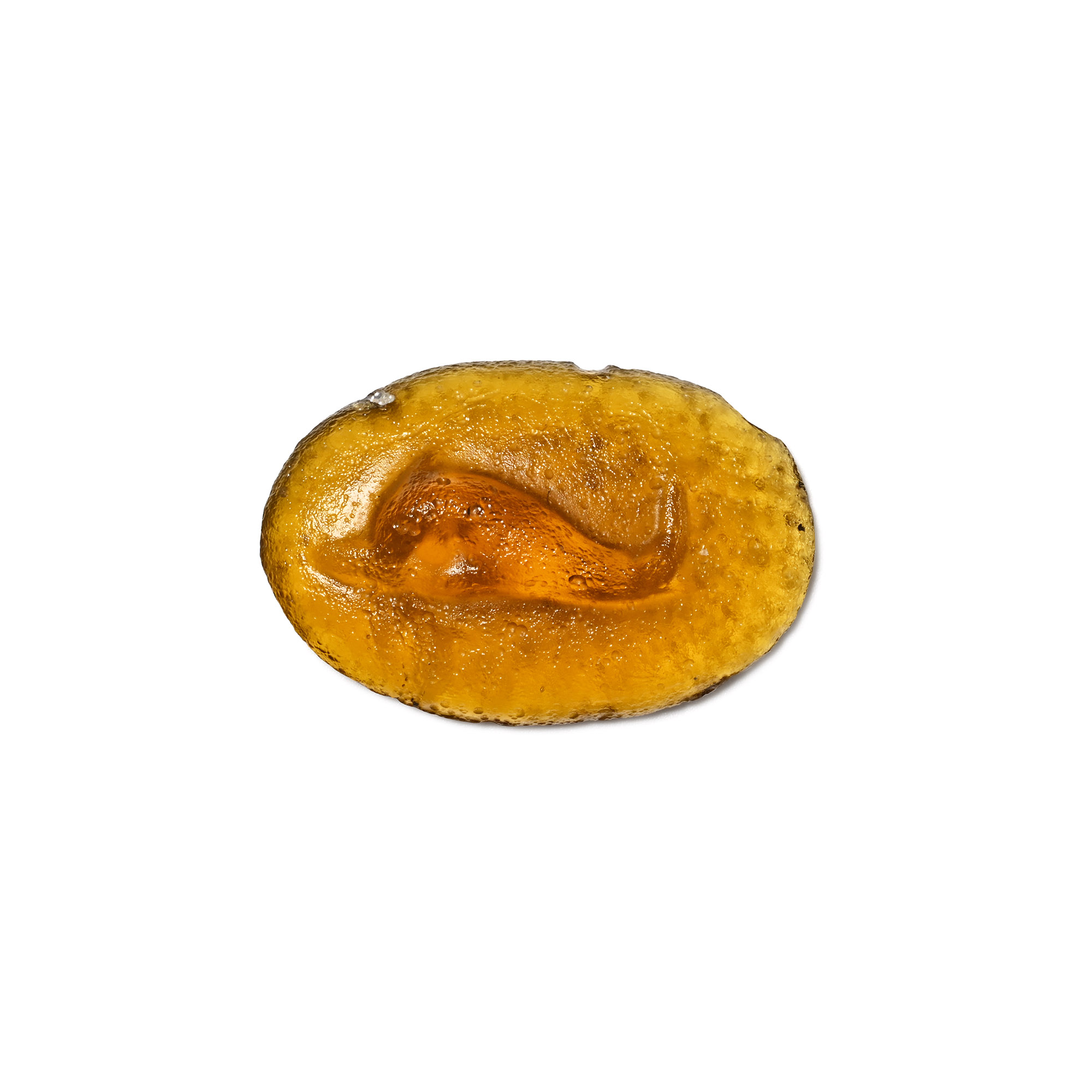
Greek Glass Cameo with Dolphin
LATE 1ST MILLENNIUM B.C.
1 in. (2.75 grams, 26 mm).
Ellipsoid in plan and plano-convex in section with low-relief dolphin modelled in the half-round.
ProvenanceAcquired on the German art market, 1989-1995.
with The Museum Gallery, 19 Bury Place, London, WC1, UK, 1998-2003.
Property of a London based academic, 2003 to present.
This lot is accompanied by an illustrated lot declaration signed by the Head of the Antiquities Department, Dr Raffaele D'Amato.
TimeLine Auctions follows a vetting process to ensure the authenticity and legality of all items, reinforcing our commitment to integrity and responsible trading. Each antiquity, antique, and coin lot undergoes thorough examination by a vetting committee of at least ten external specialists, professional trade association members, scientists, and archaeologists: Our Vetting Process
AUCTIONS:
TimeLine is a leading auction house specialising in antiquities, ancient art, collectables, natural history, coins, medals, and books. Our auctions offer museums, collectors, historians, and enthusiasts the opportunity to acquire unique and historically significant pieces.
-
.jpg)
Etruscan Impasto 'Spiral' Amphora
7th century B.C.Sold for (Inc. bp): £715
Comprising a bulbous body and a short neck with everted rim, two strap handles with incised striations continuing in an inverted V-shape beneath the handles; on each side of the body a large double spiral flanked by five curving lines, a stylised bird above. 343 grams, 16.5 cm
Ex Fortuna, Gallery for Ancient Art (Zurich, Kirchgasse 31) Basel, 7 April 1984. Private collection, Bern, Switzerland. This lot is accompanied by an illustrated lot declaration signed by the Head of the Antiquities Department, Dr Raffaele D'Amato.
With the arrival of the Greeks (775 B.C. at Pithekoussai, 750 B.C. at Cumae), a clear technical advancement in ceramic production was observed: impasto vessels began to show more varied patterns, were fired at higher temperatures, and were eventually replaced by wheel-made pottery in the Greek style. Despite growing populations, there remained a significant demand for this more 'old-fashioned' yet technically refined pottery. Note on the term impasto (Italian): in painting, it refers to the thick application of paint (a textured, paste-like technique). In ceramics, it refers to a thick layer of slip (a watered suspension of purified clay) applied before firing, which results in a homogenous, matte-glossy surface after firing. -
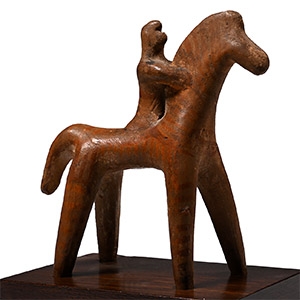
Greek Boeotian Horse and Rider Figure
Mid 6th century B.C.Sold for (Inc. bp): £1,365
In static stance with forelegs straight and head erect, rider gripping the neck, painted detailing to mane and body; mounted on a custom-made stand. 117 grams, 11.5 cm (268 grams total, 14 cm high including stand)
Acquired from Spink, London, UK, 30 June 1956. Ex private collection. with Sotheby's, New Bond Street, London, 8 December 1994, no.184. Accompanied by copies of the relevant Sotheby's catalogue pages. This lot is accompanied by an illustrated lot declaration signed by the Head of the Antiquities Department, Dr Raffaele D'Amato. -
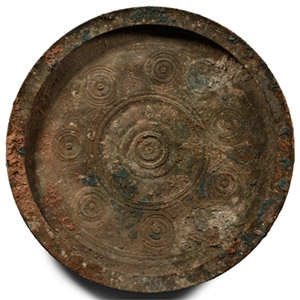
Hellenistic Decorated Bronze Mirror
2nd century B.C.Estimate: £300 - 400 (‡+bp*)
Opening Bid: £135
Discoid with slightly raised rim, low-relief concentric ring detailing to the reverse. 440 grams, 15.1 cm
Acquired in the mid 1995. Private collection, Switzerland, thence by descent. Private collection, since the late 1990s. This lot is accompanied by an illustrated lot declaration signed by the Head of the Antiquities Department, Dr Raffaele D'Amato.
The category of this mirror is similar to those of the Cesnola collection, from Cyprus at the Metropolitan Museum. They consist of heavy circular disks, provided with low cylindrical rims. They were made in pairs, and polished respectively on the recessed and flat sides. The unpolished sides were ornamented with concentric-circle ornaments and concentric mouldings.
