
Loading, please wait...

LOT 0029
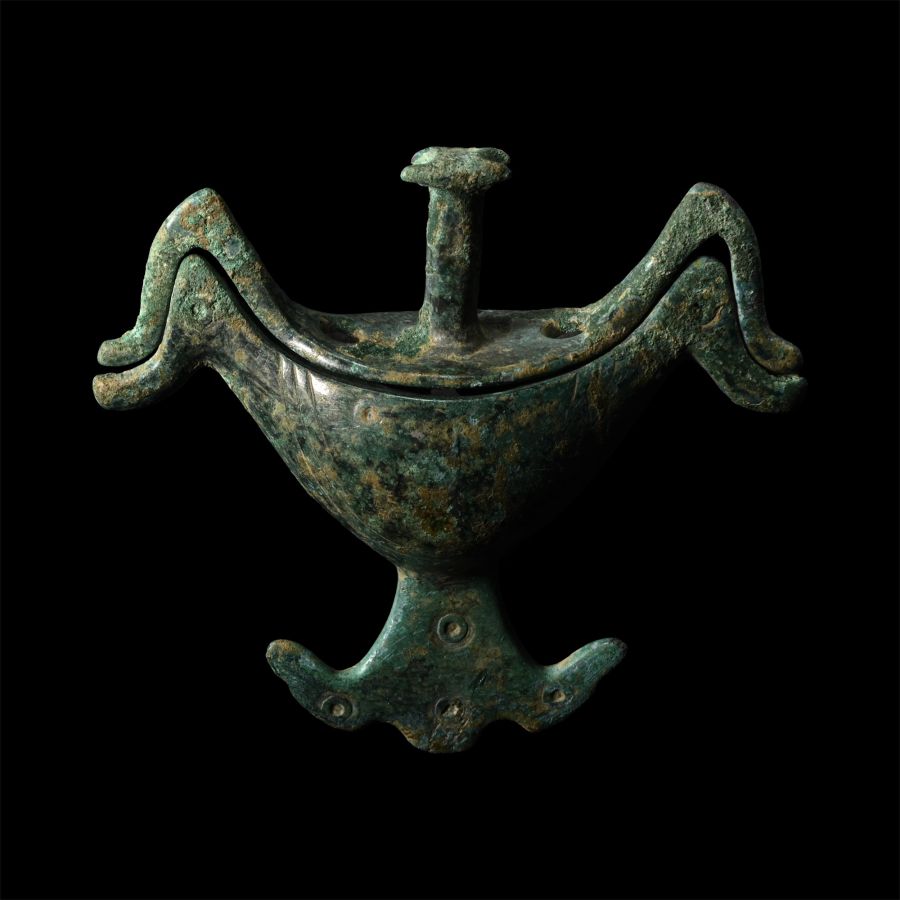
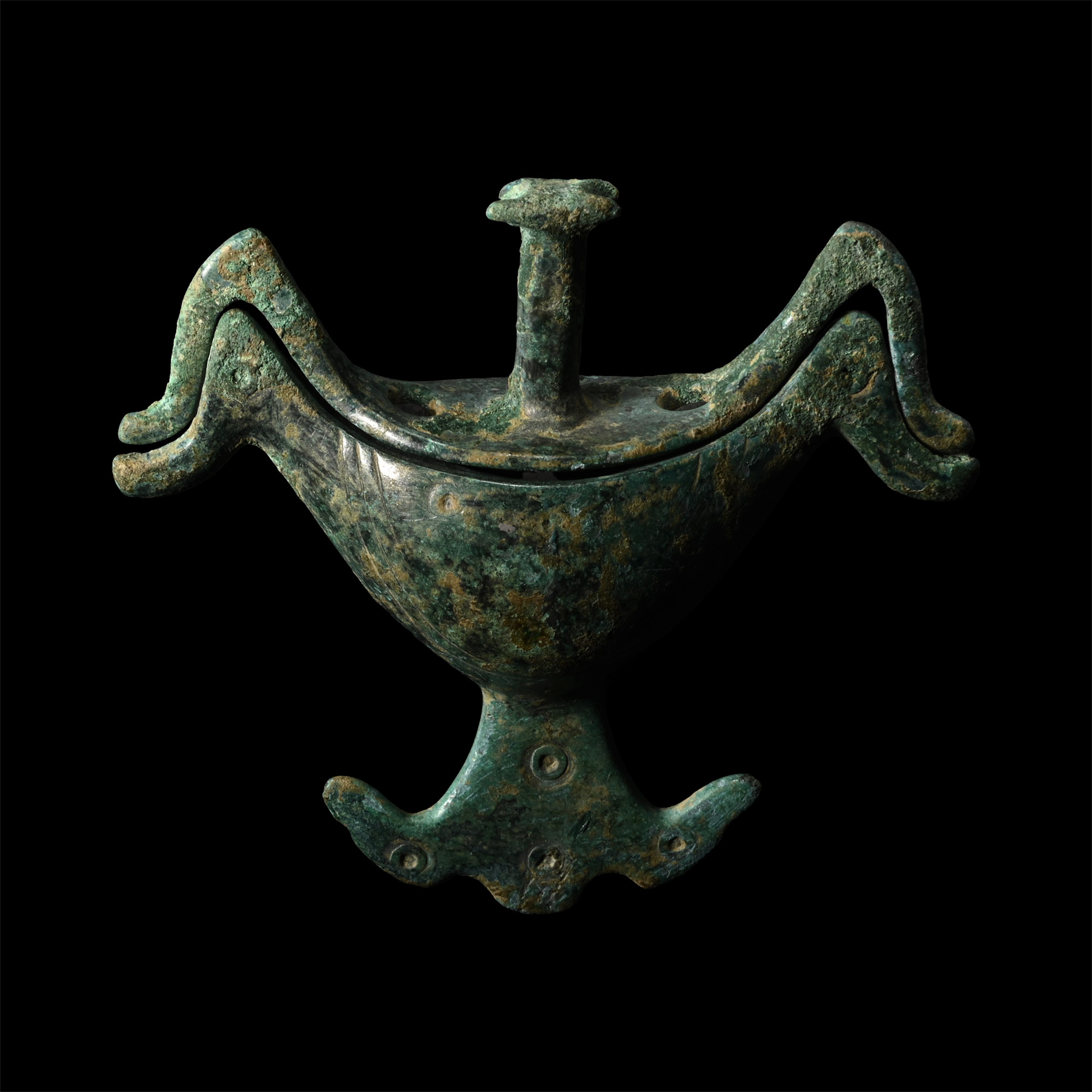
Greek Geometric Bronze Macedonian Pyxis
8TH CENTURY B.C.
3 in. (69 grams total, 75 mm).
'Sickle-type' pyxis composed of a lentoid-section body with integral bird protomes, incised detailing and scalloped openwork finial; lid elliptical in plan with a central stem crowned by a pierced discoid flange, also adorned with stylised bird protomes; corresponding perforations in lid and body used to fasten the component parts together. [2]
ProvenanceAcquired in Germany in 2001.
Acquired by the present owner from the above.
Two pyxides of similar form were found at Samos, but the type is believed to have originated in Macedonia.
CONDITIONTimeLine Auctions follows a vetting process to ensure the authenticity and legality of all items, reinforcing our commitment to integrity and responsible trading. Each antiquity, antique, and coin lot undergoes thorough examination by a vetting committee of at least ten external specialists, professional trade association members, scientists, and archaeologists: Our Vetting Process
AUCTIONS:
TimeLine is a leading auction house specialising in antiquities, ancient art, collectables, natural history, coins, medals, and books. Our auctions offer museums, collectors, historians, and enthusiasts the opportunity to acquire unique and historically significant pieces.
LOT 0029
Greek Geometric Bronze Macedonian Pyxis
Estimate £800 - 1,000€930 - 1,160 (for guidance only)$1,080 - 1,350 (for guidance only)
-
Cypriot Painted Terracotta Jug
Middle Bronze Age, circa 2000-1650 B.C.Sold for (Inc. bp): £111
Bulbous in profile with scooped spout, loop handle, spurs to the junction, painted geometric ornament. 123 grams, 13.5 cm
From a collection acquired on the UK art market from various auction houses and collections mostly before 2000. From an important Cambridgeshire estate; thence by descent. -
Very Large Cypriot Terracotta Amphora
Cypro-Archaic, circa 750-600 B.C.Sold for (Inc. bp): £2,860
The ovoid body decorated in red and black with two rows of concentric circles at the shoulder between the handles, with encircling bands above and below; concentric circles around the neck, zig-zag on the everted rim. 8.15 kg, 57 cm
Private Channel Islands collection. Acquired by the previous vendor's father in about 1935. Acquired from Bonhams, 29 April 2009, no.1. From an important Cambridgeshire estate; thence by descent. Accompanied by copies of the relevant Bonhams catalogue pages. Accompanied by an academic report by Dr Raffaele D'Amato. This lot has been checked against the Interpol Database of stolen works of art and is accompanied by search certificate number no.12204-218513. -
.jpg)
Greek Terracotta Antefix
Archaic, 6th-5th century B.C.Estimate: £3,000 - 4,000 (‡+bp*)
Opening Bid: £1,500
Mould-made figure of a female upper body with tall curved and conical headdress, hair dressed in braids falling to her shoulders and flanking her breasts, arms spread and right hand curled to grip a handle or sword-hilt; beneath, a tapering mounting peg for attachment to a roof. 411 grams, 26 cm
Acquired in the mid 1980s-1990s. Private collection, Switzerland, thence by descent. Private collection, since the late 1990s. Accompanied by an academic report by Dr Raffaele D'Amato. This lot has been checked against the Interpol Database of stolen works of art and is accompanied by search certificate number no.12207-222349.
