
Loading, please wait...
LOT 0559
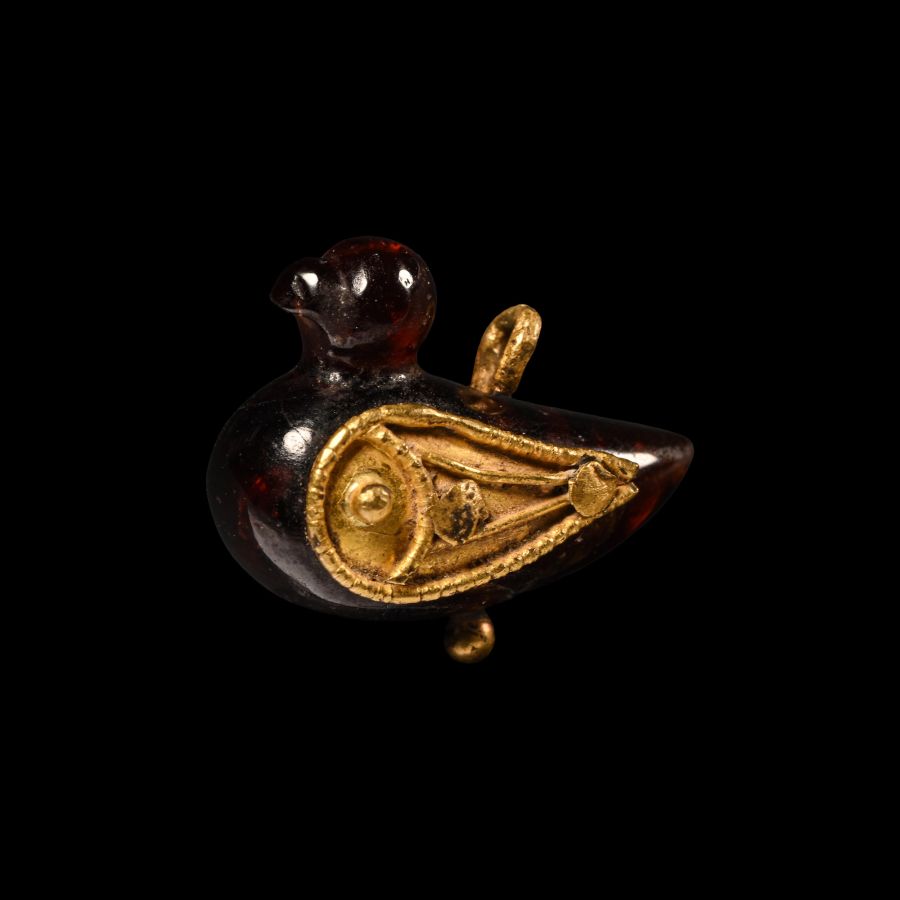
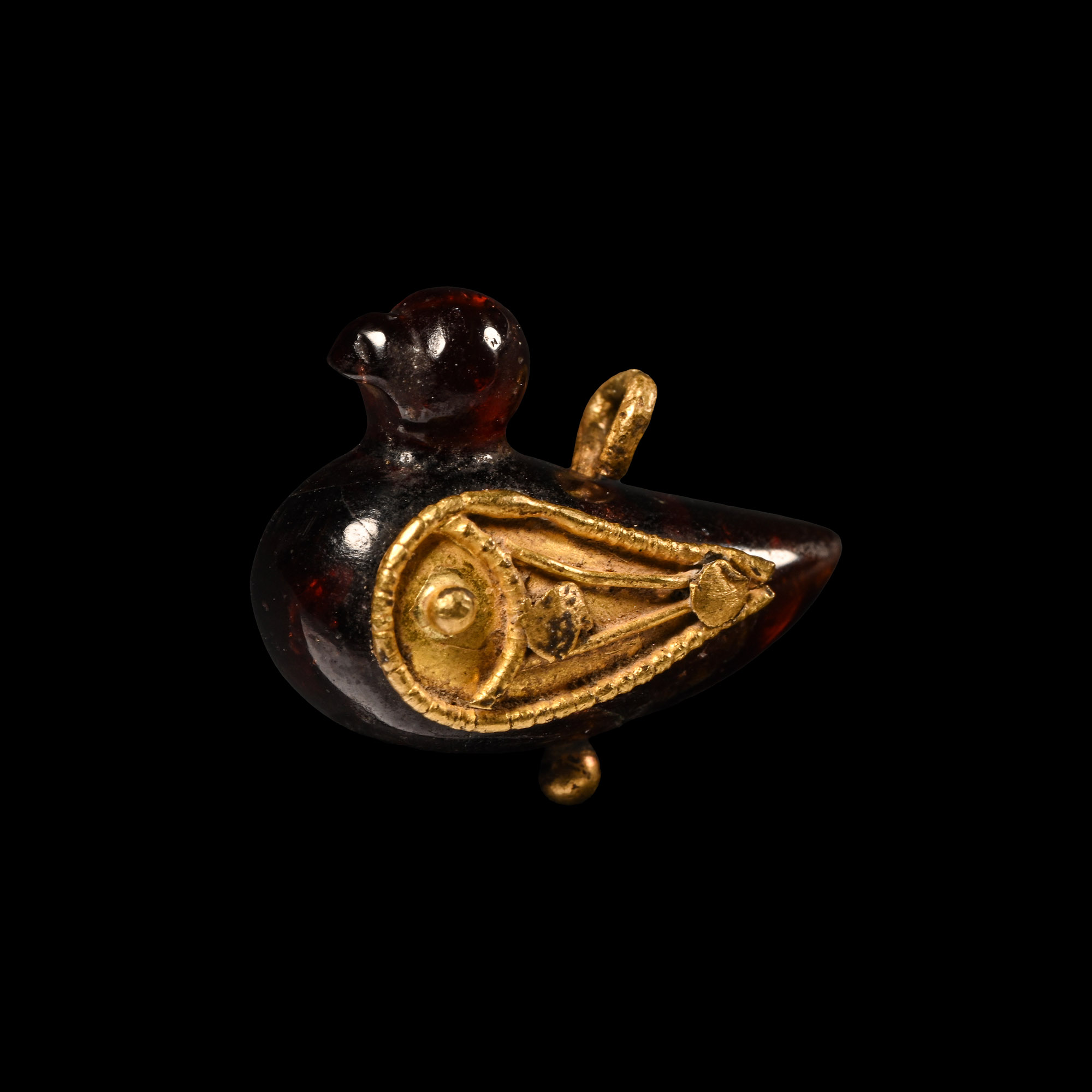
Greek Garnet and Gold Bird Pendant
4TH-3RD CENTURY B.C.
5/8 in. (2.77 grams, 15 mm).
Comprising a carved garnet model bird with applied old wings decorated with beaded wire and granules, gold loop above and stud beneath.
ProvenanceEx German art market, 2000s.
Acquired from an EU collector living in London.
From the collection of Surrey, UK, gentleman.
TimeLine Auctions follows a vetting process to ensure the authenticity and legality of all items, reinforcing our commitment to integrity and responsible trading. Each antiquity, antique, and coin lot undergoes thorough examination by a vetting committee of at least ten external specialists, professional trade association members, scientists, and archaeologists: Our Vetting Process
AUCTIONS:
TimeLine is a leading auction house specialising in antiquities, ancient art, collectables, natural history, coins, medals, and books. Our auctions offer museums, collectors, historians, and enthusiasts the opportunity to acquire unique and historically significant pieces.
-
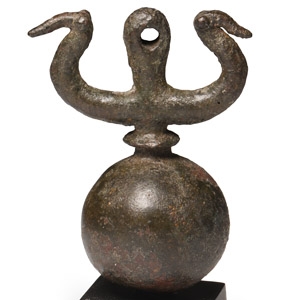
Etruscan Globular Pendant with Birds' Heads
Circa 8th-7th century B.C.Sold for (Inc. bp): £104
Comprising a spherical body with biconvex collar, lateral arms ending in stylised bird-heads, pierced lobe above; mounted on a custom-made display stand. 113 grams total, 69 mm including stand
From a collection acquired on the UK art market from various auction houses and collections mostly before 2000. From an important Cambridgeshire estate; thence by descent.
These globular pendants surmounted by two opposed birds heads belong to the early Iron Age phase of the Etruscan-Villanovan culture. The heads are those of aquatic birds, whose motif is often repeated on the embossed belt-cuirasses decorating the waists of high-status men and women. -
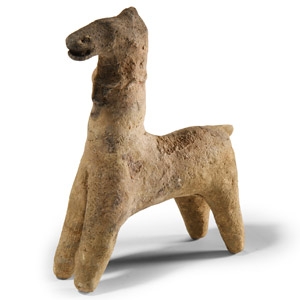
Boeotian Terracotta Horse Statuette
6th century B.C.Sold for (Inc. bp): £182
In static stance with forelegs straight and head erect, applied harness detailing. 130 grams, 11.1 cm high
From a collection acquired on the UK art market from various auction houses and collections mostly before 2000. From an important Cambridgeshire estate; thence by descent. -
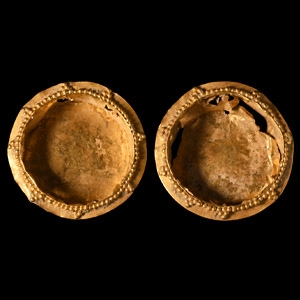
Hellenistic Gold Mount Pair
2nd-1st century B.C.Sold for (Inc. bp): £169
Comprising discoid cells each with shallow sidewall and flange rim, granule collar with radiating clusters. 1.62 grams total, 19 mm each
From a late Japanese specialist collector, 1970-2000s.
