
Loading, please wait...
LOT 0053
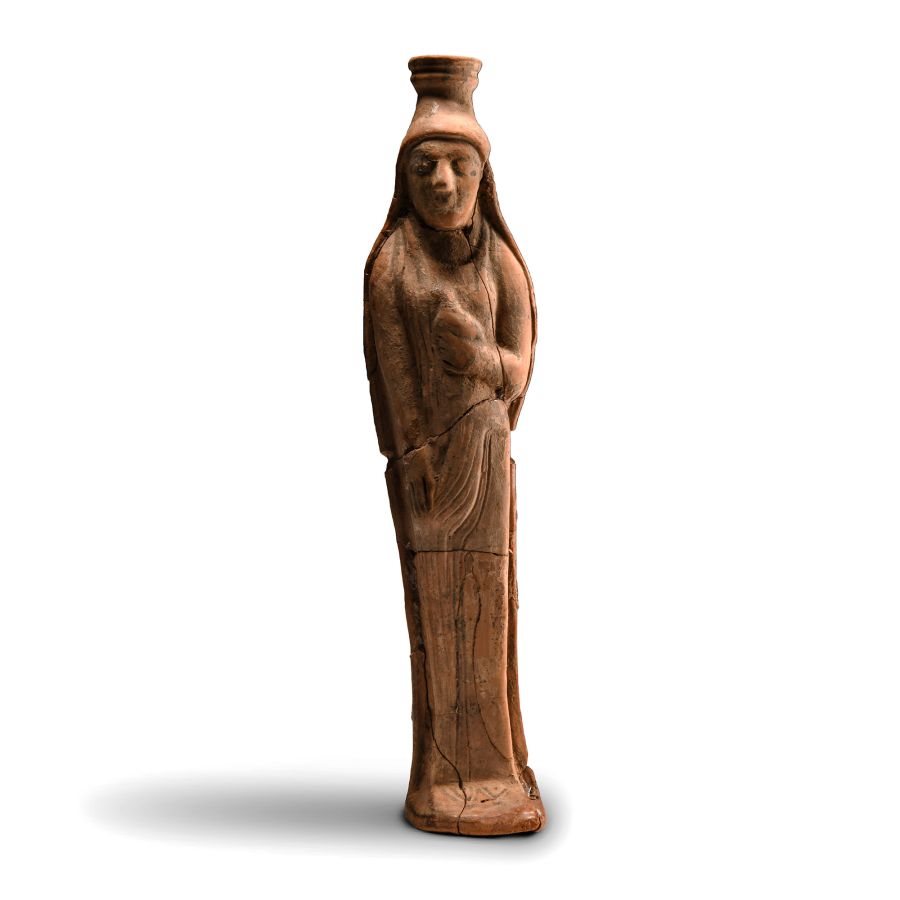
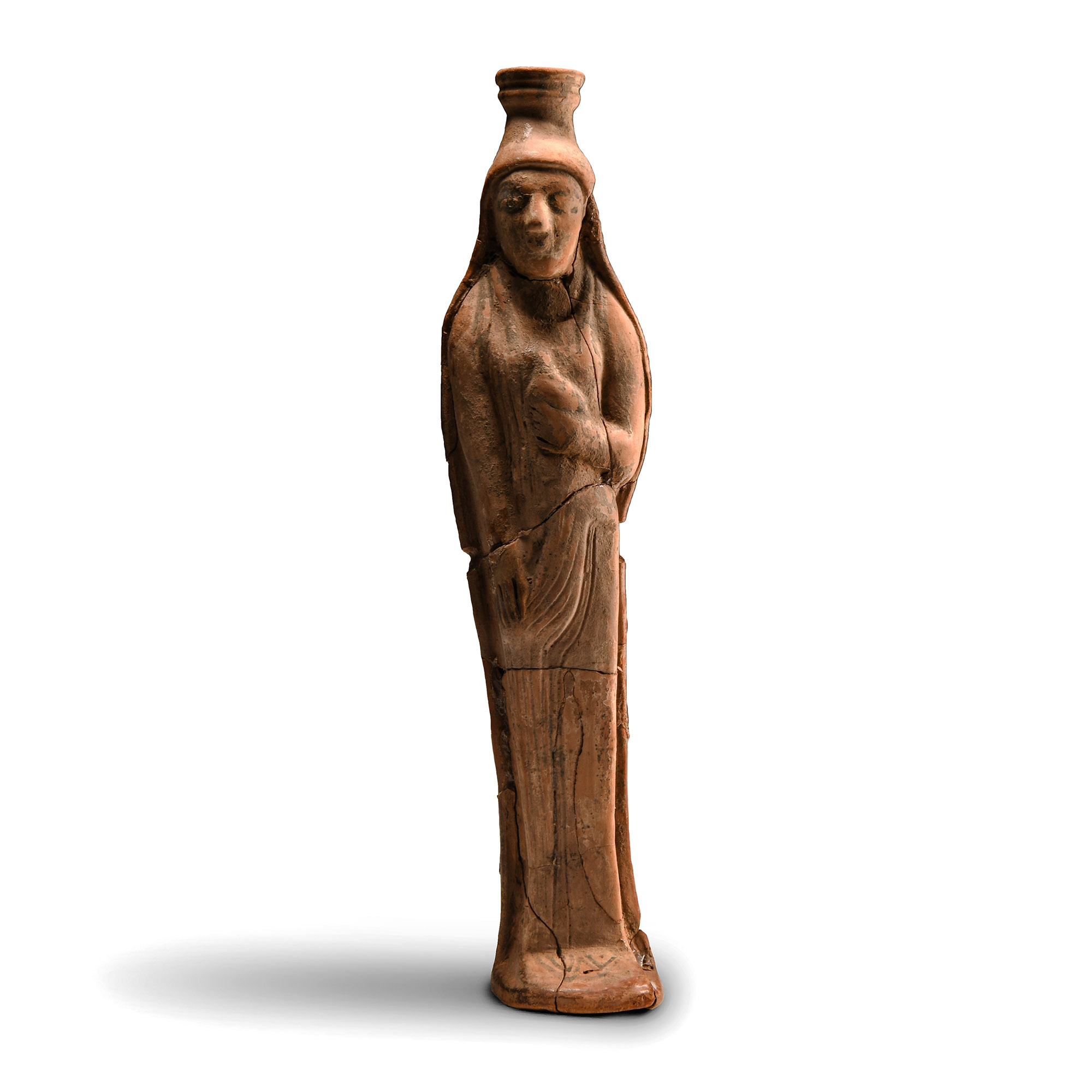
Greek Figural Alabastron
ARCHAIC, 6TH CENTURY B.C.
8 5/8 in. (269 grams, 22 cm high).
The free-standing perfume vase modelled as a standing and draped female figure, the neck and mouth of the vessel possibly formed as a modius worn on her head, holding what is possibly a dove to her chest; moulded and painted detailing to her face and garments; heavily repaired.
ProvenanceAcquired in Europe before 2001.
LiteratureCf. The Metropolitan Museum, accession number 54.151, for similar.
CONDITIONTimeLine Auctions follows a vetting process to ensure the authenticity and legality of all items, reinforcing our commitment to integrity and responsible trading. Each antiquity, antique, and coin lot undergoes thorough examination by a vetting committee of at least ten external specialists, professional trade association members, scientists, and archaeologists: Our Vetting Process
AUCTIONS:
TimeLine is a leading auction house specialising in antiquities, ancient art, collectables, natural history, coins, medals, and books. Our auctions offer museums, collectors, historians, and enthusiasts the opportunity to acquire unique and historically significant pieces.
LOT 0053
Greek Figural Alabastron
Estimate £700 - 900€810 - 1,040 (for guidance only)$950 - 1,220 (for guidance only)
-
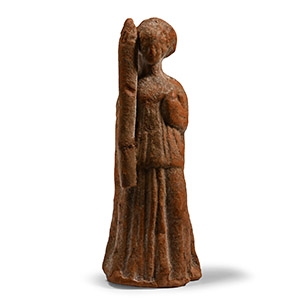
Greek Terracotta Figure
4th-3rd century B.C.Estimate: £800 - 1,000 (‡+bp*)
Opening Bid: £400
Tanagra type, hollow-formed with a void to the reverse, standing female in tiered robe wearing a diadem and with her hair drawn back, applied torch in her right hand. 18 grams, 12 cm
European art market. Acquired in Münich in 2012. European private collection. -
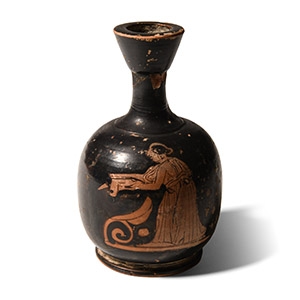
Greek Red-Figure Lekythos
5th century B.C.Estimate: £1,000 - 1,400 (‡+bp*)
Opening Bid: £540
Of ovoid form with trumpet-shaped spout and strap handle, reserved image of a lady wearing a large himation, on a baseline with scrolled foliage. 106 grams, 11 cm
Ex German collection, 1970. with Galerie Chenel, Paris, 22 July 2008.
The word lekythos had a wide meaning in ancient Greece, probably generally meaning all oil jugs, including the athletes' oil bottle (now called aryballos) as well as the types now given this name by archaeologists. Certain lekythoi resemble certain oenochoe superficially, at a first glance. Oenochoes, however, were wine-pitchers and in most cases were larger than the lekythoi, which were small jugs for oil, perfumes, etc. -
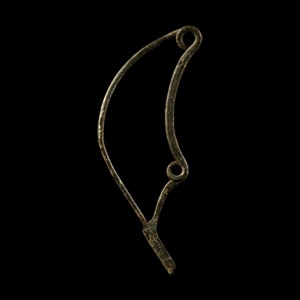
Iron Age Italic Bronze Bow Brooch
10th-8th century B.C.Sold for (Inc. bp): £91
Fibula with two spring coils, scooped catch and curved pin. 10.3 grams, 94 mm
From the collection of the famous author, writer and speaker, Gordon Bailey, Essex, UK; formed since 1968.
