
Loading, please wait...
LOT 0512
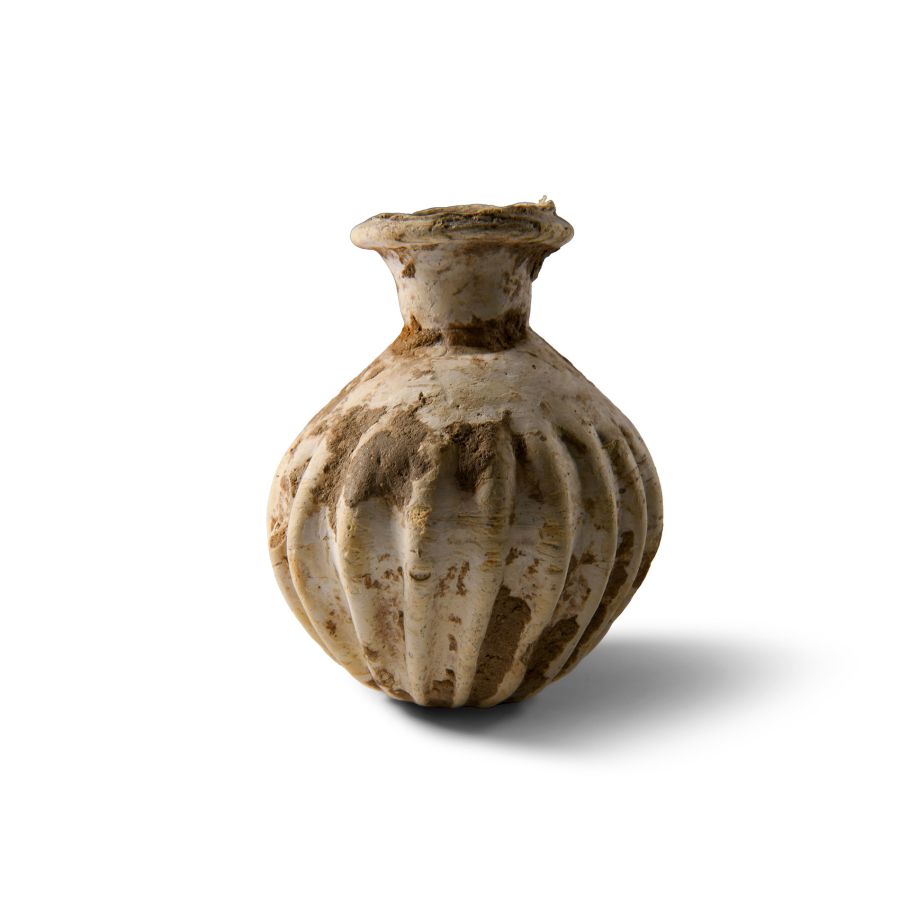
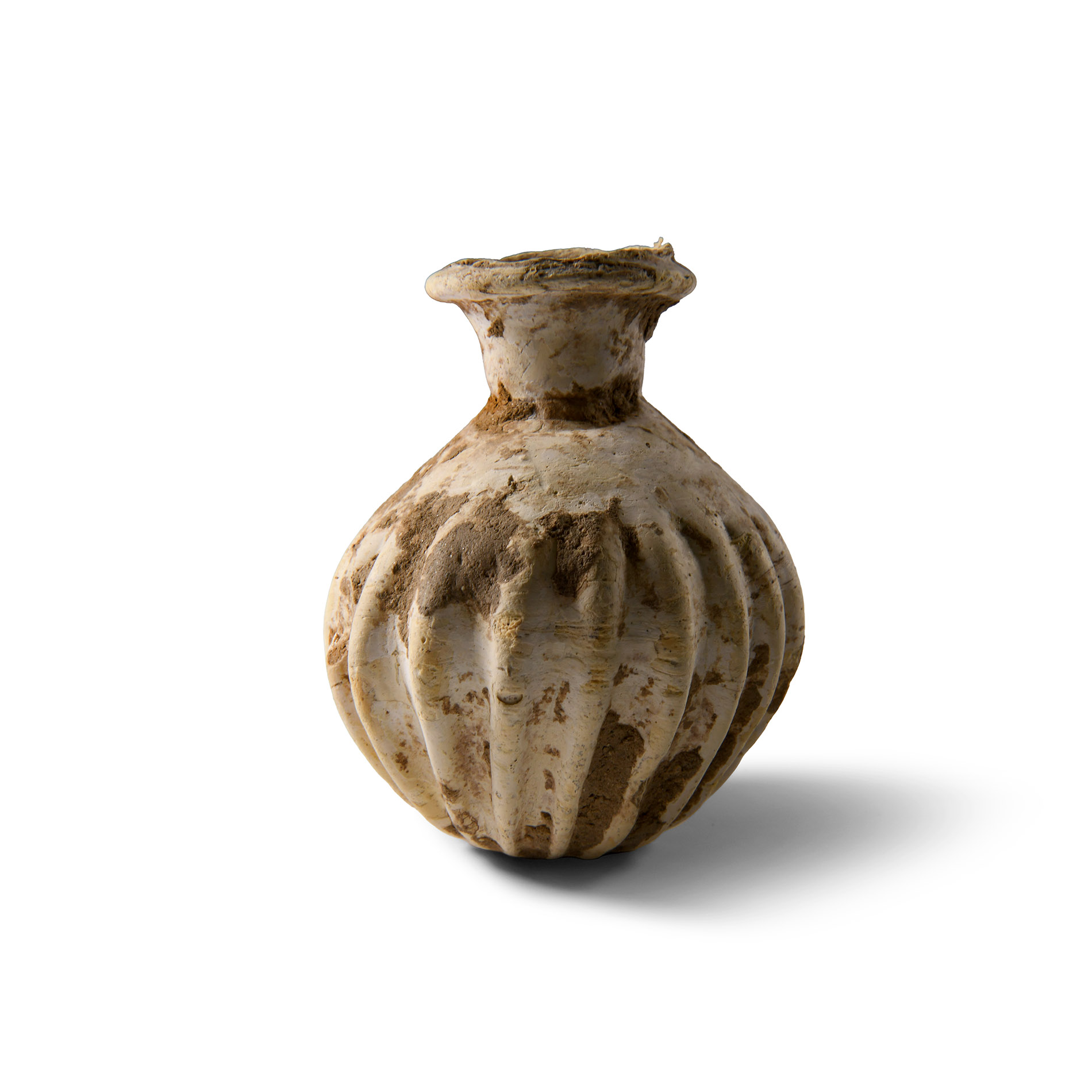
Greek Cream Frit Ribbed Bottle
4TH-2ND CENTURY B.C.
2 7/8 in. (76 grams, 73 mm high).
Opaque with vertical ribbing around the globular body, trumpet-style neck and mouth with rolled rim.
ProvenanceAcquired early 1990s.
Ex private American collection; thence by descent.
Private collection since 1998.
This lot is accompanied by an illustrated lot declaration signed by the Head of the Antiquities Department, Dr Raffaele D'Amato.
TimeLine Auctions follows a vetting process to ensure the authenticity and legality of all items, reinforcing our commitment to integrity and responsible trading. Each antiquity, antique, and coin lot undergoes thorough examination by a vetting committee of at least ten external specialists, professional trade association members, scientists, and archaeologists: Our Vetting Process
AUCTIONS:
TimeLine is a leading auction house specialising in antiquities, ancient art, collectables, natural history, coins, medals, and books. Our auctions offer museums, collectors, historians, and enthusiasts the opportunity to acquire unique and historically significant pieces.
-
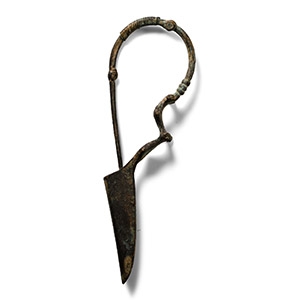
Greek Bronze Brooch
4th century B.C.Sold for (Inc. bp): £143
Comprising a deep bow with coiled wire above the pin, scooped forward section with lateral lugs, triangular catchplate. 10 grams, 92 mm
Acquired on the German art market, 1989-1995. with The Museum Gallery, 19 Bury Place, London, WC1, UK, 1998-2003. Property of a London based academic, 2003 to present. This lot is accompanied by an illustrated lot declaration signed by the Head of the Antiquities Department, Dr Raffaele D'Amato. -
.jpg)
Greek Terracotta Head Collection
1st millennium B.C.Sold for (Inc. bp): £390
Comprising: a head of a kore wearing a tall polos crown; head of Eros; a head of a lady with almond-shaped eyes and Archaic smile; a rectangular plaque with low-relief nude figure; all mounted on custom-made display stands. 118 grams total, 4-10.5 cm including stand
Private collection, before 1970. with Galerie Rhéa, Zurich, Switzerland. This lot is accompanied by an illustrated lot declaration signed by the Head of the Antiquities Department, Dr Raffaele D'Amato. -
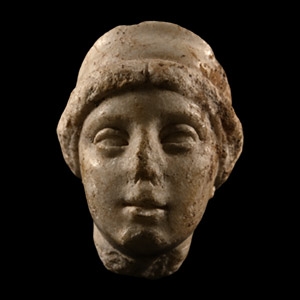
Hellenistic Marble Head of a Woman
3rd-2nd century B.C.Sold for (Inc. bp): £1,300
Carved in the round with carinated diadem in the hair, heavily lidded eyes, small mouth with pursed lips. 620 grams, 95 mm
Acquired in the mid 1980s-1990s. From the family collection of Mr S.A., Switzerland, thence by descent. Private collection since the late 1990s. This lot has been checked against the Interpol Database of stolen works of art and is accompanied by a search certificate number no.12102-218191. This lot is accompanied by an illustrated lot declaration signed by the Head of the Antiquities Department, Dr Raffaele D'Amato.
