
Loading, please wait...
LOT 0598
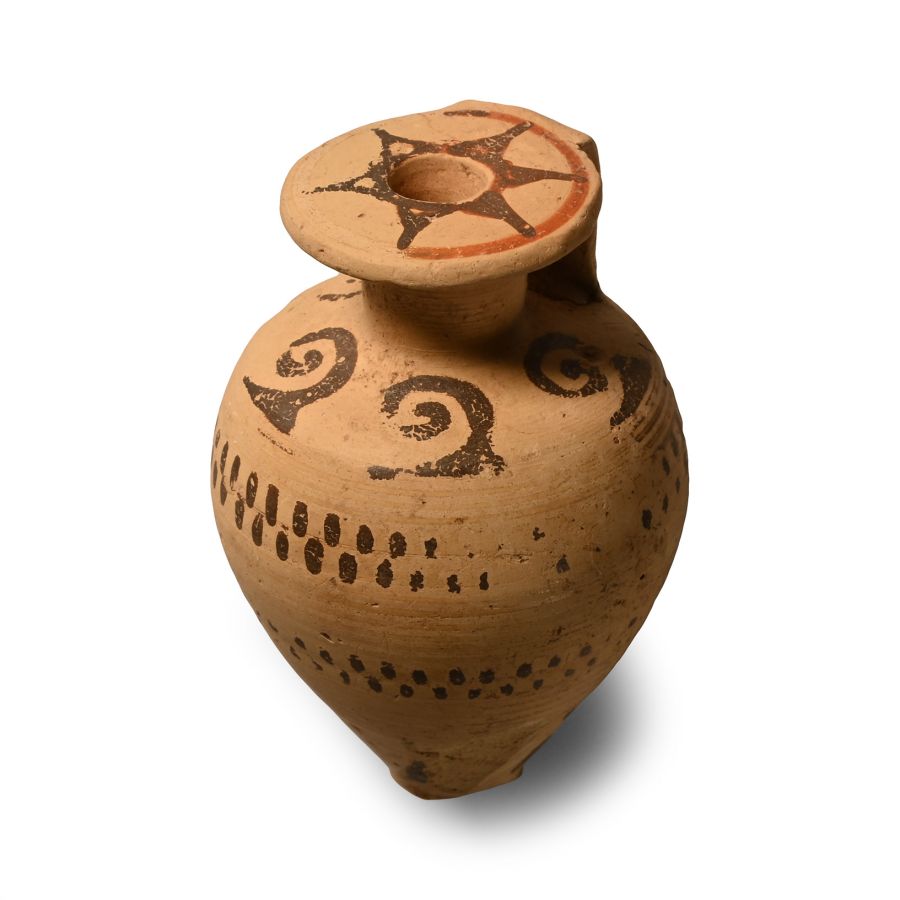
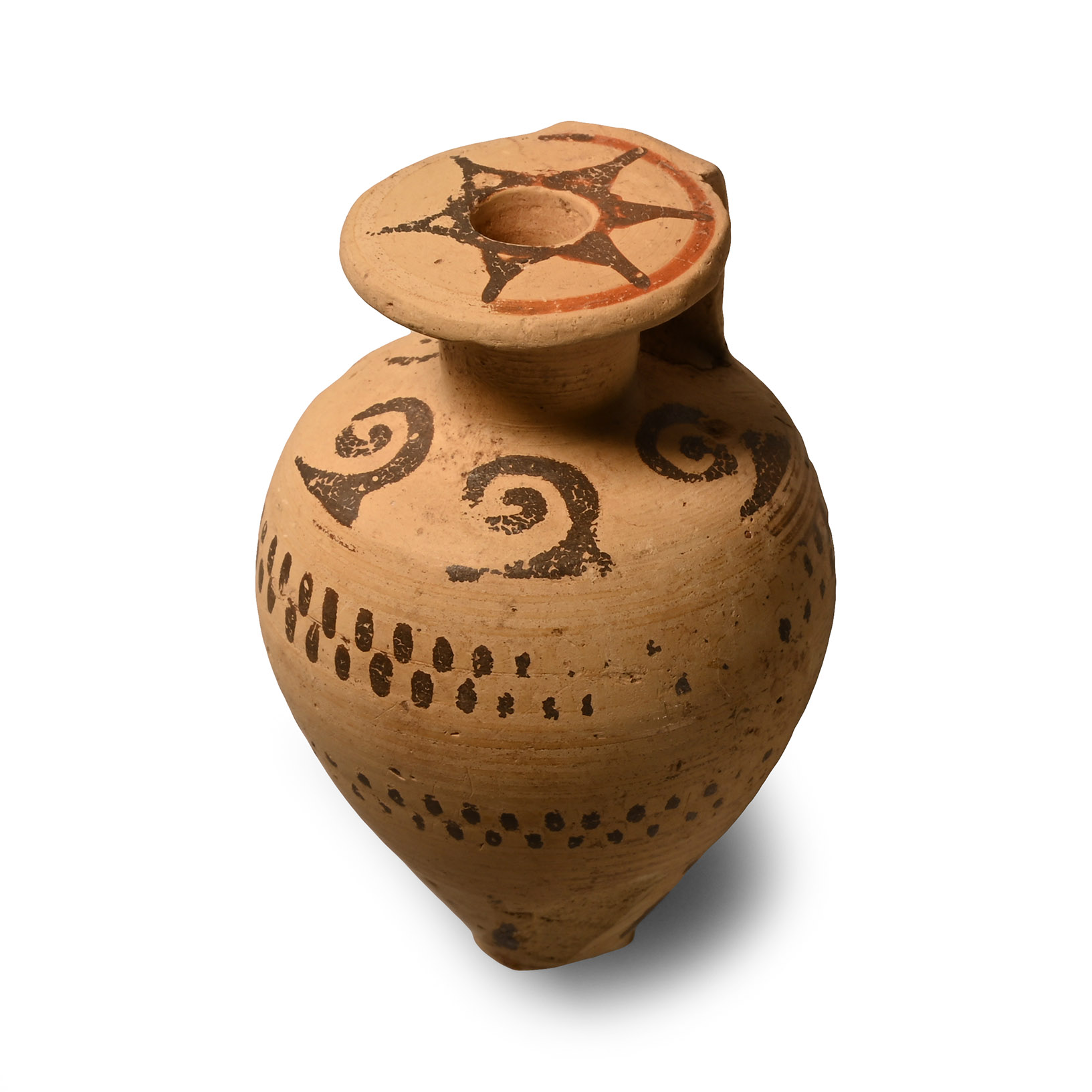
Greek Corinthian Terracotta Piriform Aryballos
CIRCA 600-550 B.C.
2 3/8 in. (36 grams, 61 mm).
Bulbous vessel with narrow neck, broad rim to the mouth and short strap handle to the rear; circumferential rings of pellets and horizontal bands to the body, rosette to the rim, wave pattern to the shoulder; foot absent. [No Reserve]
ProvenanceEx H. Norry collection, 1980s-1990s.
LiteratureCf. similar item in the Metropolitan Museum of Art, New York, under accession no.62.11.11.
FootnotesFrom the 8th century B.C. Corinthian pottery vessels were exported to Greek colonies in South Italy and the coast of Asia Minor. They were used to hold perfumed oil, an essential item for the wealthy middle classes of the time. In Italy, especially in Etruria, local workshops produced imitations of Corinthian vessel types for a clientele of Greek settlers and local populations with a taste for Greek fashions.
CONDITIONTimeLine Auctions follows a vetting process to ensure the authenticity and legality of all items, reinforcing our commitment to integrity and responsible trading. Each antiquity, antique, and coin lot undergoes thorough examination by a vetting committee of at least ten external specialists, professional trade association members, scientists, and archaeologists: Our Vetting Process
AUCTIONS:
TimeLine is a leading auction house specialising in antiquities, ancient art, collectables, natural history, coins, medals, and books. Our auctions offer museums, collectors, historians, and enthusiasts the opportunity to acquire unique and historically significant pieces.
-
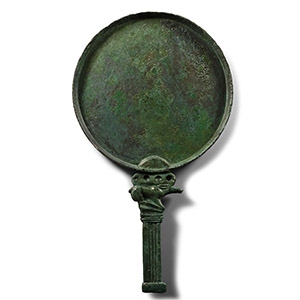
Scythian Mirror with Crouching Stag
5th-4th century B.C.Estimate: £2,000 - 3,000 (+bp*)
Opening Bid: £1,000
Discoid body with raised rim; ribbed column-like handle with a kneeling stag above, supporting the mirror with its large antlers. 570 grams, 31.5 cm
Mr M.B., Mainz, Germany, since the 1960s. Acquired from the above, 2007. Private collection, London. Accompanied by an academic report by Dr Raffaele D’Amato. This lot has been checked against the Interpol Database of stolen works of art and is accompanied by search certificate no.12182-221464.
Bronze mirrors of this type with zoomorphic handles, were widespread in the Scythian archaeology of the Northern Black Sea Region, Northern Caucasus and Carpathian Basin. Handles were often decorated with sculptured depictions of rams, feline predators or deer (stag). The similarity with Scythian art is clearly visible by comparing the stag of our mirror with the stags from the Scythian steppe culture (Loehr, 1955, figs.5,6,10,13-21). -
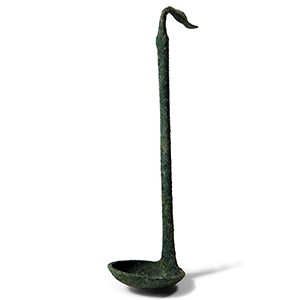
Etruscan Bronze Ladle with Duck's Head Handle
5th-4th century B.C.Sold for (Inc. bp): £650
With shallow circular bowl and broad rim, stem with slightly domed front face, terminal formed as a duck's head. 179 grams, 24.7 cm
Acquired in 1998. Ex Swiss private collection. -
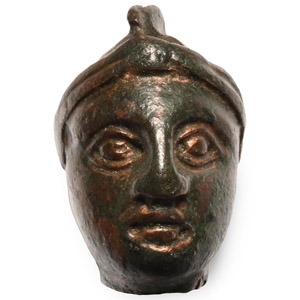
East Greek Bronze Helmetted Head
3rd-2nd century B.C.Sold for (Inc. bp): £124
Modelled in the round, wearing a low crested helmet, stylised facial detailing; socket to the neck. 40.1 grams, 29 mm
Ex German art market, 2000s. Acquired from an EU collector living in London. From the collection of Surrey, UK, gentleman.
