
Loading, please wait...
LOT 0538
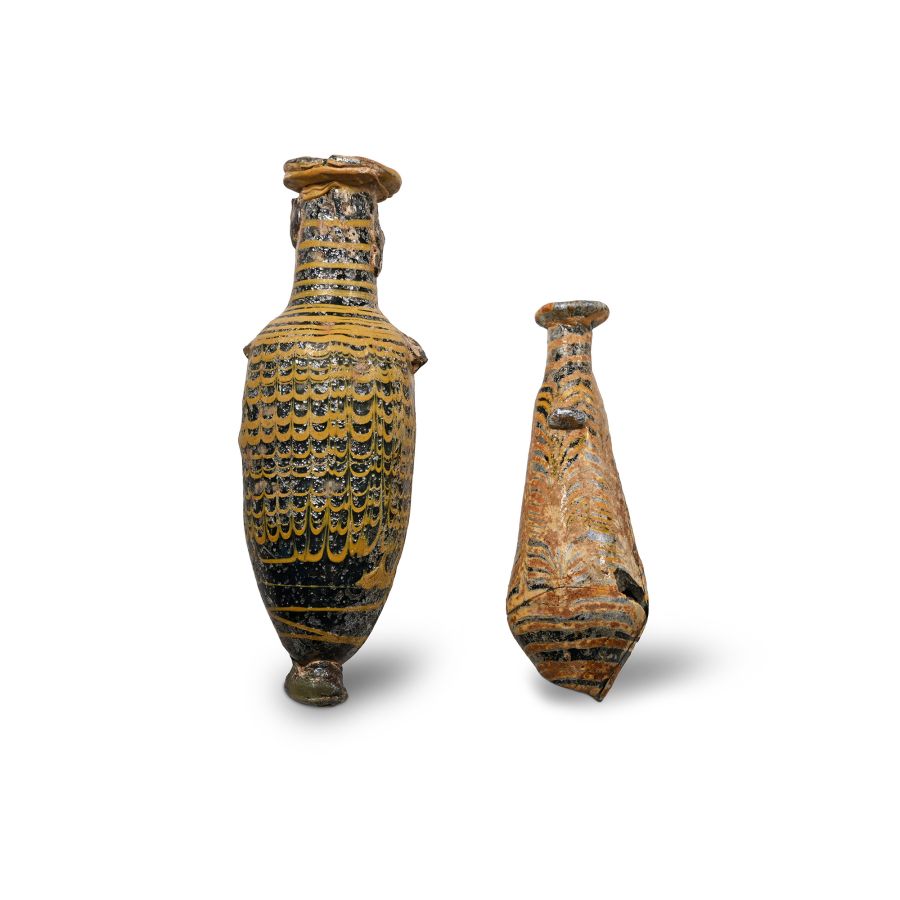
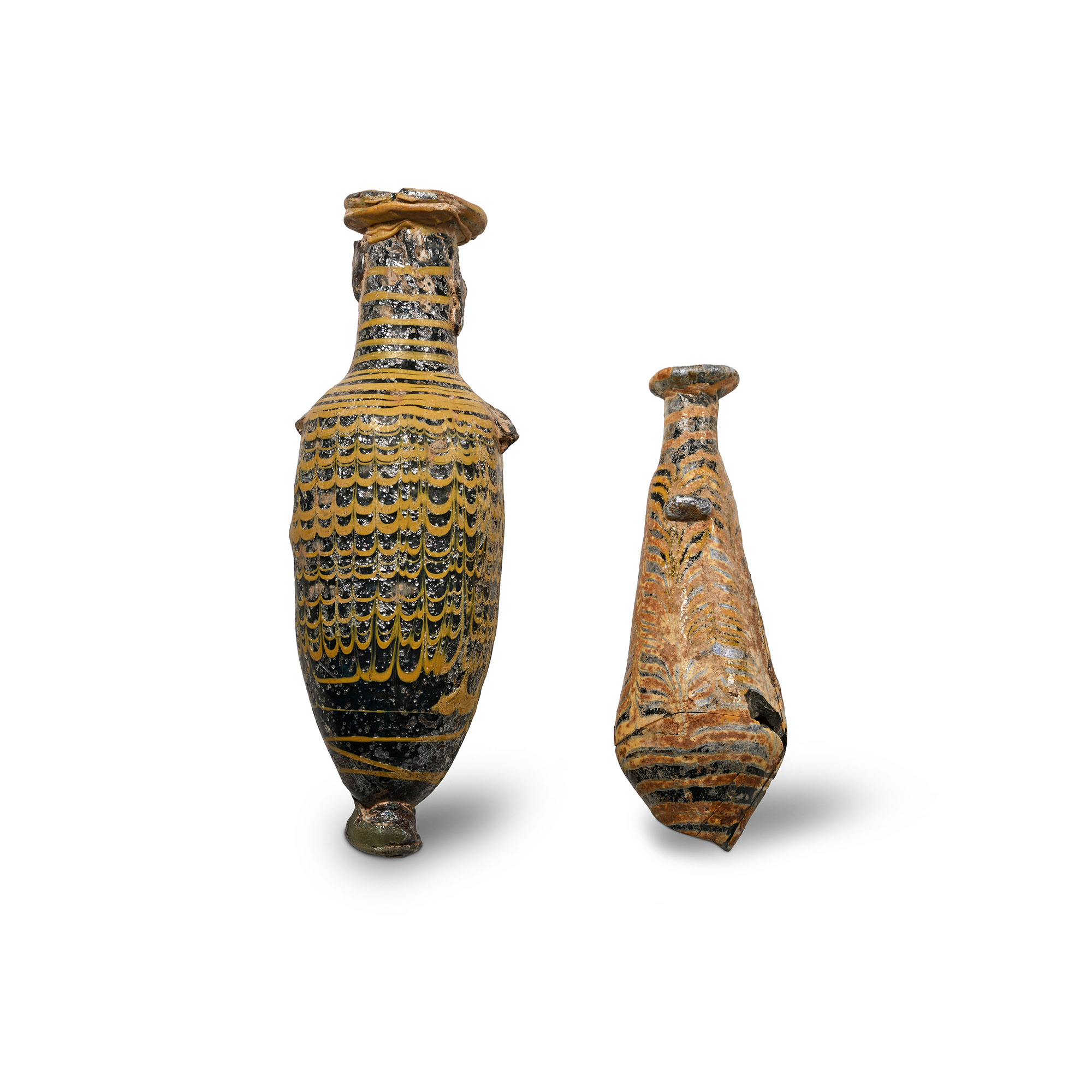
Greek Core-Formed Glass Vessel Group
2ND-1ST CENTURY B.C.
4 1/2 - 5 7/8 in. (197 grams total, 11.3-15 cm high).
With polychrome decoration and iridescent surfaces, comprising: an alabastron with fusiform body, conical foot and ledge handles, decorated with yellow feathering and trails; a blue amphoriskos with yellow festooning and trails, knop foot and everted rim; fragmentary. [2]
ProvenanceAcquired early 1990s.
Ex private American collection; thence by descent.
Private collection since 1998.
This lot is accompanied by an illustrated lot declaration signed by the Head of the Antiquities Department, Dr Raffaele D'Amato.
Cf. The Metropolitan Museum, accession numbers 74.51.322 and 17.194.594, for similar.
CONDITIONTimeLine Auctions follows a vetting process to ensure the authenticity and legality of all items, reinforcing our commitment to integrity and responsible trading. Each antiquity, antique, and coin lot undergoes thorough examination by a vetting committee of at least ten external specialists, professional trade association members, scientists, and archaeologists: Our Vetting Process
AUCTIONS:
TimeLine is a leading auction house specialising in antiquities, ancient art, collectables, natural history, coins, medals, and books. Our auctions offer museums, collectors, historians, and enthusiasts the opportunity to acquire unique and historically significant pieces.
-
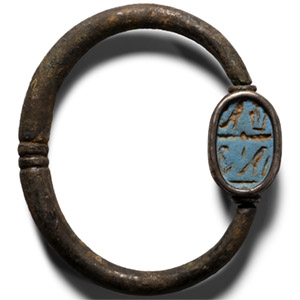
Etruscan Silver Bracelet with Mounted Scarab
6th century B.C.Sold for (Inc. bp): £1,820
Hollow-formed tapering shank with rotating cell containing a scarab with hieroglyphs to the underside. 24.8 grams, 57.6 mm
Acquired in the mid 1980s-1990s. Private collection, Switzerland, thence by descent. Private collection, since the late 1990s. This lot has been checked against the Interpol Database of stolen works of art and is accompanied by a search certificate number no.12660-234644. This lot has been cleared against the Art Loss Register database, and is accompanied by an illustrated lot declaration signed by the Head of the Antiquities Department, Dr Raffaele D'Amato. -
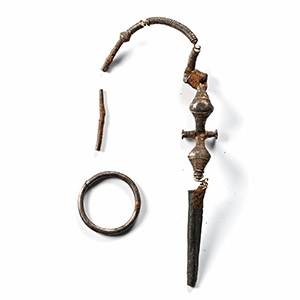
Greek Silver Wire Fibula
6th-4th century B.C.Estimate: £300 - 400 (‡+bp*)
Opening Bid: £135
With coiled spring and lateral lugs; tapering shank and separate ring. 9.11 grams total, 1.8-12.4 cm
Private collection, Switzerland, 1992. Thence by descent. Private collection, since the late 1990s. This lot is accompanied by an illustrated lot declaration signed by the Head of the Antiquities Department, Dr Raffaele D'Amato. -
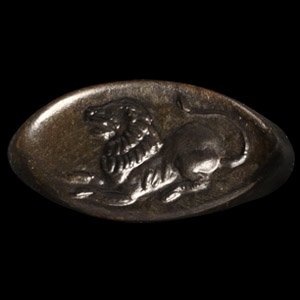
Greek Bronze Seal Ring with Lion
Circa 5th-3rd century B.C.Sold for (Inc. bp): £247
Comprising a D-section hoop with raised bulb to the base, lentoid-shaped bezel with a reclining lion. 5.73 grams, 23.51 mm overall, 20.22 mm internal diameter (approximate size British S 1/2, USA 9 1/4, Europe 20.63, Japan 19)
Ex German art market, 2000s. Acquired from an EU collector living in London. From the collection of a Surrey, UK, gentleman. This lot is accompanied by an illustrated lot declaration signed by the Head of the Antiquities Department, Dr Raffaele D'Amato.
