
Loading, please wait...
LOT 0564
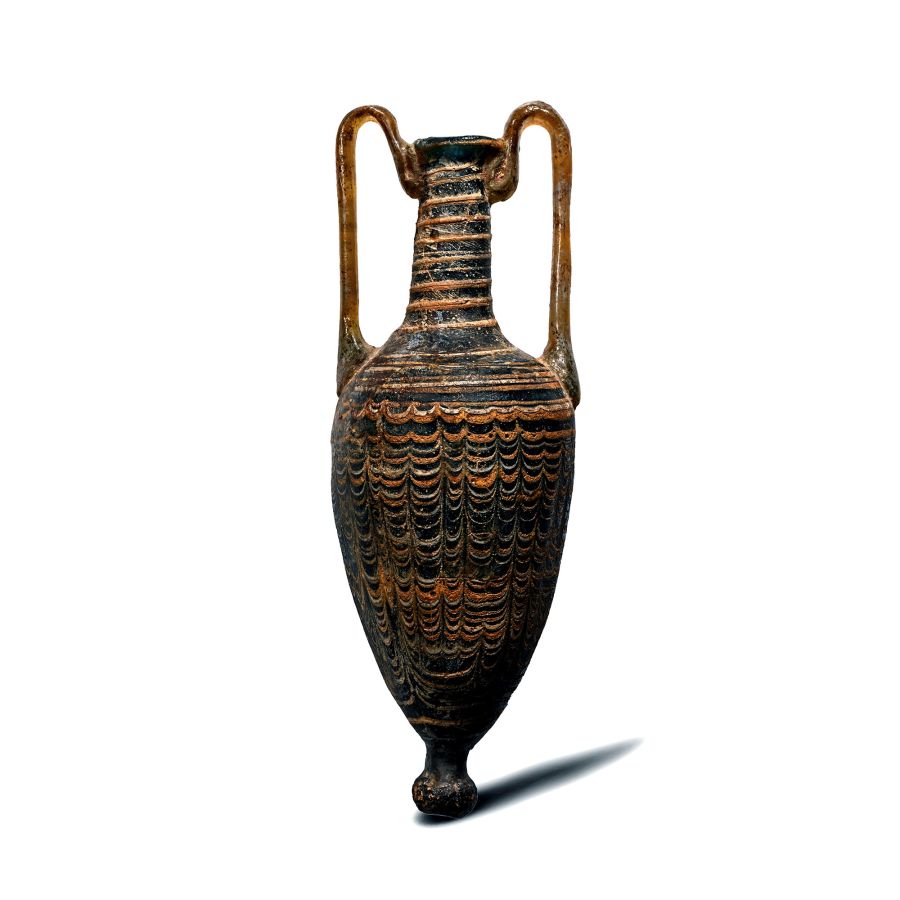
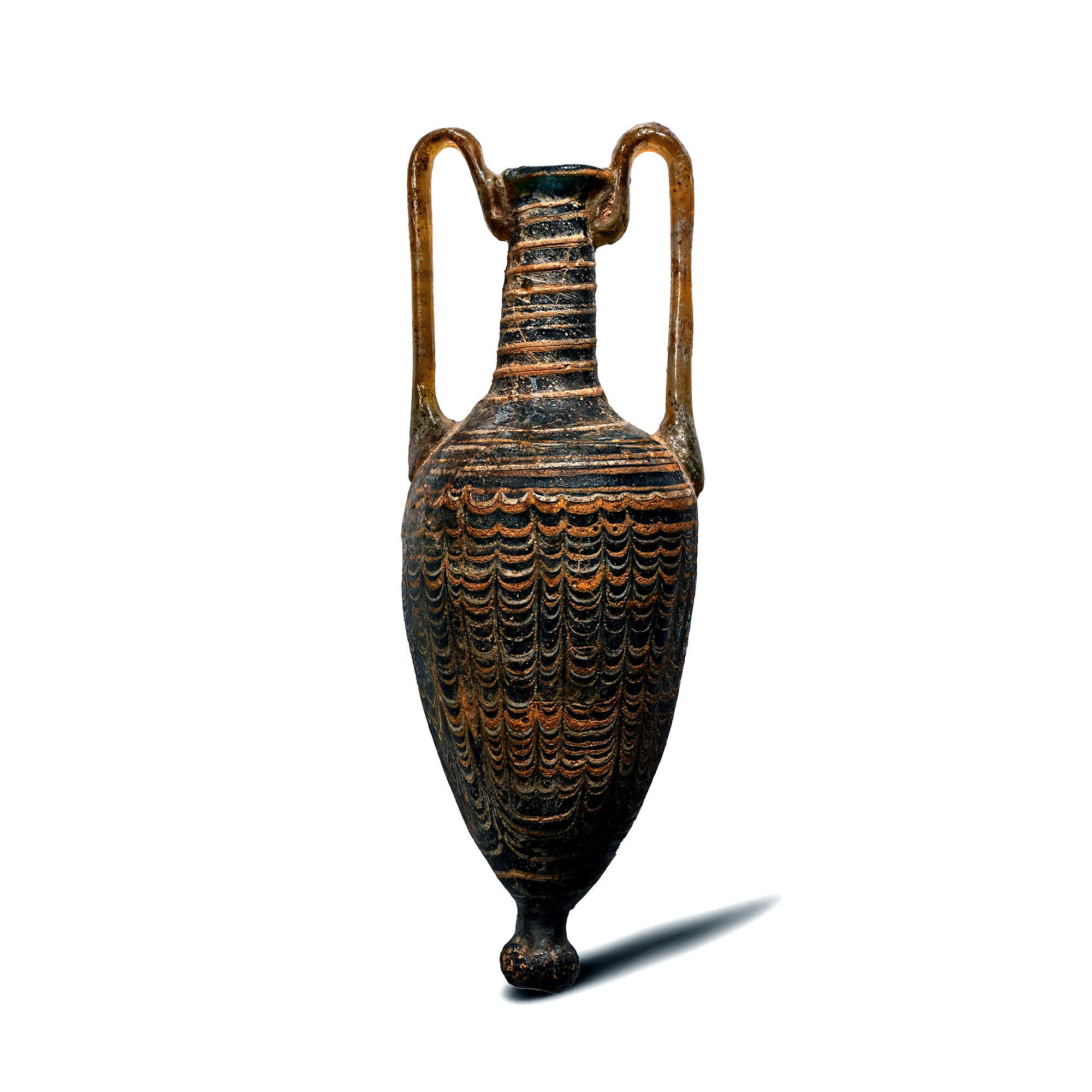
Greek Core-Formed Glass Amphoriskos
5TH-3RD CENTURY B.C.
7 in. (152 grams, 18 cm high).
Elongated piriform amphora shape, tubular neck and everted rim, decorated with polychrome festooning and trails, applied amber-green handles and knop foot.
ProvenanceAcquired early 1990s.
Ex private American collection; thence by descent.
Private collection since 1998.
This lot has been checked against the Interpol Database of stolen works of art and is accompanied by search certificate number no.12206-222129.
This lot has been cleared against the Art Loss Register database, and is accompanied by an illustrated lot declaration signed by the Head of the Antiquities Department, Dr Raffaele D'Amato.
Cf. The Metropolitan Museum, New York, accession number 74.51.320, for similar.
CONDITIONTimeLine Auctions follows a vetting process to ensure the authenticity and legality of all items, reinforcing our commitment to integrity and responsible trading. Each antiquity, antique, and coin lot undergoes thorough examination by a vetting committee of at least ten external specialists, professional trade association members, scientists, and archaeologists: Our Vetting Process
AUCTIONS:
TimeLine is a leading auction house specialising in antiquities, ancient art, collectables, natural history, coins, medals, and books. Our auctions offer museums, collectors, historians, and enthusiasts the opportunity to acquire unique and historically significant pieces.
LOT 0564
Greek Core-Formed Glass Amphoriskos
Estimate £3,000 - 4,000€3,480 - 4,640 (for guidance only)$4,050 - 5,400 (for guidance only)
-
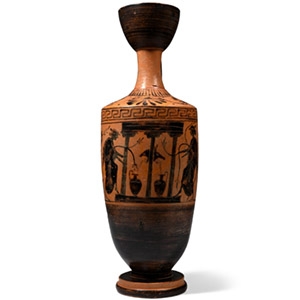
Terracotta Painted Lekythos by the Gela Painter
Circa 490 B.C.Sold for (Inc. bp): £6,500
With cylindrical body and bevelled shoulder, stepped foot; three connecting palmettes above the shoulder with two flanking lotus flowers, meander pattern below; decorated with a scene from a fountain house comprising a building with three columns, water flowing from animal-shaped fountain heads into two hydria, two women approaching the vessels by stepping onto the upper step, both wearing a long himation and their hair tied up in krobyloi, two men approaching the building behind the women, dressed in cloaks and leaning on sticks, the man on the left holding a conical cup, a seated dog at his feet; restored. 715 grams, 33 cm
Ex Jean-David Cahn AG, Auction 4, Kunstwerke der Antike, 19 October 2002, no.234. Private collection. Accompanied by copies of the relevant Jean-David Cahn AG catalogue pages. This lot has been checked against the Interpol Database of stolen works of art and is accompanied by a search certificate number no.12642-236377. This lot has been cleared against the Art Loss Register database, and is accompanied by an illustrated lot declaration signed by the Head of the Antiquities Department, Dr Raffaele D'Amato. -
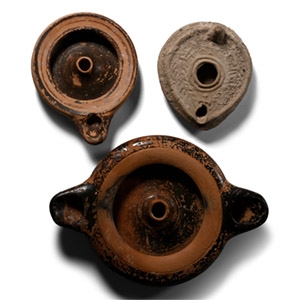
Greek and Byzantine Ceramic Oil Lamp Collection
5th century B.C.-6th century A.D.Estimate: £300 - 400 (‡+bp*)
Opening Bid: £150
Comprising: a squat oil lamp with wreath surrounding the large filler hole, radiating sun motif on the base; the two larger terracotta lamps with open reservoirs with a central cone open beneath, short nozzle. 473 grams total, 9.2-17.8 cm
Ex R.C. collection. Acquired by Galerie Rhéa, Zurich, from the above in 2010. This lot is accompanied by an illustrated lot declaration signed by the Head of the Antiquities Department, Dr Raffaele D'Amato. -
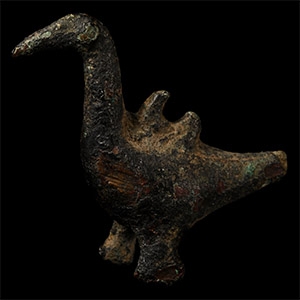
Greek Bronze Bird Figure
8th century B.C.Estimate: £100 - 140 (‡+bp*)
Opening Bid: £45
Amuletic pendant formed as a perching bird with long neck and stub legs, loop to the back. 21.9 grams, 42 mm
Acquired in the mid 1980s-1990s. Private collection, Switzerland, thence by descent. Private collection, since the late 1990s. This lot is accompanied by an illustrated lot declaration signed by the Head of the Antiquities Department, Dr Raffaele D'Amato.
