
LOT 2406
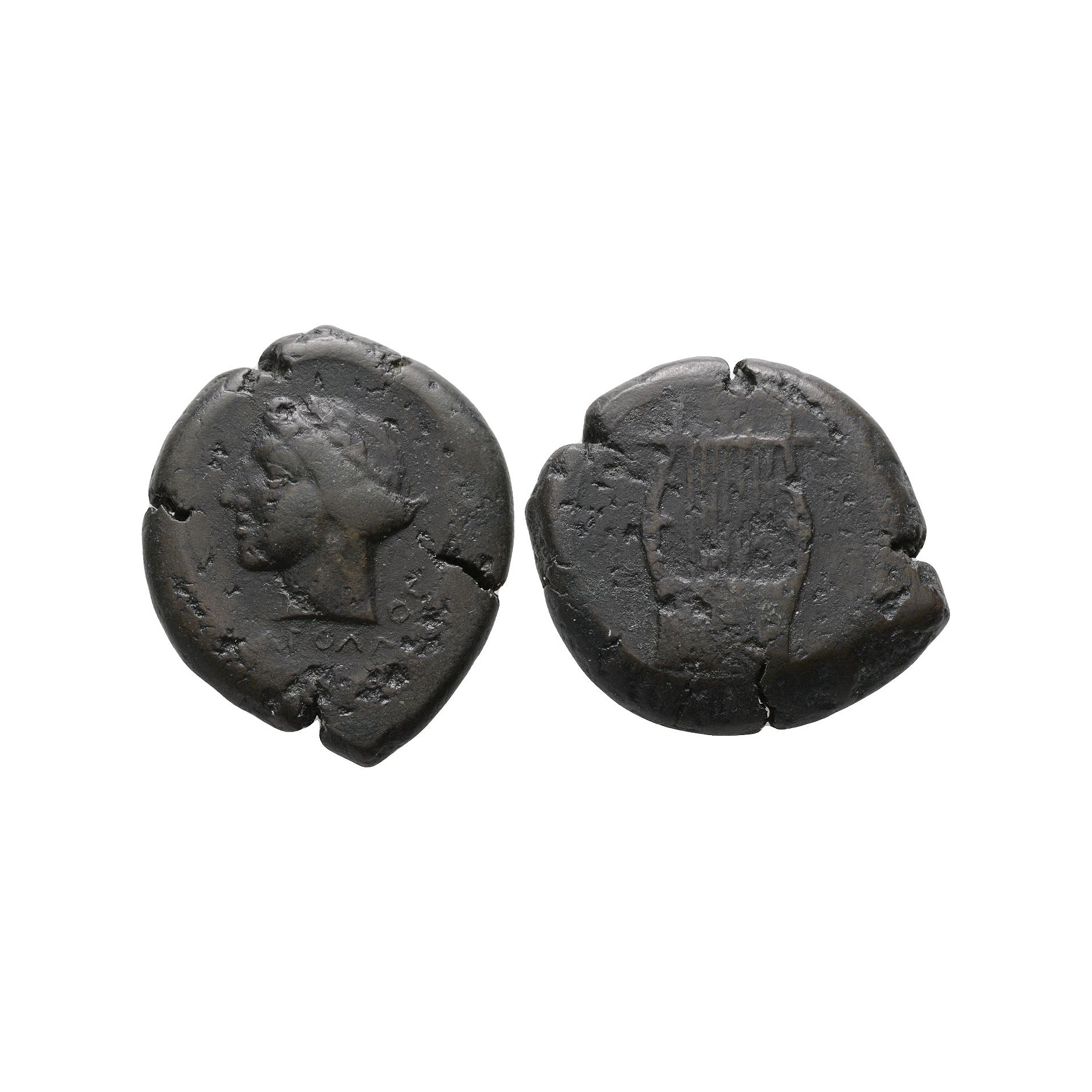
Greek Coins - Sicily - Abranon - AE Litra 344-336 B.C.
Obv: laureate head of Apollo left. Rev: APOL beneath lyre with seven strings. About very fine. Excessively rare and sought after large Sicilian bronze.(21.96 grams, 31 mm.). [No Reserve]
ProvenanceFrom an old UK collection.
From the collection of a London antiquarian.
Sear 1015.
TimeLine Auctions follows a vetting process to ensure the authenticity and legality of all items, reinforcing our commitment to integrity and responsible trading. Each antiquity, antique, and coin lot undergoes thorough examination by a vetting committee of at least ten external specialists, professional trade association members, scientists, and archaeologists: Our Vetting Process
AUCTIONS:
TimeLine is a leading auction house specialising in antiquities, ancient art, collectables, natural history, coins, medals, and books. Our auctions offer museums, collectors, historians, and enthusiasts the opportunity to acquire unique and historically significant pieces.
-
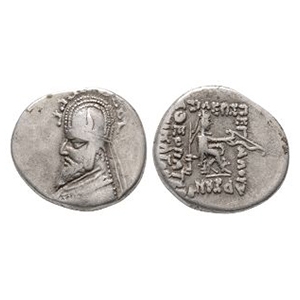
Ancient Greek Coins - Parthian Dynasty - Sinatrukes - AR Drachm 95-68 B.C.
Sold for (Inc. bp): £39
Obv: diademed and bust left, wearing tiara. Rev: archer (Arsakes I) seated right on throne, holding bow, BAΣIΛEΩΣ MEΓAΛoY APΣAKoY ΘEoΠATPoY NIKAToPoΣ. 4.04 grams, 19 mm.
Very fine.
Property of a London, UK, gentleman. -
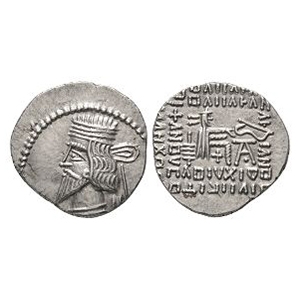
Ancient Greek Coins - Parthia - Vardanes I - Seated Archer AR Drachm 40-45 A.D.
Sold for (Inc. bp): £78
Obv: profile bust left. Rev: seated archer with stylised legends. 3.45 grams, 20 mm.
Extremely fine.
Property of a Cambridgeshire, UK, gentleman. -
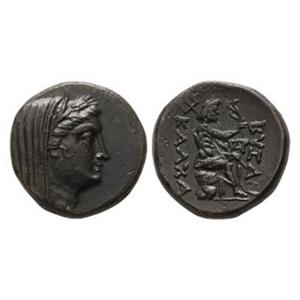
Greek Coins - Thrace - Byzantium - Poseidon AE Unit Late 3rd-2nd century B.C.
Sold for (Inc. bp): £111
Obv: veiled head of Demeter right, wearing grain wreath. Rev: BYZAN / KAΛXAΔ. Poseidon seated right on rocks, holding aphlaston and trident. 11.43 grams, 22 mm.
About extremely fine.
From an old UK collection. From the collection of an London antiquarian.
Very interesting coin, issued to commemorate the alliance signed between the cities of Byzantion and Kalchedon, located in opposite banks of the Bosphorus strait.
