
Loading, please wait...
LOT 0556
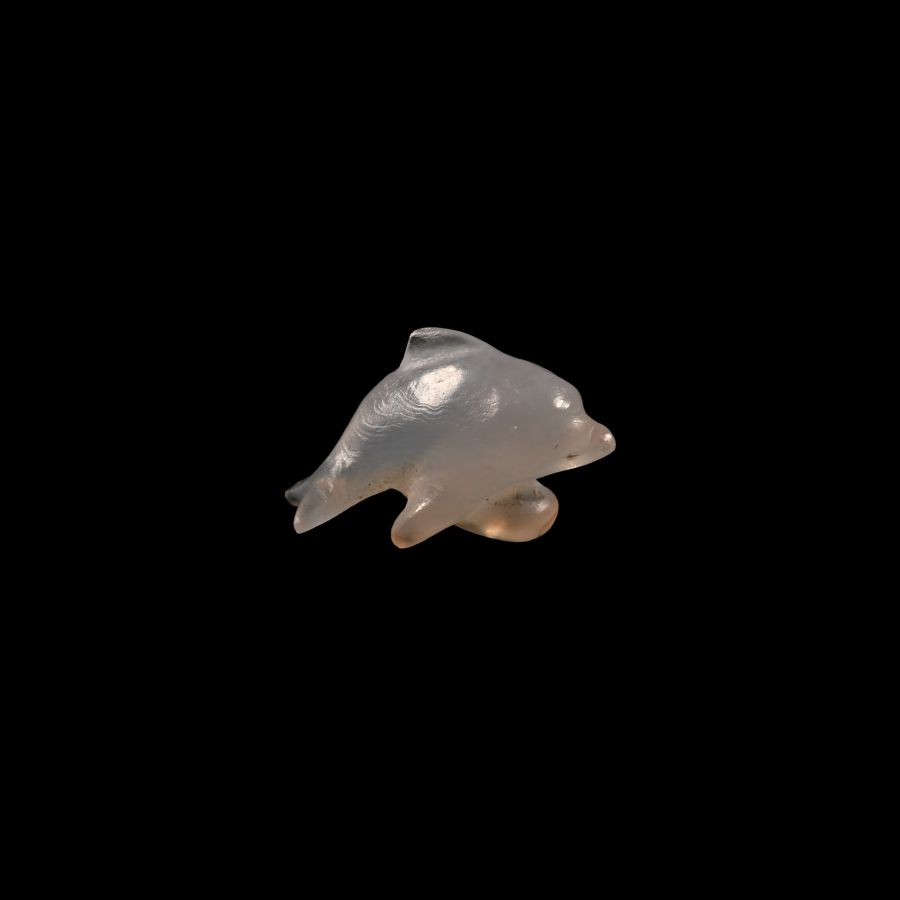
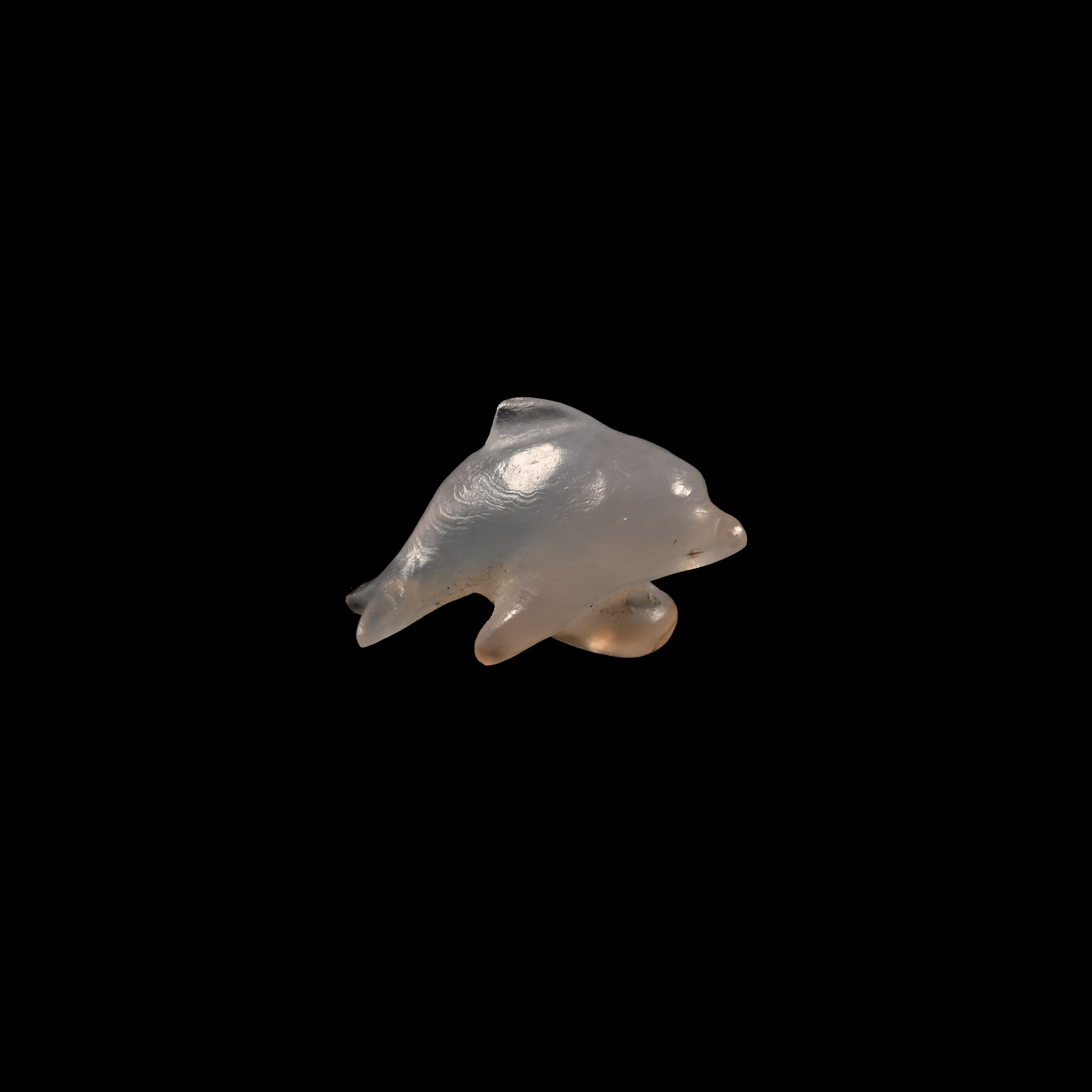
Greek Chalcedony Dolphin Pendant
CIRCA 4TH CENTURY B.C.
1/2 in. (0.84 grams, 16 mm).
Carved in the round with an integral suspension loop to the underbelly; simple facial detailing.
ProvenanceAcquired 1970-2010.
Collection of a late Japanese gentleman.
TimeLine Auctions follows a vetting process to ensure the authenticity and legality of all items, reinforcing our commitment to integrity and responsible trading. Each antiquity, antique, and coin lot undergoes thorough examination by a vetting committee of at least ten external specialists, professional trade association members, scientists, and archaeologists: Our Vetting Process
AUCTIONS:
TimeLine is a leading auction house specialising in antiquities, ancient art, collectables, natural history, coins, medals, and books. Our auctions offer museums, collectors, historians, and enthusiasts the opportunity to acquire unique and historically significant pieces.
-
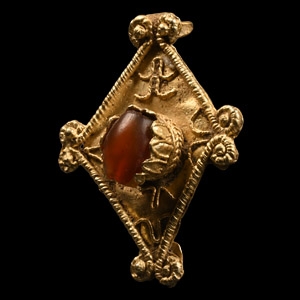
Eastern Greek Gold Lozenge-Shaped Brooch
5th-3rd century B.C.Sold for (Inc. bp): £260
Retaining the pin lug and catchplate to reverse, filigree borders and scrolls to the perimeter, central cell adorned with filigree ropework and petals; stone replaced. 3.88 grams, 33 mm
From the collection of a North American gentleman, formed in the 1990s. -
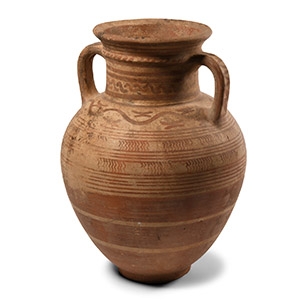
Italo-Geometric Painted Terracotta Amphora
Circa 7th-6th century B.C.Sold for (Inc. bp): £1,040
Decorated in red with geometric motifs including encircling bands, a horizontal wavy band with motifs at the shoulder, with two rows of vertical wavy linear panels below. 1.2 kg, 27 cm high
From a New Mexico private collection, acquired before 1991. with Bonhams, 3 July 2019, lot 53, (£1,500-£2,500). Accompanied by a copy of a previous collector's catalogue pages with inventory number 20.13. -
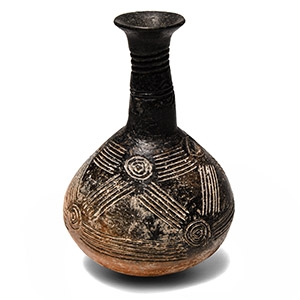
Early Cypriot Terracotta Bottle
Bronze Age, circa 2300-1650 B.C.Sold for (Inc. bp): £1,040
Black burnished with rounded underside, incised pattern of roundels and linear bands to shoulder and neck, flared rim. 142 grams, 11.5 cm high
From the collection of Mr Leinonen, by descent to his son, Stan Leinonen.
