
Loading, please wait...
LOT 0644
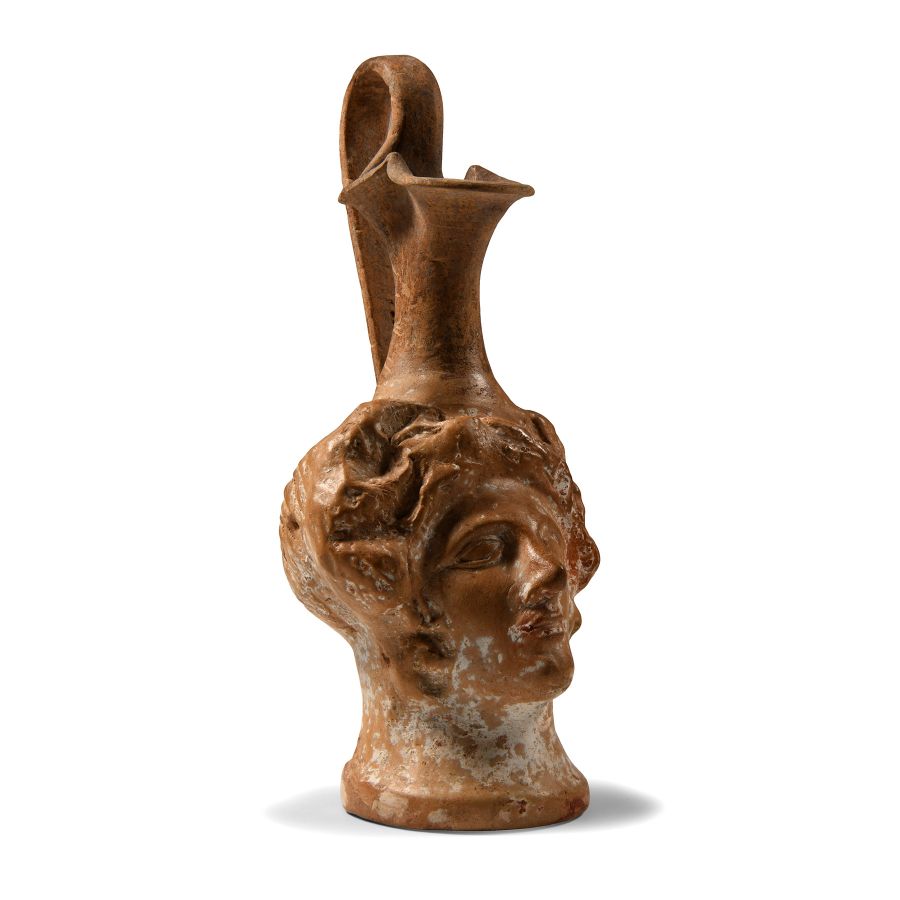
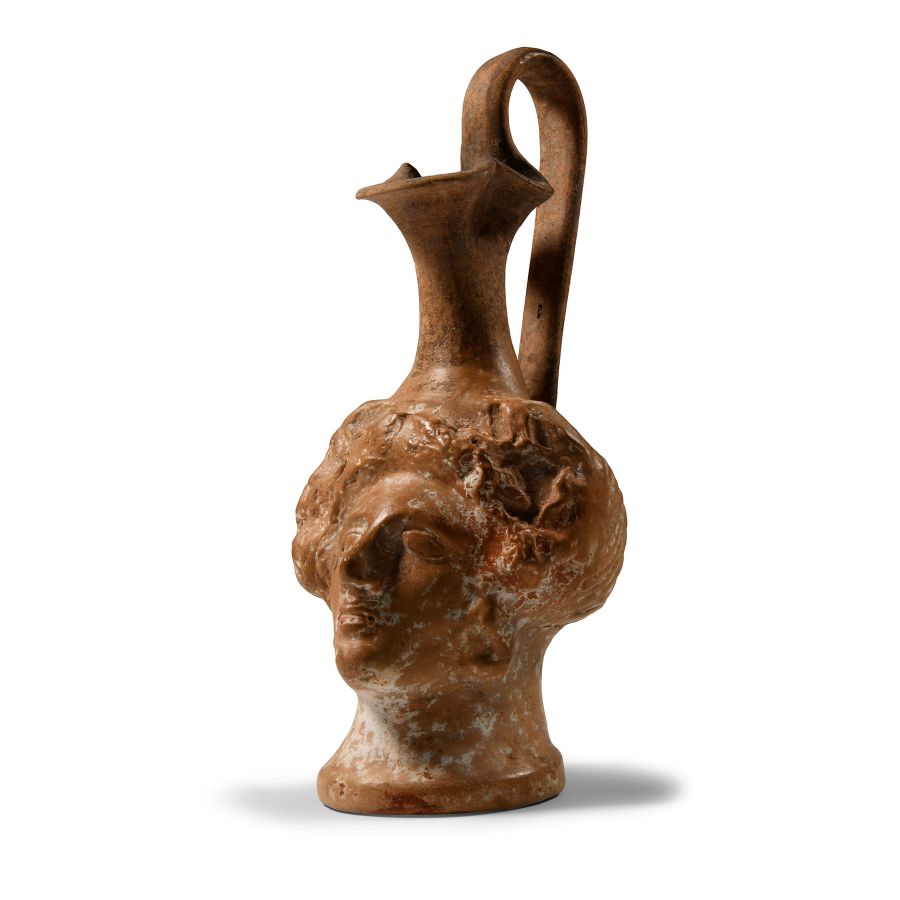
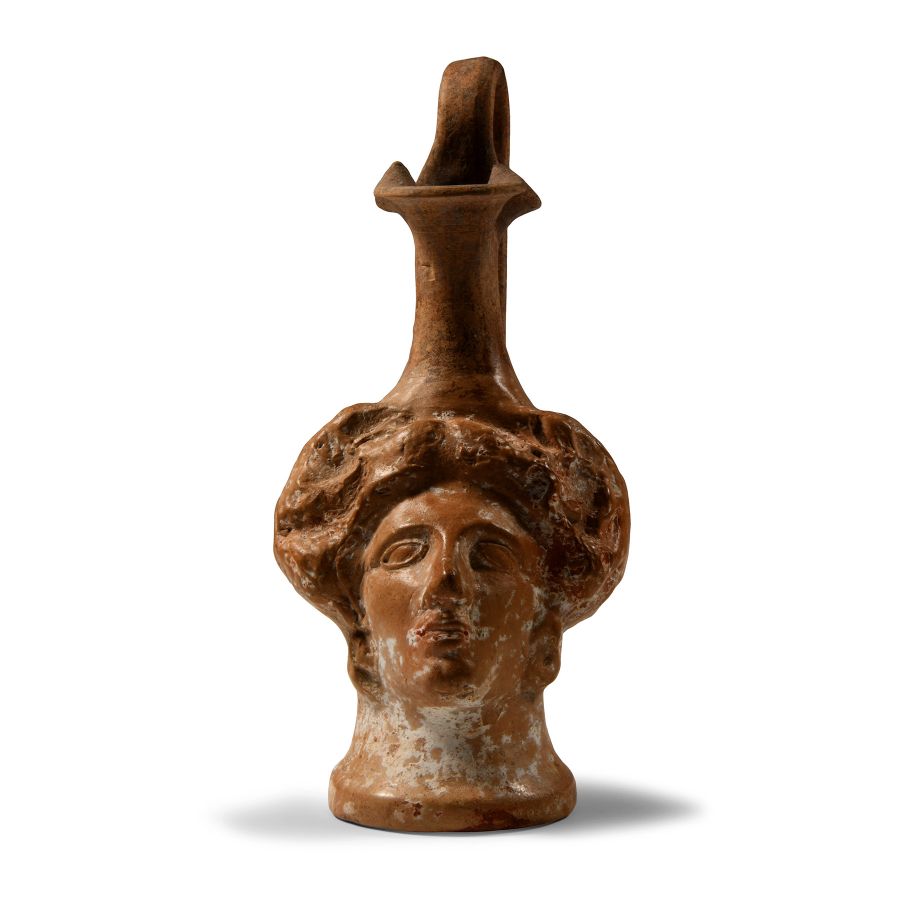
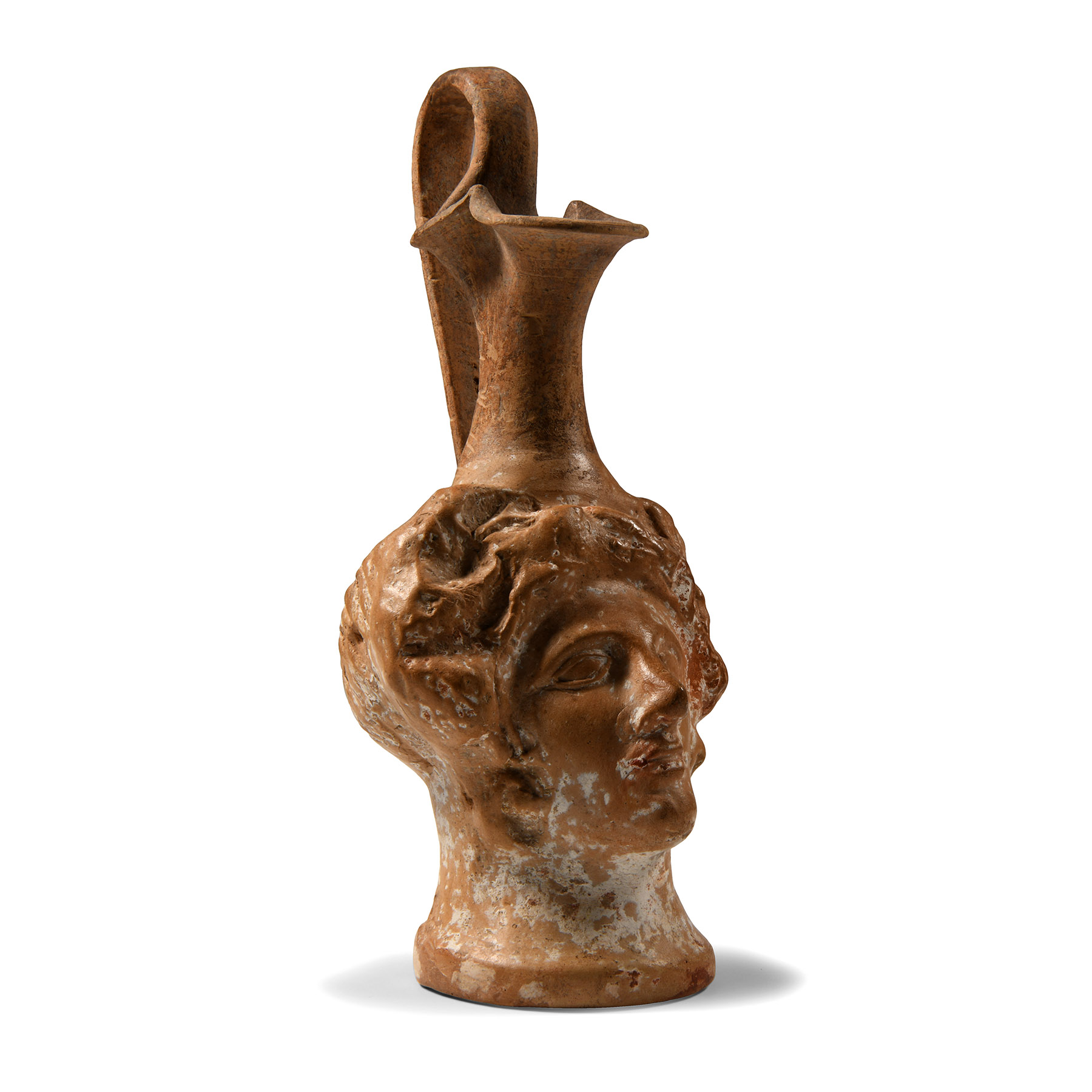
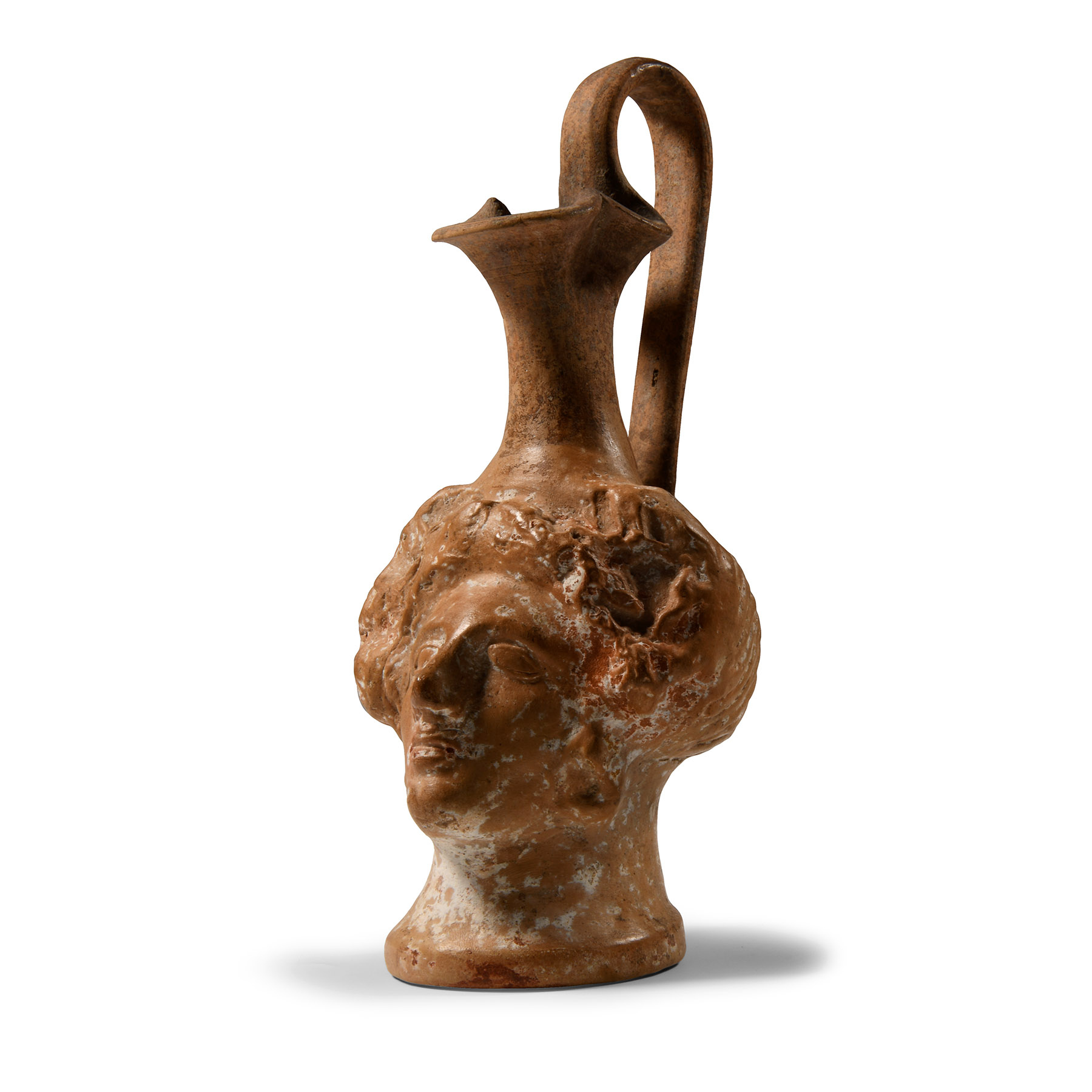
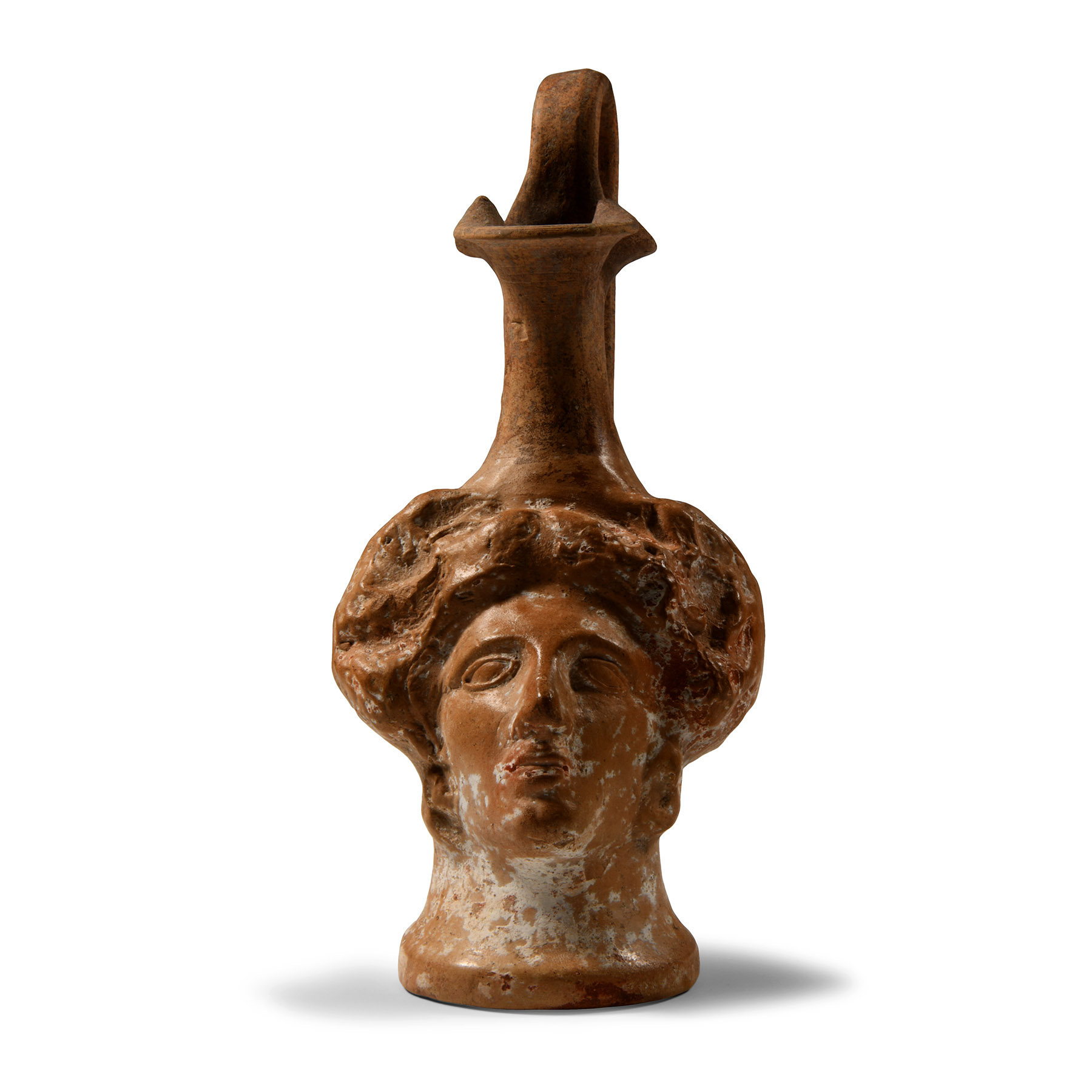
Greek Canosan Terracotta Oinochoe with Face
CIRCA 4TH CENTURY B.C.
8 5/8 in. (446 grams, 22.2 cm high).
The body formed as a female bust with elaborately styled hair; discoid foot, tall stem with pinched rim giving a broad pouring lip, strap handle to the rear; some pigment remaining.
ProvenanceOld French private collection.
Swiss private collection, Basel-Landschaft.
Private collection of M. Tritten, Binningen, Switzerland.
Property of an East Sussex, UK, gentleman.
Cf. Frel, J., Knudsen Morgan, S., Occasional Papers on Antiquities, 3, Greek Vases in the J. Paul Getty Museum, Malibu, volume 2, 1985, figs.5-7, for similar.
FootnotesThe Canosan ceramic workshops produced several series of head vases, starting with a red-figure imitation of the Attic plastic oenochoe attributed by Beazley to Group N.21. The next product combined two ceramic techniques: a) the neck, mouth, and handle were executed in red-figure technique with superimposed white rays on the neck; b) the head was drawn from two moulds, mounted on a base rim, and decorated with white slip and polychrome after firing. It belongs to the initial phase of the polychrome ceramic production of Canosa, for which only this type of mould is known. It also illustrates the close collaboration which existed between potters and coroplasts. The same archetype was used in the next phase, producing entirely polychrome head vases, like this one, in which traces of polychrome are still visible on the mouth and near the left ear.
CONDITIONTimeLine Auctions follows a vetting process to ensure the authenticity and legality of all items, reinforcing our commitment to integrity and responsible trading. Each antiquity, antique, and coin lot undergoes thorough examination by a vetting committee of at least ten external specialists, professional trade association members, scientists, and archaeologists: Our Vetting Process
AUCTIONS:
TimeLine is a leading auction house specialising in antiquities, ancient art, collectables, natural history, coins, medals, and books. Our auctions offer museums, collectors, historians, and enthusiasts the opportunity to acquire unique and historically significant pieces.
LOT 0644
Greek Canosan Terracotta Oinochoe with Face
Estimate £800 - 1,000€930 - 1,160 (for guidance only)$1,080 - 1,350 (for guidance only)
-
Cypriot Bichrome Ware Pottery Feeder Flask
Iron Age, circa 950-850 B.C.Sold for (Inc. bp): £325
Spherical body with flared foot, trumpet-shaped mouth with strap handle, flared spout to the shoulder with strainer; painted circles to the mouth, rim and body, transverse stripes to the handle. 148 grams, 11.2 cm high
Acquired from Bonhams, London, 20 October 2005, no.406 (part). From an important Cambridgeshire estate; thence by descent. Accompanied by copies of the relevant Bonhams catalogue pages and the original Bonhams lot tag. -
.jpg)
Greek Archaic Laconian Black-Figure Kylix Fragment Group Attributed to the Rider Painter
550-540 B.C.Sold for (Inc. bp): £1,820
Comprising six fragments from a bowl once decorated with concentric circles around a central disc with expanding black rays, remains of palmette to the sides of the handle; the internal base with two facing warriors holding spears and a wreath, the older one depicted with a beard. 67 grams total, 34-89 mm
Acquired in Europe before 1990. Private collection, Europe. Accompanied by an academic report by Dr Raffaele D’Amato. This lot has been checked against the Interpol Database of stolen works of art and is accompanied by search certificate number no.11820-206481.
The Rider Painter was a Laconian vase painter active between 560 and 530 B.C. and is considered to be one of the five great vase painters of Sparta. He painted various forms predominantly kylikes but also lebetes, a form rare in this area. He mainly painted scenes from mythology, such as figures like Cadmos or Heracles, and tales such as the blinding of Polyphemus. In addition, he realised pictures from everyday life. The attribution of these fragments to his workmanship can be supported by the motifs painted on the exterior decoration of the vessel, and by the shape of the birds and figures. The illustrated scene fits within the warrior society of Spartan Laconia. -
Cypriot White Painted Ware Zoomorphic Jug with Swastikas
Cypro-Archaic, circa 700-600 B.C.Sold for (Inc. bp): £312
Spherical body with pinched trumpet-shaped mouth, strap handle, painted 'eyes' to the mouth, vertical arrow and gammadions to each side; two very old labels to the base; repaired. 345 grams, 16 cm high
From a collection acquired on the UK art market from various auction houses and collections mostly before 2000. From an important Cambridgeshire estate; thence by descent.
