
Loading, please wait...
LOT 0072
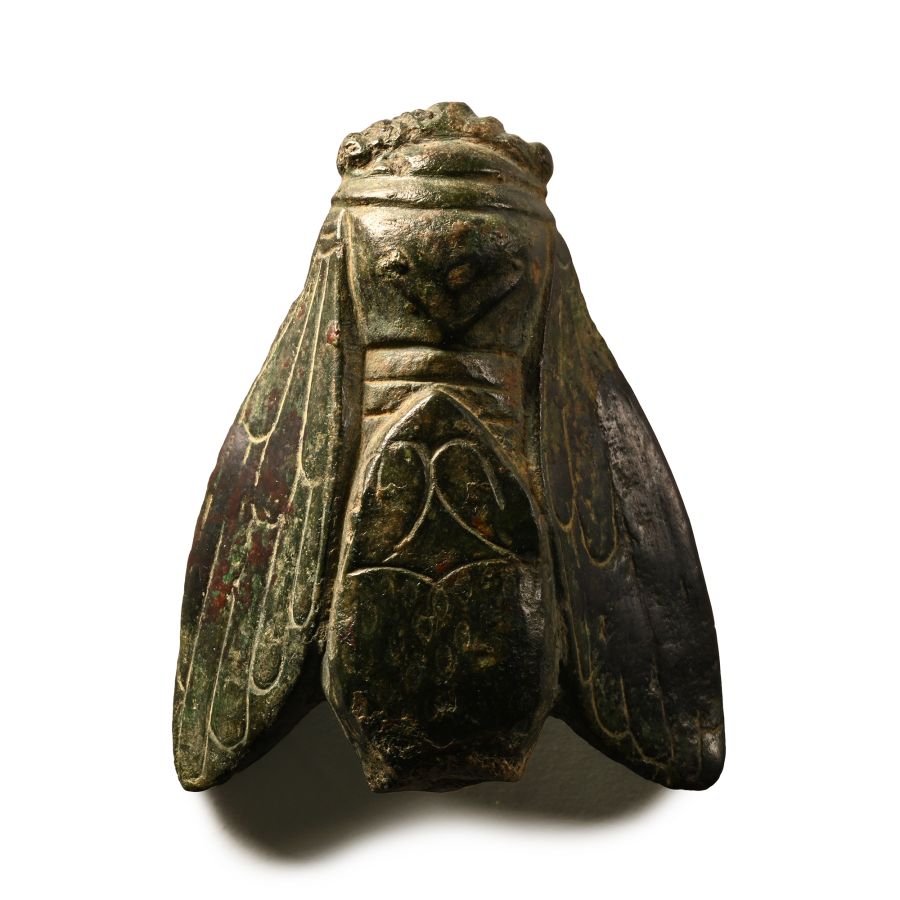
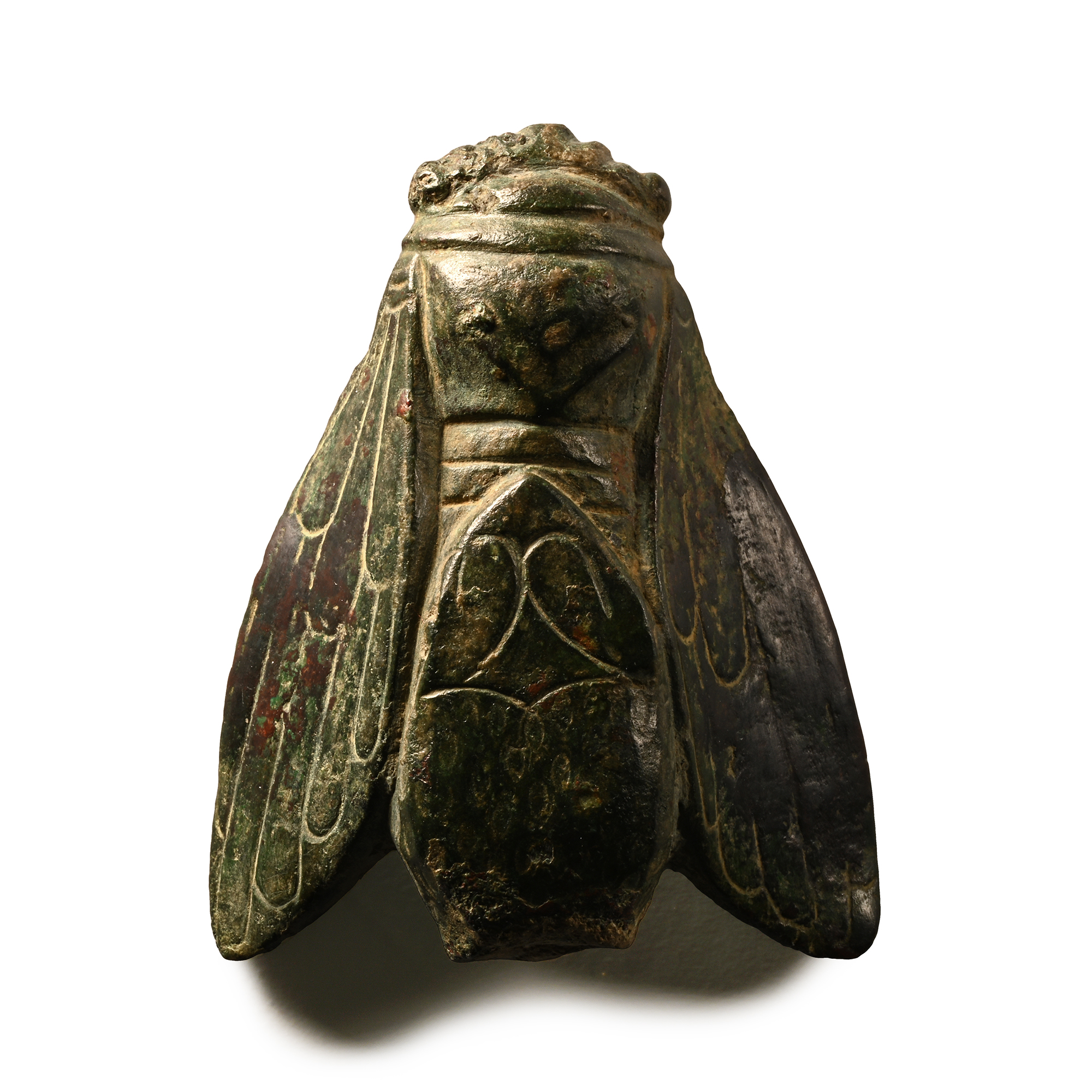
Greek Bronze Snake Biting a Cicada Mount Fragment
CIRCA 5TH CENTURY B.C.
1 3/4 in. (46.15 grams, 43 mm).
D-section insect body with lateral splayed wings, merging with the head of a serpent with scale detailing. [No Reserve]
ProvenanceFrom the collection of an London antiquarian, 1980s.
CONDITIONTimeLine Auctions follows a vetting process to ensure the authenticity and legality of all items, reinforcing our commitment to integrity and responsible trading. Each antiquity, antique, and coin lot undergoes thorough examination by a vetting committee of at least ten external specialists, professional trade association members, scientists, and archaeologists: Our Vetting Process
AUCTIONS:
TimeLine is a leading auction house specialising in antiquities, ancient art, collectables, natural history, coins, medals, and books. Our auctions offer museums, collectors, historians, and enthusiasts the opportunity to acquire unique and historically significant pieces.
-
.jpg)
Phoenician Limestone Herakles Melqart Wearing Lionskin
Circa 6th-5th century B.C.Sold for (Inc. bp): £845
Modelled in the round, standing with lionskin mantle tied around the shoulders at the chest, with girdle to the waist and knee-length tunic; left hand resting on the handle of a club; mounted on a custom-made display stand. 1.85 kg total, 36.5 cm including stand
From a collection acquired on the UK art market from various auction houses and collections mostly before 2000. From an important Cambridgeshire estate; thence by descent.
Melqart was the Phoenician tutelary deity whose name means 'king of the city'; in the Roman interpretation, he was identified with Hercules. -
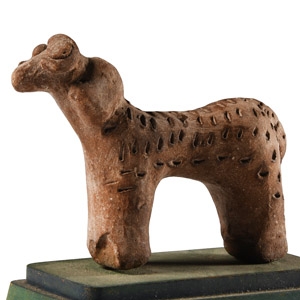
Cypriot Terracotta Ram
Early Bronze Age, circa 2500-2000 B.C.Sold for (Inc. bp): £247
Modelled in the round with fleece texture to the back and rump, applied eyes and horns; mounted on a display base with old collector's labels to the underside: 'Cyprus / Early bronze age, 250-2000 BC. / Ram, red clay, once attached to the rim of a vessel.' and '2517-14/3'. 204 grams total, 11 cm wide including stand
Ex Professor Karl Lunde collection (1931-2009). From a collection acquired on the UK art market from various auction houses and collections mostly before 2000. From an important Cambridgeshire estate; thence by descent. With old label to the base and accompanied by the remains of an old identification tag. -
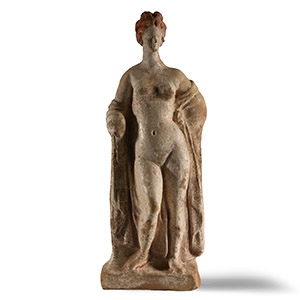
Hellenistic Painted Terracotta Figure of Aphrodite
Mid 4th-mid 3rd century B.C.Estimate: £3,000 - 4,000 (‡+bp*)
Opening Bid: £1,111
Bearing the weight of her body on her left leg, wearing a himation draped over her left and right arms, the right arm bent to grasp a part of the himation that falls behind her, leaving her shoulders uncovered and revealing her naked body; the head turned slightly to the left; the hair arranged in the typical flattering melon coiffure, parted into six large sections and gathered into a low bun; oval face with a small, fleshy mouth and a fine nose; wearing large circular earrings; her right hand resting on top of a small pillar, covered by the cloak; the lower part of the himation embroidered with volutes; the back flat with a square hole for attachment; red-brown pigment on the hair, white coating, traces of pink on the himation and red on the edges of the feet. 493 grams, 22.5 cm high
Collected in the 1950s-1990s. Ex R. Liechti collection (1934-2010), acquired in Geneva. Accompanied by an academic report by Raffaele D'Amato. This lot has been checked against the Interpol Database of stolen works of art and is accompanied by search certificate no.11999-211931.
In particular in South Italy, two types of female statuettes leaning on small pillars were widespread, derived from Tanagra prototypes: the first type dressed in a high-belted chiton with crowned head, the second consisting of partially draped or nude female figures identified as Aphrodite, like our specimen. The Tanagra production ended in about 200 B.C., but the models created by the Boeotian workshops would continue to be produced until the end of the 1st century B.C. The statuette shows extensive traces of the original polychromy, characterised by strongly contrasting hues in keeping with the local style. The Tanagrine elements are mainly identifiable in the ‘melon coiffure’, the intense red colour of the hair and the pose characterised by the turned hip.
