
Loading, please wait...
LOT 0530
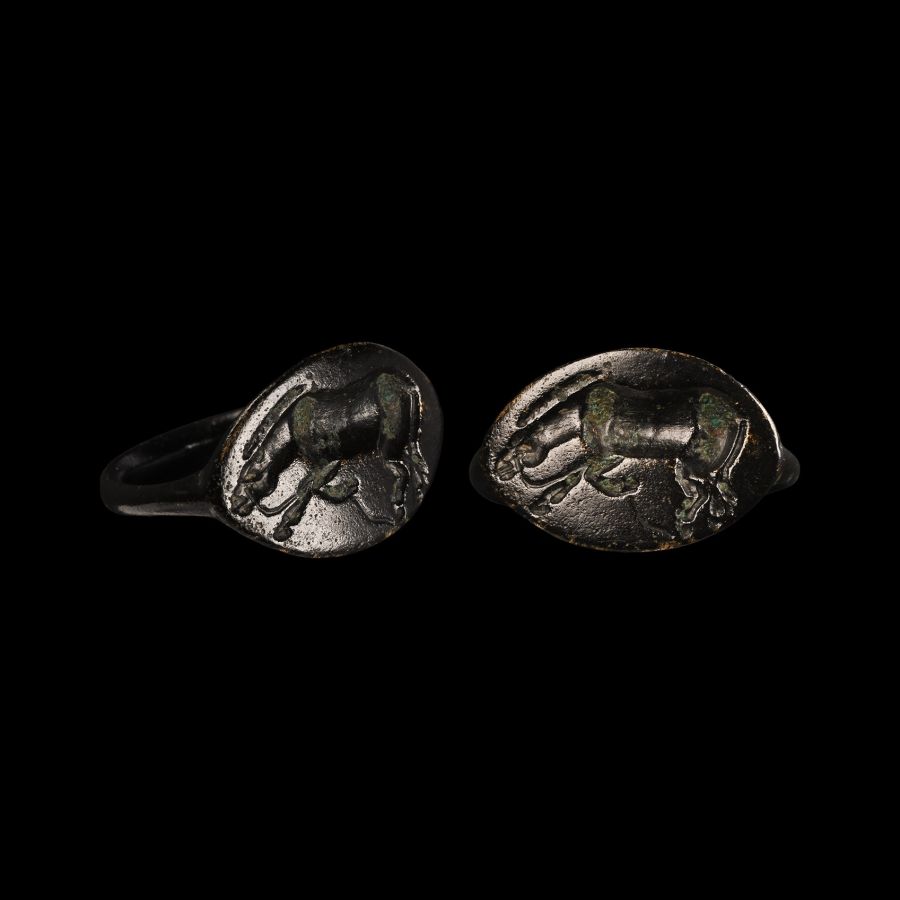
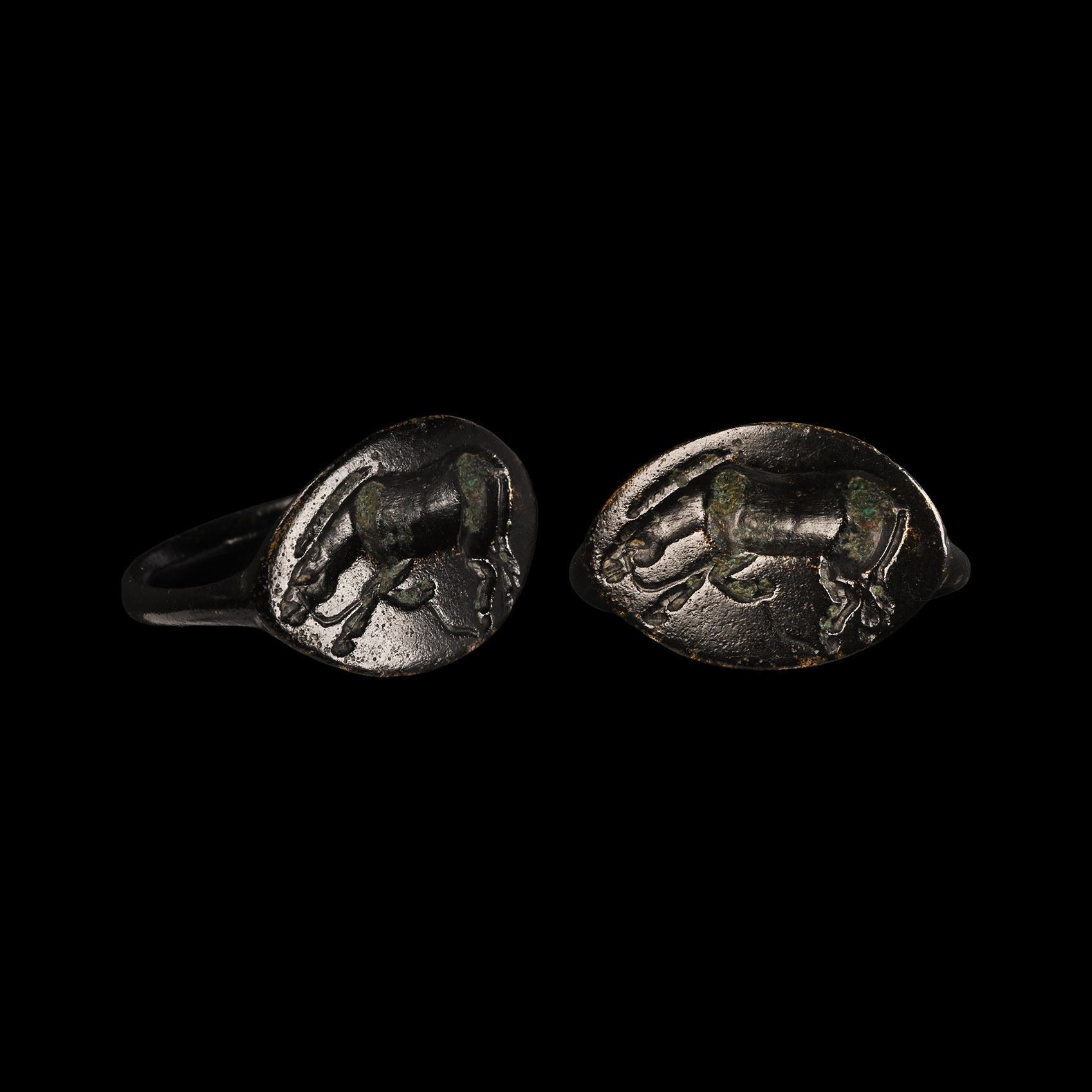
Greek Bronze Seal Ring with Horse
CIRCA 5TH CENTURY B.C.
7/8 in. (4.02 grams, 22.50 mm overall, 18.90 mm internal diameter (approximate size British P, USA 7 1/2, Europe 16.23, Japan 15)).
With a slender hoop and elliptical bezel engraved with a horse.
ProvenanceAcquired before 2000.
From the collection of a European gentleman living in the UK.
TimeLine Auctions follows a vetting process to ensure the authenticity and legality of all items, reinforcing our commitment to integrity and responsible trading. Each antiquity, antique, and coin lot undergoes thorough examination by a vetting committee of at least ten external specialists, professional trade association members, scientists, and archaeologists: Our Vetting Process
AUCTIONS:
TimeLine is a leading auction house specialising in antiquities, ancient art, collectables, natural history, coins, medals, and books. Our auctions offer museums, collectors, historians, and enthusiasts the opportunity to acquire unique and historically significant pieces.
-
Early Parthian Bronze Vase
Circa 3rd century B.C.Sold for (Inc. bp): £442
Featuring a squat piriform body, flared cylindrical neck and short waisted stem with everted foot. 227 grams, 21 cm high
UK collection, early 1990s and before. Acquired on the UK art market since the early 2000s. From a private collection, Lancashire, UK. -
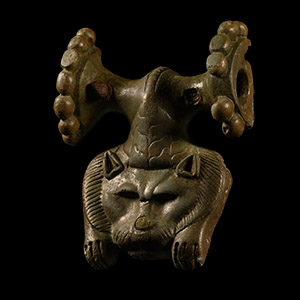
Greek Bronze Handle with Lion-Skin Head
Circa 5th-4th century B.C.Estimate: £1,000 - 1,400 (+bp*)
Opening Bid: £400
Formed as the skinned head and forepaws of a lion, together with two lateral handles with fastening holes surmounted by a pearled edge. 159 grams, 80 mm
Acquired on the UK art market 2000s.
The handle appears to be a device once attached to a wine vessel or pan-like vessels. The vessel handles were usually formed as divinities or animals linked with gods (ie. lions for Herakles). The lion's skin is hanging down like in the images representing Herakles resting and drinking after his labours. -
.jpg)
Villanovan Impasto Biconical Urn
Circa 8th century B.C.Estimate: £700 - 900 (+bp*)
Opening Bid: £350
Black burnished ceramic urn with conical lower body, two flared loop handles, bell-shaped upper body and flat everted rim; band of incised chevrons to the equator, horizontal linear bands and ropework key patterns; one handle restored. 2 kg, 25 cm high
Ex private Orange Country collection. with Ancient Resources Auctions, Auction 34, 14 September 2014, lot 246. Accompanied by a detailed collector's catalogue pages including description and photograph.
Such urns were often deposited with the cremated remains inside, one handle broken off (perhaps part of the funerary rites) and in some case a bronze crested helmet placed over the top of the urn.
