
Loading, please wait...
_900x900.jpg "Greek Bronze Seal Ring with Hippocamp")
_200x200.jpg "Greek Bronze Seal Ring with Hippocamp")
.jpg "Greek Bronze Seal Ring with Hippocamp")
LOT 0637
Greek Bronze Seal Ring with Hippocamp
CIRCA 5TH-3RD CENTURY B.C.
1 in. (8.14 grams, 24.23 mm overall, 19.29 mm internal diameter (approximate size British S 1/2, USA 9 1/4, Europe 20.63, Japan 19)).
Comprising a wide hoop and lentoid bezel with a leaping hippocamp holding a spear and a shield.
ProvenanceEx German art market, 2000s.
Acquired from an EU collector living in London.
From the collection of a Surrey, UK, gentleman.
TimeLine Auctions follows a vetting process to ensure the authenticity and legality of all items, reinforcing our commitment to integrity and responsible trading. Each antiquity, antique, and coin lot undergoes thorough examination by a vetting committee of at least ten external specialists, professional trade association members, scientists, and archaeologists: Our Vetting Process
AUCTIONS:
TimeLine is a leading auction house specialising in antiquities, ancient art, collectables, natural history, coins, medals, and books. Our auctions offer museums, collectors, historians, and enthusiasts the opportunity to acquire unique and historically significant pieces.
-
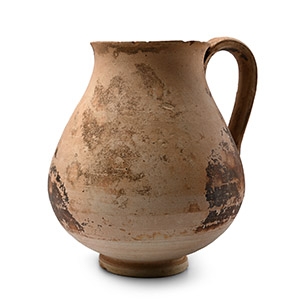
Greek Corinthian Terracotta Juglet
6th-5th century B.C.Sold for (Inc. bp): £98
Piriform in profile with low flared foot, slightly everted rim, applied strap handle; remains of painted design. 124 grams, 95 mm high
From an old German collection. From the property of a late Lincolnshire, UK, gentleman. -
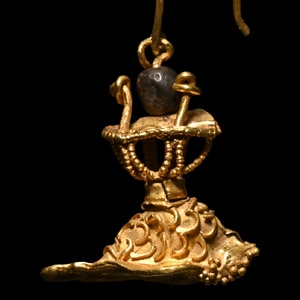
Greek Openwork Gold Earring
Circa 5th-3rd century B.C.Sold for (Inc. bp): £312
Comprising an openwork caged body with loops for beads, one remaining with a later earring hook, beneath the cage an upside-down bird with open wings and granular decoration on the head. 2.12 grams, 33 mm
From the collection of a gentleman, acquired on the London art market in the 1990s. -
.jpg)
Monumental Early Etruscan Impasto Kyathos
7th century B.C.Estimate: £3,500 - 4,500 (‡+bp*)
Opening Bid: £1,750
Fluted body tapering to a narrow foot, the shoulders decorated with tiered bosses, short neck with flared mouth; wide handle perforated with a triangle. 1.18 kg, 25 cm wide
Estate of Mr Bruno Fellinger (1926-2016), Küsnacht, Switzerland. with Galerie Rhéa, Zurich, Switzerland. This lot has been checked against the Interpol Database of stolen works of art and is accompanied by a search certificate number no.12648-236390.
Buccheroid impasto is the name attributed by modern archaeologists to wheel thrown pottery. The clay in these specimens is less refined, and the firing techniques less precise than in the later bucchero ware.
