
Loading, please wait...
LOT 0509
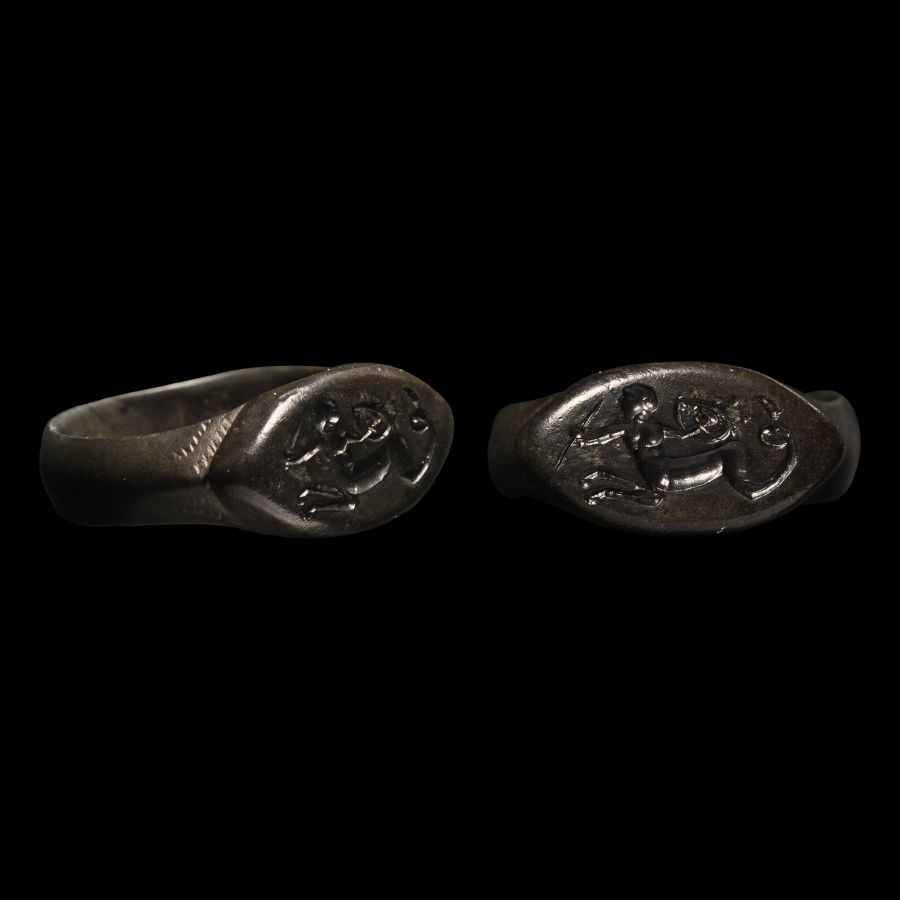
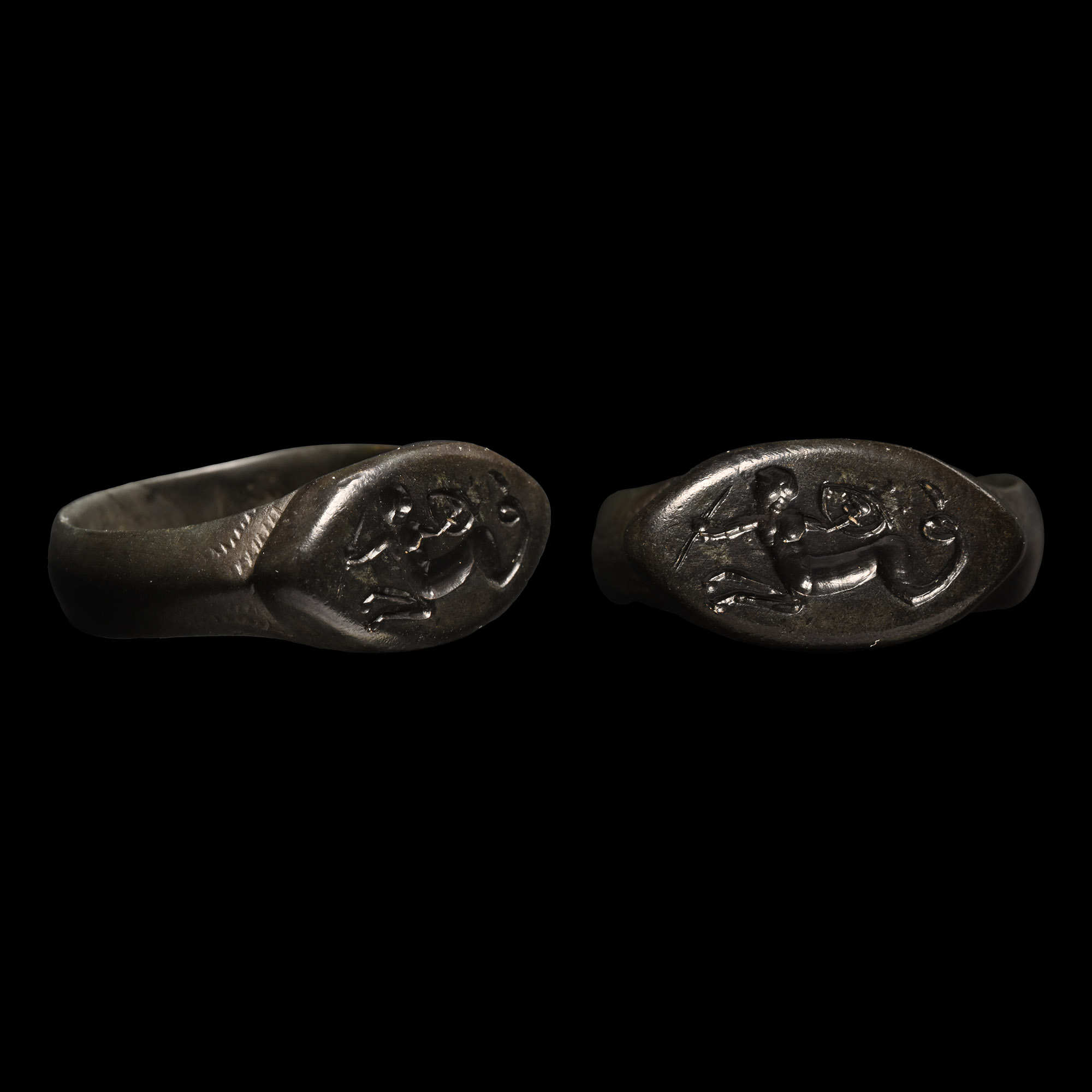
Greek Bronze Seal Ring with Hippocamp
CIRCA 5TH-3RD CENTURY B.C.
1 in. (8.14 grams, 24.23 mm overall, 19.29 mm internal diameter (approximate size British S 1/2, USA 9 1/4, Europe 20.63, Japan 19)).
Comprising a wide hoop and lentoid bezel with a leaping hippocamp holding a spear and a shield.
ProvenanceEx German art market, 2000s.
Acquired from an EU collector living in London.
From the collection of a Surrey, UK, gentleman.
This lot is accompanied by an illustrated lot declaration signed by the Head of the Antiquities Department, Dr Raffaele D'Amato.
TimeLine Auctions follows a vetting process to ensure the authenticity and legality of all items, reinforcing our commitment to integrity and responsible trading. Each antiquity, antique, and coin lot undergoes thorough examination by a vetting committee of at least ten external specialists, professional trade association members, scientists, and archaeologists: Our Vetting Process
AUCTIONS:
TimeLine is a leading auction house specialising in antiquities, ancient art, collectables, natural history, coins, medals, and books. Our auctions offer museums, collectors, historians, and enthusiasts the opportunity to acquire unique and historically significant pieces.
-
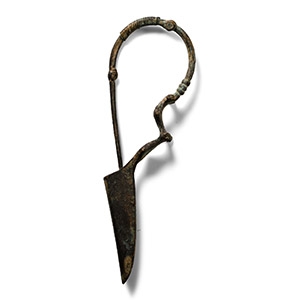
Greek Bronze Brooch
4th century B.C.Sold for (Inc. bp): £143
Comprising a deep bow with coiled wire above the pin, scooped forward section with lateral lugs, triangular catchplate. 10 grams, 92 mm
Acquired on the German art market, 1989-1995. with The Museum Gallery, 19 Bury Place, London, WC1, UK, 1998-2003. Property of a London based academic, 2003 to present. This lot is accompanied by an illustrated lot declaration signed by the Head of the Antiquities Department, Dr Raffaele D'Amato. -
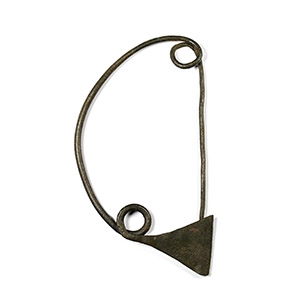
Large Greek Bronze Fibula
Iron Age, 8th century B.C.Estimate: £100 - 140 (+bp*)
Opening Bid: £50
Single-piece fibula comprising a curved bow with integral coiled spring to one end developing to a sturdy pin; to the other end, a flared catchplate on a single-coil spring. 15.7 grams, 10 cm
Ex important German collection of brooches, 1980s. This lot is accompanied by an illustrated lot declaration signed by the Head of the Antiquities Department, Dr Raffaele D'Amato. -
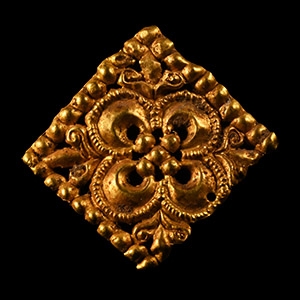
Thracian Gold Applique
Circa 5th century B.C.Sold for (Inc. bp): £421
Rectangular in plan with beaded border on three sides, openwork quatrefoil with volute-scroll to each angle. 3.17 grams, 32 mm
Acquired in the mid 1980s-1990s. Private collection, Switzerland, thence by descent. Private collection, since the late 1990s. This lot is accompanied by an illustrated lot declaration signed by the Head of the Antiquities Department, Dr Raffaele D'Amato.
