
Loading, please wait...


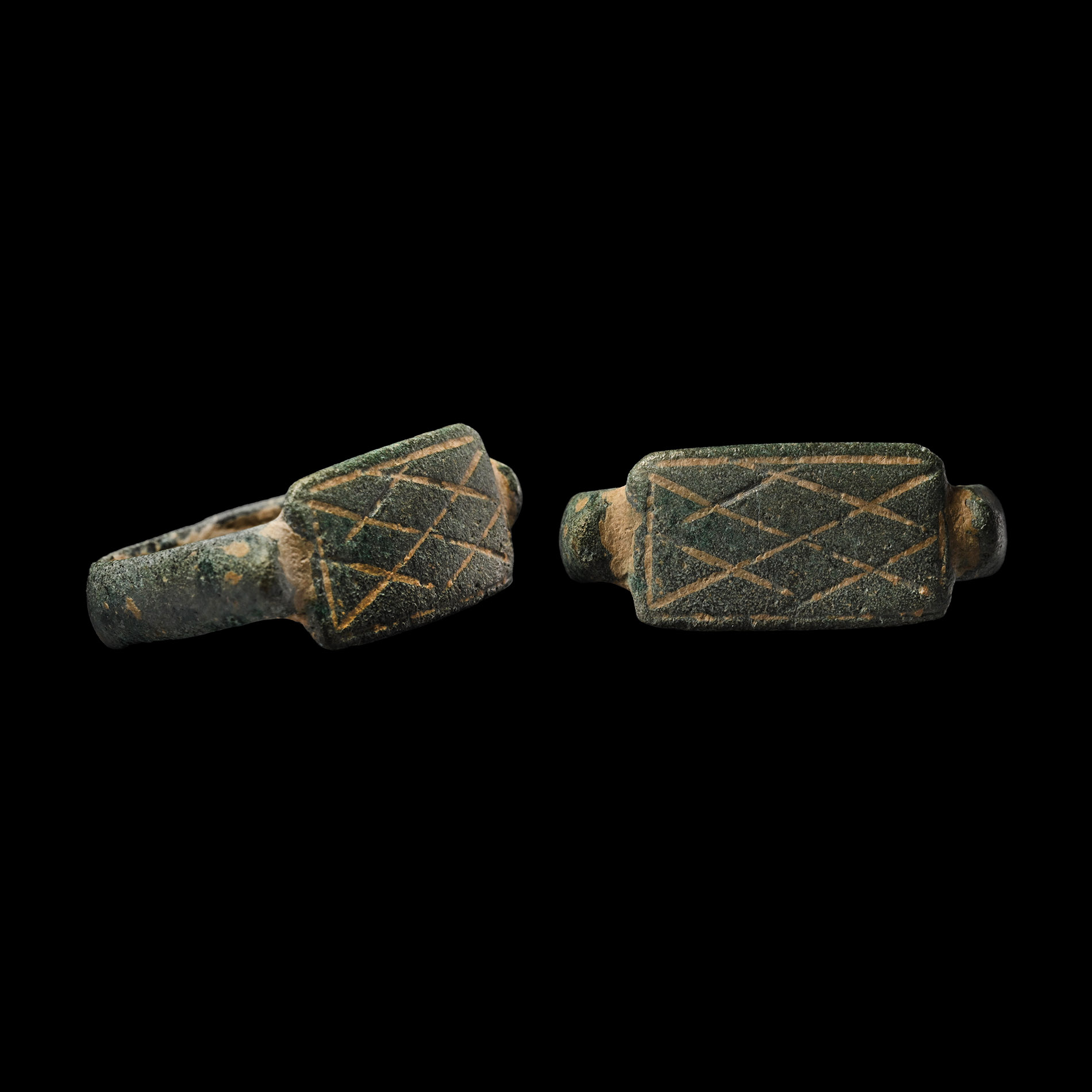
LOT 0625
Greek Bronze Ring with Pattern
4TH-3RD CENTURY B.C.
1 in. (3.33 grams, 22.36 mm overall, 18.88 mm internal diameter (approximate size British O, USA 7, Europe 14.98, Japan 14)).
Comprising a plain hoop and rectangular plaque with incised hatching. [No Reserve]
ProvenanceAcquired 1980-2015.
Ex Abelita family collection.
TimeLine Auctions follows a vetting process to ensure the authenticity and legality of all items, reinforcing our commitment to integrity and responsible trading. Each antiquity, antique, and coin lot undergoes thorough examination by a vetting committee of at least ten external specialists, professional trade association members, scientists, and archaeologists: Our Vetting Process
AUCTIONS:
TimeLine is a leading auction house specialising in antiquities, ancient art, collectables, natural history, coins, medals, and books. Our auctions offer museums, collectors, historians, and enthusiasts the opportunity to acquire unique and historically significant pieces.
-
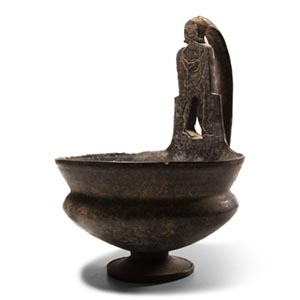
Etruscan Blackware Terracotta Kyathos
6th century B.C.Estimate: £1,200 - 1,700 (+bp*)
Opening Bid: £600
Squat bowl with pedestal foot and carinated profile, broad flared rim; tall loop handle with flat frontal panel with advancing nude kouros, the head turned and one arm bent, voided below respecting the inner outline of the legs; to the reverse, an incised gorgoneion with broad gaping mouth. 1.15 kg, 27 cm
English private collection. -
.jpg)
Mycenaean Terracotta Goddess Figure
Circa 13th century B.C.Sold for (Inc. bp): £650
Standing on a conical foot with rounded upper body, applied disc breasts, impressed necklace, pinched facial features, old label '24' to reverse; mounted on a custom-made stand. 69 grams total, 92 mm including stand
From a collection acquired on the UK art market from various auction houses and collections mostly before 2000. From an important Cambridgeshire estate; thence by descent. -
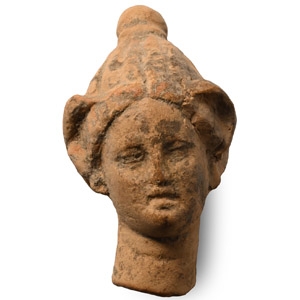
Tarentine Terracotta Head
3rd-1st century B.C.Sold for (Inc. bp): £234
Female head from an effigy, moulded with a segmented conical cap and lateral upturned flaps on the brim. earrings visible beneath; the head slightly turned and tilted downwards on a long slender neck. 32 mm, 63 mm
Acquired in the mid 1980s-1990s. Private collection, Switzerland, thence by descent. Private collection, since the late 1990s.
