
Loading, please wait...
LOT 0643
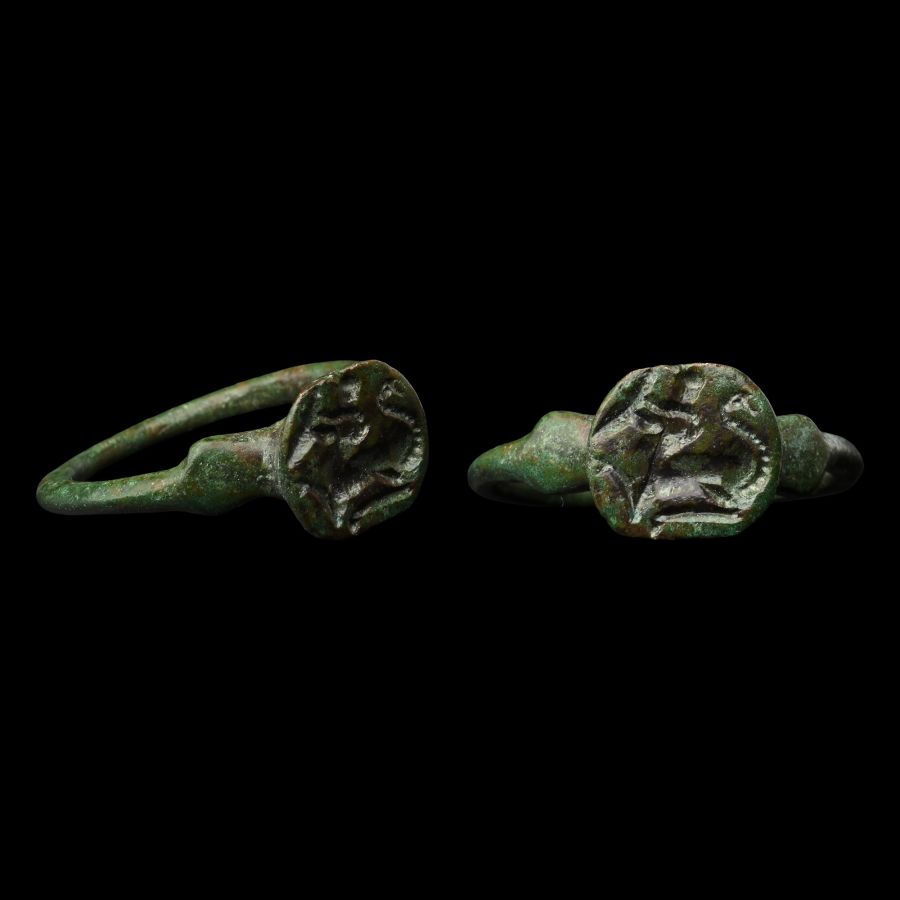
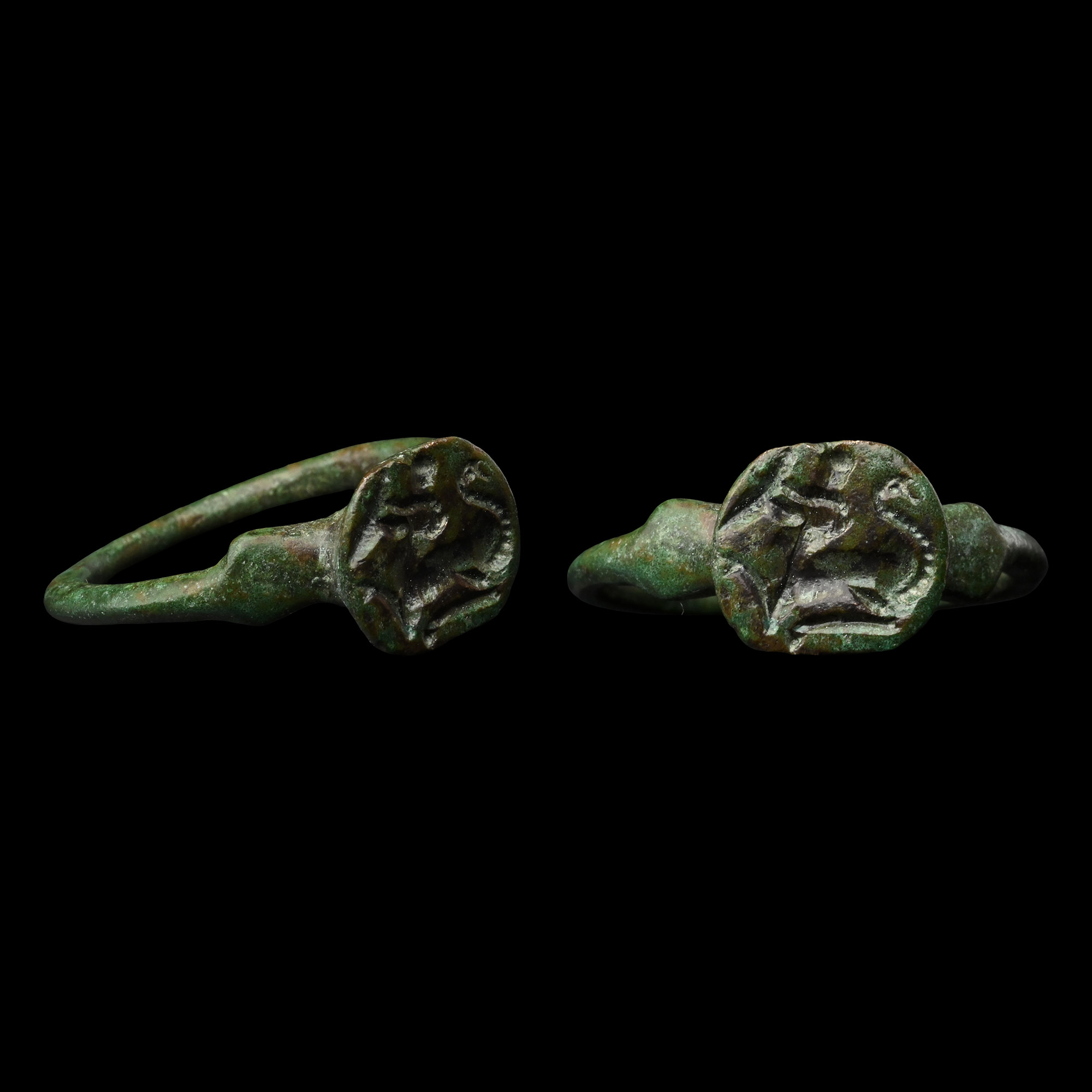
Greek Bronze Ring with Horse and Rider
3RD-2ND CENTURY B.C.
1 in. (5.68 grams, 26.95 mm overall, 19.88 mm internal diameter (approximate size British R 1/2, USA 8 3/4, Europe 19.38, Japan 18)).
Round-section hoop with raised oval bezel bearing a stylised image of a horse and rider. [No Reserve]
ProvenanceEx German art market, 2000s.
Acquired from an EU collector living in London.
From the collection of a Surrey, UK, gentleman.
TimeLine Auctions follows a vetting process to ensure the authenticity and legality of all items, reinforcing our commitment to integrity and responsible trading. Each antiquity, antique, and coin lot undergoes thorough examination by a vetting committee of at least ten external specialists, professional trade association members, scientists, and archaeologists: Our Vetting Process
AUCTIONS:
TimeLine is a leading auction house specialising in antiquities, ancient art, collectables, natural history, coins, medals, and books. Our auctions offer museums, collectors, historians, and enthusiasts the opportunity to acquire unique and historically significant pieces.
-
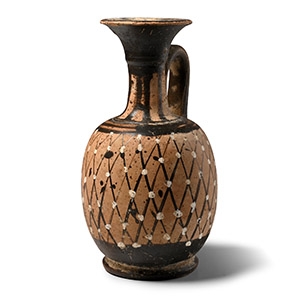
Greek Apulian Blackware Net-Painted Lekythos
Magna Graecia, circa 4th century B.C.Sold for (Inc. bp): £247
Barrel-shaped body with a carinated shoulder; net pattern painted to the body; trumpet-shaped mouth and loop handle to the rear. 120 grams, 11.3 cm
Property of a private Rutland, UK, collector, formed from at least from the 1990s. -
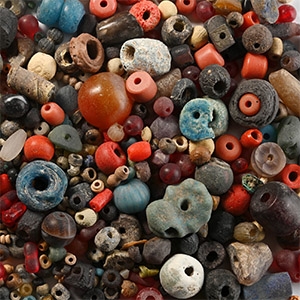
Mixed Ancient Bead Collection
1st millennium B.C. and laterSold for (Inc. bp): £143
Including tubular, oblate, melon, biconical, polyhedral and other types in glass and other materials. 122 grams total, 1-20 mm
London, UK, collection, 2000s. -
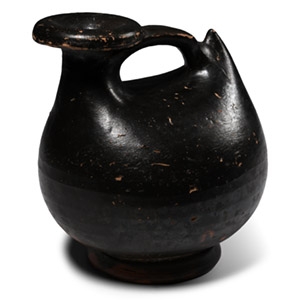
Greek Black-Glazed Terracotta Askos
4th century B.C.Sold for (Inc. bp): £416
A pouring vessel with bulbous body and funicular spout, central strap handle. 160 grams, 97 mm high
Ex C.R., Ticino, before 1970. with Galerie Rhéa, Zurich, Switzerland.
