
Loading, please wait...

LOT 0576
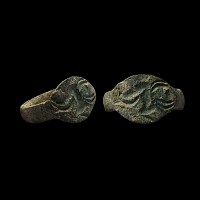
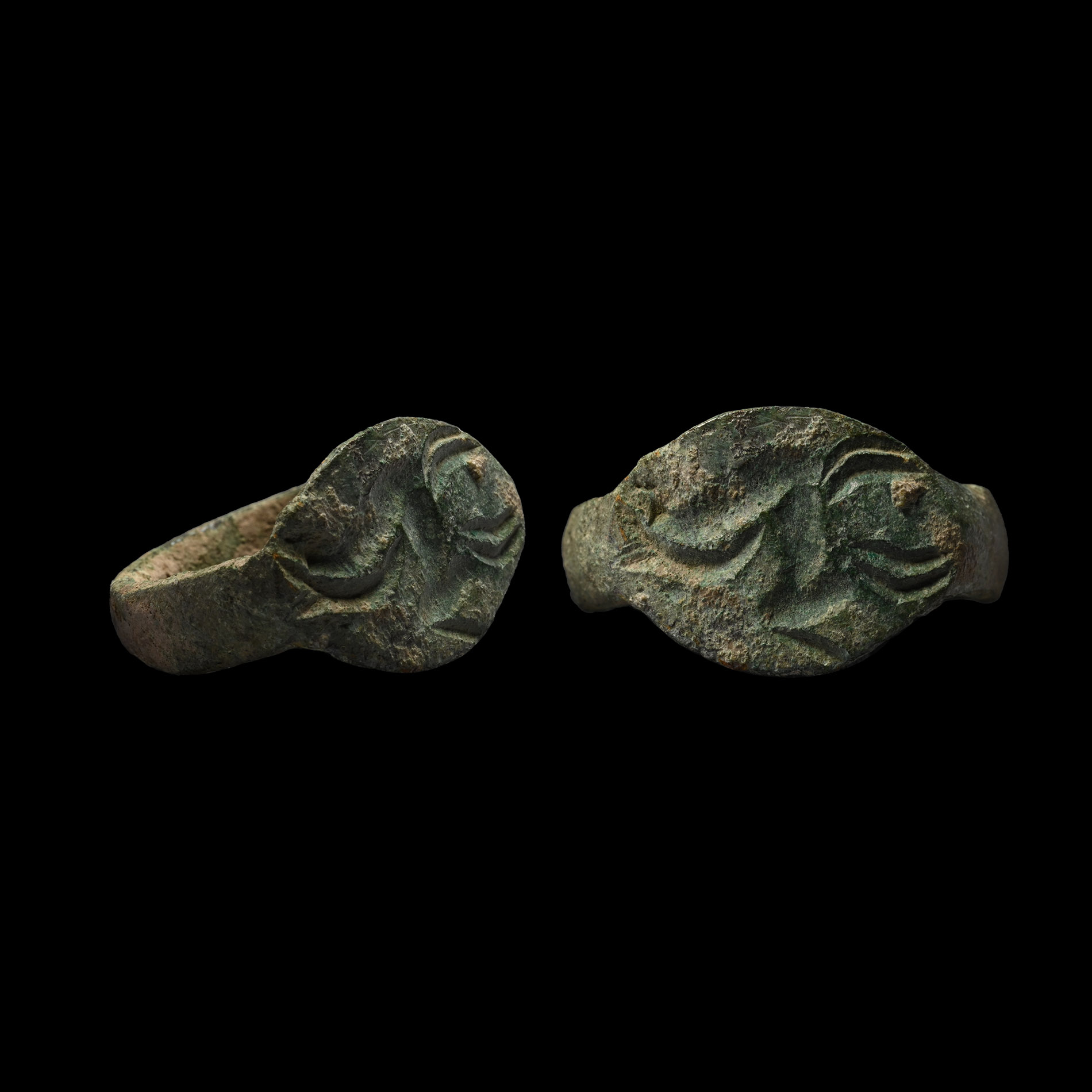
Greek Bronze Ring with Animal
4TH-3RD CENTURY B.C.
7/8 in. (5.06 grams, 22.11 mm overall, 17.28 mm internal diameter (approximate size British M, USA 6, Europe 12.46, Japan 12)).
With ellipsoid bezel, incuse image of a horse with long slender neck. [No Reserve]
ProvenanceAcquired 1980-2015.
Ex Abelita family collection.
TimeLine Auctions follows a vetting process to ensure the authenticity and legality of all items, reinforcing our commitment to integrity and responsible trading. Each antiquity, antique, and coin lot undergoes thorough examination by a vetting committee of at least ten external specialists, professional trade association members, scientists, and archaeologists: Our Vetting Process
AUCTIONS:
TimeLine is a leading auction house specialising in antiquities, ancient art, collectables, natural history, coins, medals, and books. Our auctions offer museums, collectors, historians, and enthusiasts the opportunity to acquire unique and historically significant pieces.
-
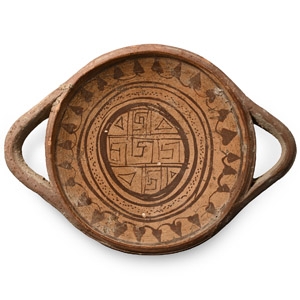
Danubian Decorated Terracotta Bowl with Handles
4th-3rd century B.C.Sold for (Inc. bp): £221
Shallow discoid vessel with thick loop handles, central panel with meander detailing, concentric bands and outer radiating ring of ivy leaves on tendrils. 233 grams, 16.5 cm
Acquired in the mid 1980s-1990s. Private collection, Switzerland, thence by descent. Private collection, since the late-1990s. -
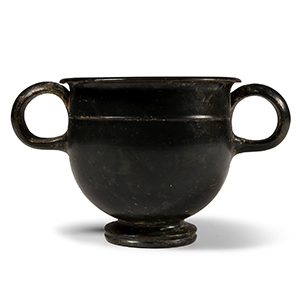
Greek High-Glazed Cup with Handles
5th-3rd century B.C.Estimate: £700 - 900 (‡+bp*)
Opening Bid: £350
The body with an inverted bell shape, foot with channeled sidewall, two loop handles with carinated upper faces; repaired. 96 grams, 12.8 cm wide
Acquired in Europe before 2001. European collection. -
.jpg)
Greek Terracotta Antefix
Archaic, 6th-5th century B.C.Estimate: £3,000 - 4,000 (‡+bp*)
Opening Bid: £1,500
Mould-made figure of a female upper body with tall curved and conical headdress, hair dressed in braids falling to her shoulders and flanking her breasts, arms spread and right hand curled to grip a handle or sword-hilt; beneath, a tapering mounting peg for attachment to a roof. 411 grams, 26 cm
Acquired in the mid 1980s-1990s. Private collection, Switzerland, thence by descent. Private collection, since the late 1990s. Accompanied by an academic report by Dr Raffaele D'Amato. This lot has been checked against the Interpol Database of stolen works of art and is accompanied by search certificate number no.12207-222349.
