
Loading, please wait...
LOT 0588
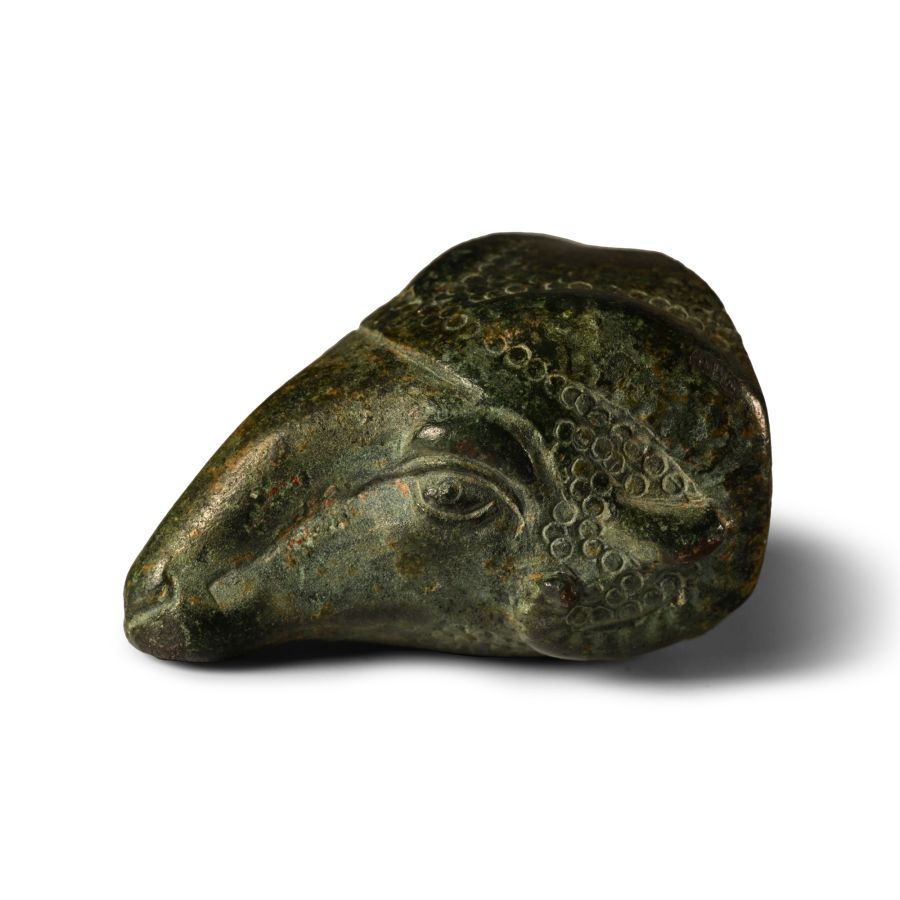
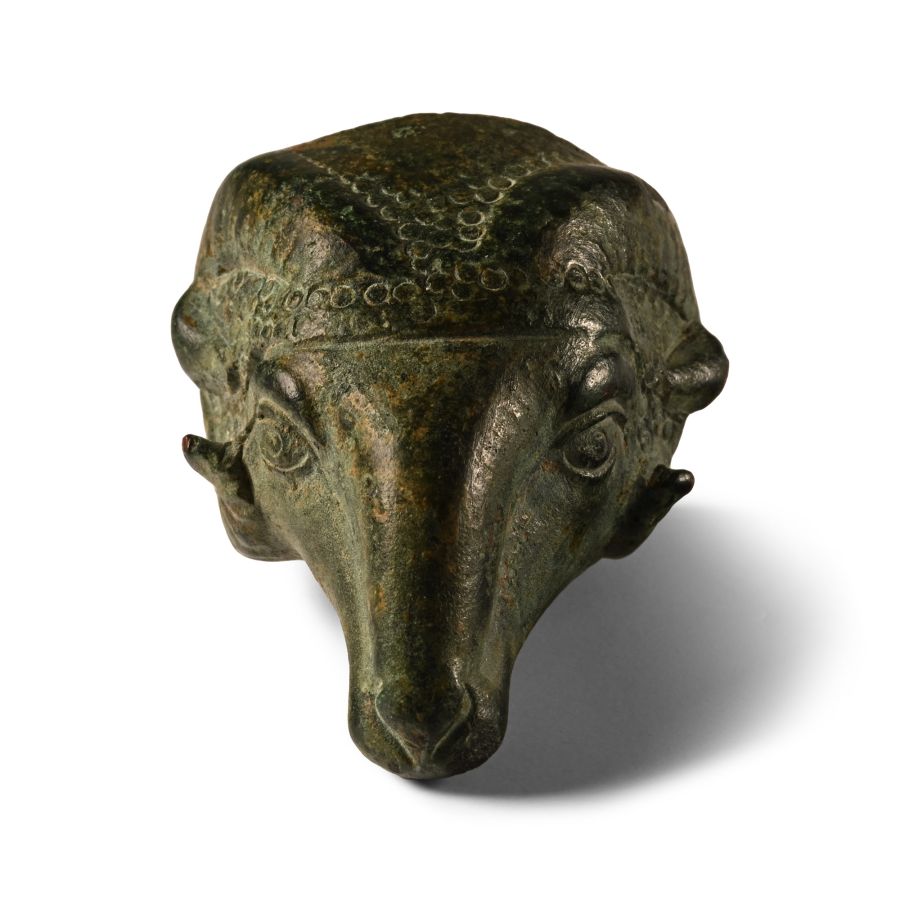
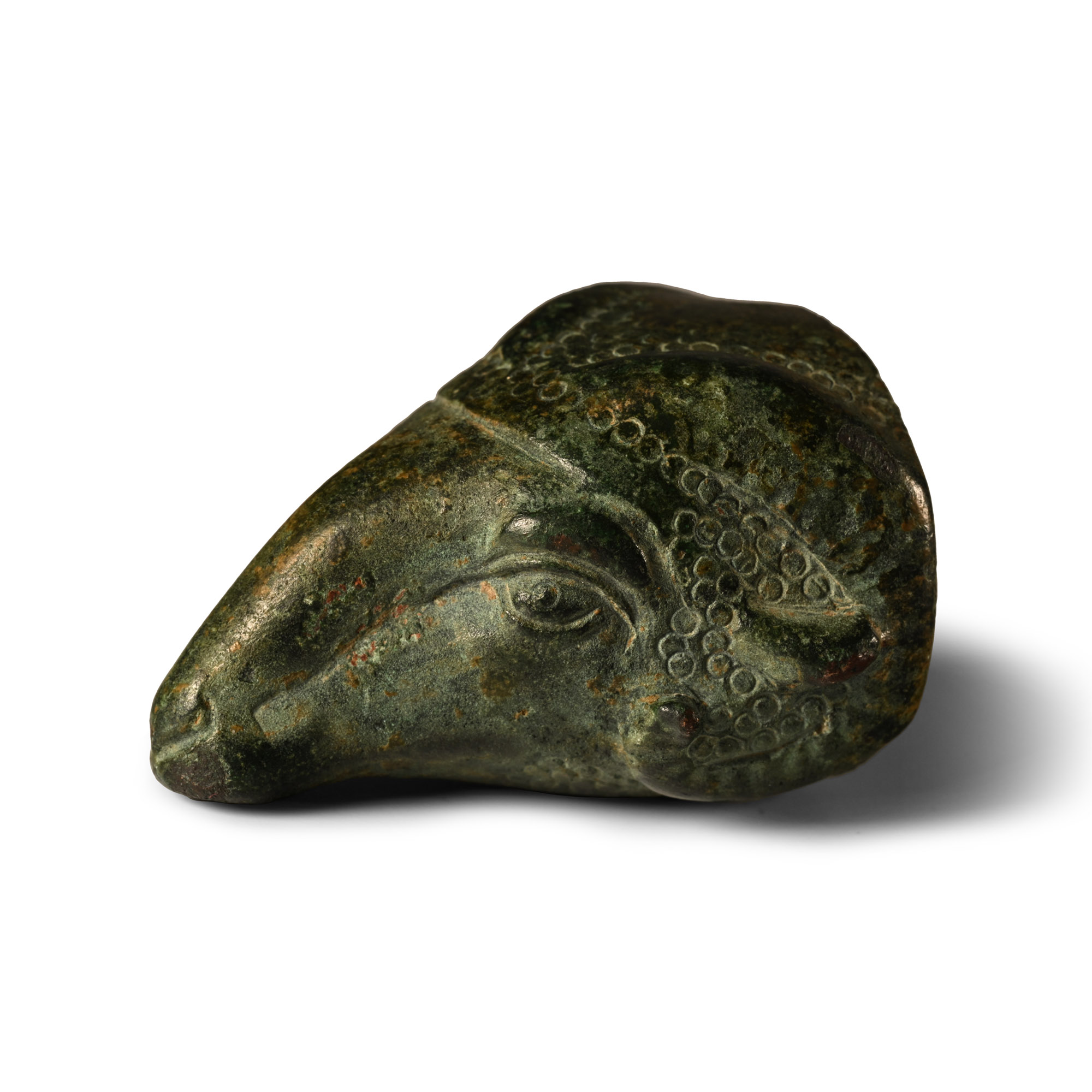
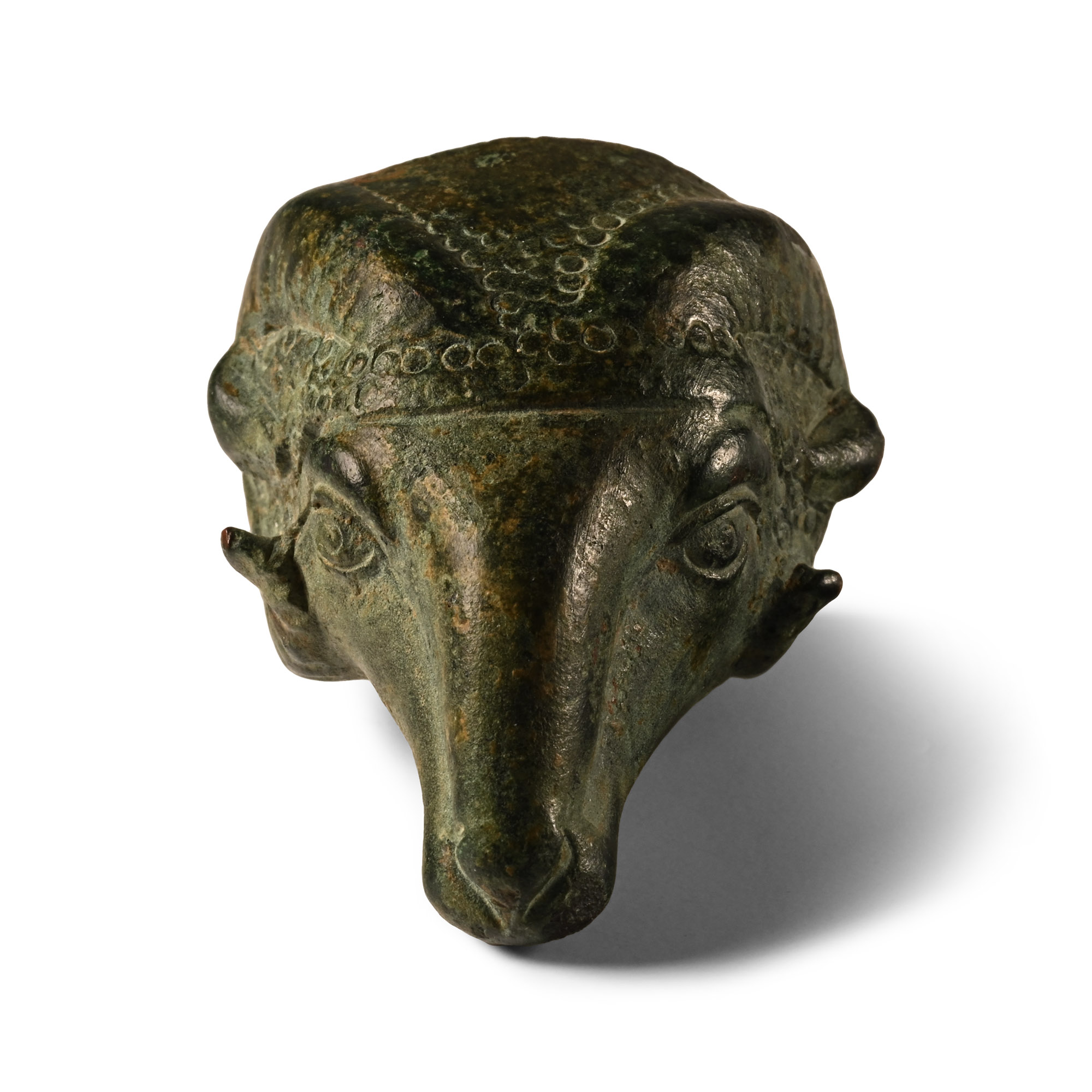
Greek Bronze Ram Protome
6TH CENTURY B.C.
(82 grams, 40 mm).
Hollow-formed finial in the form of a ram's head with punched annulet texture detailing.
Provenancewith Herbert A. Cahn, Zurich, Switzerland, 1997.
From a private European collection.
Cf. The Metropolitan Museum, New York, accession number 51.178, for a comparable head.
CONDITIONTimeLine Auctions follows a vetting process to ensure the authenticity and legality of all items, reinforcing our commitment to integrity and responsible trading. Each antiquity, antique, and coin lot undergoes thorough examination by a vetting committee of at least ten external specialists, professional trade association members, scientists, and archaeologists: Our Vetting Process
AUCTIONS:
TimeLine is a leading auction house specialising in antiquities, ancient art, collectables, natural history, coins, medals, and books. Our auctions offer museums, collectors, historians, and enthusiasts the opportunity to acquire unique and historically significant pieces.
-
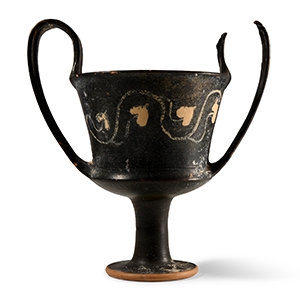
South Italian Blackware Kantharos with Ivy Branch
5th-4th century B.C.Estimate: £1,200 - 1,700 (‡+bp*)
Opening Bid: £667
The high-handled drinking cup with carinated lower body, discoid feet and vines painted to the equator. 525 grams, 22.2 cm
Acquired in the late-1980. Ex S.A. collection. -
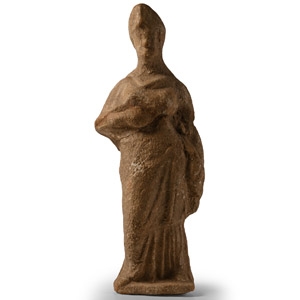
Greek Terracotta Figure
4th-3rd century B.C.Estimate: £180 - 240 (‡+bp*)
Opening Bid: £100
Tanagra type, hollow-formed with a void to the reverse, standing female in tiered robe wearing a diadem and with her hair drawn back, right hand cradling an object; chipped, repaired. 95 grams, 16.5 cm
European art market. Acquired in Münich in 2012. European private collection. -
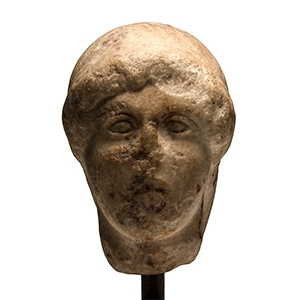
Greek Marble Head of a Youth
Early 5th century B.C.Estimate: £2,500 - 3,500 (‡+bp*)
Opening Bid: £1,200
Carved in the round; semi-naturalistic anatomic and facial detailing, hair gathered loosely at the neck and tied with a taenia knotted at the nape of the neck; mounted on a custom-made display base. 879 grams total, 18 cm high including stand
Ex old European private property, by inheritance to the previous owner. Ex Schuler Auktionen, Zürich, 10 December 2020, no.1211. Accompanied by an academic report by Dr Raffaele D’Amato. This lot has been checked against the Interpol Database of stolen works of art and is accompanied by search certificate number no.11817-206512.
The small statuette to which the head belonged was probably that of a naked youth, the so-called kouros, typical of archaic Greek sculpture from the 7th century B.C. onwards.
