
Loading, please wait...
_900x900.jpg "Greek Bronze Patrix Die")
_200x200.jpg "Greek Bronze Patrix Die")
.jpg "Greek Bronze Patrix Die")
LOT 0071
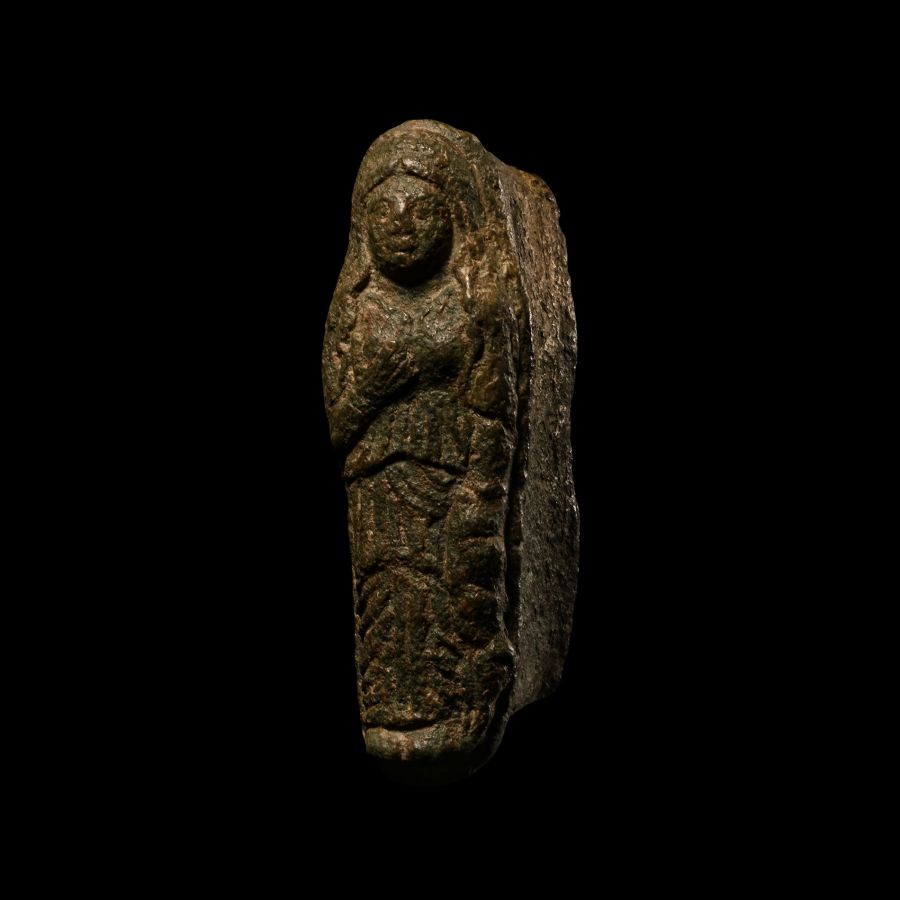
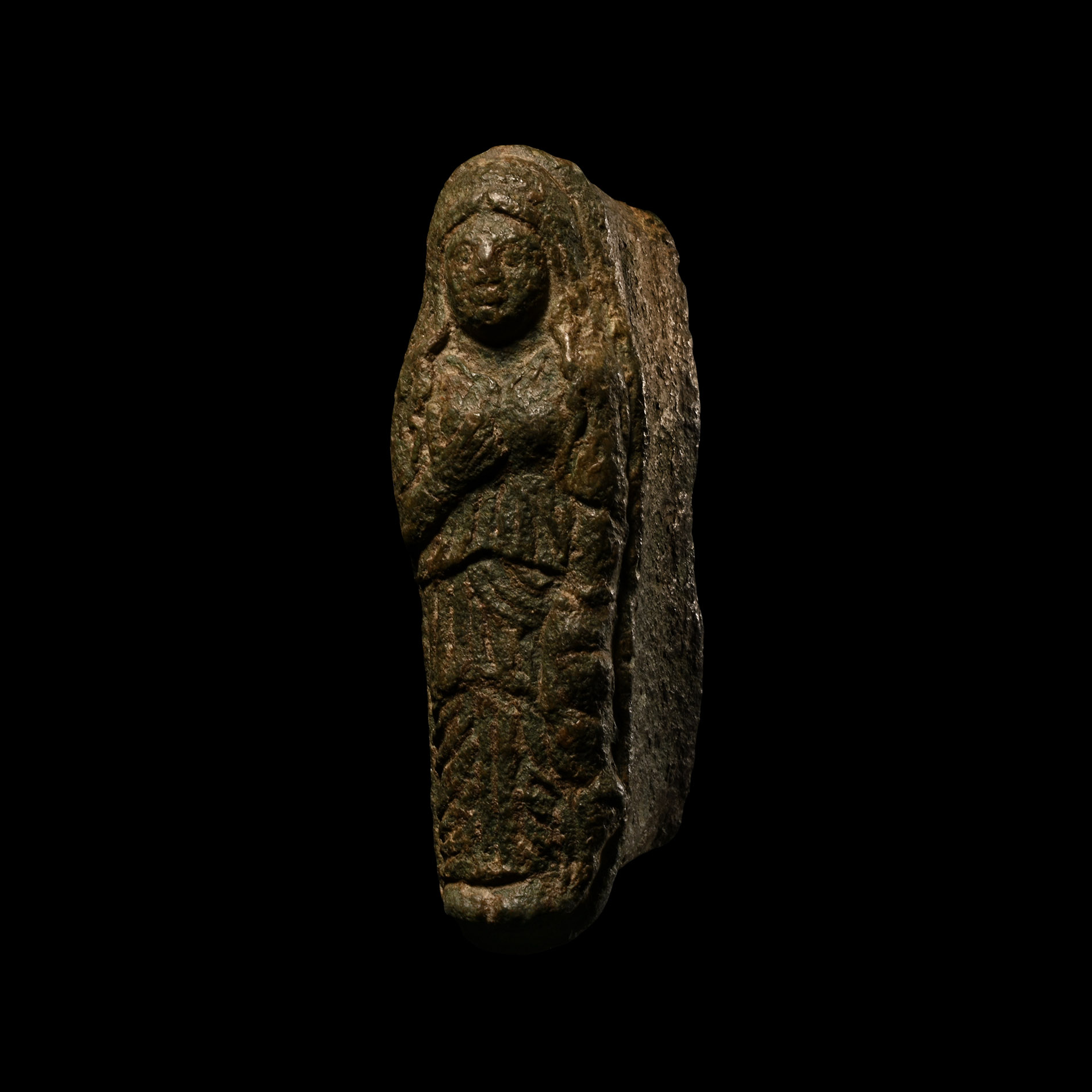
Greek Bronze Patrix Die
5TH-3RD CENTURY B.C.
2 3/4 in. (238 grams, 71 mm).
Mummiform in plan with deep concave sidewall and ellipsoidal base, the upper face engraved with a standing female figure wearing a full-length garment with textured pleats and head covering.
ProvenanceCollected from 1970-1999.
From the collection of the late Mr S.M., London, UK.
Accompanied by a previous catalogue information card.
Cf. a fragment of a female statuette with hands to the breast from Amrit, in Moscati, S., I Fenici, Milano, 1992, p.150; sarcophagus from Carthage, p.297, for the style of the garment.
FootnotesThe woman is apparently cupping her right breast with her right hand. The gesture and the stylised facial features of the woman refer to a Greek-oriental environment, almost a Phoenician production in a Hellenizing style. The object was likely for repoussé work.
CONDITIONTimeLine Auctions follows a vetting process to ensure the authenticity and legality of all items, reinforcing our commitment to integrity and responsible trading. Each antiquity, antique, and coin lot undergoes thorough examination by a vetting committee of at least ten external specialists, professional trade association members, scientists, and archaeologists: Our Vetting Process
AUCTIONS:
TimeLine is a leading auction house specialising in antiquities, ancient art, collectables, natural history, coins, medals, and books. Our auctions offer museums, collectors, historians, and enthusiasts the opportunity to acquire unique and historically significant pieces.
LOT 0071
Greek Bronze Patrix Die
Estimate £500 - 700€580 - 810 (for guidance only)$680 - 950 (for guidance only)
-
Cypriot Red Polished Ware Jar Group
Middle Bronze Age, circa 2000-1600 B.C.Sold for (Inc. bp): £1,040
Comprising: two with globular body, broad neck and flared rim, pierced lugs to the shoulders, bands of incised hatching; one with rounded underside, broad neck and everted rim, pierced lugs to the shoulder, horizontal broken lines and zigzags. 1.27 kg total, 9.7-15 cm
From a collection acquired on the UK art market from various auction houses and collections mostly before 2000. From an important Cambridgeshire estate; thence by descent.
In the Early Bronze Age, the most common form of Cypriot jars was the round-based, two-handled variety, with the handles attached on the vertical plane. -
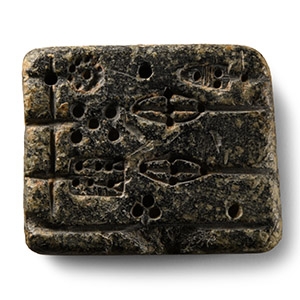
Very Large Greek Stone Jeweller's Mould
Bronze Age, 13th-11th century B.C.Sold for (Inc. bp): £208
Of square shape, used for making various jewellery elements: small circles, ear-drop pendants, rosettes with striated lines and locating holes on the surface. 114 grams, 63 mm
Collected from 1969-1999. From the collection of the late Mr S.M., London, UK.
Plaques of this type were half of a mould for small objects such as ribbed bobbin-shaped or spherical beads or crescent-shaped pendants. They must have been made for casting, judging by the pouring channels and the circular holes for fixing it to another corresponding half. Ribbed globular and ‘grain of wheat’ gold beads were common in Cyprus and Crete. Similar moulds with pouring channels have been found in the Near East, while open moulds intended for glass ornaments with flat backs have been found in the Aegean. -
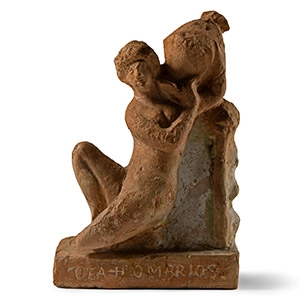
Hellenistic Terracotta Water-Carrier Figure
2nd-1st century B.C.Sold for (Inc. bp): £260
Hollow-formed on a rectangular base, nude female supporting an amphora; with possibly later enigmatic inscription to base 'ΘEA HOMBRIOS'. 478 grams, 16.1 cm
From a collection acquired on the UK art market from various auction houses and collections mostly before 2000. From an important Cambridgeshire estate; thence by descent.
