
Loading, please wait...
LOT 0564
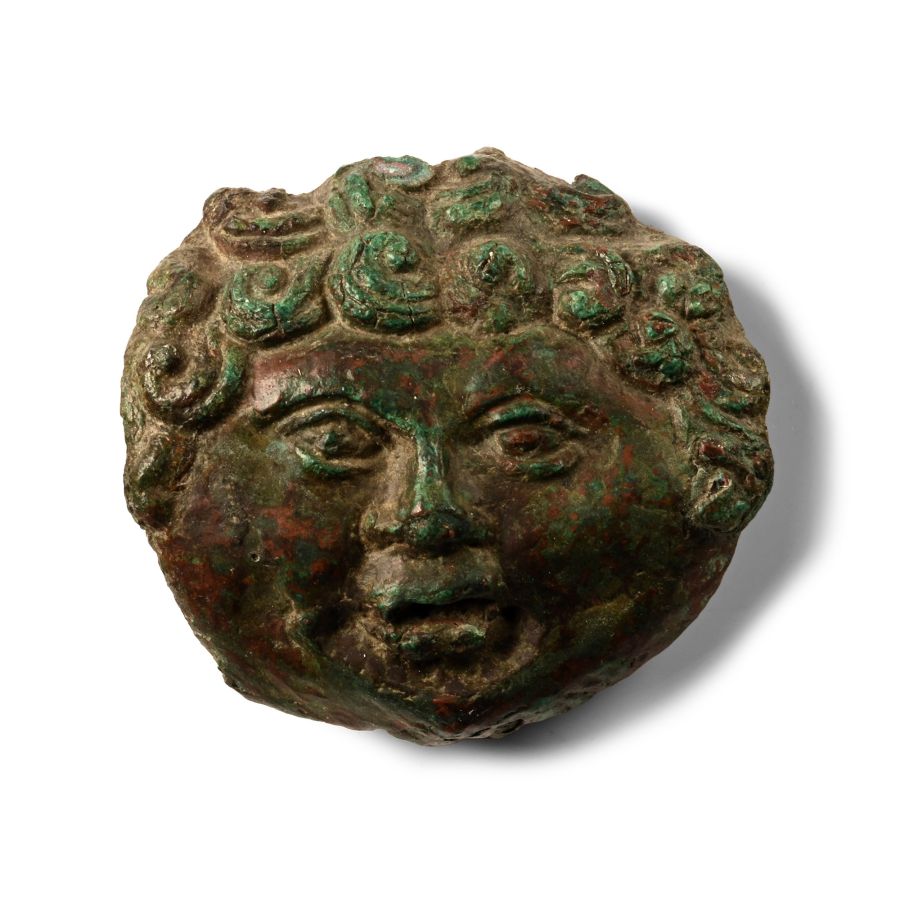
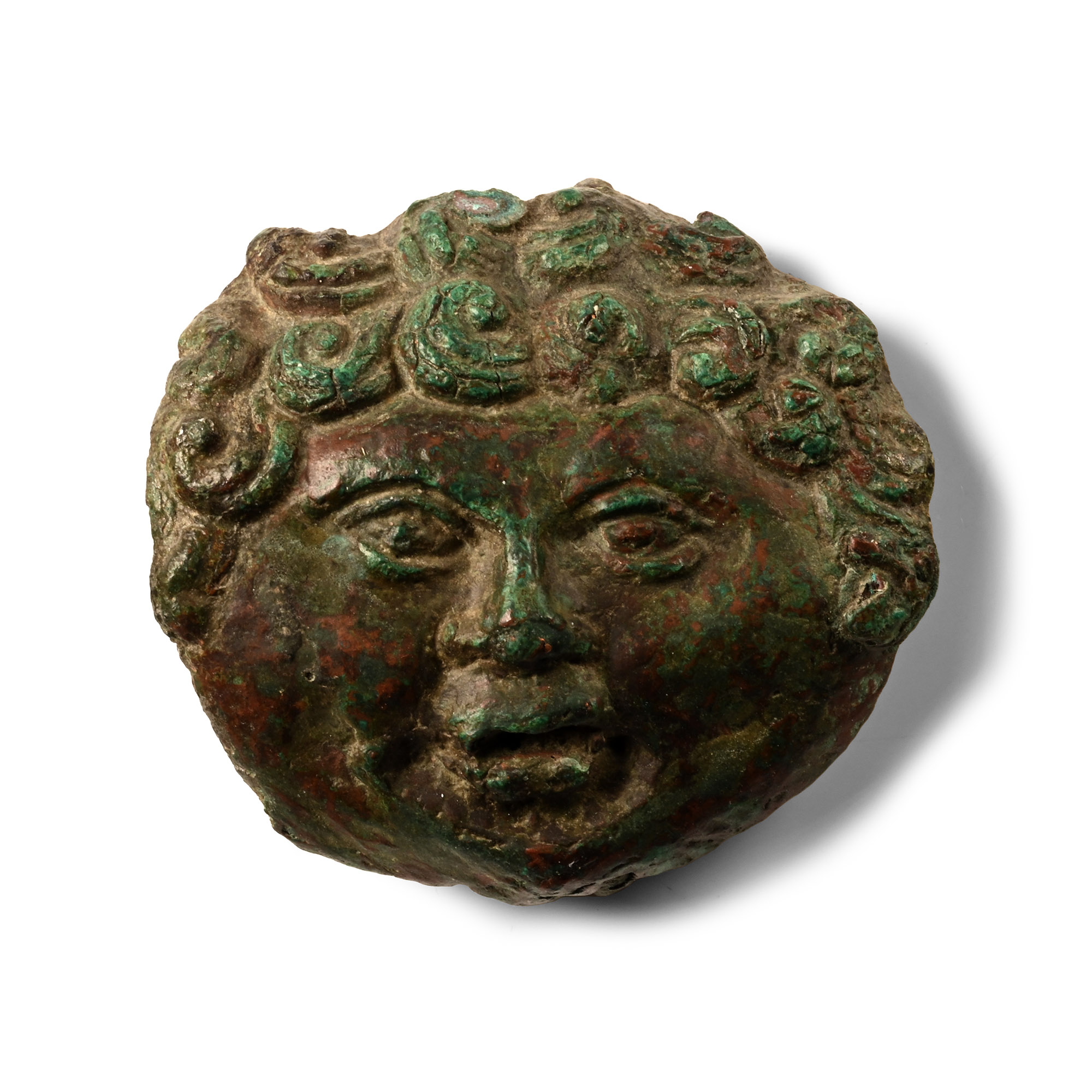
Greek Bronze Medusa Mount
4TH-2ND CENTURY B.C.
1 3/8 in. (27.4 grams, 35 mm).
Discoid appliqué with gorgoneion motif in high-relief; hollow to reverse.
ProvenanceEx German art market, 2000s.
Acquired from an EU collector living in London.
From the collection of Surrey, UK, gentleman.
TimeLine Auctions follows a vetting process to ensure the authenticity and legality of all items, reinforcing our commitment to integrity and responsible trading. Each antiquity, antique, and coin lot undergoes thorough examination by a vetting committee of at least ten external specialists, professional trade association members, scientists, and archaeologists: Our Vetting Process
AUCTIONS:
TimeLine is a leading auction house specialising in antiquities, ancient art, collectables, natural history, coins, medals, and books. Our auctions offer museums, collectors, historians, and enthusiasts the opportunity to acquire unique and historically significant pieces.
-
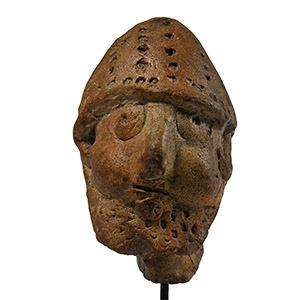
Cypriot Terracotta Head of a Warrior
1st millennium B.C.Sold for (Inc. bp): £117
With conical helmet bearing vertical lines of impressed points (representing rivets), applied square-cut beard and domed eyes; mounted on a custom-made display stand. 95 grams total, 87 mm including stand
Ex Sotheby's 2003-2005. From an important Cambridgeshire estate; thence by descent. -
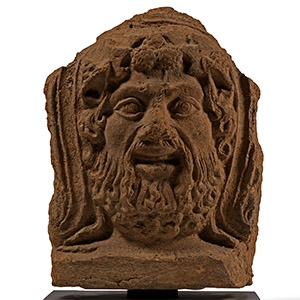
Etruscan Terracotta Satyr Antefix
4th century B.C.Estimate: £3,000 - 4,000 (+bp*)
Opening Bid: £1,500
D-shaped in profile with high-relief mask of a satyr within a looped frame; hanks of curling hair to the brow and temples with berries to the fillet, lentoid eyes, broad nose, curling moustache and beard; ledge below and arched ridge to the reverse; mounted on a custom-made stand. 6.77 kg total, 30 cm including stand
Acquired from Faustus Ancient Art Ltd, London, 1990. Private American collection. with Christie’s, London, 27 October 2009, no 9. Accompanied by copies of the relevant Christie's catalogue pages. Accompanied by an academic report by Dr Raffaele D’Amato. This lot has been checked against the Interpol Database of stolen works of art and is accompanied by a search certificate number no.12062-217441.
The antefix belongs to the typical decorative scheme of alternating maenad and satyr head antefixes that were mainly produced in Cerveteri. Heads were often placed in temples and displayed identifying features such as wavy hair and large, almond-shaped lidded eyes, and were lavishly painted. These typologies of antefixes generally look quite similar and appear to have identical colour schemes with dark red skin, and with darker shade of red applied to the hair below the ears and on top of the head and inside the ears. -

Cypriot Archaic Stone Statue of a Votary
Iron Age, 6th century B.C.Sold for (Inc. bp): £2,210
Standing erect on a square base wearing an ankle-length robe with mantle with segmented edge draped from the left shoulder, left arm straight at his side right arm bent and fist clenched at the breast; hair cut in a bobbed style with frontal band, collected in a Near-Eastern head-cloth falling down his back; bare feet with toes emphasised; mounted on a custom-made stand. 7.3 kg, 55.5 cm including stand
From a collection acquired on the UK art market from various auction houses and collections mostly before 2000. From an important Cambridgeshire estate; thence by descent. Accompanied by an academic report by Dr Raffaele D’Amato. This lot has been checked against the Interpol Database of stolen works of art and is accompanied by a search certificate number no.12046-217199.
The sculpture is a good example of the mixed Near Eastern and Attic Ionian styles reflected in Cypriot sculpture. Cypriot art was often influenced by both Greek and Near Eastern styles, although in phase H of the archaic period (680-400 B.C.) the Greek influence became stronger, perhaps as a result of intensified trade and political contacts between the continent, Ionia and the Aegean islands.
