
Loading, please wait...
LOT 0543
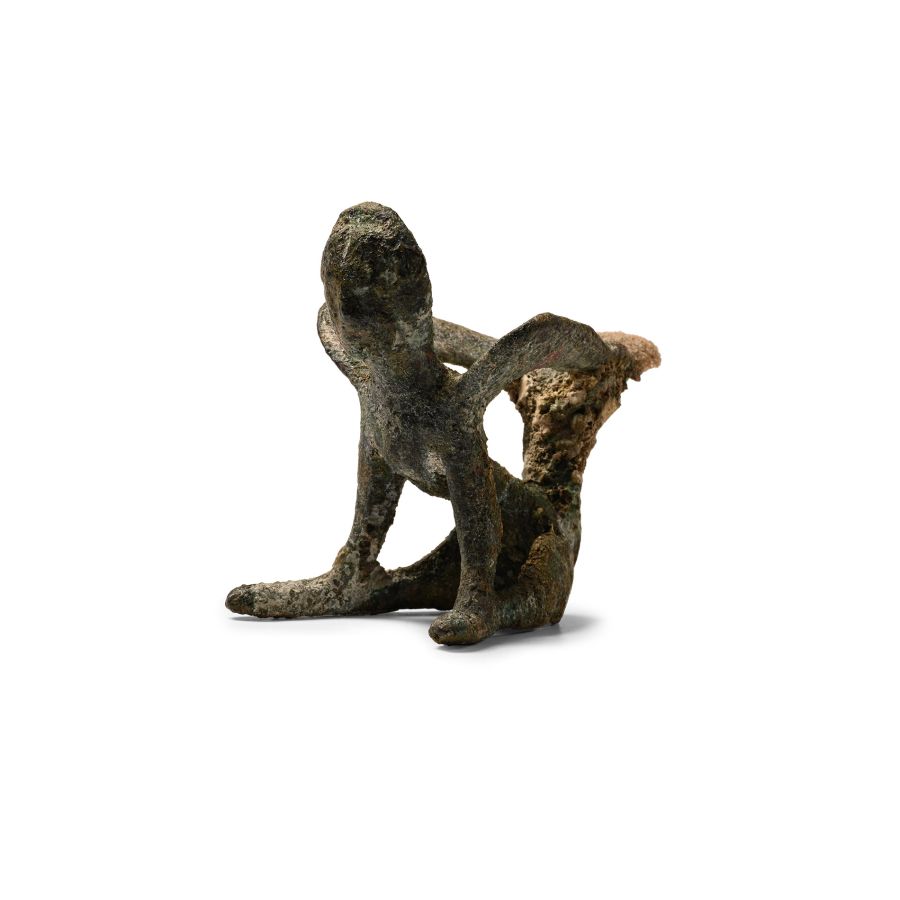
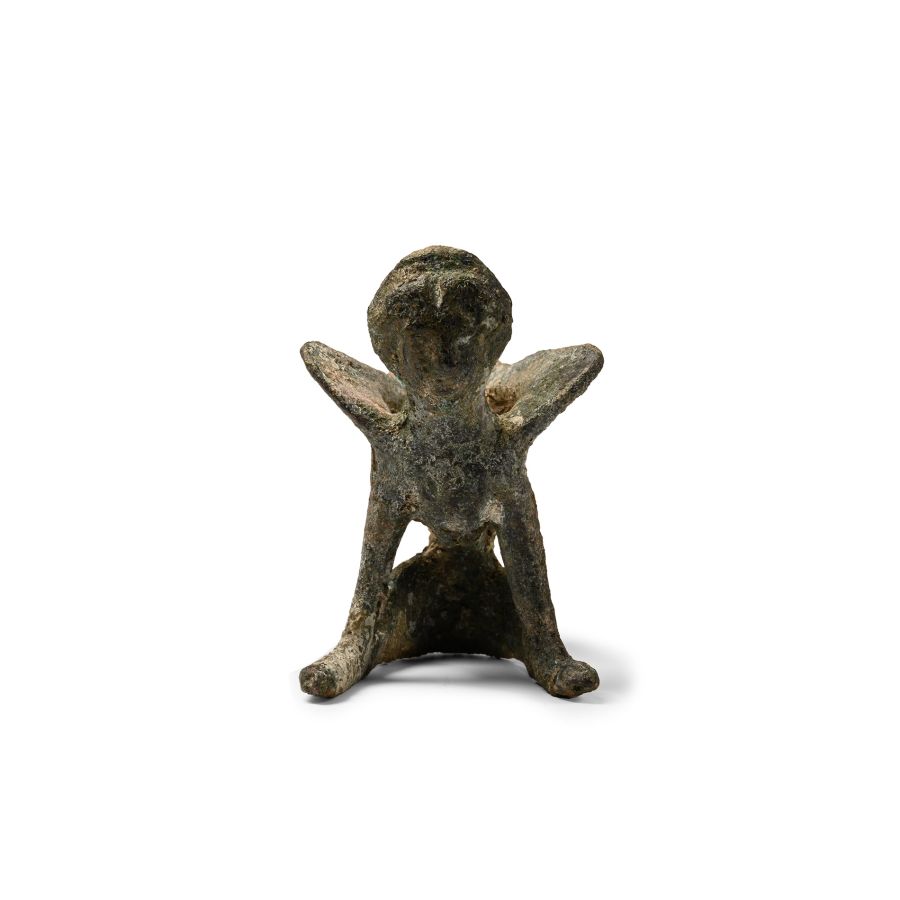
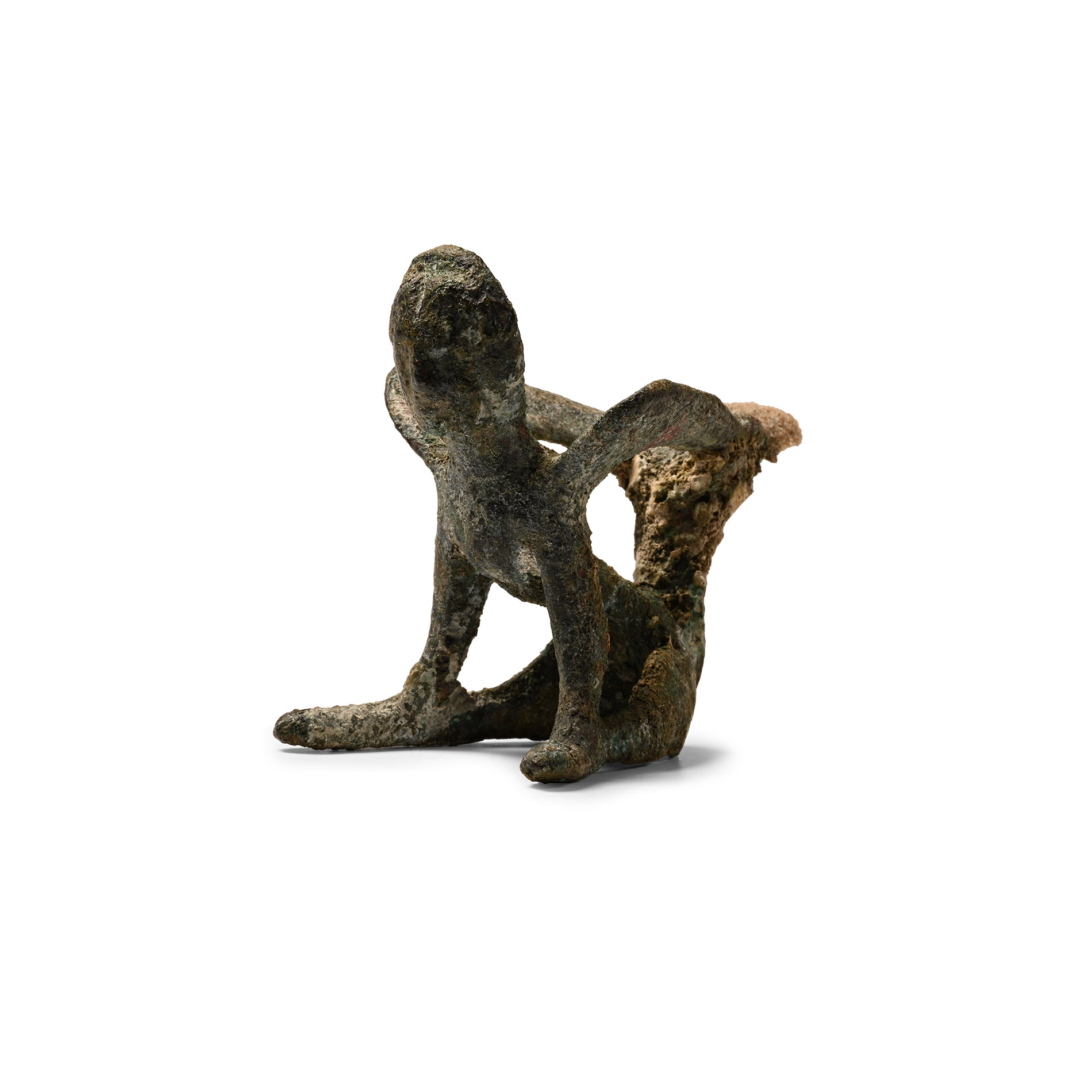
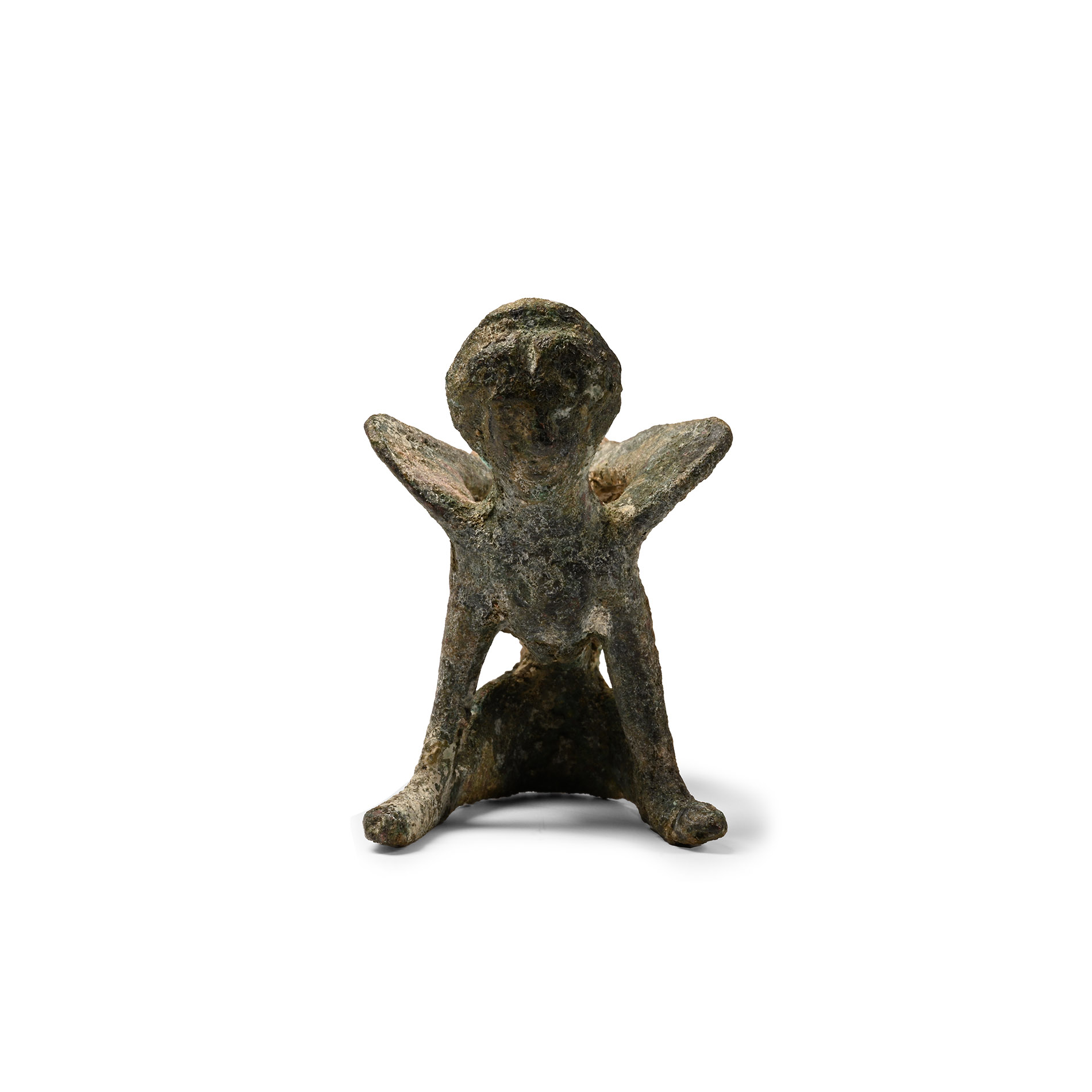
Greek Bronze Human-Headed Sphinx
CIRCA 4TH CENTURY B.C.
2 1/4 in. (86 grams, 57 mm).
Formed standing facing with wings spread, directed backwards, female head with stylised detailing; semi-circular base to the rear with vertical strut joined to wing tips; possibly a furniture fitting.
ProvenanceFrom an important collection formed pre 1988, Geneva and London, by descent.
CONDITIONTimeLine Auctions follows a vetting process to ensure the authenticity and legality of all items, reinforcing our commitment to integrity and responsible trading. Each antiquity, antique, and coin lot undergoes thorough examination by a vetting committee of at least ten external specialists, professional trade association members, scientists, and archaeologists: Our Vetting Process
AUCTIONS:
TimeLine is a leading auction house specialising in antiquities, ancient art, collectables, natural history, coins, medals, and books. Our auctions offer museums, collectors, historians, and enthusiasts the opportunity to acquire unique and historically significant pieces.
-
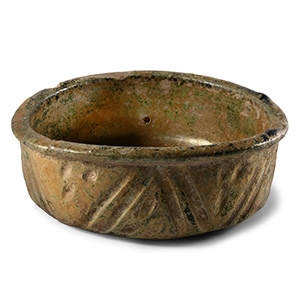
Parthian Green Glazed Dish
3rd-2nd century B.C.Estimate: £600 - 800 (+bp*)
Opening Bid: £250
Of squat form with incised chevrons and dashes decorating the exterior; iridescent surfaces. 298 grams, 13.5 cm
with a London, UK gallery 1971-early 2000s. -
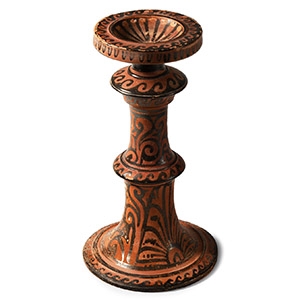
Greek Apulian Red-Figure Stand
4th century B.C.Estimate: £800 - 1,000 (+bp*)
Opening Bid: £444
Comprising a trumpet-shaped base, carinated balusters and broad upper face with dished centre; painted with running wave patterns to the baluster, base and top, the centre with a rosette; the base with the profile head of a lady of fashion with the earrings, necklace and diadem picked out in white. 847 grams, 25 cm high
French collection, 1990s-early 2000s. Ex Hampel Auctions, Munich, Germany, 1990s. -
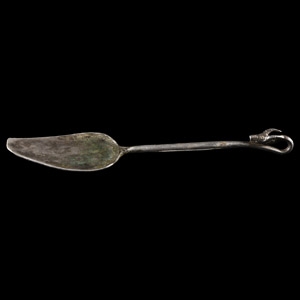
Graeco-Persian Silver Spoon
Circa 3rd century B.C.Sold for (Inc. bp): £338
The shallow 'bowl' or plaque with a squared tip, round-section shank and horned animal had finial with stylised detailing. 30.8 grams, 15 cm
UK collection, early 1990s and before. Acquired on the UK art market since the early 2000s. From a private collection, Lancashire, UK.
