
Loading, please wait...
LOT 0097
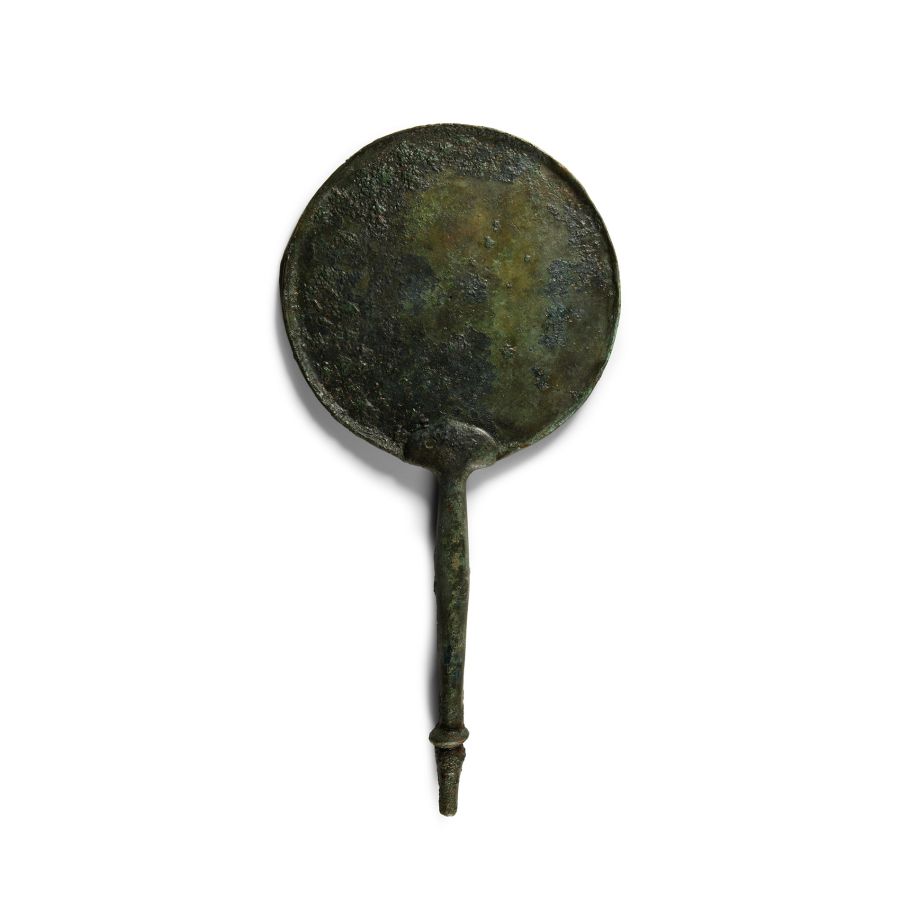
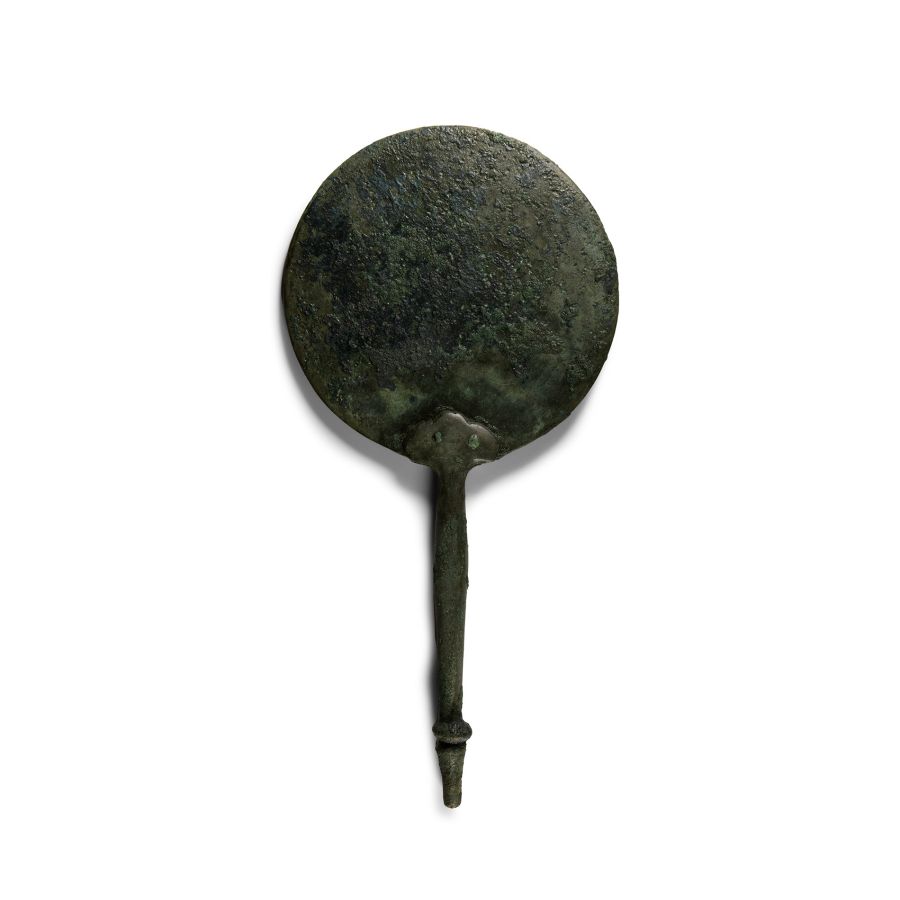
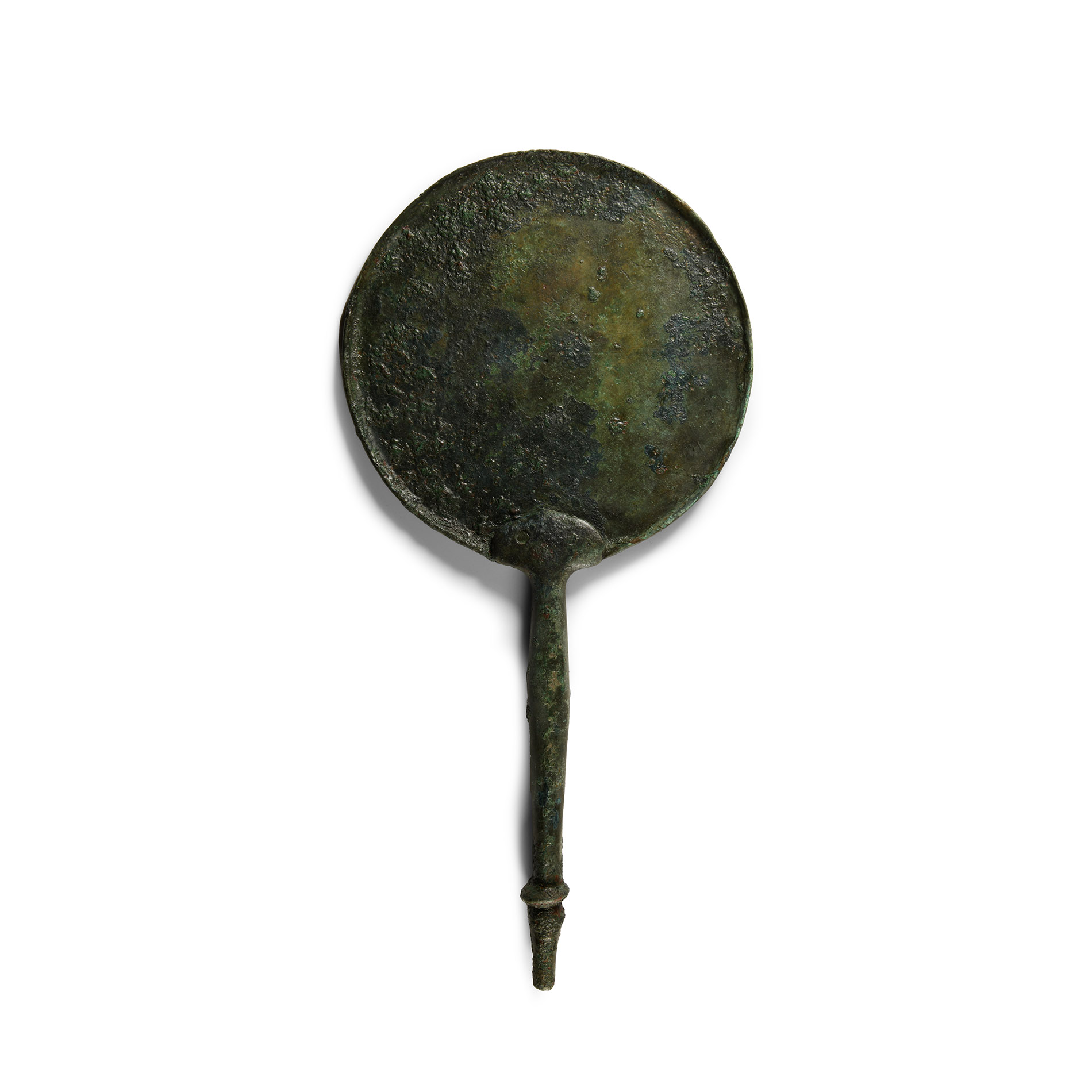
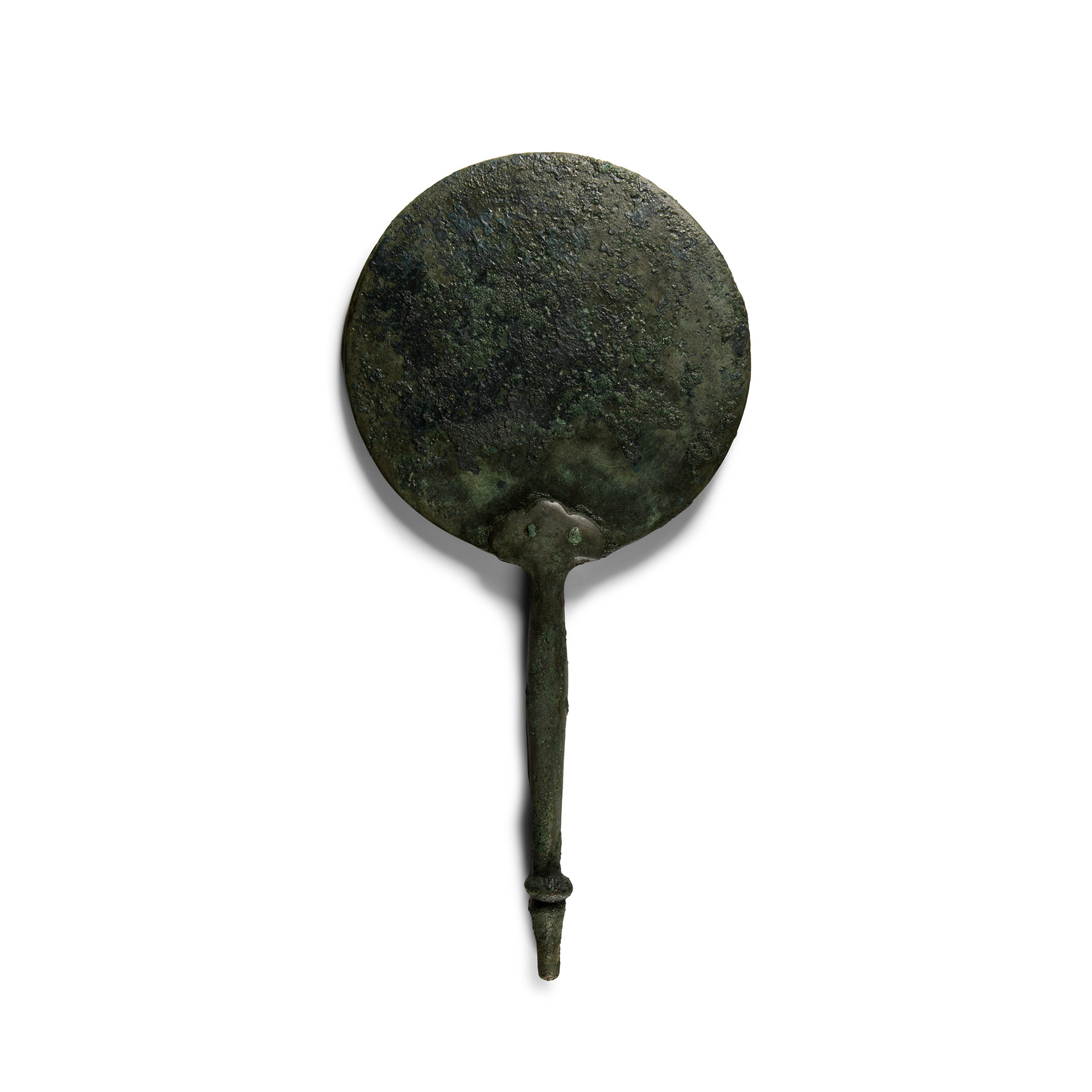
Greek Bronze Handled Mirror
HELLENISTIC, 2ND-1ST CENTURY B.C.
9 1/2 in. (194 grams, 24 cm).
Comprising a broad disc with raised rim to one face, pelta-shaped junction developing to a balustered handle with acorn finial.
ProvenanceFrom the private collection of a London gentleman, from his grandfather's collection formed before the early 1970s.
CONDITIONTimeLine Auctions follows a vetting process to ensure the authenticity and legality of all items, reinforcing our commitment to integrity and responsible trading. Each antiquity, antique, and coin lot undergoes thorough examination by a vetting committee of at least ten external specialists, professional trade association members, scientists, and archaeologists: Our Vetting Process
AUCTIONS:
TimeLine is a leading auction house specialising in antiquities, ancient art, collectables, natural history, coins, medals, and books. Our auctions offer museums, collectors, historians, and enthusiasts the opportunity to acquire unique and historically significant pieces.
-
Cypriot Brown Burnished Ware 'Bilbil' Vessel
Late Bronze Age II, 1400-1200 B.C.Sold for (Inc. bp): £260
Unglazed tall juglet (bilbil) with flared foot, piriform body, tapering neck and flared mouth. strap handle; bands of bilinear ornament to the shoulder and neck. 103 grams, 13.7 cm
From a collection acquired on the UK art market from various auction houses and collections mostly before 2000. From an important Cambridgeshire estate; thence by descent. -
Etruscan Terracotta Satyr Antefix
4th century B.C.Estimate: £3,000 - 4,000 (+bp*)
Opening Bid: £1,500
D-shaped in profile with high-relief mask of a satyr within a looped frame; hanks of curling hair to the brow and temples with berries to the fillet, lentoid eyes, broad nose, curling moustache and beard; ledge below and arched ridge to the reverse; mounted on a custom-made stand. 6.77 kg total, 30 cm including stand
Acquired from Faustus Ancient Art Ltd, London, 1990. Private American collection. with Christie’s, London, 27 October 2009, no 9. Accompanied by copies of the relevant Christie's catalogue pages. Accompanied by an academic report by Dr Raffaele D’Amato. This lot has been checked against the Interpol Database of stolen works of art and is accompanied by a search certificate number no.12062-217441.
The antefix belongs to the typical decorative scheme of alternating maenad and satyr head antefixes that were mainly produced in Cerveteri. Heads were often placed in temples and displayed identifying features such as wavy hair and large, almond-shaped lidded eyes, and were lavishly painted. These typologies of antefixes generally look quite similar and appear to have identical colour schemes with dark red skin, and with darker shade of red applied to the hair below the ears and on top of the head and inside the ears. -
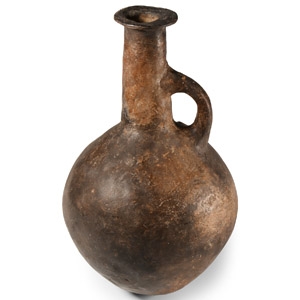
Cypriot Brown Ware Jug
Late Bronze Age, circa 1700 B.C.Sold for (Inc. bp): £156
Comprising a bulbous body with slightly conical underside, tapering tubular neck and everted flange rim, loop handle to the shoulder; restored. 1.03 kg, 25.5 cm
From a collection acquired on the UK art market from various auction houses and collections mostly before 2000. From an important Cambridgeshire estate; thence by descent.
Wheelmade red lustrous ware was a ceramic of foreign origin which found its way into Cyprus during the Late Bronze Age, when international trade was widespread. According to Karageorghis it originated in Anatolia during the early Bronze Age but was known in Alasya (Cyprus) during the Late Bronze Age II.
