
Loading, please wait...
LOT 0516
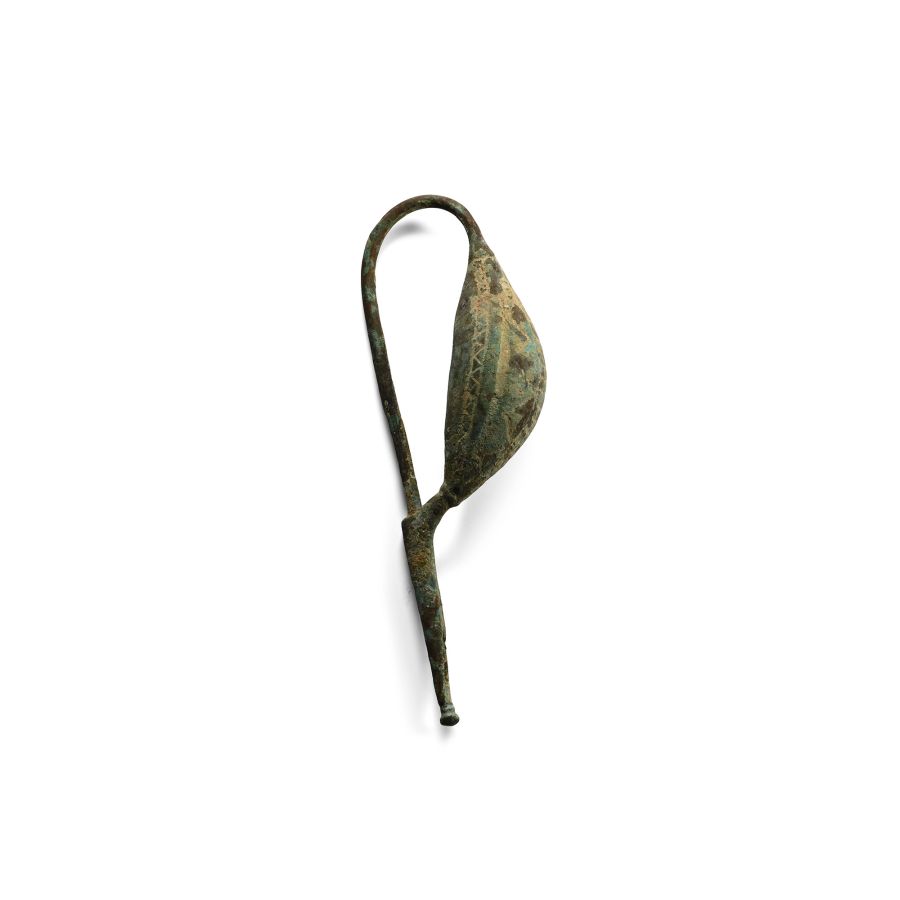
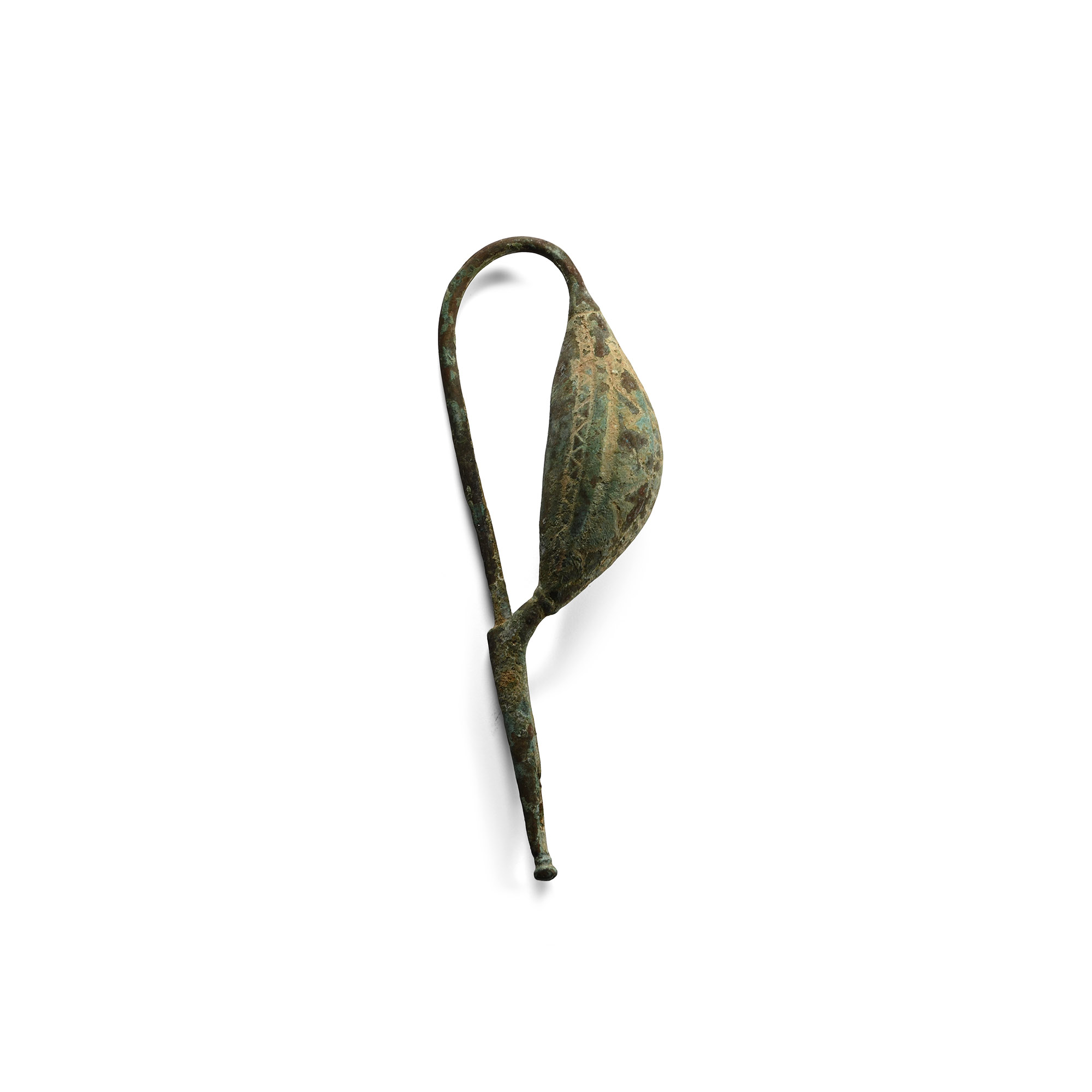
Greek Bronze Geometric Brooch
8TH-7TH CENTURY B.C.
4 in. (31 grams, 10.3 cm).
With hollow-formed ornamental bulb to the bow, study curved pin, flange finial forming the catch.
ProvenanceAcquired on the German art market, 1989-1995.
with The Museum Gallery, 19 Bury Place, London, WC1, UK, 1998-2003.
Property of a London based academic, 2003 to present.
This lot is accompanied by an illustrated lot declaration signed by the Head of the Antiquities Department, Dr Raffaele D'Amato.
TimeLine Auctions follows a vetting process to ensure the authenticity and legality of all items, reinforcing our commitment to integrity and responsible trading. Each antiquity, antique, and coin lot undergoes thorough examination by a vetting committee of at least ten external specialists, professional trade association members, scientists, and archaeologists: Our Vetting Process
AUCTIONS:
TimeLine is a leading auction house specialising in antiquities, ancient art, collectables, natural history, coins, medals, and books. Our auctions offer museums, collectors, historians, and enthusiasts the opportunity to acquire unique and historically significant pieces.
-
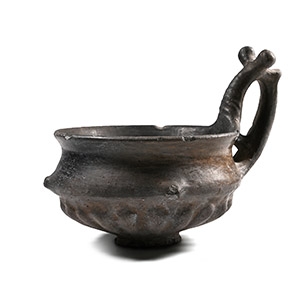
Villanovan Impasto Kyathos with Zoomorphic Handle
7th century B.C.Sold for (Inc. bp): £338
Modelled with squat body and raised openwork handle with two projecting lobes to the top, the body with three raised bosses on the shoulder and the base with raised petals radiating from the low foot. 208 grams, 13.3 cm wide
Ulrike Feuz-Lauprecht, NIKE Kunst der Antike, Bremgarten 9 April 1991. Private collection, Bern, Switzerland. This lot is accompanied by an illustrated lot declaration signed by the Head of the Antiquities Department, Dr Raffaele D'Amato. -
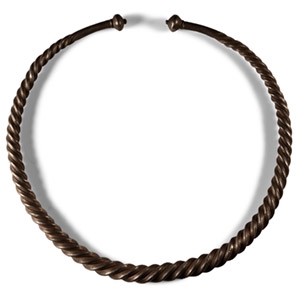
Thracian Twisted Silver Torc
4th-2nd century B.C.Sold for (Inc. bp): £1,820
Formed of twisted rods, each square in section, tapering towards the hammered finials, each with an onion-knop terminal. 157 grams, 15 cm
with Christie's, New York, 5 June 1998, no.209. Private collection, Europe. Accompanied by an academic report by Dr Raffaele D'Amato. Accompanied by copies of the relevant Christie's catalogue pages. This lot has been checked against the Interpol Database of stolen works of art and is accompanied by a search certificate number no.12381-226710. This lot has been cleared against the Art Loss Register database, and is accompanied by an illustrated lot declaration signed by the Head of the Antiquities Department, Dr Raffaele D'Amato. -
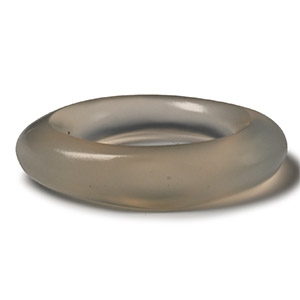
Late Hellenistic Chalcedony Ring
1st century B.C.-1st century A.D. or laterSold for (Inc. bp): £143
Of facetted section, with broad shoulders, flat bezel, polished. 3.04 grams, 26.02 mm overall, 14.79 mm internal diameter (approximate size British H, USA 3 3/4, Europe 6.18, Japan 6)
with H.A.C.A.G., Basel, prior 1999. This lot is accompanied by an illustrated lot declaration signed by the Head of the Antiquities Department, Dr Raffaele D’Amato. This lot is accompanied by an illustrated lot declaration signed by the Head of the Antiquities Department, Dr Raffaele D'Amato.
