
Loading, please wait...
LOT 0098
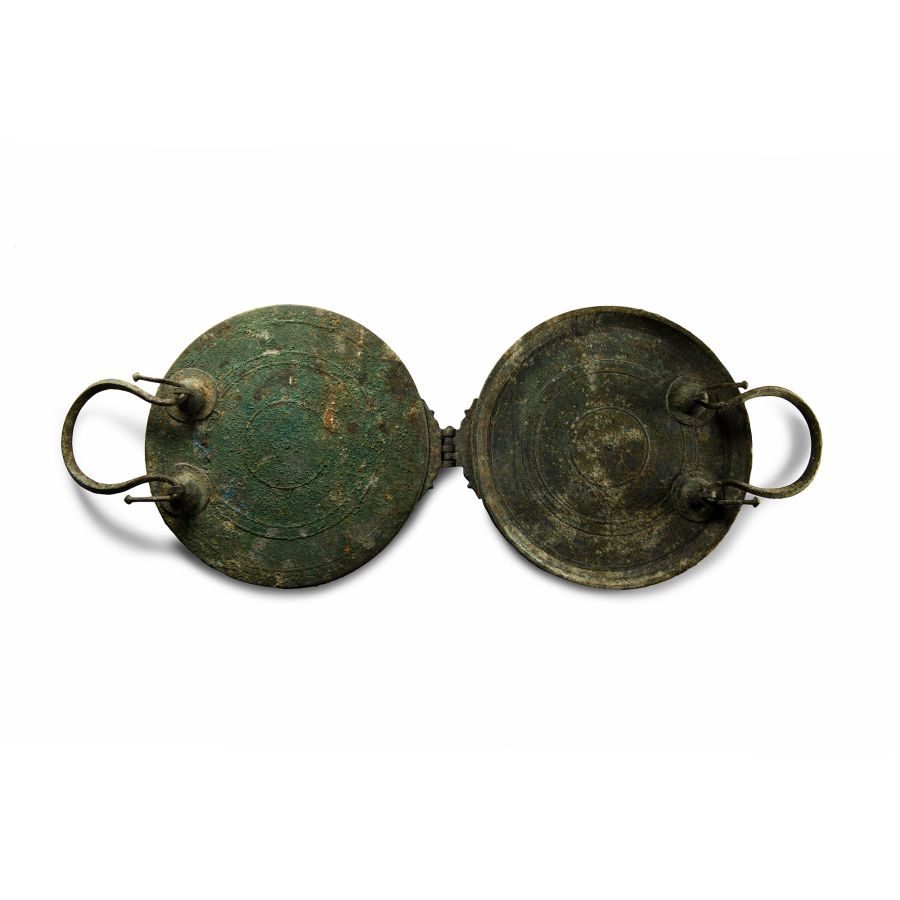
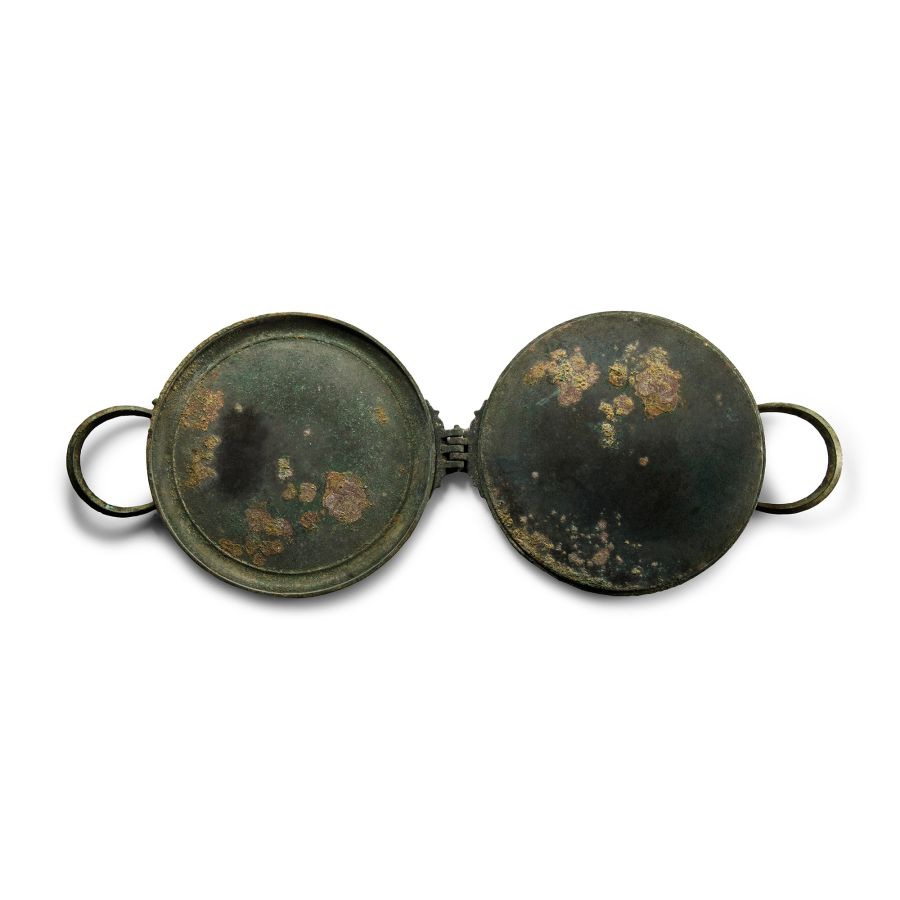
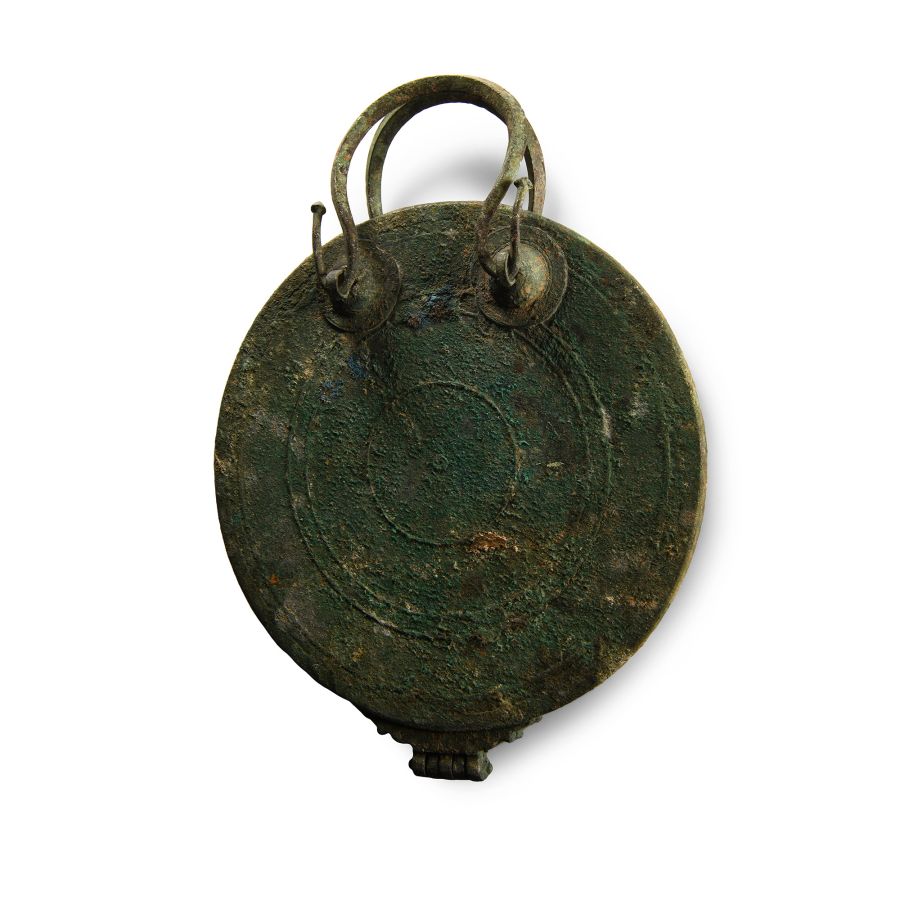
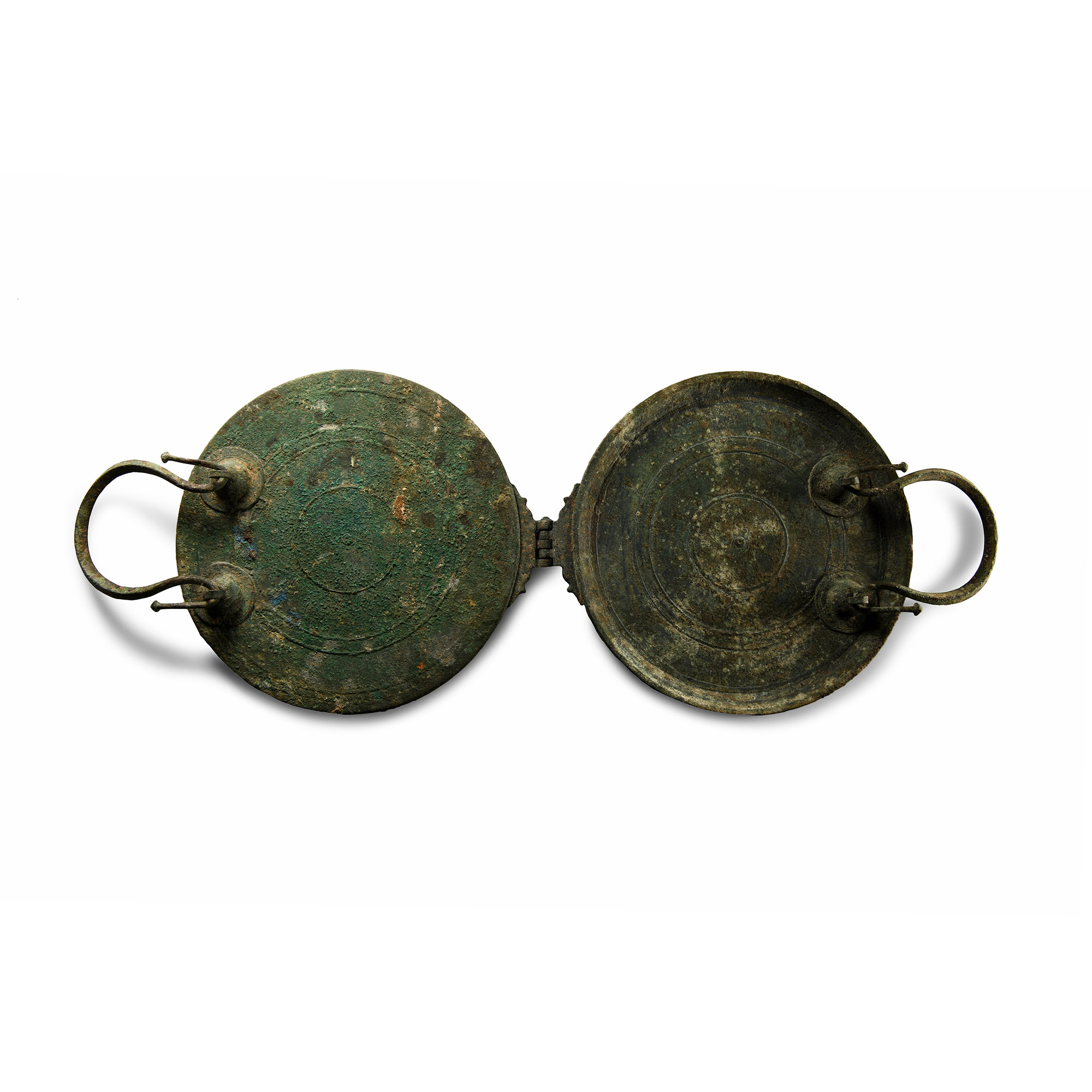
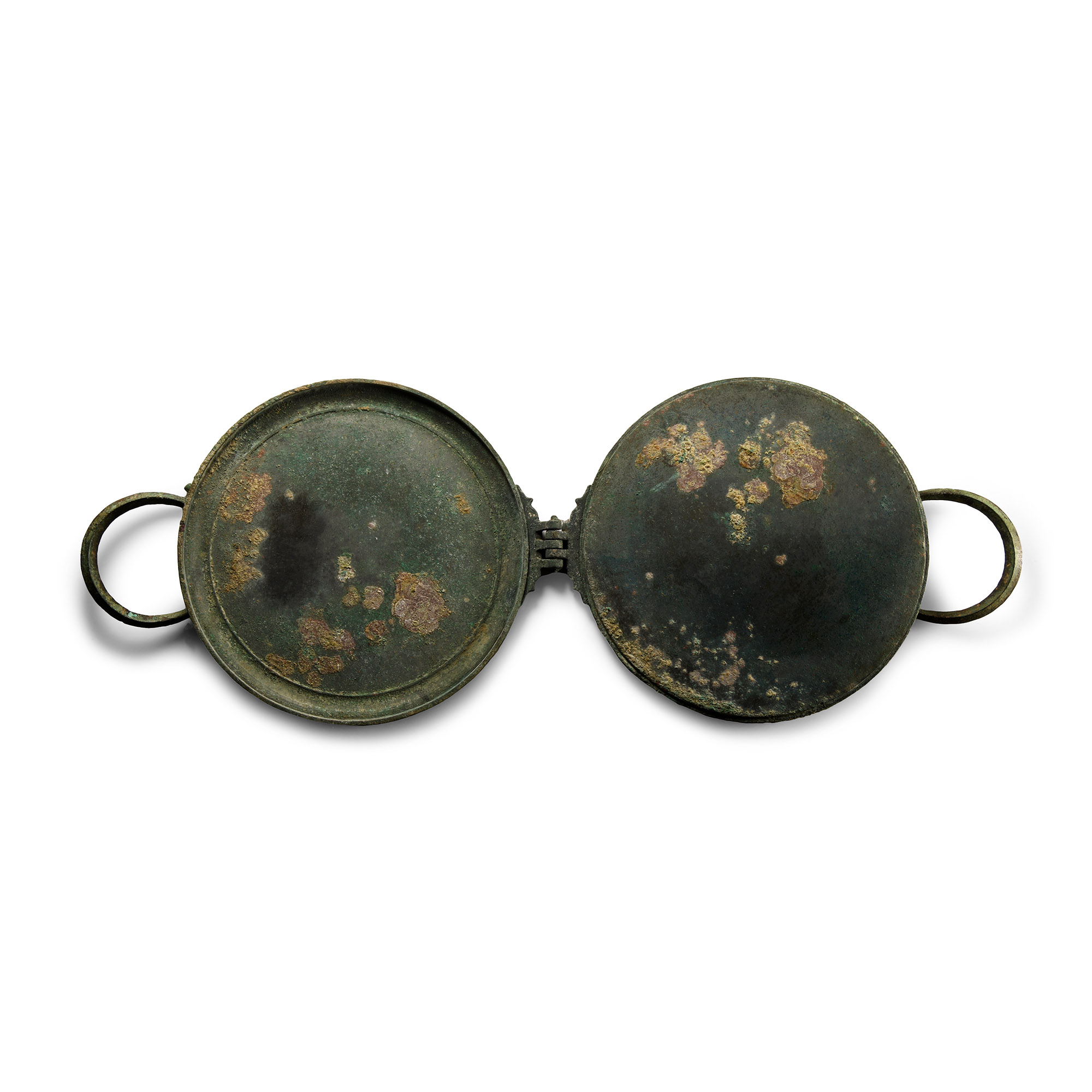
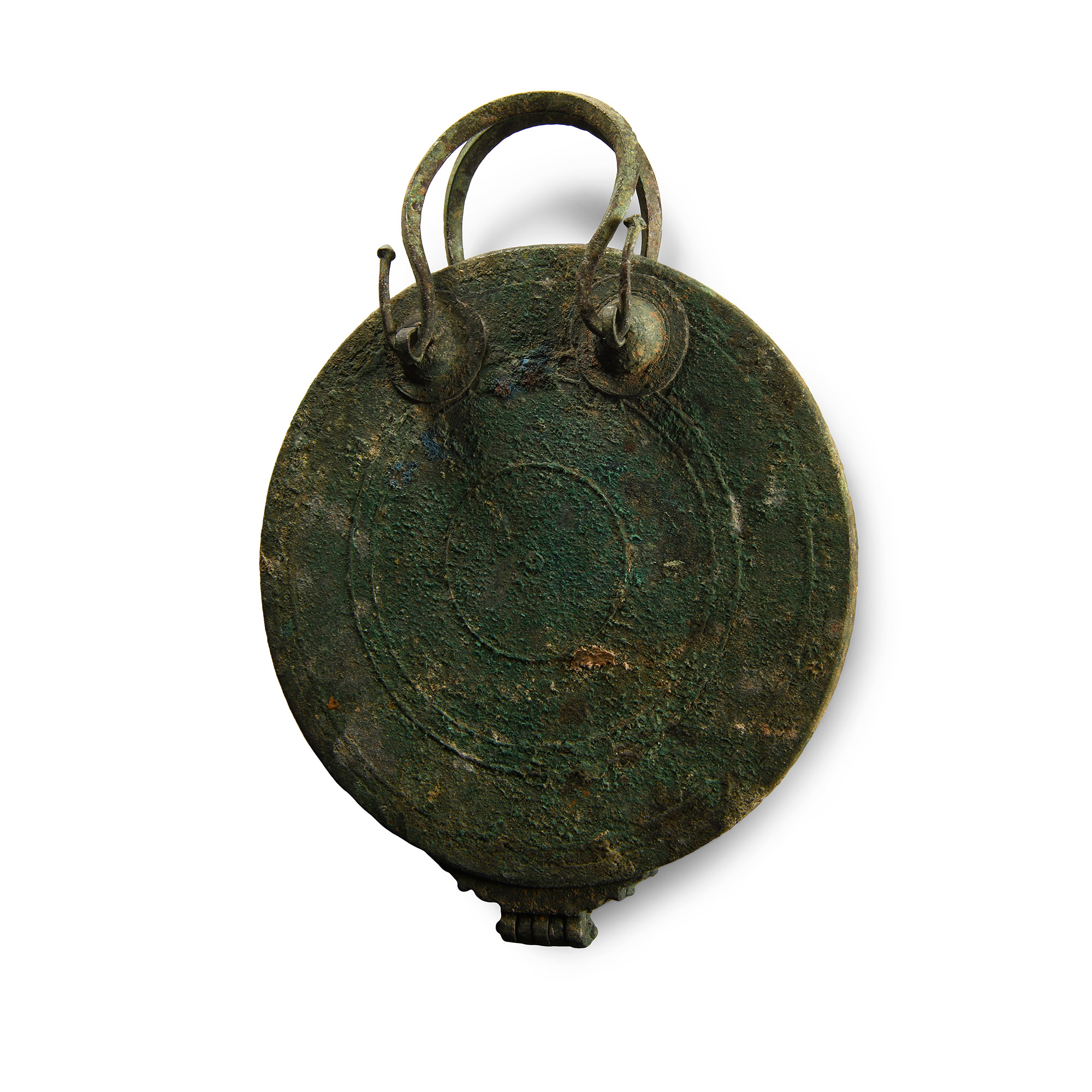
Greek Bronze Folding Travelling Mirror
HELLENISTIC, 2ND CENTURY B.C.
5 in. (305 grams, 12.8 cm).
Discoid mirror with recess to obverse and reverse, each with a looped handle attached to two domed lugs, concentric rings and stepped rim; hinge to lower edge, recessed inner face to one disc and raised equivalent to the other with silvered finish.
ProvenanceAcquired on the German art market, 1989-1995.
with The Museum Gallery, 19 Bury Place, London, WC1A 2JB, 1998-2003.
Property of a London based academic, 2003-present.
This lot has been checked against the Interpol Database of stolen works of art and is accompanied by a search certificate no.12061-217502.
Cf. Richter, G.M.A., The Metropolitan Museum of Art, Greek, Etruscan and Roman Bronzes, New York, 1915, nos.784, 787, 789, for similar.
FootnotesThese kind of mirrors consisted of heavy circular discs with low cylindrical rims. They were made in pairs, and polished (and sometimes silvered) respectively on the recessed and flat sides, the latter being provided with a bevelled edge, into which the other fitted like a cover. Both polished surfaces were thus protected. The unpolished sides were ornamented with concentric-circle ornaments and concentric mouldings.
CONDITIONTimeLine Auctions follows a vetting process to ensure the authenticity and legality of all items, reinforcing our commitment to integrity and responsible trading. Each antiquity, antique, and coin lot undergoes thorough examination by a vetting committee of at least ten external specialists, professional trade association members, scientists, and archaeologists: Our Vetting Process
AUCTIONS:
TimeLine is a leading auction house specialising in antiquities, ancient art, collectables, natural history, coins, medals, and books. Our auctions offer museums, collectors, historians, and enthusiasts the opportunity to acquire unique and historically significant pieces.
-
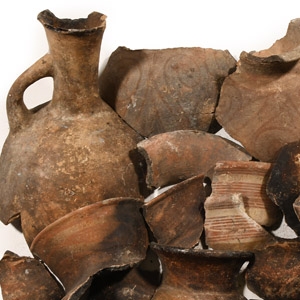
Greek and Other Pottery Fragment Group
Circa 1st millennium B.C.Sold for (Inc. bp): £72
Including amphora, bowl, cup and other fragments. 5.6 kg total, 5.5-33 cm
From a collection acquired on the UK art market from various auction houses and collections mostly before 2000. From an important Cambridgeshire estate; thence by descent. -
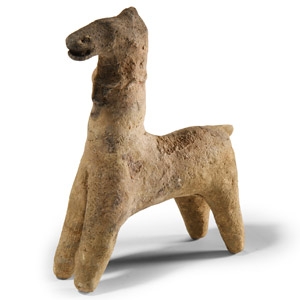
Boeotian Terracotta Horse Statuette
6th century B.C.Sold for (Inc. bp): £182
In static stance with forelegs straight and head erect, applied harness detailing. 130 grams, 11.1 cm high
From a collection acquired on the UK art market from various auction houses and collections mostly before 2000. From an important Cambridgeshire estate; thence by descent. -
.jpg)
Graeco-Phoenician Mottled Agate Scaraboid with Three Line Inscription
6th-5th century B.C.Estimate: £1,200 - 1,700 (+bp*)
Opening Bid: £400
Plano-convex with three lines of incised text to the underside within a hatched border; supplied with a museum-quality impression. 2.11 grams, 16 mm
From the Fadel family collection, London, UK, 1970s.
