
Loading, please wait...
LOT 1496
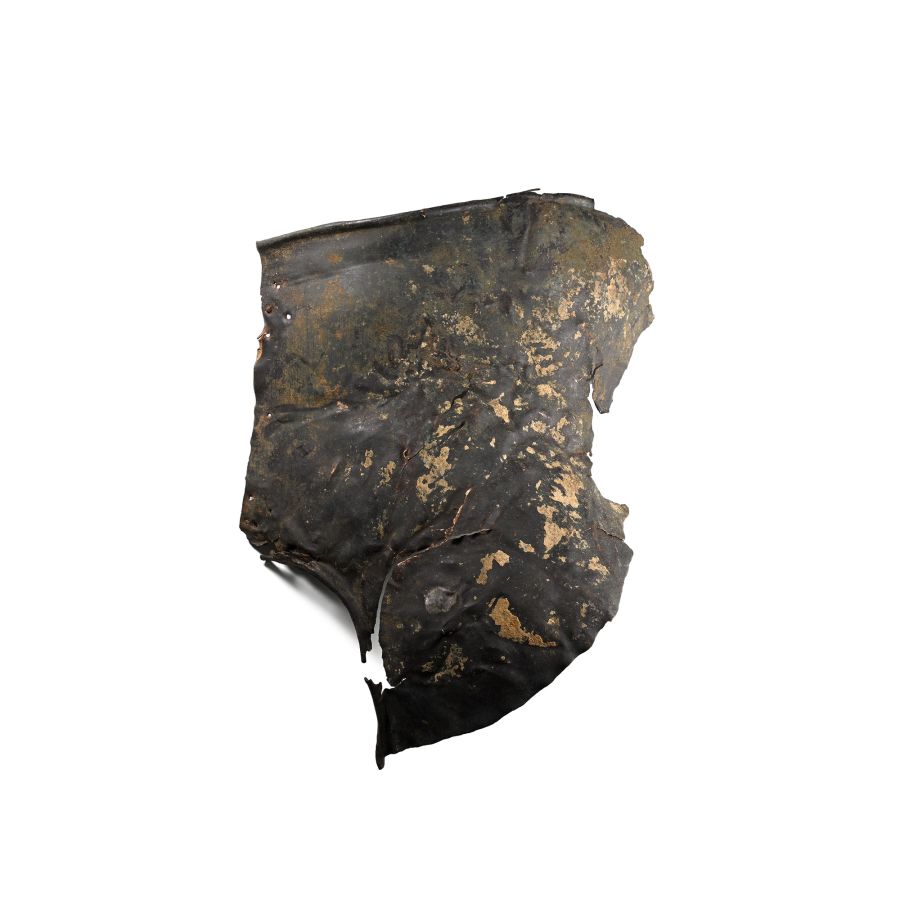
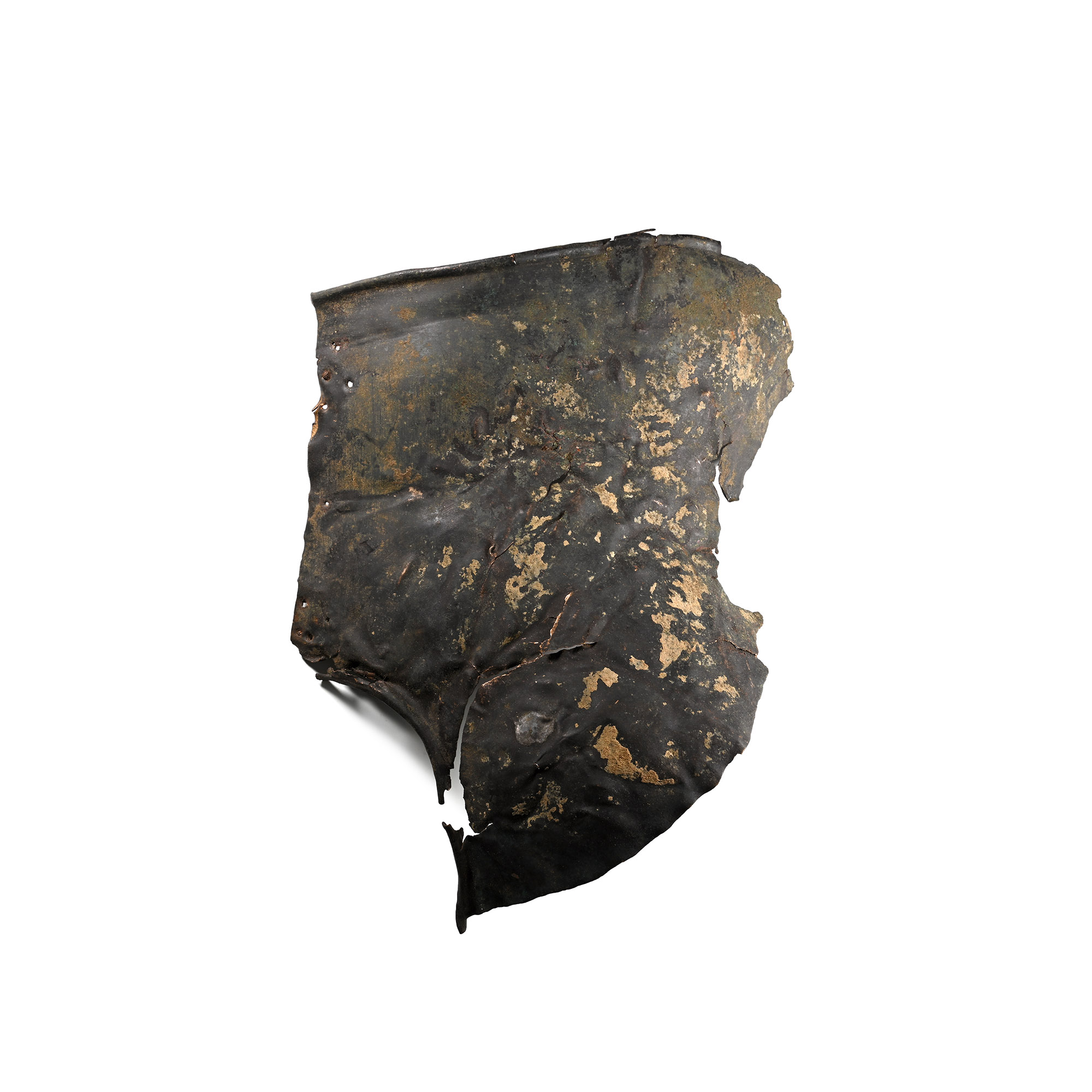
Greek Bronze Cuirass Section of Thorax Stadios
4TH-3RD CENTURY B.C.
13 1/4 in. (465 grams, 33.5 cm).
Left front side of anatomical armour for horseman, embossed left flank muscles embossed, double border of armour under armpits still partially visible. [No Reserve]
ProvenanceUK private collection, acquired in 1996.
This lot is accompanied by an illustrated lot declaration signed by the Head of the Antiquities Department, Dr Raffaele D'Amato.
Cf. Connolly, P., Greece and Rome at War, London, 2006, fig.p.56, bottom right, for similar.
FootnotesArmour for cavalrymen in classical Greece were specially designed with these characteristics. They were very broad on the hips to enable their wearers to sit on a horse. Important parallels are known from South Italy, one of them preserved in the Bari Museum.
CONDITIONTimeLine Auctions follows a vetting process to ensure the authenticity and legality of all items, reinforcing our commitment to integrity and responsible trading. Each antiquity, antique, and coin lot undergoes thorough examination by a vetting committee of at least ten external specialists, professional trade association members, scientists, and archaeologists: Our Vetting Process
AUCTIONS:
TimeLine is a leading auction house specialising in antiquities, ancient art, collectables, natural history, coins, medals, and books. Our auctions offer museums, collectors, historians, and enthusiasts the opportunity to acquire unique and historically significant pieces.
-
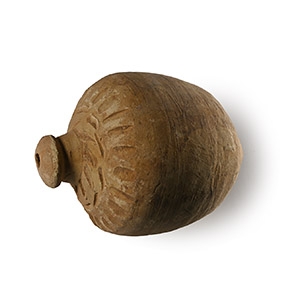
Byzantine 'Greek Fire' Ceramic Fire Bomb or Hand Grenade
9th-11th century A.D.Sold for (Inc. bp): £78
Piriform in profile with narrow point and domed mouth; radiating line decoration to the upper body; intended to be filled with explosive liquid and a wick, and used as a hand grenade. 756 grams, 15.5 cm
From an important specialist collection, London, UK, 1990s onwards. Accompanied by an academic paper by military specialist Dr Raffaele D'Amato, dated 15 July 2019 and titled 'Eastern Roman Empire - Greek Fire Bomb or Hand Grenade (μεσαίον kακάβιον) 9th-11th century AD'. This lot is accompanied by an illustrated lot declaration signed by the Head of the Antiquities Department, Dr Raffaele D'Amato.
Apart from the use of siphons or manual flame-throwers called cheirosiphona, special corps of Roman soldiers employed terracotta grenades, in the form of small jars, abundantly evidenced in archaeological excavations. They were called μεσαία kακαβιά or κυτροκακάβια where the former had a bulbous shape and the latter a more cylindrical form. -
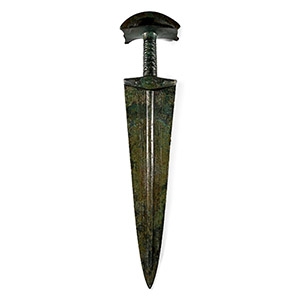
Luristan Bronze Short Sword with Blood Channels
14th-10th century B.C.Sold for (Inc. bp): £9,750
Triangular blade with raised midrib flanked by shallow grooves extending from the integral lower-guard to the tip; the lower guard with raised coffee bean-shaped bosses to both sides; grooved handle with raised ribs and a large openwork crescentic pommel bearing a similar decoration to the blade at the top; accompanied by a custom-made display stand. 1.31 kg total, sword: 47 cm long
Ex Rabi Gallery, London, UK, 1980s. From a private Surrey, UK, collection. Accompanied by an academic report by Dr Raffaele D’Amato. This lot has been checked against the Interpol Database of stolen works of art and is accompanied by search certificate number no.12606-234422. This lot has been cleared against the Art Loss Register database, and is accompanied by an illustrated lot declaration signed by the Head of the Antiquities Department, Dr Raffaele D'Amato.
The now empty cavities of the handle were once filled with organic material. -
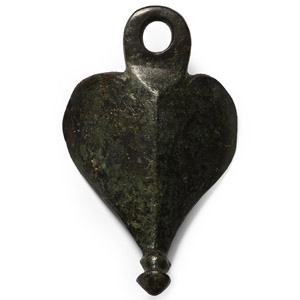
Roman Horse Harness Phalera
1st-4th century A.D.Sold for (Inc. bp): £72
Of carinated profile with pierced lug above and knop finial. 97 grams, 95 mm
Ex German art market, 2000s. Acquired from an EU collector living in London. From the collection of a Surrey, UK, gentleman. This lot is accompanied by an illustrated lot declaration signed by the Head of the Antiquities Department, Dr Raffaele D’Amato. This lot is accompanied by an illustrated lot declaration signed by the Head of the Antiquities Department, Dr Raffaele D'Amato.
