
Loading, please wait...
LOT 0528
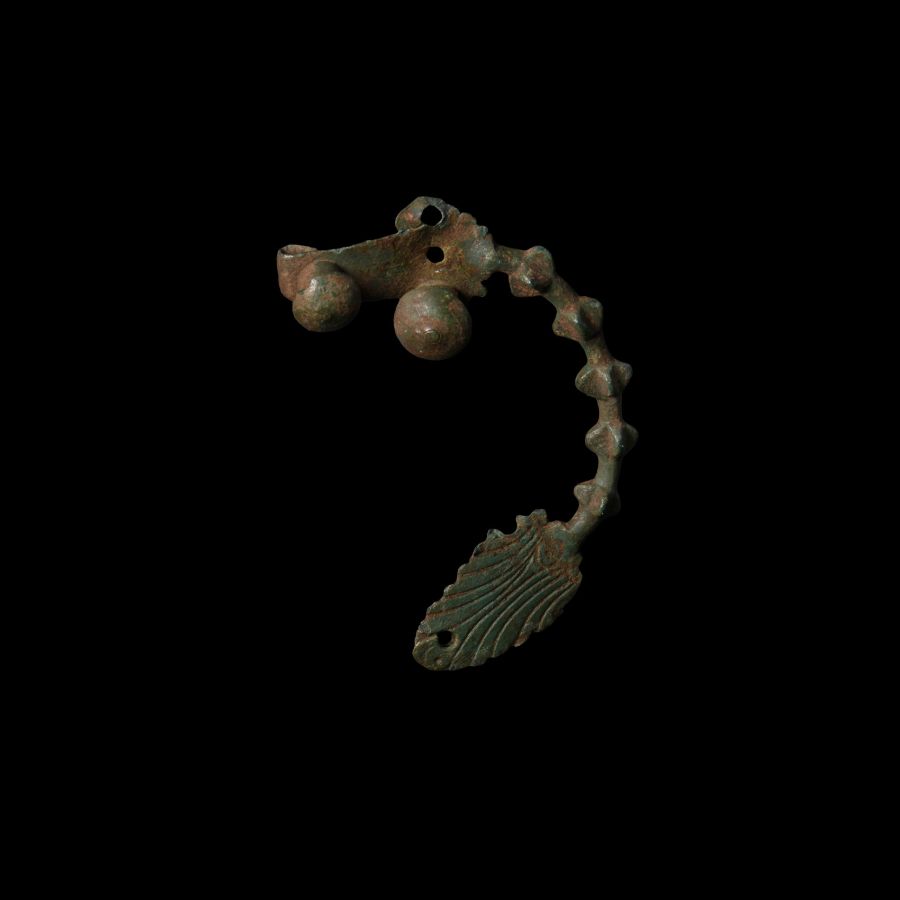
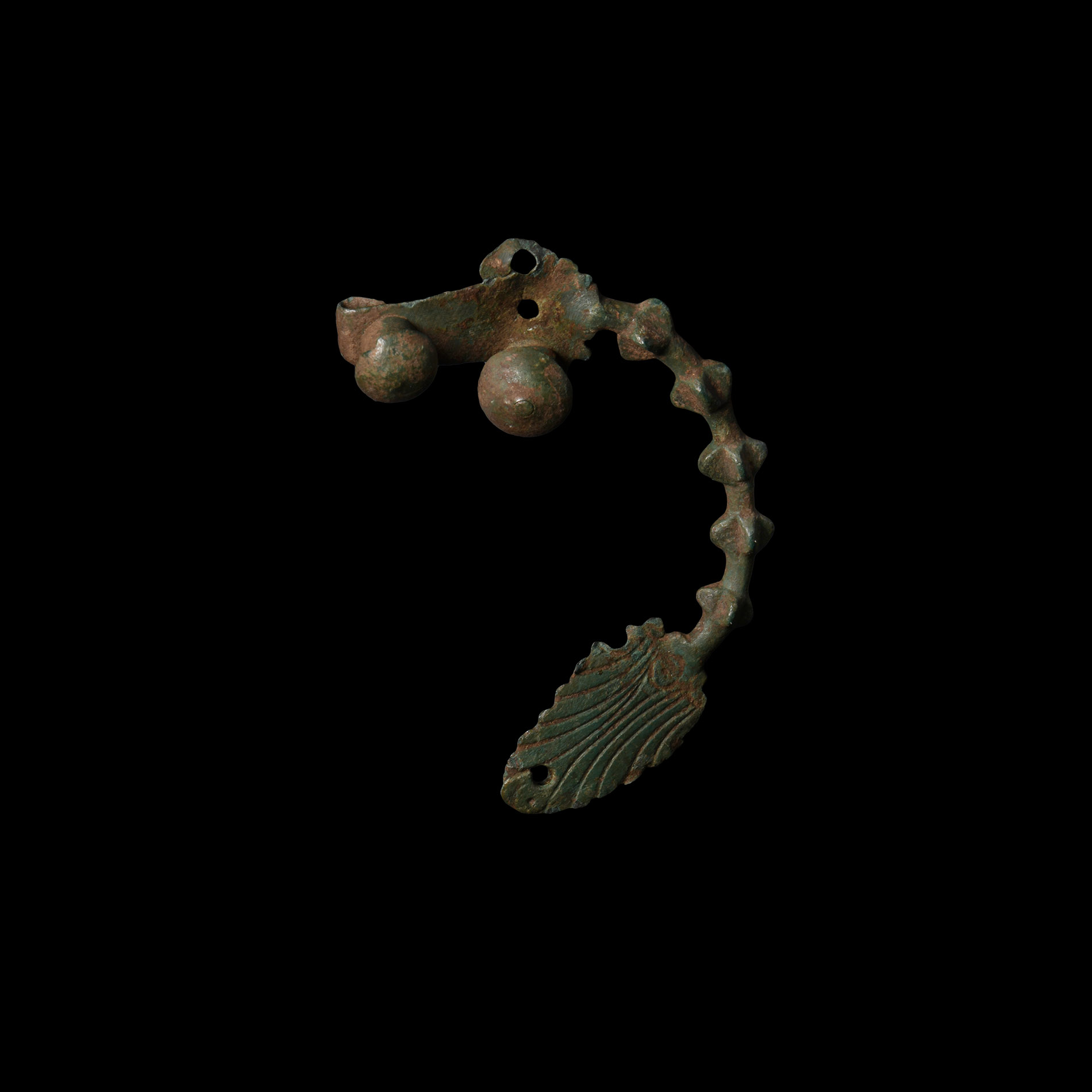
Greek Bronze Crescent Brooch
CIRCA 3RD CENTURY B.C.
2 1/8 in. (6.7 grams, 55 mm).
Comprising a bow with transverse ribs and vine-leaf terminals; one terminal pierced to accept the pin; the other with bossed stops. [No Reserve]
ProvenanceAcquired in the early 1980s.
Ex property of a Middlesex, UK, gentleman.
TimeLine Auctions follows a vetting process to ensure the authenticity and legality of all items, reinforcing our commitment to integrity and responsible trading. Each antiquity, antique, and coin lot undergoes thorough examination by a vetting committee of at least ten external specialists, professional trade association members, scientists, and archaeologists: Our Vetting Process
AUCTIONS:
TimeLine is a leading auction house specialising in antiquities, ancient art, collectables, natural history, coins, medals, and books. Our auctions offer museums, collectors, historians, and enthusiasts the opportunity to acquire unique and historically significant pieces.
-
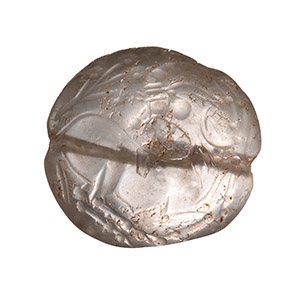
Minoan Lentoid Rock Crystal Seal
Circa 1450-1375 B.C.Sold for (Inc. bp): £2,470
Displaying an incuse bull or other horned quadruped looking backwards; drilled for suspension. 3.63 grams, 18 mm
Acquired in 1970. with Coins and Antiquities, formerly known as D.J. Crowther Ltd, Mayfair, London, UK. Private collection of a London antiquarian.
The style of the lentoid seal has similarities with an agate lentoid seal from Fourni, Archanes, dated to the last period of the Cretan Palace in Knossos, before the island was occupied by the Achaeans. On the Cretan lentoid seals, single animals or a group of animals are plentiful. One of the most common motifs is that of a reclining or standing animal. Single animals are sometimes depicted with contorted bodies. -
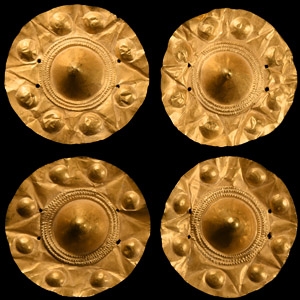
Sarmatian Gold Dress Mount Group
1st-3rd century A.D.Sold for (Inc. bp): £975
Each composed of a sheet-metal disc with central repoussé conical dome, concentric borders of faux strip twist wire; the edge with shallow domes and a sunburst motif, four fastening holes to each element. 14.75 grams total, 63-66 mm wide
From the collection of a North American gentleman, formed in the 1990s.
Ornamental discs of this type decorated the long dresses of Sarmatian princesses, arranged vertically on long garments, on shawls, and on the upper shoulders. They were fixed to the garments through sewing, using the fastening holes. -
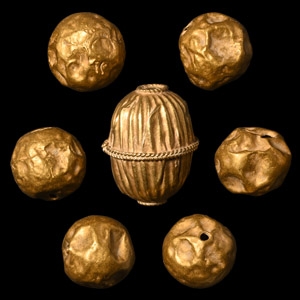
Hellenistic Large Gold Beads with Decoration
2nd-1st century B.C.Estimate: £500 - 700 (+bp*)
Opening Bid: £250
Six spherical with denting; one capsule-shaped with ribbing and medial filigree band. 9.79 grams total, 13-20 mm
From the private collection of the late Mr S.M., London, UK, thence by descent.
