
Loading, please wait...
LOT 0621
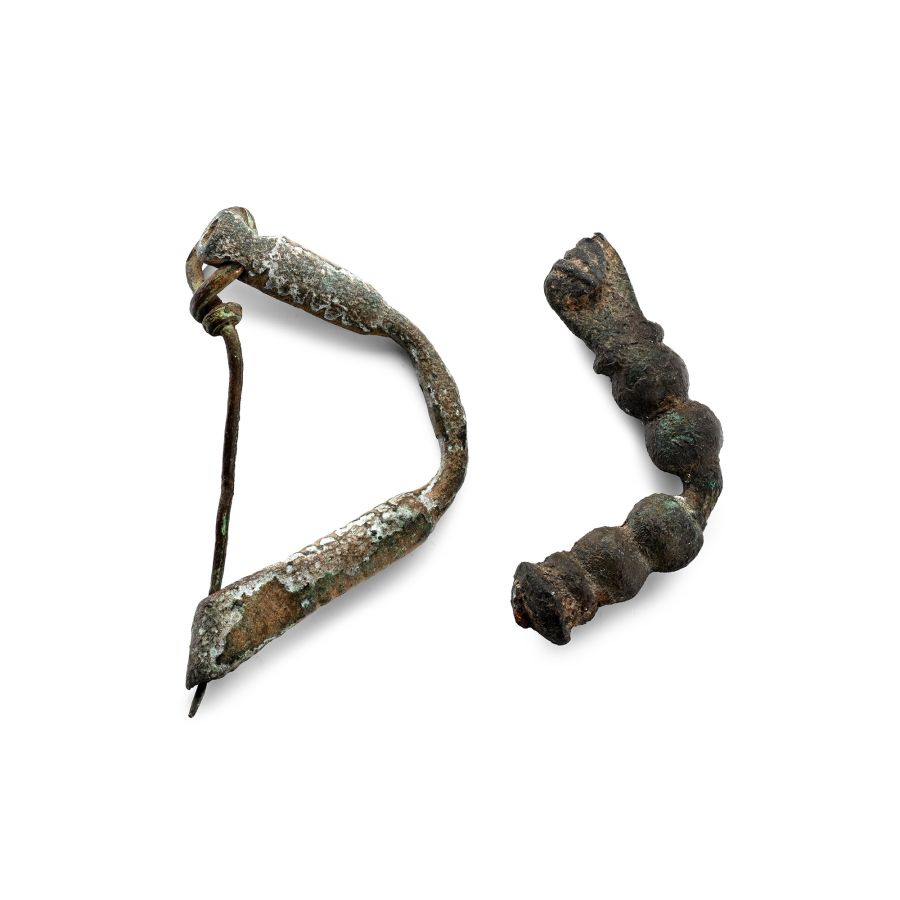
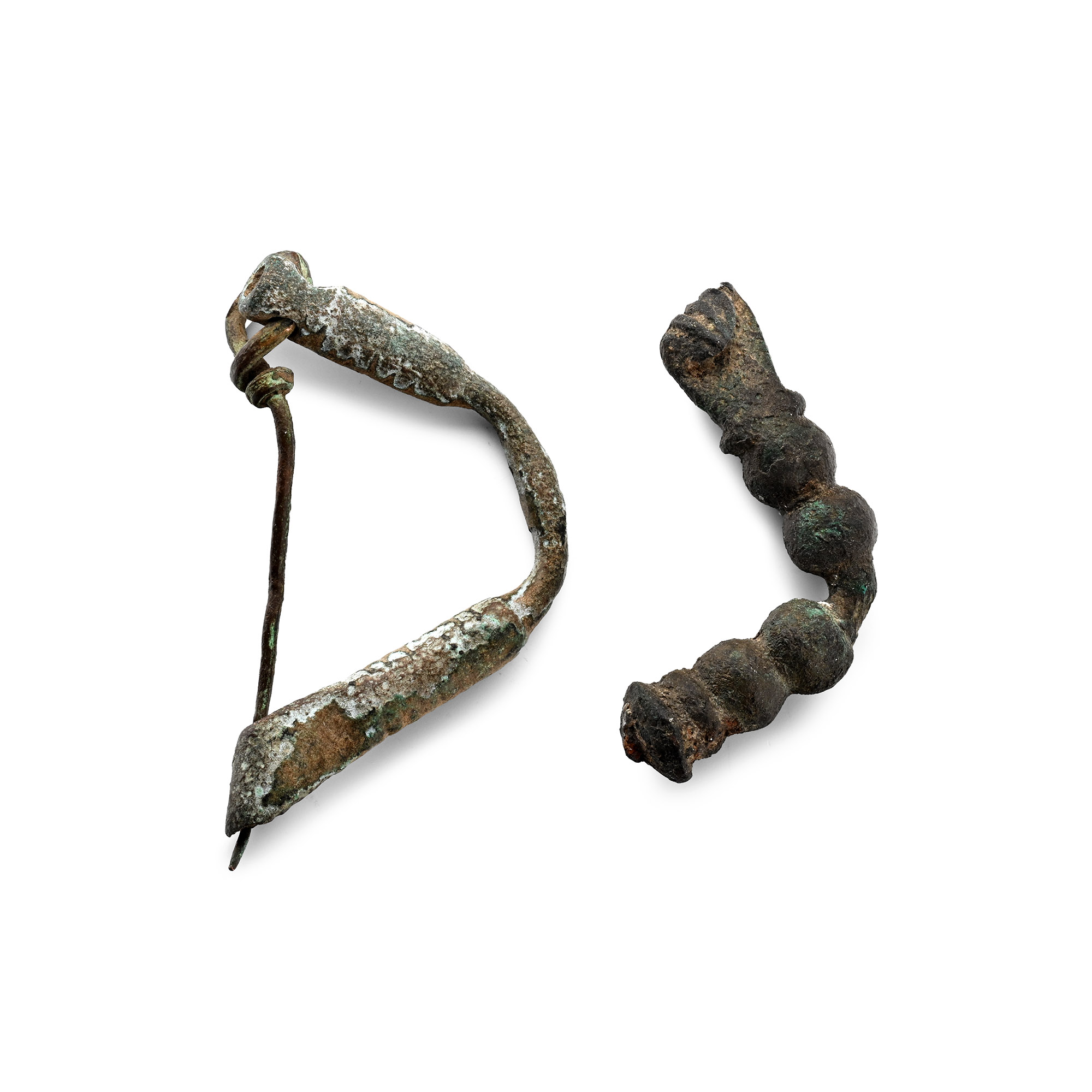
Greek Bronze Bow Brooch Group
4TH-2ND CENTURY B.C.
1 5/8 - 2 in. (25.5 grams total, 43-53 mm).
Each comprising a thick segmented bow with an integral coiled spring to one end, developing to a sturdy pin; to the other end, a U-section lobed catchplate on a single-coil spring. [2, No Reserve]
ProvenancePreviously in a European collection formed prior to 1980.
From a private collection formed in the Netherlands.
From the property of a late Lincolnshire, UK, gentleman.
Cf. Beck, H. et al., Fibel und Fibeltracht, Berlin, 2000, abb.86, for type.
CONDITIONTimeLine Auctions follows a vetting process to ensure the authenticity and legality of all items, reinforcing our commitment to integrity and responsible trading. Each antiquity, antique, and coin lot undergoes thorough examination by a vetting committee of at least ten external specialists, professional trade association members, scientists, and archaeologists: Our Vetting Process
AUCTIONS:
TimeLine is a leading auction house specialising in antiquities, ancient art, collectables, natural history, coins, medals, and books. Our auctions offer museums, collectors, historians, and enthusiasts the opportunity to acquire unique and historically significant pieces.
-
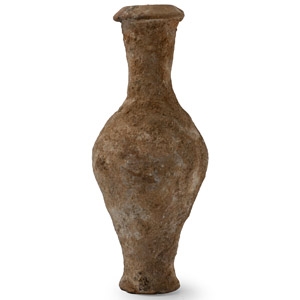
Hellenistic Terracotta Spindle Flask
4th-3rd century B.C.Sold for (Inc. bp): £59
With narrow neck and chamfered mouth, developing to a biconical body and flared foot; old label 'ΓΓΣΣ' to shoulder. 86 grams, 11.1 cm
Private Derby, UK, antiquities collection. From the property of a late Lincolnshire, UK, gentleman. -
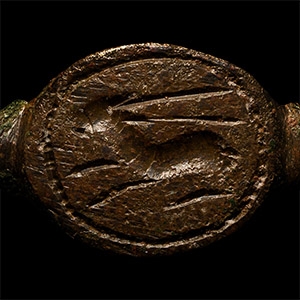
Parthian Bronze Engraved Ring
1st century B.C.-1st century A.D.Sold for (Inc. bp): £78
Comprising a D-section hoop with bulb to the underside, stepped shoulders, ellipsoid plaque with low-relief running ibex motif. 23.82 grams, 20.50 mm overall, 23.84 mm internal diameter (approximate size British N 1/2, USA 6 3/4, Europe 14.35, Japan 13)
Paris, France, art market, 1990s. From the collection of G.M.R.H., London, UK. -
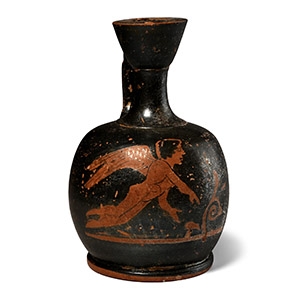
Greek Red-Figure Lekythos with Eros
Attic, circa 4th century B.C.Sold for (Inc. bp): £975
With flared foot, waisted neck and everted rim, strap handle to the rear; painted with a scene of winged Eros in flight above a baseline, with frond. 106 grams, 10.9 cm
Property of a private Rutland, UK, collector, formed from at least from the 1990s.
