
Loading, please wait...
LOT 1144
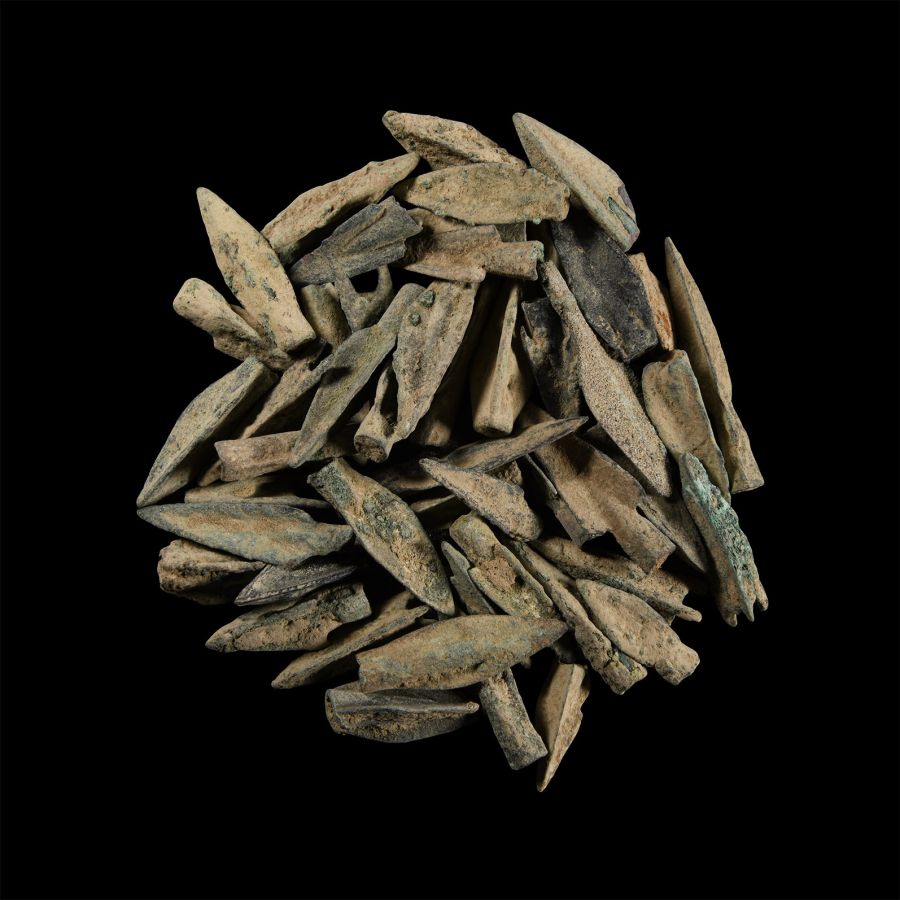
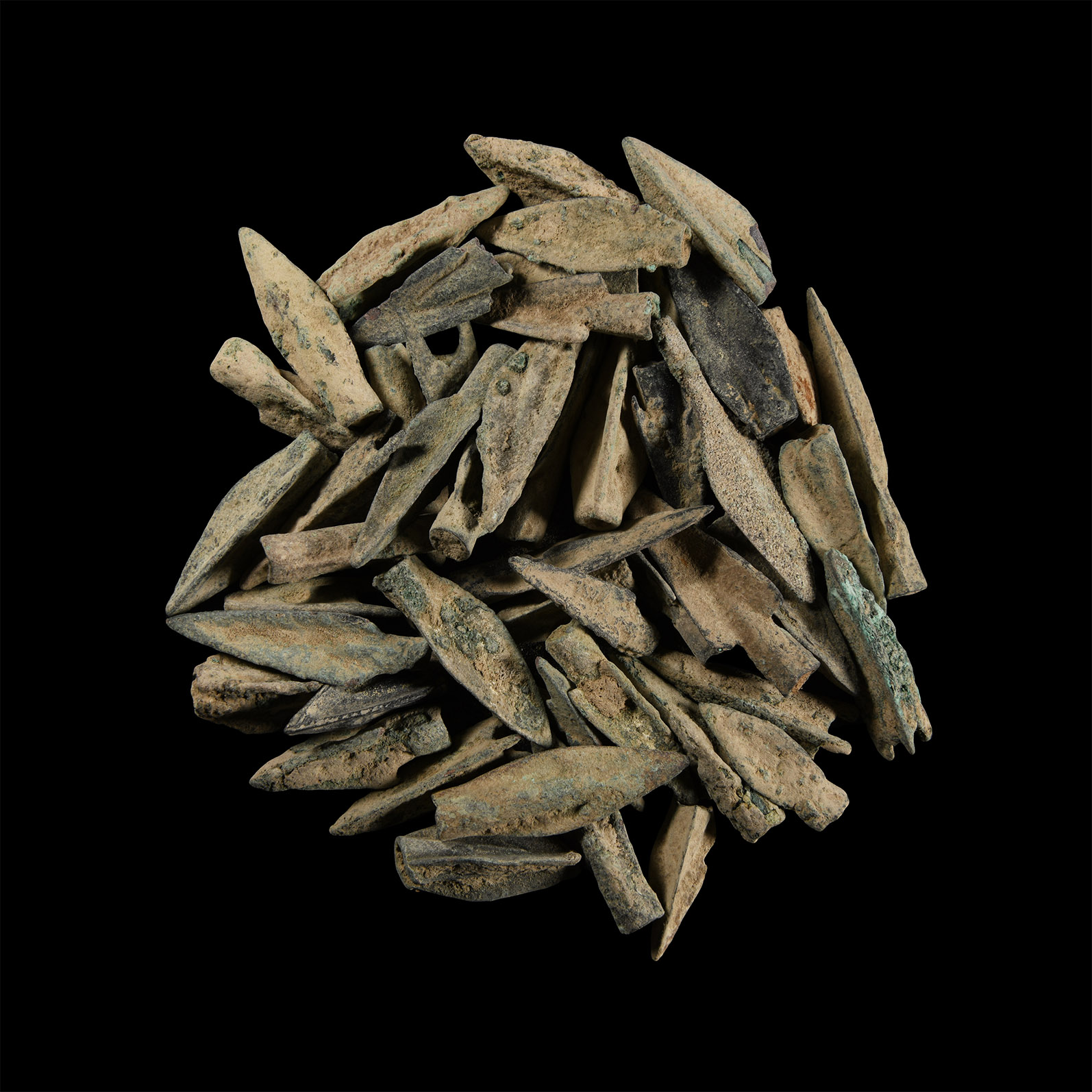
Greek Bronze Arrowhead Group
CIRCA 5TH-3RD CENTURY B.C.
1 - 1 3/4 in. (186 grams, 26-45 mm).
Primarily composed of socketted types, most triangular in section. [50, No Reserve]
ProvenanceEx private collection, 1980s.
Acquired on the UK art market in the 1990s.
TimeLine Auctions follows a vetting process to ensure the authenticity and legality of all items, reinforcing our commitment to integrity and responsible trading. Each antiquity, antique, and coin lot undergoes thorough examination by a vetting committee of at least ten external specialists, professional trade association members, scientists, and archaeologists: Our Vetting Process
AUCTIONS:
TimeLine is a leading auction house specialising in antiquities, ancient art, collectables, natural history, coins, medals, and books. Our auctions offer museums, collectors, historians, and enthusiasts the opportunity to acquire unique and historically significant pieces.
-
.jpg)
Archaic Greek Modified Bronze Corinthian Helmet
Late 7th-early 6th century B.C.Estimate: £4,000 - 6,000 (+bp*)
Opening Bid: £2,000
Consisting of two sections joined with bronze rivets; above a domed section with row of rivets; below, a folded band with rolled rim, with rivets to the rear holding two halves; line of holes to the base for securing an inner lining. 2.2 kg total, 31.5 cm high including stand
Acquired in the 1970s. Ex private Austrian collection. The Kusmirek Collection, UK. Accompanied by an academic report by Dr Raffaele D'Amato. Accompanied by a metal analysis and appraisal by Dr Brian Gilmour. This lot has been checked against the Interpol Database of stolen works of art and is accompanied by search certificate number no.11764-203980.
The upper part of the helmet was probably modified in antiquity, the lower part of the eye holes and the cheek pieces have been cut away, and replacement cheek pieces, now lacking, were once crudely rivetted to the sides. -
.jpg)
British 1796 Pattern Light Cavalry Officer's Sword
19th century A.D.Sold for (Inc. bp): £1,040
Composed of a curved blade with broad fuller, facetted steel stirrup hilt and grip retaining its original wire-bound leather; accompanied by the sword's steel scabbard. 1.7 kg, 1.01 m
Acquired from Military Swords Ltd, UK, 2015. The Kusmirek Collection, UK. Accompanied by a copy of the purchase invoice and item details. -
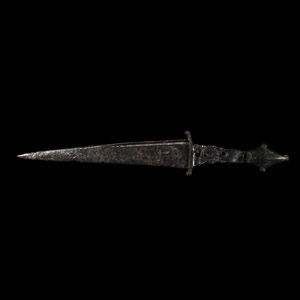
Medieval Quillon Dagger with Bronze Pommel
England or Germany, 16th century A.D.Sold for (Inc. bp): £1,430
Featuring a hexagonal brass pommel engraved with a fleur-de-lis to one side and a dragon to the other; pierced tang, two short quillons inclining towards the blade, terminating in lion head-shaped finials; straight single-edged blade, with side ridges to both faces of the blade, tapering to a fine point. 177 grams, 34 cm
Tang is heavily corroded, trace of employment on the battlefield.
Acquired 1960s-1990s. Late Alison Barker collection, a retired London barrister.
Quillon daggers were predominantly employed as a military weapon. During the 16th century, this dagger continued to be popular, although the hilt no longer resembled that of the contemporary sword, as sword hilts had developed into more intricate forms.
