
Loading, please wait...
LOT 1489
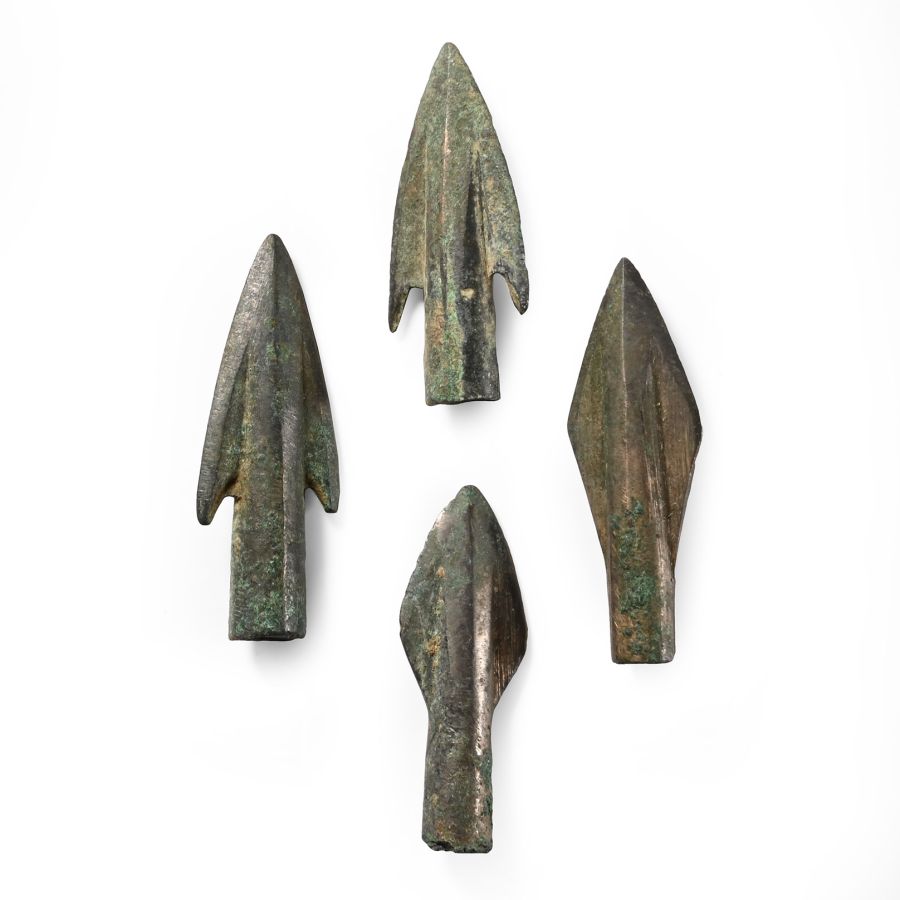
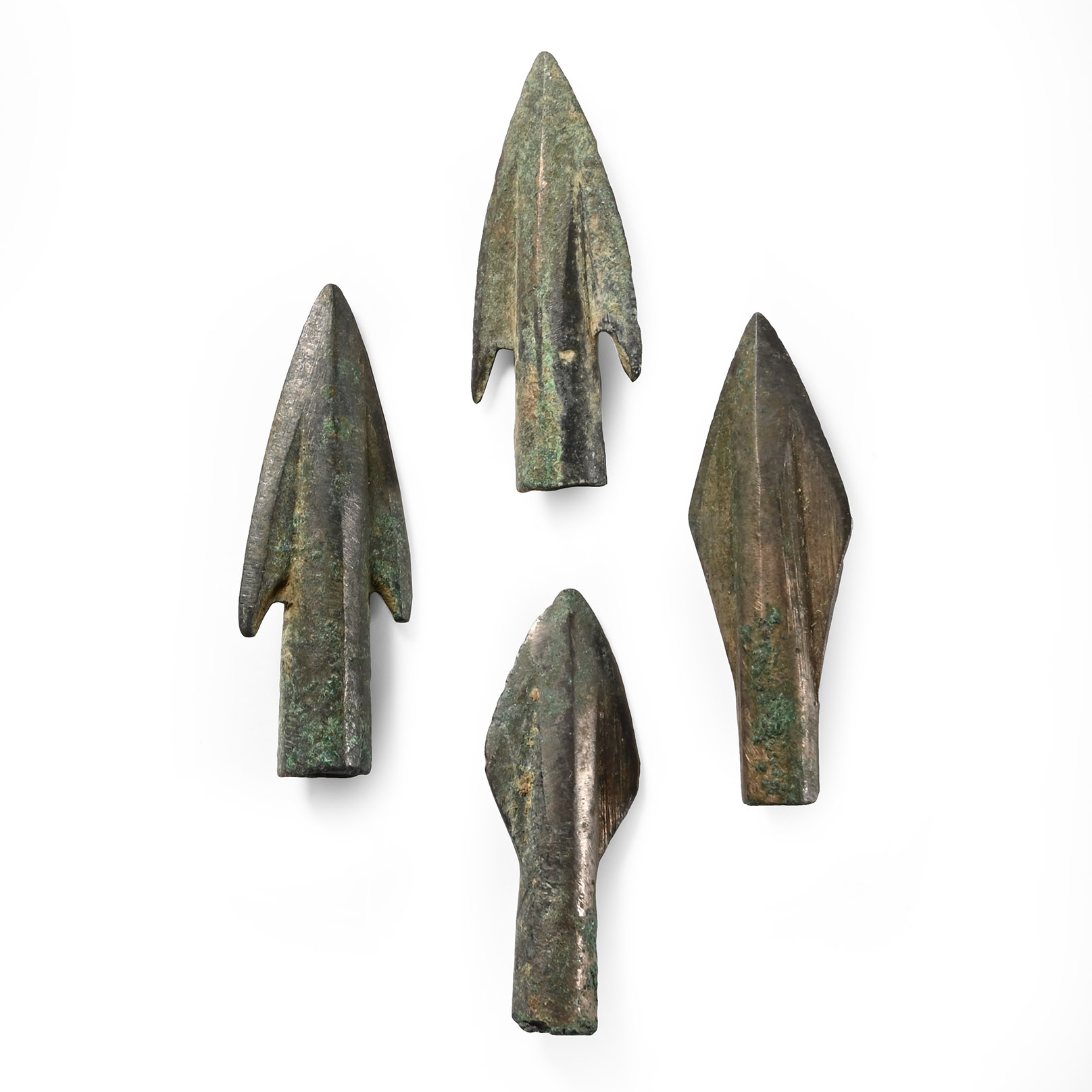
Greek Bronze Arrowhead Collection
CIRCA 5TH-3RD CENTURY B.C.
1 1/4 - 1 1/2 in. (25 grams total, 33-38 mm).
Comprising four socketted arrowheads, mainly triangular or foliate in section, trilobate and with short socket, one with holes for the application of incendiary material; two with barbs. [4, No Reserve]
ProvenanceUK private collection before 2000.
Acquired on the UK art market.
Property of a London gentleman.
Cf. Furtwängler, A., Olympia. Die Ergebnisse der von dem Deutschen Reich veranstalteten Ausgrabung, Band 4. 2 Bände (Textband, Tafelband), Berlin, 1890, pl.LXIV, nos.1076, 1079, 1082, 1083, 1086, 1090; Sekunda, N., Marathon 490 BC, The first Persian invasion of Greece, Oxford, 2002, p.60.
FootnotesIn Greek warfare archery was mainly employed by Scythians and Cretans for longer-ranks. Both used composite bows made of wood, horn, bone and sinew.
CONDITIONTimeLine Auctions follows a vetting process to ensure the authenticity and legality of all items, reinforcing our commitment to integrity and responsible trading. Each antiquity, antique, and coin lot undergoes thorough examination by a vetting committee of at least ten external specialists, professional trade association members, scientists, and archaeologists: Our Vetting Process
AUCTIONS:
TimeLine is a leading auction house specialising in antiquities, ancient art, collectables, natural history, coins, medals, and books. Our auctions offer museums, collectors, historians, and enthusiasts the opportunity to acquire unique and historically significant pieces.
-
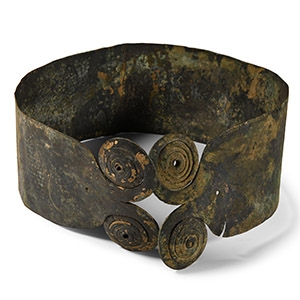
Luristan Bronze Armour Belt with Double Scroll Terminals
9th-7th century B.C.Sold for (Inc. bp): £169
A broad hammered military belt or cuirass band with plain surface, the terminals shaped as a double spiral ornament, holes in the centre of both ends for fastening. 330 grams, 22 cm
UK private collection before 2000. Acquired on the UK art market. Property of a London gentleman.
The rich and noble aristocrats of Luristan, Elamites, Hurrians, Lullubians, Kutians, and Kassites, went to battle splendidly equipped and used magnificent bronze armours. For metal sheets used for quiver plaques and bronze protective belts or shields, they used the hammering technique (Čakoškāri). -
.jpg)
Lead Musket Ball Collection
17th-18th century A.D.Sold for (Inc. bp): £221
Group of ninty-nine lead musket and pistol balls. 2.08 kg total, 12-18 mm
UK gallery, early 2000s. -
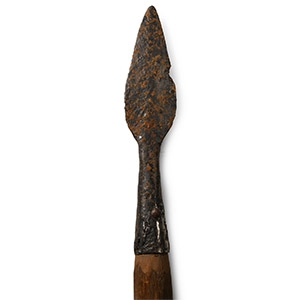
Medieval Iron Spear with Replacement Shaft
14th-16th century A.D. and laterSold for (Inc. bp): £85
With split socket and small lozenge-shaped head, lentoid in section; conical ferrule; wooden shaft replaced. 664 grams, 161.5 cm
From the collection of the famous author, writer and speaker, Gordon Bailey, Essex, UK; formed since 1968.
