
Loading, please wait...
LOT 1460
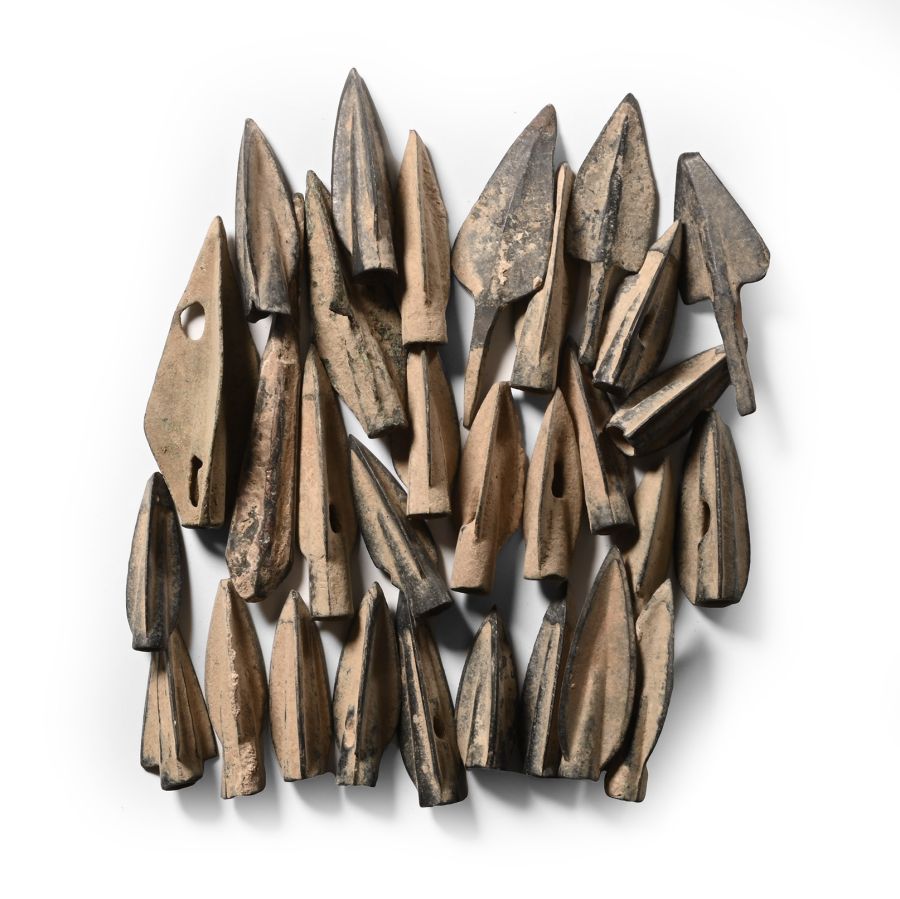
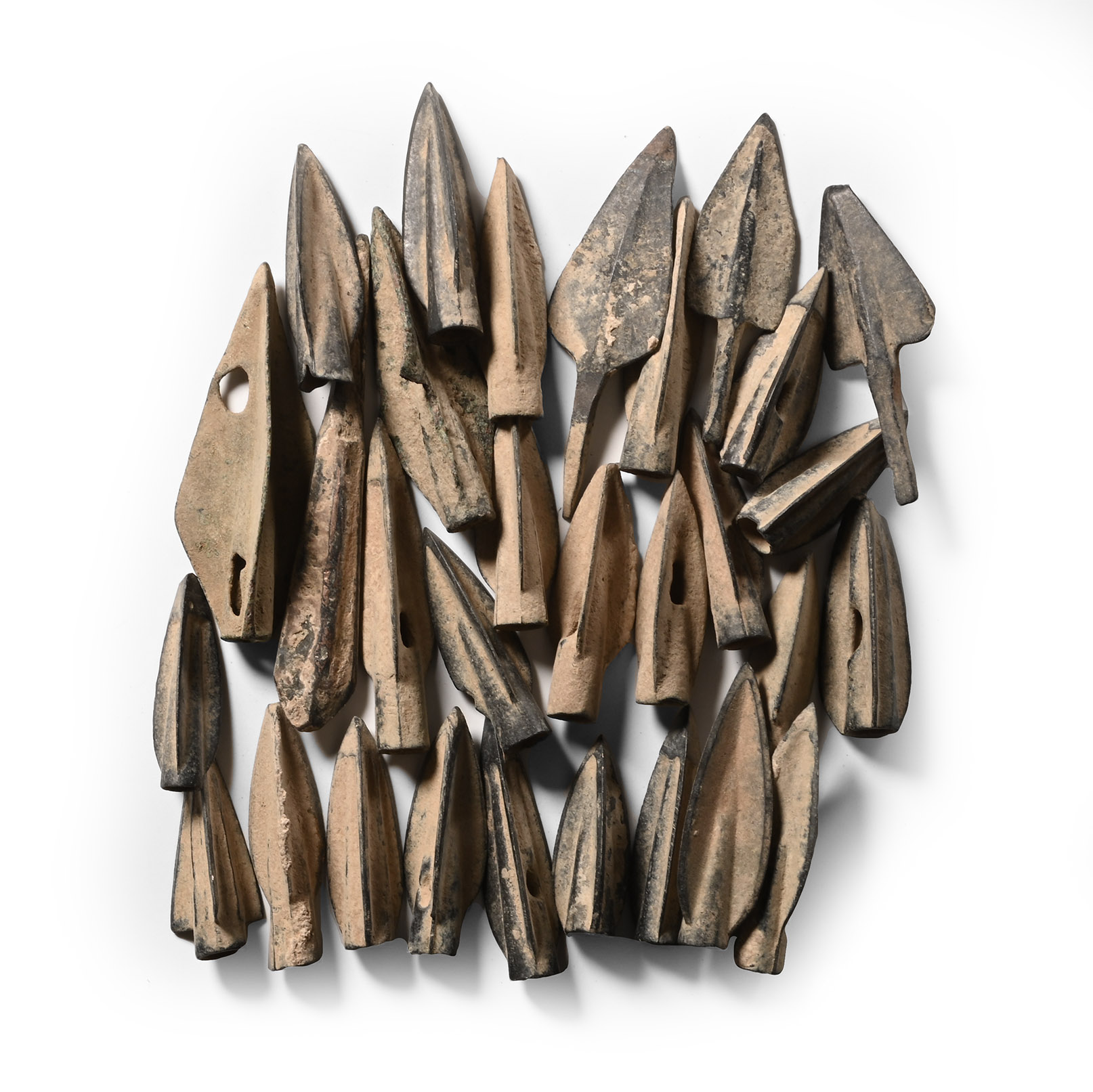
Greek Bronze Arrowhead Collection
CIRCA 5TH-3RD CENTURY B.C.
1 - 2 1/4 in. (104 grams total, 23-58 mm).
Including triangular-section sockettedtype, triangular barbed type, tanged leaf-shaped type and others. [30]
ProvenanceEx London, UK, collection, 1990s.
CONDITIONTimeLine Auctions follows a vetting process to ensure the authenticity and legality of all items, reinforcing our commitment to integrity and responsible trading. Each antiquity, antique, and coin lot undergoes thorough examination by a vetting committee of at least ten external specialists, professional trade association members, scientists, and archaeologists: Our Vetting Process
AUCTIONS:
TimeLine is a leading auction house specialising in antiquities, ancient art, collectables, natural history, coins, medals, and books. Our auctions offer museums, collectors, historians, and enthusiasts the opportunity to acquire unique and historically significant pieces.
-
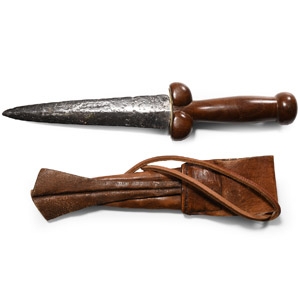
Medieval Iron Kidney Dagger with Replacement Handle and Sheath
15th century A.D. and laterSold for (Inc. bp): £442
Hand-forged two-edged iron knife blade with modern replacement hilt and leather sheath with saddle-stitched detailing. 336 grams total, 34.5 cm
From the collection of the famous author, writer and speaker, Gordon Bailey, Essex, UK; formed since 1968. -
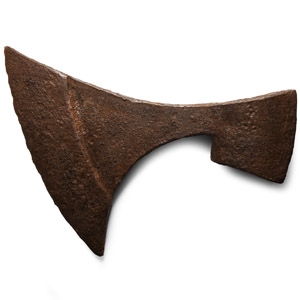
Medieval Iron Broad Axehead with Maker's Mark
Circa 14th-15th century A.D.Sold for (Inc. bp): £468
The socket D-shaped in plan with gently curved rear edge, narrow neck ad swept curve to the blade with forge-welded steel edge; lateral stamped mark. 700 grams, 210 mm
Ex private North American collection, California, USA, 1970s-1990s. -
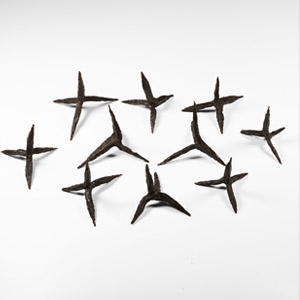
Medieval Iron Caltrop Anti-Cavalry Group
13th-15th century A.D.Sold for (Inc. bp): £182
Comprising ten anti-cavalry caltrops, hand-forged with square-section spikes. 536 grams total, 72-98 mm
From the private collection of a London gentleman, from his grandfather's collection formed before the early 1970s.
Caltrops were scattered on battlefields in an effort to stop or slow advancing enemy cavalry or foot soldiers; regardless of how a caltrop lands, one spike is always facing upwards.
