
Loading, please wait...
LOT 1389
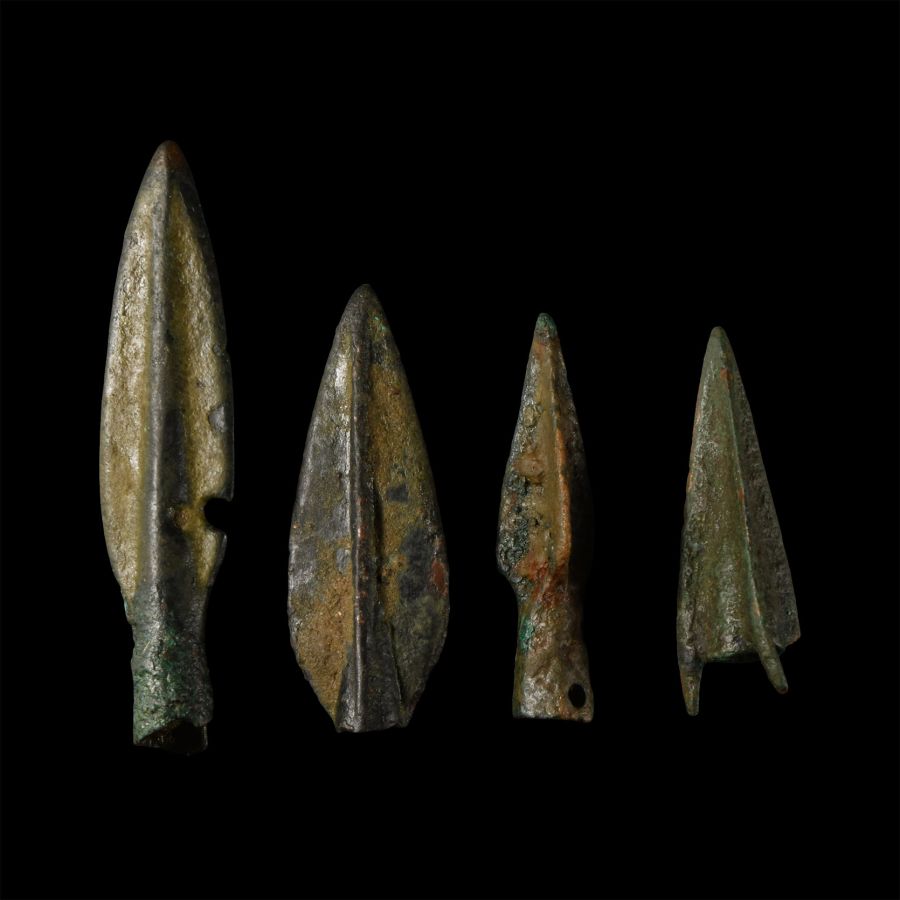
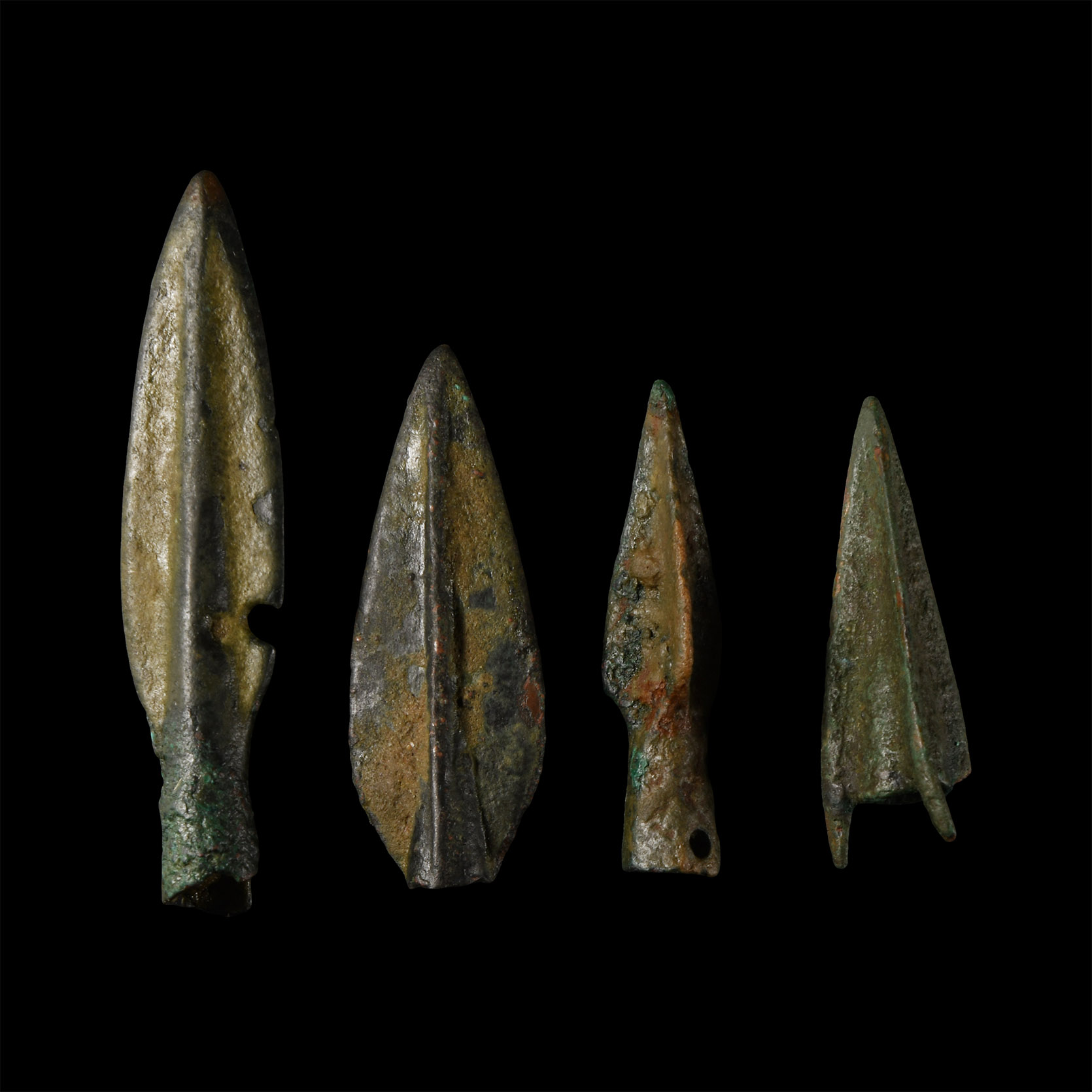
Greek Bronze Arrowhead Collection
CIRCA 5TH-3RD CENTURY B.C.
1 3/8 - 2 in. (18 grams total, 34-52 mm).
Comprising: two leaf-shaped with raised midribs; one triangular with barbs; one triangular with short socket. [4, No Reserve]
ProvenanceFrom an old UK collection, acquired on the UK art market.
Property of a Shropshire private collector.
TimeLine Auctions follows a vetting process to ensure the authenticity and legality of all items, reinforcing our commitment to integrity and responsible trading. Each antiquity, antique, and coin lot undergoes thorough examination by a vetting committee of at least ten external specialists, professional trade association members, scientists, and archaeologists: Our Vetting Process
AUCTIONS:
TimeLine is a leading auction house specialising in antiquities, ancient art, collectables, natural history, coins, medals, and books. Our auctions offer museums, collectors, historians, and enthusiasts the opportunity to acquire unique and historically significant pieces.
-
.jpg)
Khazar Iron Sabre with Gilt Bronze Cross Guard
9th century A.D.Sold for (Inc. bp): £975
A single-edged hand-forged sabre with a gently curving blade, an iron band welded beneath the cross guard, together with a tongue along the side of the blade; the separate gilt cross guard with spherical ornamented finials to the quillons, the central panel with a stylised face flanked by a pair of leaping lions biting the top of the head, the other side with a lozenge within a ropework frame. 610 grams, 80.5 cm
Fine condition.
Acquired 1971-1972. From the collection of the vendor's father. Property of a London, UK, collector. Accompanied by an academic report by military specialist Dr Raffaele D'Amato. This lot has been checked against the Interpol Database of stolen works of art and is accompanied by search certificate no.114437-196034.
This exceptional sabre shows similarity with examples from the Caucasus and Kuban regions. The blade could be Khazar-Magyar, and certainly its best parallels are the specimens from Verchne-Szaltovo area. According to M. Gorelik, some of these sabres were produced by the Kabarians, a breakaway tribe from the Khazar State, who formed an alliance with the Magyars. The extra band welded beneath the quillons, together with the side tongue, not only protected the scabbard from being cut by the blade but, more importantly, defended the warrior’s fingers which were wrapped around the quillons when fighting. -
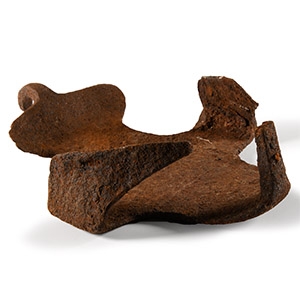
Roman Iron 'Hipposandalus' Military Horseshoe
1st-4th century A.D.Sold for (Inc. bp): £494
Iron shoe with lateral curved plates and vertical bar to the front, rear panel with hooked spur for attachment. 350 grams, 16.5 cm
From a collection acquired on the UK art market from various auction houses and collections mostly before 2000. From an important Cambridgeshire estate; thence by descent.
Hipposandals (soleae ferreae) were used on horses with injured hooves, a sort of equine orthopaedic shoe used by the mulomedicus, i.e. a Roman military veterinarian. Another important function was that to protect the hooves of the horse from injuries and damages from hard objects. The hipposandal of type 1 was formed from a sub-oval plate which tapered towards the front and rear with projections at the front, back and on either side. The heel was upturned at about 45 degrees and flared outwards. It would have terminated with a downward facing hook, now missing. The base of the sole was flat. -
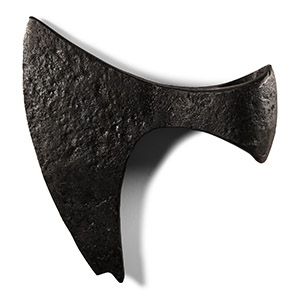
Viking Age Iron Long Bearded Axehead
Circa 10th-12th century A.D.Sold for (Inc. bp): £715
With broad curved blade and short spur beneath the chin, narrow neck, deep socket with extended edge to the reverse. 740 grams, 18 cm
From the collection of a Californian, USA, gentleman, dating back to the late 1960s.
The axe seems to be a variation of type IV of the Kirpichnikov classification of the Eastern Rus Axes typology. These axes appeared in the 10th century, and continued in the 10th-11th century.
