
Loading, please wait...
LOT 0103
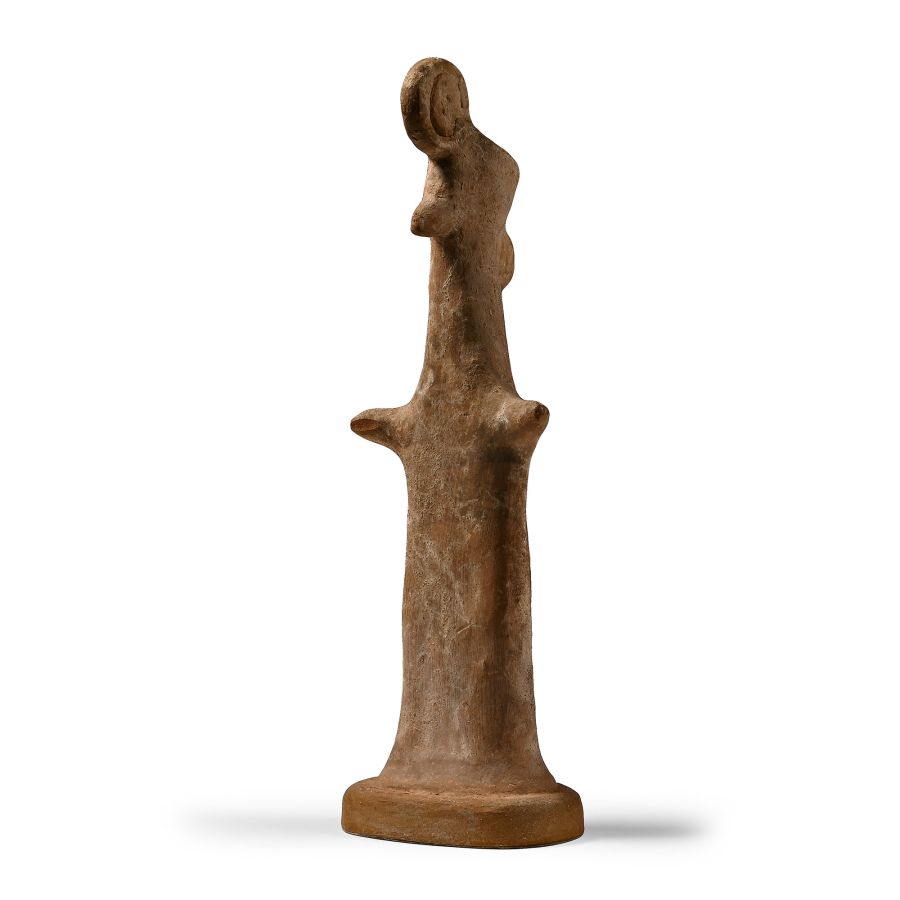
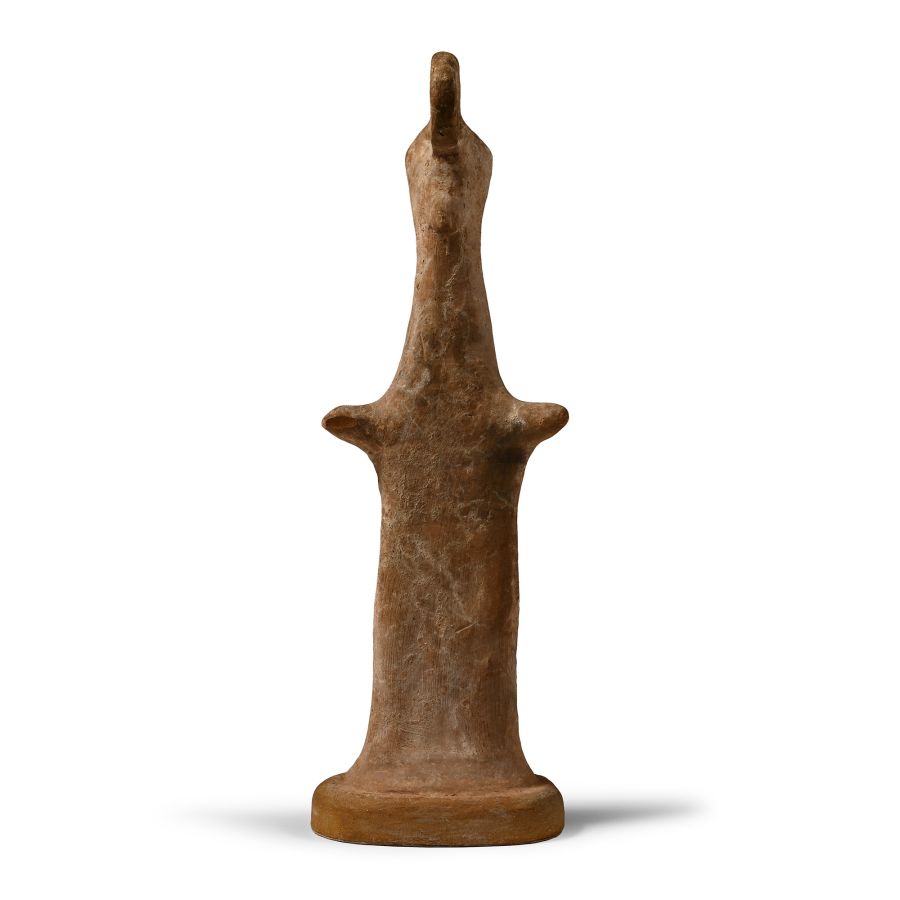
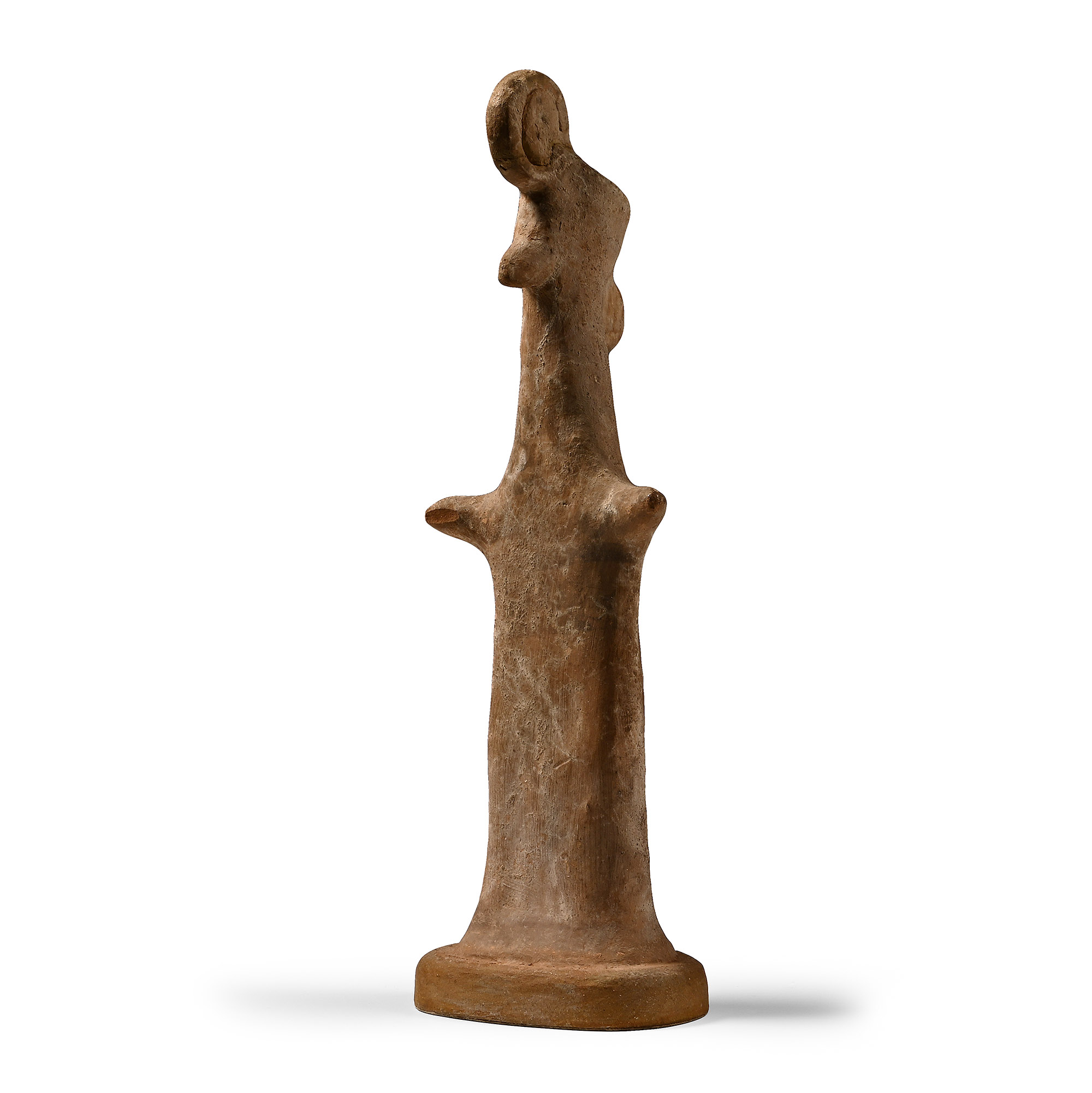
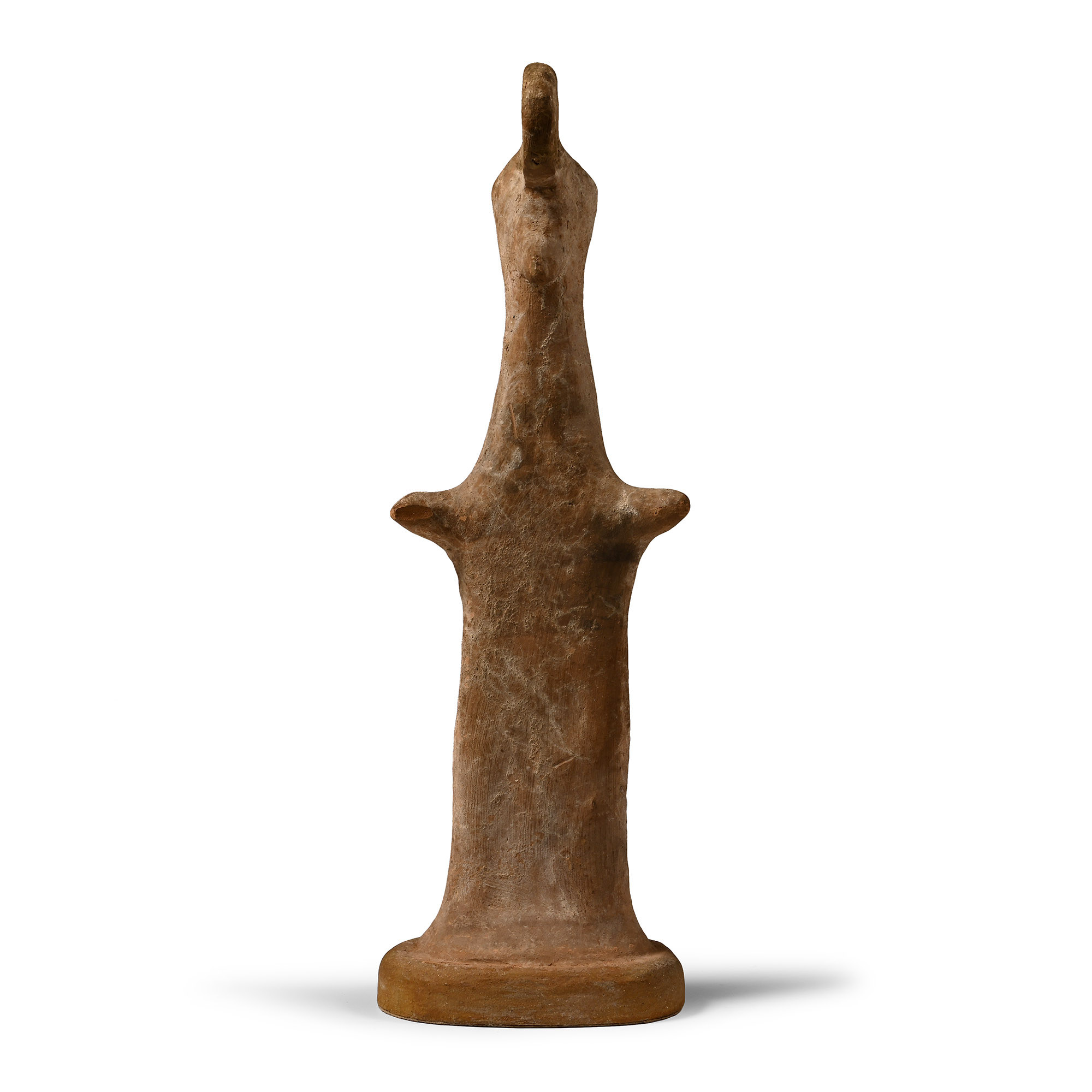
Greek Boeotian Ceramic Pappades Figure
6TH CENTURY B.C.
8 in. (188 grams, 20.5 cm).
Comprising: rectangular section tapering body with small stub arms, tapering neck, pinched conical spur for the nose, chignon to rear of head and scooped headdress with scrolled finial above; traces of geometric applied decoration to body; mounted on a custom-made stand.
ProvenancePrivate collection.
with Sotheby's 11 December 1961, no.121.
with Sotheby's 8 December 1994, no.178.
Accompanied by copies of the relevant 1994 Sotheby's catalogue pages.
This lot has been cleared against the Art Loss Register database, and is accompanied by an illustrated lot declaration signed by the Head of the Antiquities Department, Dr Raffaele D'Amato.
TimeLine Auctions follows a vetting process to ensure the authenticity and legality of all items, reinforcing our commitment to integrity and responsible trading. Each antiquity, antique, and coin lot undergoes thorough examination by a vetting committee of at least ten external specialists, professional trade association members, scientists, and archaeologists: Our Vetting Process
AUCTIONS:
TimeLine is a leading auction house specialising in antiquities, ancient art, collectables, natural history, coins, medals, and books. Our auctions offer museums, collectors, historians, and enthusiasts the opportunity to acquire unique and historically significant pieces.
LOT 0103
Greek Boeotian Ceramic Pappades Figure
Estimate £1,500 - 2,000€1,740 - 2,320 (for guidance only)$2,030 - 2,700 (for guidance only)
-
.jpg)
Greek Silver Ring for Skythos
Circa 5th century B.C.Sold for (Inc. bp): £3,120
Ellipsoid bezel with incuse figure of a running horse, Greek text 'ΣΚΥΘΟΑΓΑΘΗ' for 'the sake of Skythos'. 7.57 grams, 25.17 mm overall, 20.68 mm internal diameter (approximate size British R 1/2, USA 8 3/4, Europe 19.38, Japan 18)
Acquired in the mid 1980s-1990s. Private collection, Switzerland, thence by descent. Private collection, since the late 1990s. This lot has been cleared against the Art Loss Register database, and is accompanied by an illustrated lot declaration signed by the Head of the Antiquities Department, Dr Raffaele D'Amato. -
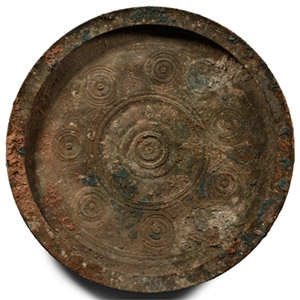
Hellenistic Decorated Bronze Mirror
2nd century B.C.Estimate: £300 - 400 (‡+bp*)
Opening Bid: £135
Discoid with slightly raised rim, low-relief concentric ring detailing to the reverse. 440 grams, 15.1 cm
Acquired in the mid 1995. Private collection, Switzerland, thence by descent. Private collection, since the late 1990s. This lot is accompanied by an illustrated lot declaration signed by the Head of the Antiquities Department, Dr Raffaele D'Amato.
The category of this mirror is similar to those of the Cesnola collection, from Cyprus at the Metropolitan Museum. They consist of heavy circular disks, provided with low cylindrical rims. They were made in pairs, and polished respectively on the recessed and flat sides. The unpolished sides were ornamented with concentric-circle ornaments and concentric mouldings. -
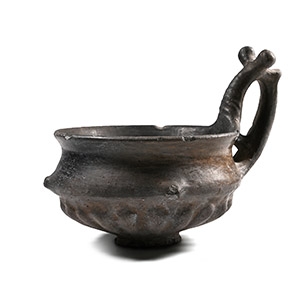
Villanovan Impasto Kyathos with Zoomorphic Handle
7th century B.C.Sold for (Inc. bp): £338
Modelled with squat body and raised openwork handle with two projecting lobes to the top, the body with three raised bosses on the shoulder and the base with raised petals radiating from the low foot. 208 grams, 13.3 cm wide
Ulrike Feuz-Lauprecht, NIKE Kunst der Antike, Bremgarten 9 April 1991. Private collection, Bern, Switzerland. This lot is accompanied by an illustrated lot declaration signed by the Head of the Antiquities Department, Dr Raffaele D'Amato.
