
Loading, please wait...

LOT 0073
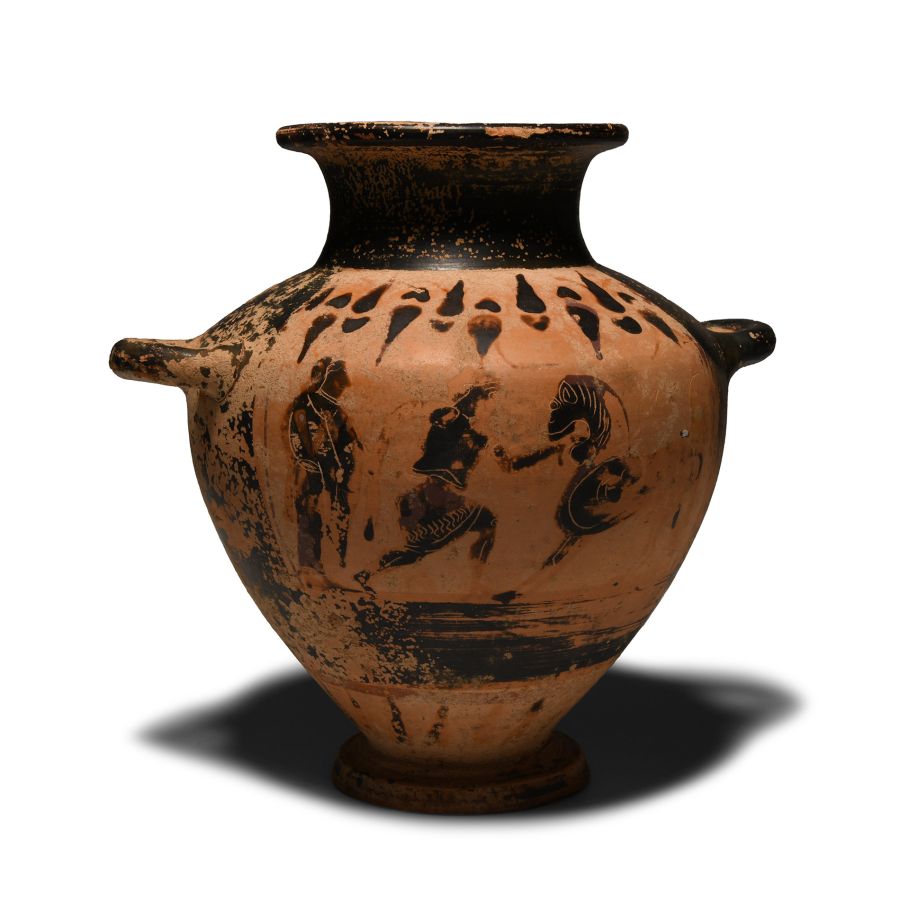
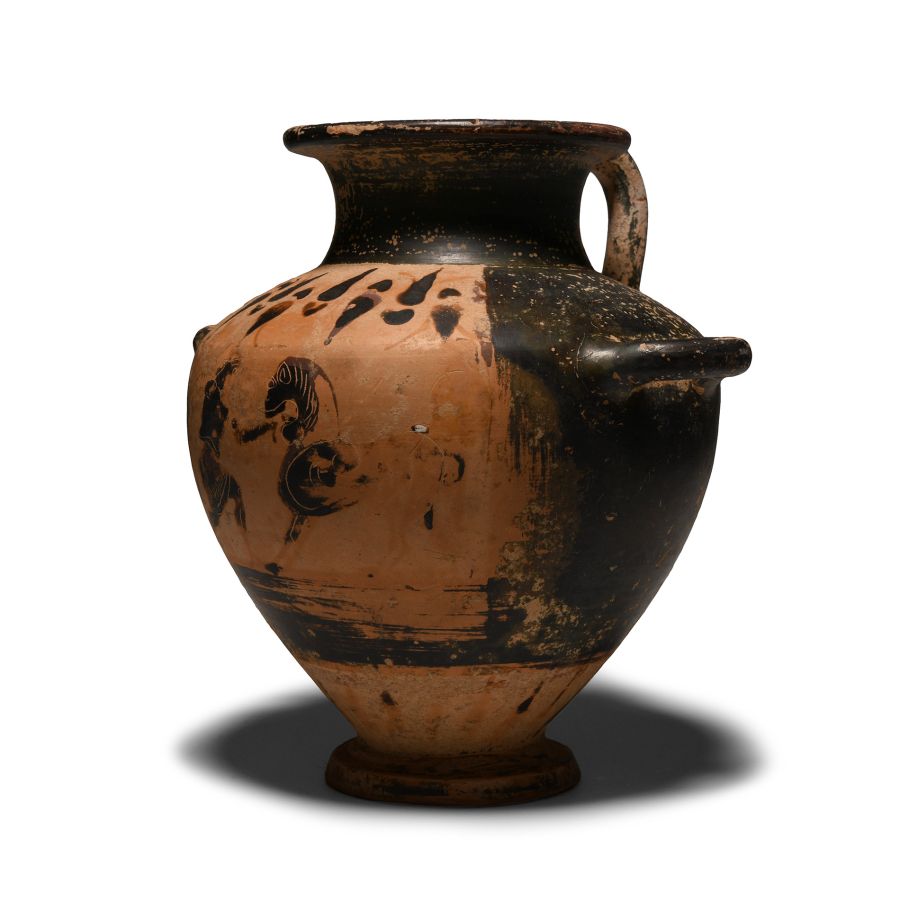
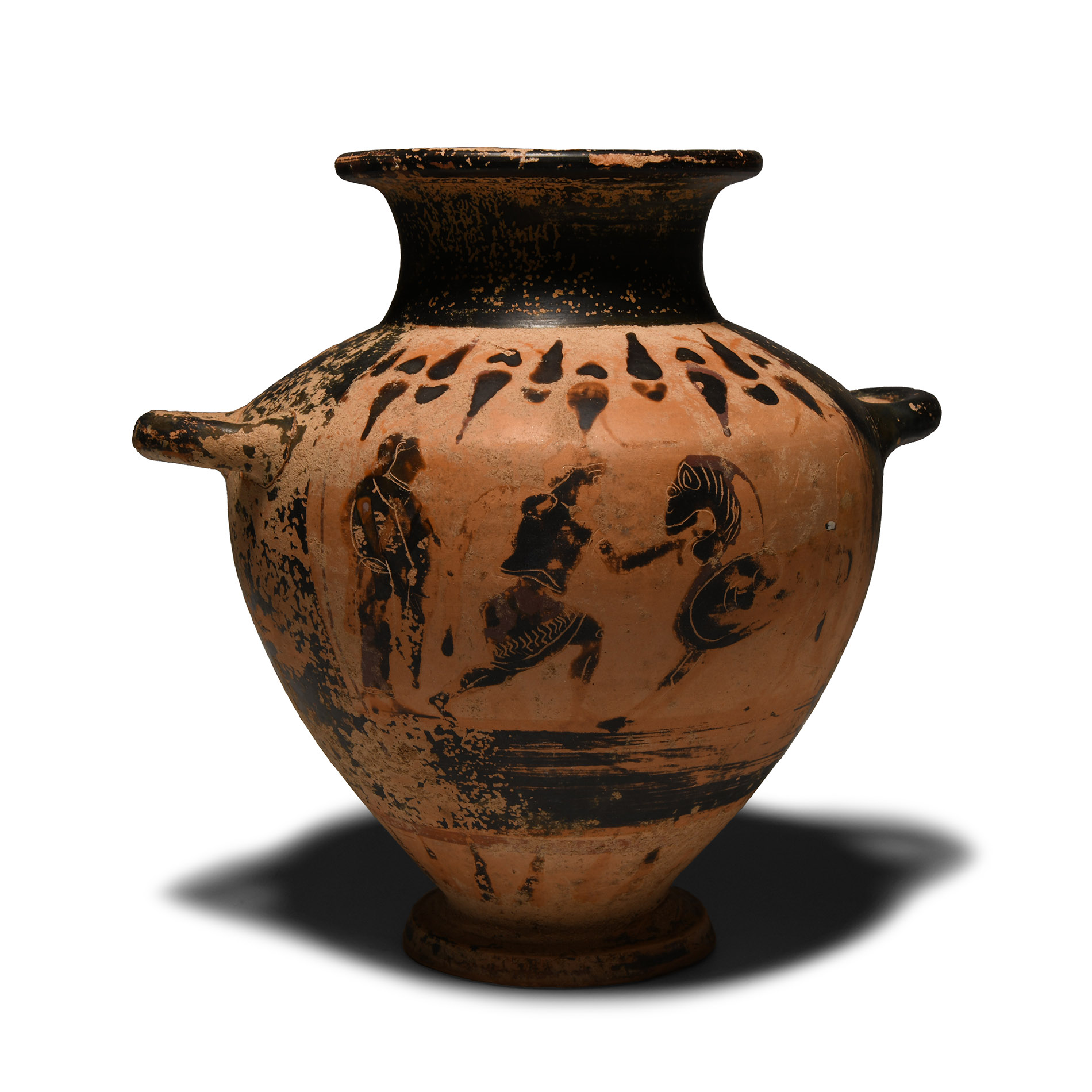
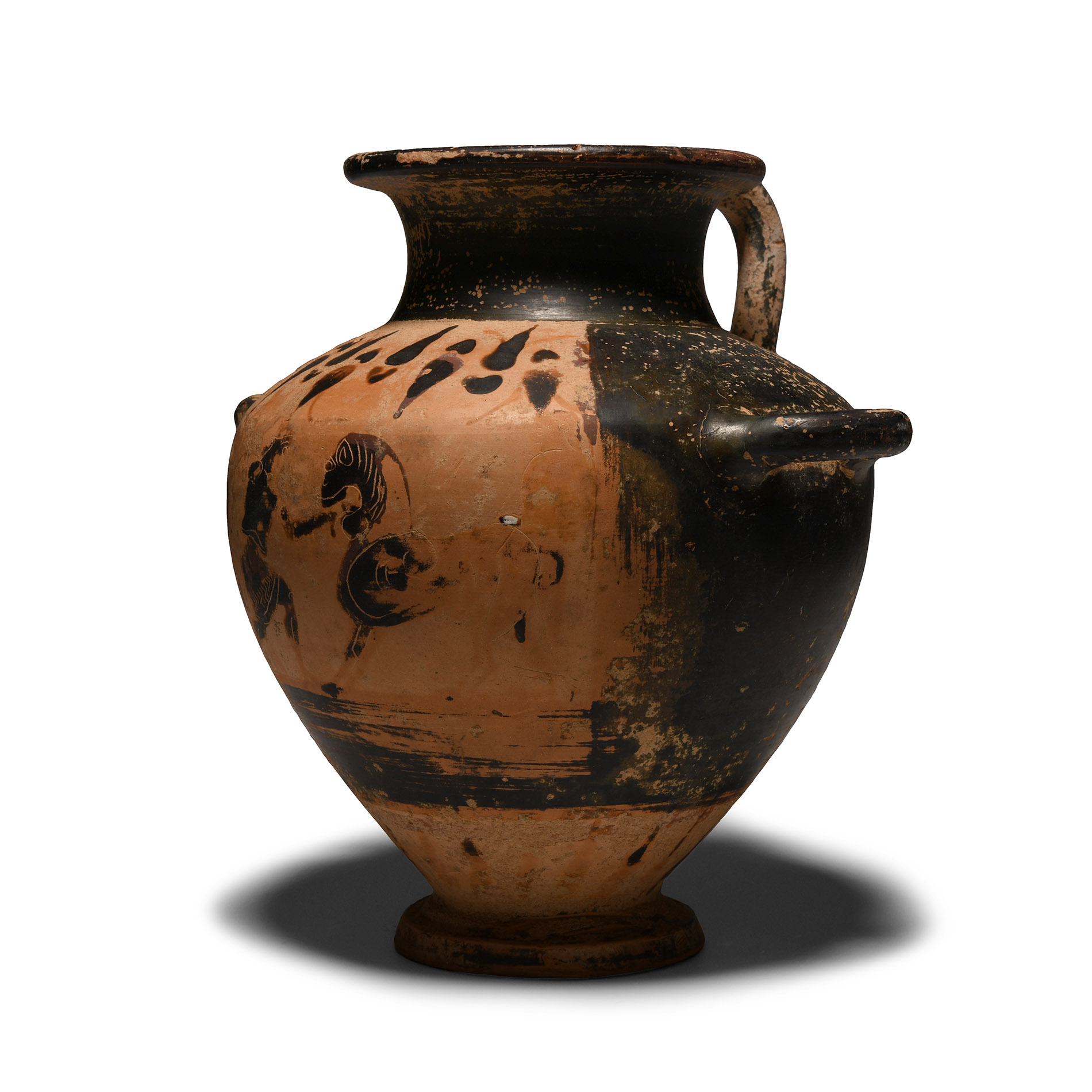
Greek Black Glazed Terracotta Hydria with Figures
6TH-5TH CENTURY B.C.
7 1/4 in. (515 grams, 18.6 cm).
Tall vessel with narrow base and loop handles to the shoulder, strap handle to the rear; reserved figural scene of a horse in profile with handler and rider behind.
ProvenancePrivate collection of Mr S.A., Switzerland, 1990, thence by descent.
This lot has been checked against the Interpol Database of stolen works of art and is accompanied by search certificate no.12047-211885.
Cf. similar item in the Metropolitan Museum of Art, New York, under accession no.19.192.45; Joslyn Art Museum, inventory no.1953.255, for a similar Attic black figure hydria.
CONDITIONTimeLine Auctions follows a vetting process to ensure the authenticity and legality of all items, reinforcing our commitment to integrity and responsible trading. Each antiquity, antique, and coin lot undergoes thorough examination by a vetting committee of at least ten external specialists, professional trade association members, scientists, and archaeologists: Our Vetting Process
AUCTIONS:
TimeLine is a leading auction house specialising in antiquities, ancient art, collectables, natural history, coins, medals, and books. Our auctions offer museums, collectors, historians, and enthusiasts the opportunity to acquire unique and historically significant pieces.
LOT 0073
Greek Black Glazed Terracotta Hydria with Figures
Estimate £2,000 - 3,000€2,320 - 3,480 (for guidance only)$2,700 - 4,050 (for guidance only)
-
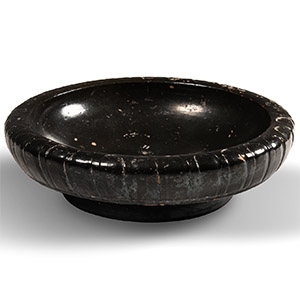
Greek Black-Glazed Plate
5th-4th century B.C.Estimate: £300 - 400 (‡+bp*)
Opening Bid: £150
Shallow-bodied with broad foot; incised fluting around the exterior body and rim. 216 grams, 12 cm wide
Acquired in the 1960s-1970s. Ex European private collection. -
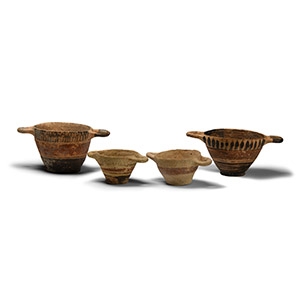
Corinthian Miniature Terracotta Skyphos Collection
6th century B.C.Estimate: £500 - 700 (‡+bp*)
Opening Bid: £250
Group of four graduated ceramic cups, each with two loop handles to the rim and painted detailing to the outer face. 103 grams total, 6.5-10.1 cm
Acquired from Gallery Gryphos, Munich, early 2000s. European private collection. -
.jpg)
Cypriot Limestone Head of a Goddess
Circa 2nd-3rd century B.C.Sold for (Inc. bp): £3,120
Carved in the round, head of a female wearing her gown over the top of her head; sombre facial features and elongated neck, the hair dressed in radiating segments; mounted on a custom-made stand. 1.11 kg total, 21 cm high including stand
with Bonham's, 22 April 1999, no.97. From a collection acquired on the UK art market from various auction houses and collections mostly before 2000. From an important Cambridgeshire estate; thence by descent. Accompanied by copies of the relevant Bonham's catalogue pages.
