
Loading, please wait...

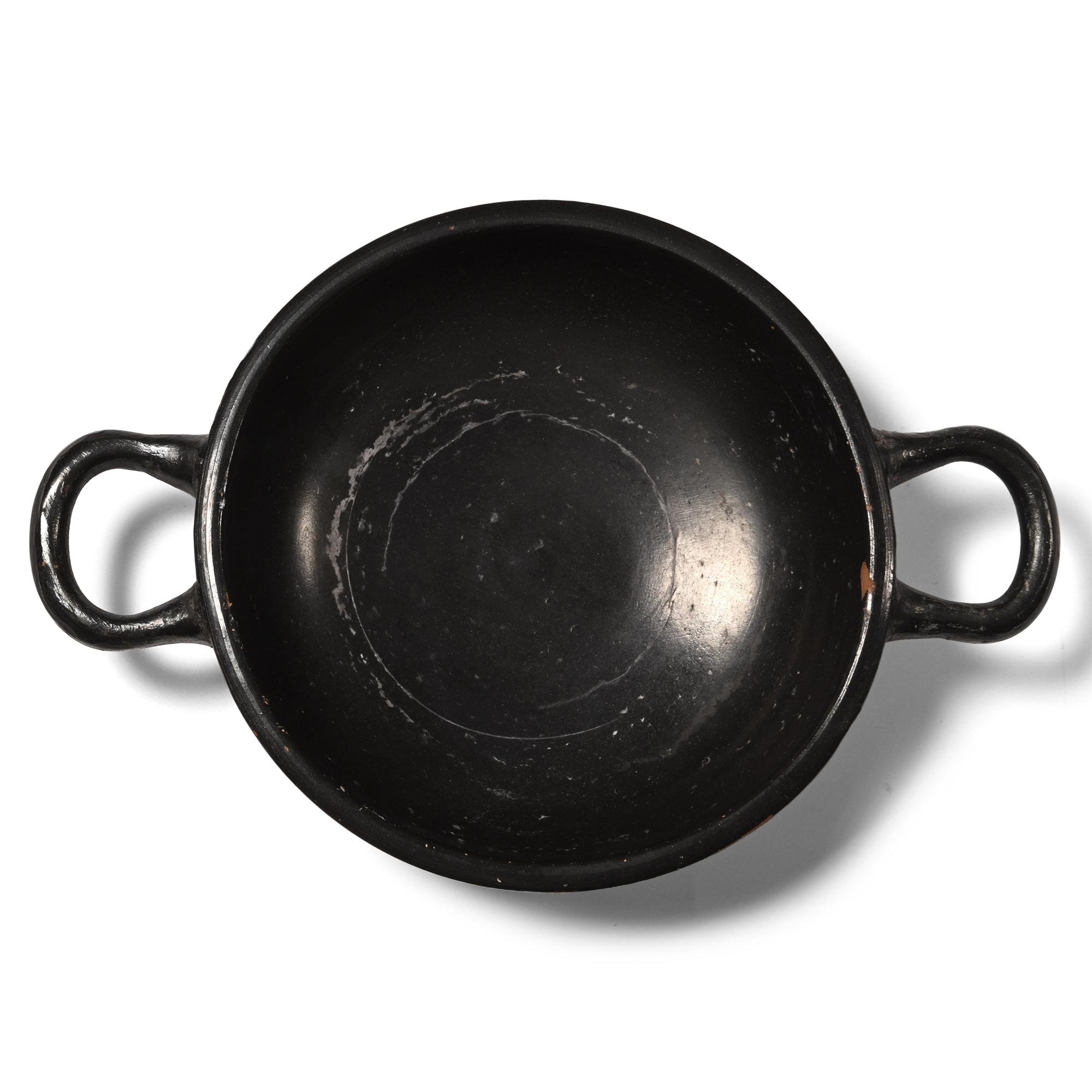
LOT 0530
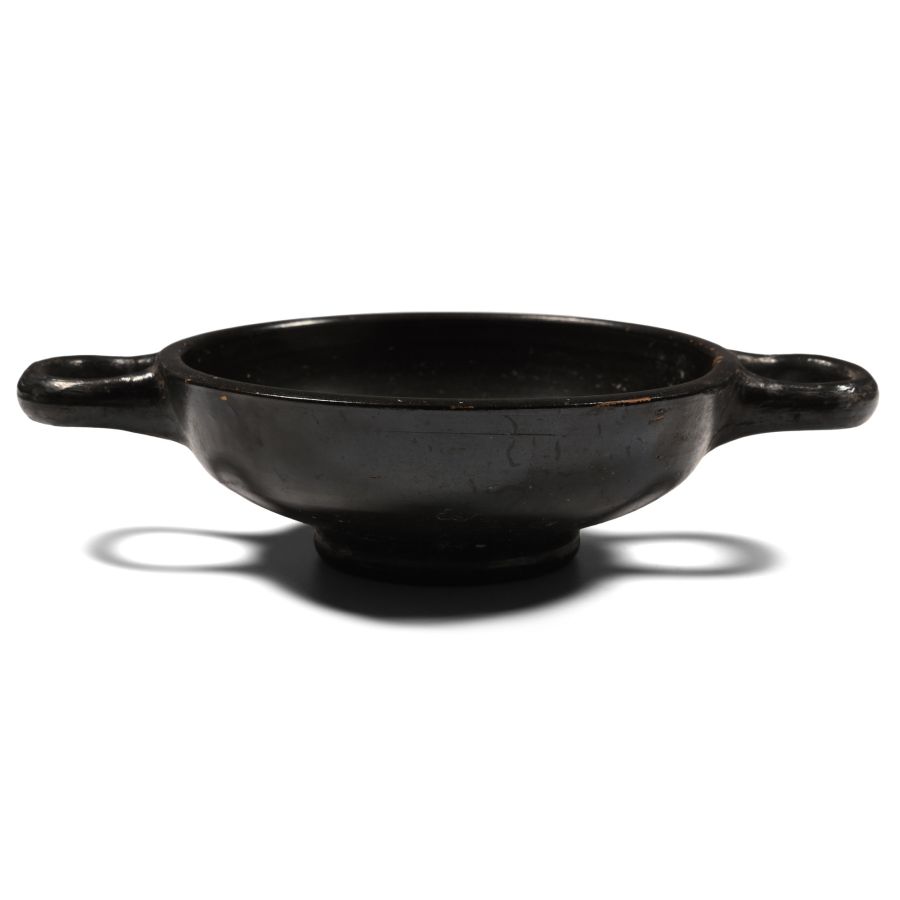
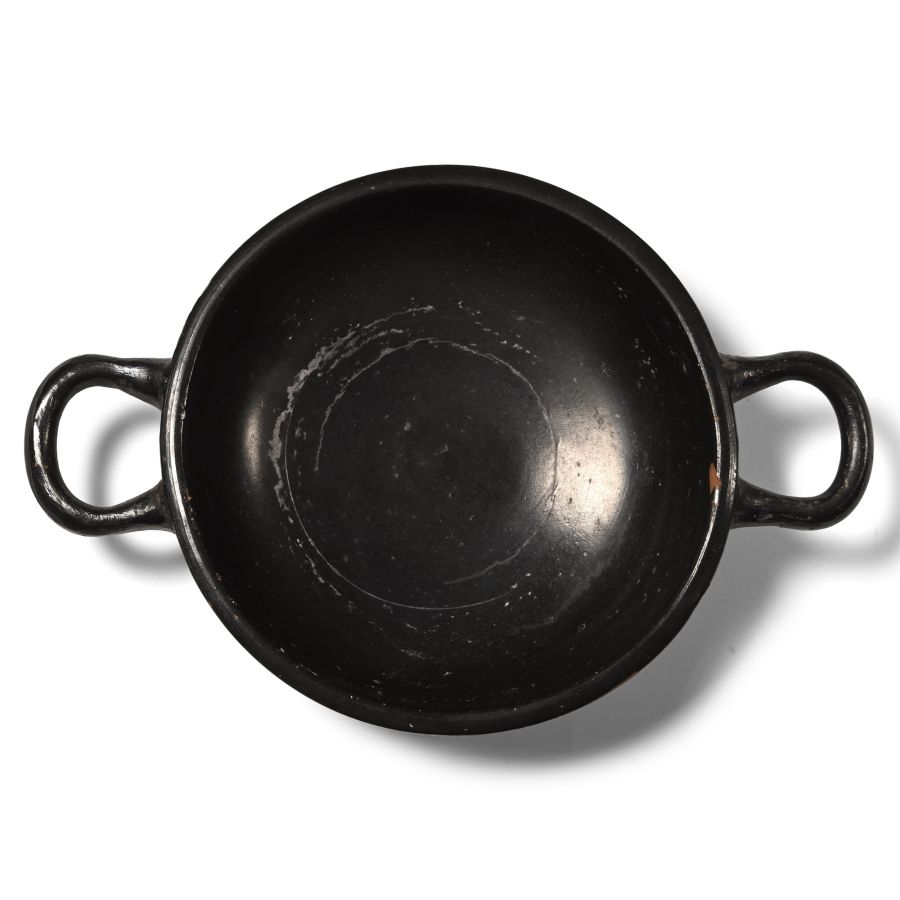
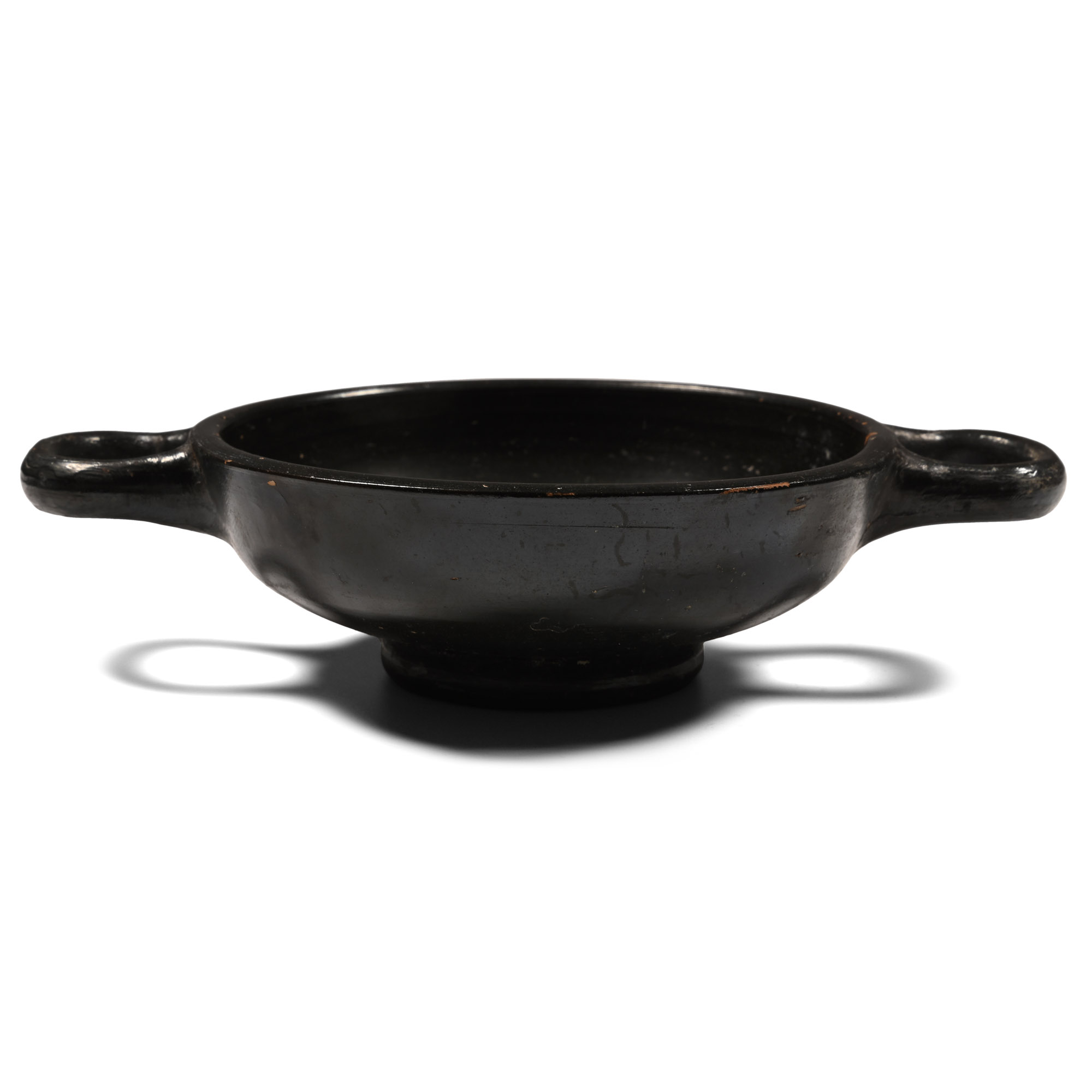
Greek Black Glazed Skyphos
SOUTH ITALIC, 5TH-4TH CENTURY B.C.
6 in. (100 grams, 15.3 cm).
Comprising a broad bowl and two loop handles set below the rim, waisted foot with carinated rim. [No Reserve]
ProvenanceFrom a private, UK, collection in the 1980s.
Property of a London, UK, antiquarian.
This lot is accompanied by an illustrated lot declaration signed by the Head of the Antiquities Department, Dr Raffaele D'Amato.
See Hoppin, J. C. and Gallatin, A.-E., Corpus Vasorum Antiquorum; USA 1, Hoppin and Gallatin Collections, Cambridge, 1926, p.109, Gallatin pl.64.4.
CONDITIONTimeLine Auctions follows a vetting process to ensure the authenticity and legality of all items, reinforcing our commitment to integrity and responsible trading. Each antiquity, antique, and coin lot undergoes thorough examination by a vetting committee of at least ten external specialists, professional trade association members, scientists, and archaeologists: Our Vetting Process
AUCTIONS:
TimeLine is a leading auction house specialising in antiquities, ancient art, collectables, natural history, coins, medals, and books. Our auctions offer museums, collectors, historians, and enthusiasts the opportunity to acquire unique and historically significant pieces.
-
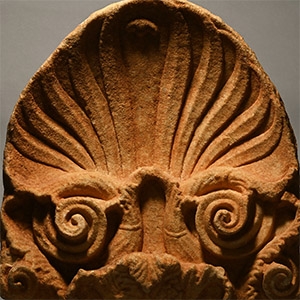
'The Stanford Place Collection' Attic Marble Stele Anthemion Finial
4th century B.C.Sold for (Inc. bp): £31,200
Carved in the form of an elaborate palmette with stems in the form of spiral tendrils rising from acanthus leaves, a small rosette at the top between the converging fronds; holes on the reverse for attachment to shaft; mounted on a custom-made display stand. 57 kg total, 47 cm (53.5 cm including stand)
Acquired on the New York, USA, art market, 1994. with Christie's, London, The Stanford Place Collection of Antiquities, 26 April 2006, no.30. Private collection, UK. Accompanied by an academic report by Dr Raffaele D’Amato. Accompanied by copies of the relevant Christie's 'Stanford Place Collection' catalogue pages. This lot has been checked against the Interpol Database of stolen works of art and is accompanied by search certificate number no.12614-235145. This lot has been cleared against the Art Loss Register database, and is accompanied by an illustrated lot declaration signed by the Head of the Antiquities Department, Dr Raffaele D'Amato.
This iconography was adapted from the Egyptian and Asiatic honeysuckle, also known as lotus palmette. First depicted on Attic white-ground lekythoi; in the 5th century B.C., then as architectural decoration, carved marble examples of this type of funerary monument were erected in the 5th-4th century B.C. It was not unusual for the anthemion to be of higher quality than the figures sculpted and painted beneath it. One splendid example is the stele of Paramythion (cf. Brinkmann-Wünsche, 2004, pp.148ff.). These memorials, originally painted, were venerated by families, anointed with oil, decorated with ribbons, and graced with offerings of food. -
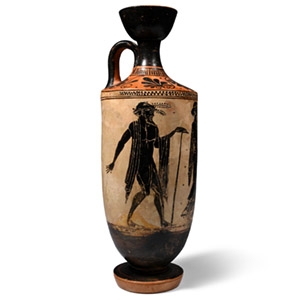
Greek Attic Terracotta Black Figure Painted Lekythos Attributed to the Athena Painter
Circa 490 B.C.Estimate: £8,000 - 10,000 (‡+bp*)
Opening Bid: £4,000
Nearly cylindrical body with a slightly sloping shoulder with five palmettes and eight dots in between; main image showing a Dionysian procession with two advancing nude satyrs facing a young male playing a double pipe, each of the satyrs leaning on a walking stick and having a long garment draped over their shoulders and wearing a fillet and a large wreath on their heads. 649 grams, 29.2 cm
Münzen und Medaillen A.G., H. Cahn, Basel, 24 April 1989. Private collection, Bern, Switzerland. This lot has been checked against the Interpol Database of stolen works of art and is accompanied by a search certificate number no.12641-236375. This lot has been cleared against the Art Loss Register database, and is accompanied by an illustrated lot declaration signed by the Head of the Antiquities Department, Dr Raffaele D'Amato. -
.jpg)
Greek Terracotta Arm Pair
5th-3rd century B.C.Sold for (Inc. bp): £13
Comprising two arms modelled in the round with finger detailing. 17 grams total, 56-64 mm
Ex German art market, 2000s. Acquired from an EU collector living in London. From the collection of a Surrey, UK, gentleman. This lot is accompanied by an illustrated lot declaration signed by the Head of the Antiquities Department, Dr Raffaele D'Amato.
