
Loading, please wait...

LOT 0642
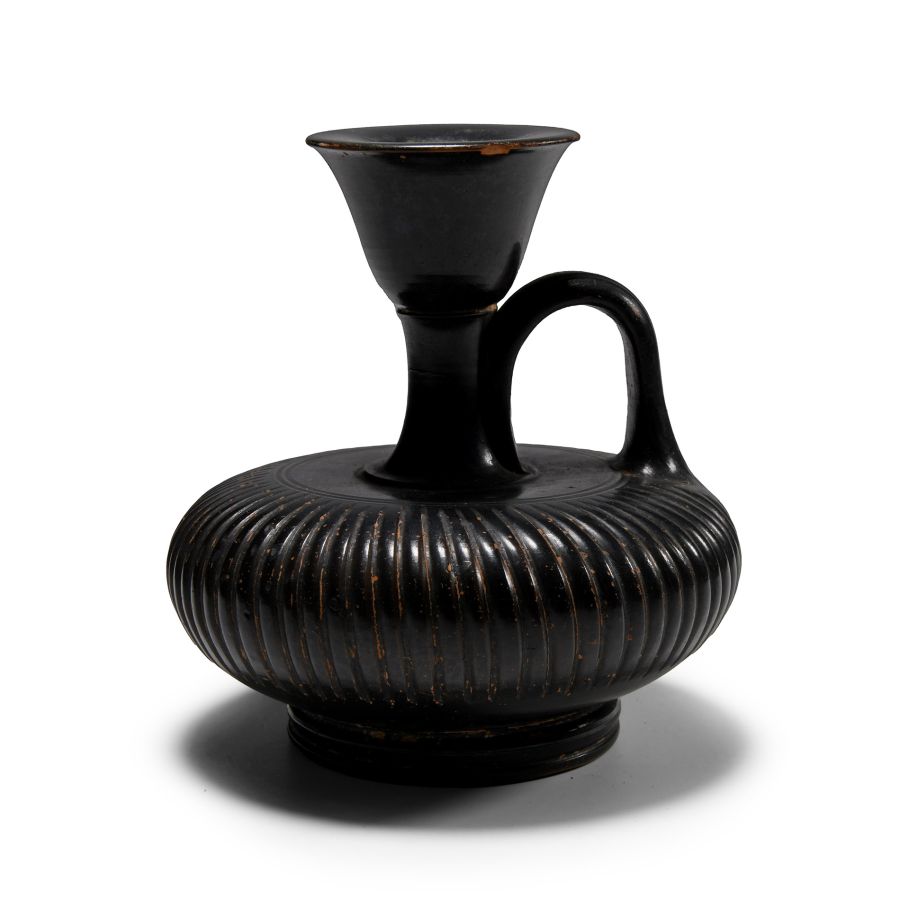
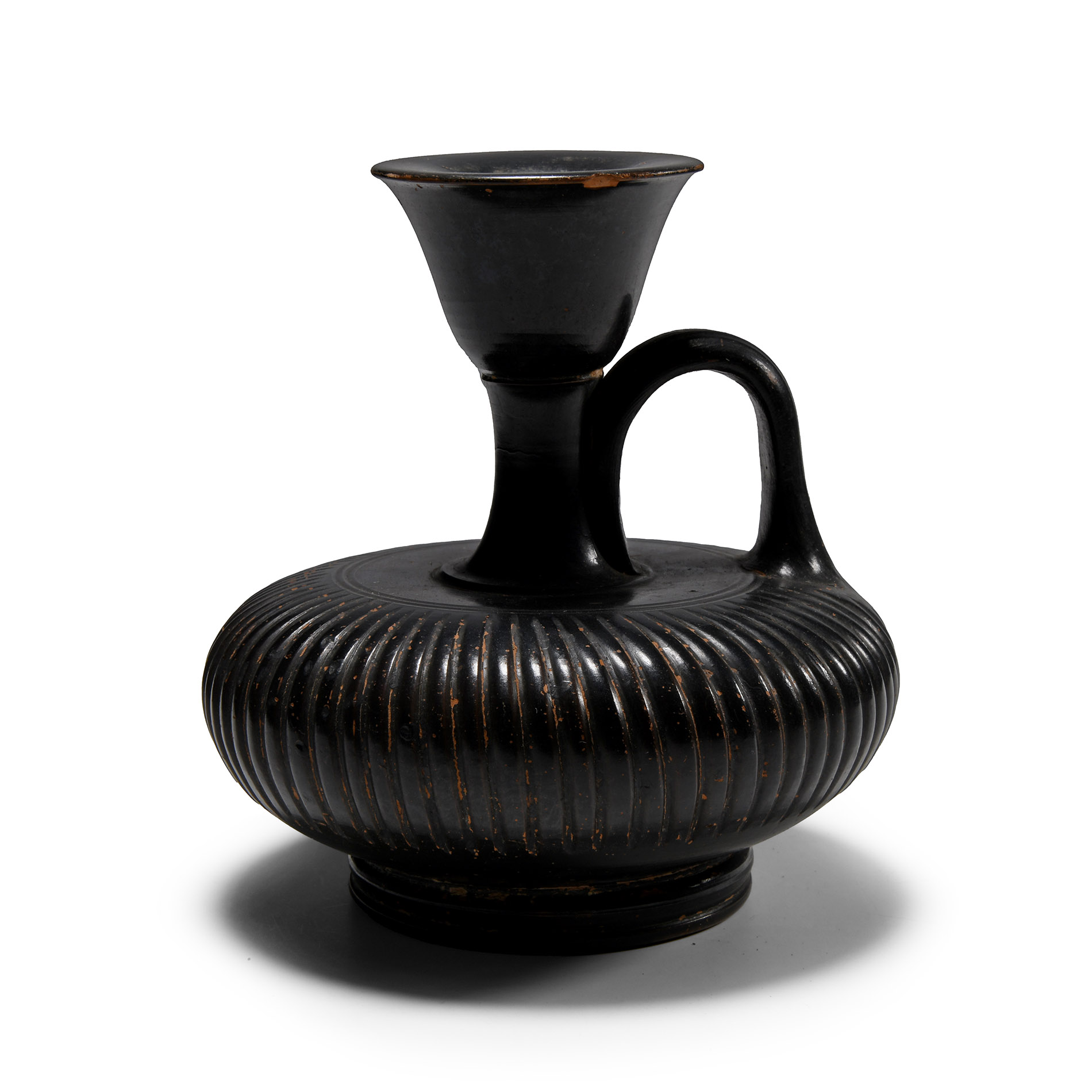
Greek Black-Glazed Ribbed Lekythos
APULIAN, 4TH-3RD CENTURY B.C.
4 3/4 in. (248 grams, 12 cm).
With squat segmented body and gusseted basal ring, trumpet-shaped spout with loop handle to the rear.
ProvenanceBelieved to be acquired in the 1970s-1980s, thence by descent.
English private collection.
TimeLine Auctions follows a vetting process to ensure the authenticity and legality of all items, reinforcing our commitment to integrity and responsible trading. Each antiquity, antique, and coin lot undergoes thorough examination by a vetting committee of at least ten external specialists, professional trade association members, scientists, and archaeologists: Our Vetting Process
AUCTIONS:
TimeLine is a leading auction house specialising in antiquities, ancient art, collectables, natural history, coins, medals, and books. Our auctions offer museums, collectors, historians, and enthusiasts the opportunity to acquire unique and historically significant pieces.
-
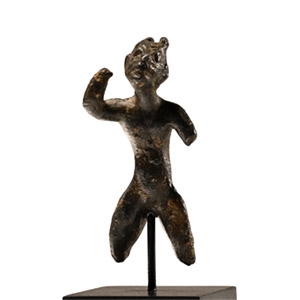
Hellenistic Bronze Sitting Statuette of a Demon
2nd-1st century B.C.Sold for (Inc. bp): £208
Modelled nude in seated pose with legs astride and right arm bent, the grotesque face slightly raised, horns to the crown; mounted on a custom-made stand; Eastern Greek. 71.5 grams total, 78 mm including stand
From a collection acquired on the UK art market from various auction houses and collections mostly before 2000. From an important Cambridgeshire estate; thence by descent. -
.jpg)
Larger Than Life-Size Greek Marble Draped Torso
Hellenistic Period, circa 4th-1st century B.C.Estimate: £50,000 - 70,000 (‡+bp*)
Opening Bid: £25,000
Standing figure tightly wrapped in a himation with both hands clenching the fabric draped close to the body. Over 500 kg, 152 cm high
Prof. Dr. Ernst Berger (1928-2006), Basel, acquired between 1961-1993. with Jean-David Cahn, Basel, 2009. On loan to the Antikenmuseum und Sammlung Ludwig, Basel, 1993-2009. Accompanied by an academic report by Professor Neritan Ceka. This lot has been checked against the Interpol Database of stolen works of art and is accompanied by search certificate number no.12213-222441.
Despite the damage, the statue appears to be a high quality piece of work by a virtuoso sculptor. The sparing use of strong movements and their diagonal contrast in the hand and foot placement suggests an early Hellenistic date for this type of sculpture, known from a few examples from Attica and the islands. Similar representations of women wearing the chiton and himation during the Hellenistic period are seen in the Tanagra type terracottas of the 4th century BC. -
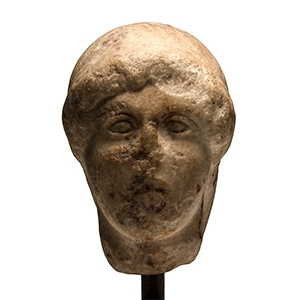
Greek Marble Head of a Youth
Early 5th century B.C.Estimate: £2,500 - 3,500 (‡+bp*)
Opening Bid: £1,200
Carved in the round; semi-naturalistic anatomic and facial detailing, hair gathered loosely at the neck and tied with a taenia knotted at the nape of the neck; mounted on a custom-made display base. 879 grams total, 18 cm high including stand
Ex old European private property, by inheritance to the previous owner. Ex Schuler Auktionen, Zürich, 10 December 2020, no.1211. Accompanied by an academic report by Dr Raffaele D’Amato. This lot has been checked against the Interpol Database of stolen works of art and is accompanied by search certificate number no.11817-206512.
The small statuette to which the head belonged was probably that of a naked youth, the so-called kouros, typical of archaic Greek sculpture from the 7th century B.C. onwards.
