
Loading, please wait...
LOT 0629
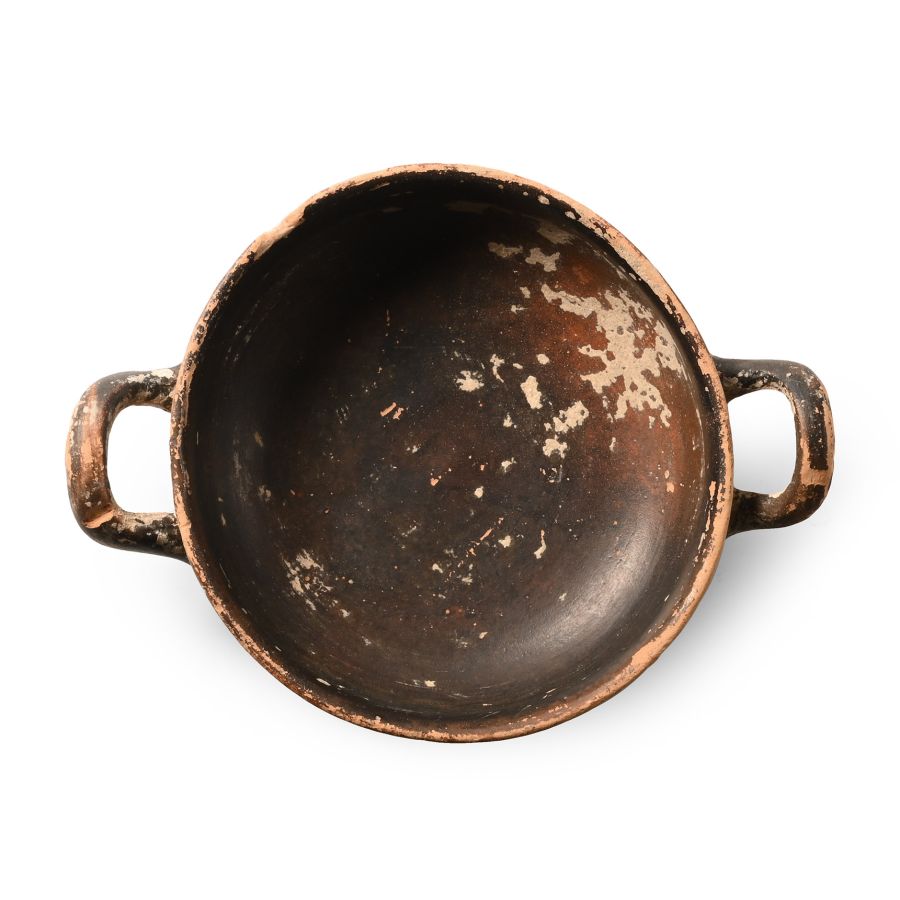
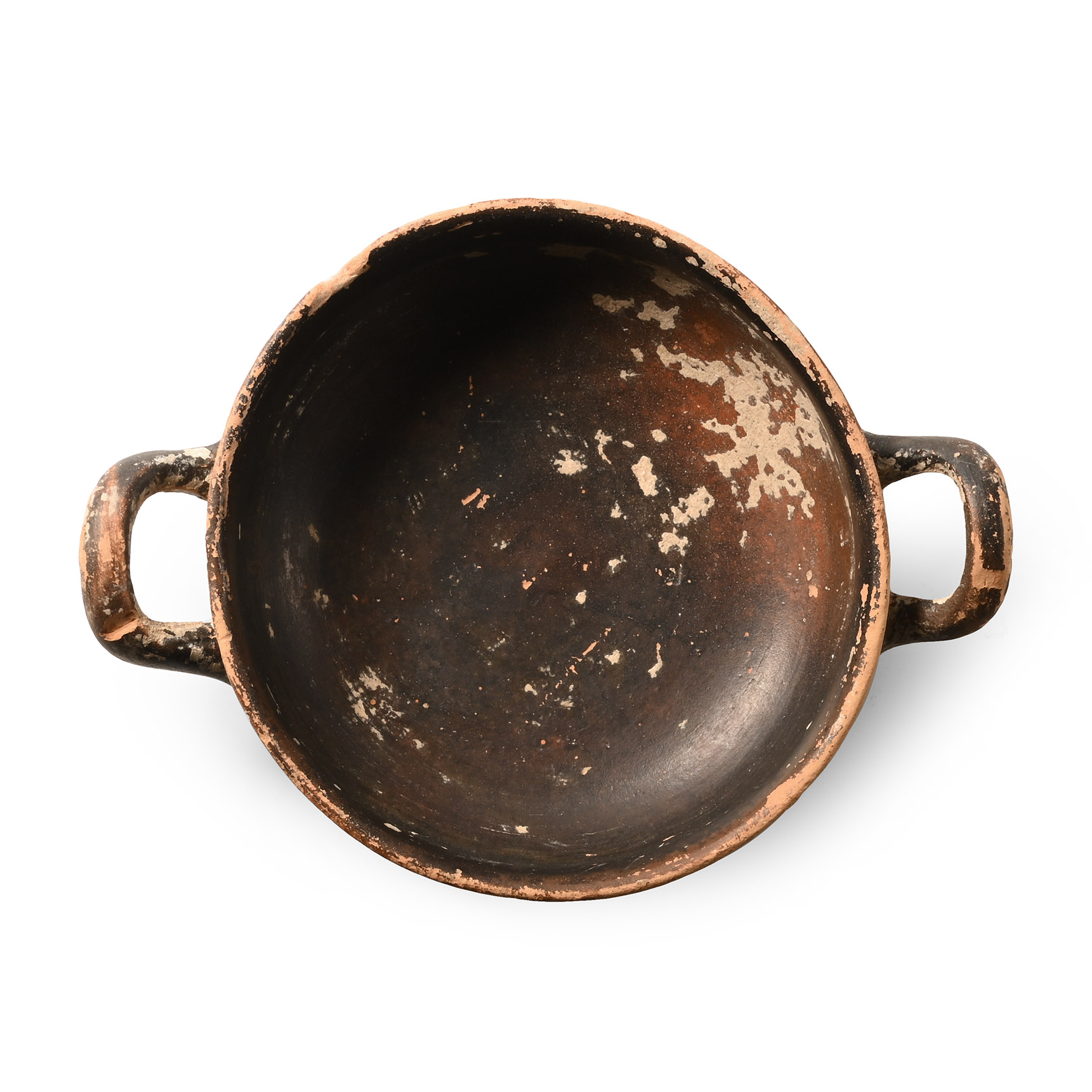
Greek Black-Glazed Cup
SOUTH ITALIAN, 5TH-4TH CENTURY B.C.
4 in. (36 grams, 10.2 cm wide).
Broad and squat with carination below the rim, two lateral loop handles, basal ring.
ProvenanceAcquired in Münich in 2012.
European private collection.
Cf. similar item in the Metropolitan Museum of Art, accession no.66.111.
CONDITIONTimeLine Auctions follows a vetting process to ensure the authenticity and legality of all items, reinforcing our commitment to integrity and responsible trading. Each antiquity, antique, and coin lot undergoes thorough examination by a vetting committee of at least ten external specialists, professional trade association members, scientists, and archaeologists: Our Vetting Process
AUCTIONS:
TimeLine is a leading auction house specialising in antiquities, ancient art, collectables, natural history, coins, medals, and books. Our auctions offer museums, collectors, historians, and enthusiasts the opportunity to acquire unique and historically significant pieces.
LOT 0629
Greek Black-Glazed Cup
Estimate £180 - 240€210 - 280 (for guidance only)$240 - 320 (for guidance only)
-
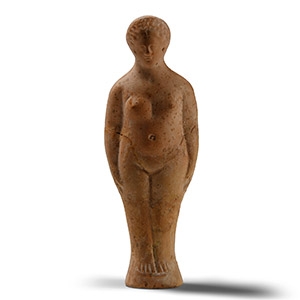
Graeco-Roman Terracotta Figure
2nd century B.C.-1st century A.D.Estimate: £500 - 700 (‡+bp*)
Opening Bid: £250
Tanagra-type hollow-formed figurine of a nude female with dressed hair; hole to the reverse and underside; repaired. 46 grams, 11.3 cm
Private collection of Mr S.A., Switzerland, 1990s, thence by descent. -
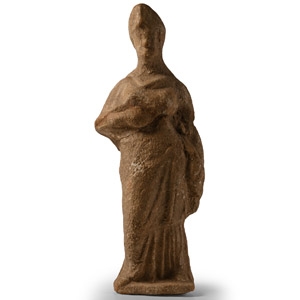
Greek Terracotta Figure
4th-3rd century B.C.Estimate: £180 - 240 (‡+bp*)
Opening Bid: £100
Tanagra type, hollow-formed with a void to the reverse, standing female in tiered robe wearing a diadem and with her hair drawn back, right hand cradling an object; chipped, repaired. 95 grams, 16.5 cm
European art market. Acquired in Münich in 2012. European private collection. -
.jpg)
Hellenistic Bronze Bowl
Late 2nd-early 1st century B.C.Sold for (Inc. bp): £130
With high tin content, the body formed with a D-section wall and rounded base, damaged. 145 grams, 16 cm wide
Acquired 1980-2015. Ex Abelita family collection.
Similar segment-shaped silver bowls, sometimes with partial gilding and decorated on the inside have been found in many nomad mounds of the Caucasus and in the territories once dominated by the Arsacid Empire. They are attributed to Parthian workshops by Pfrommer and M. Treister.
