
Loading, please wait...

LOT 0063
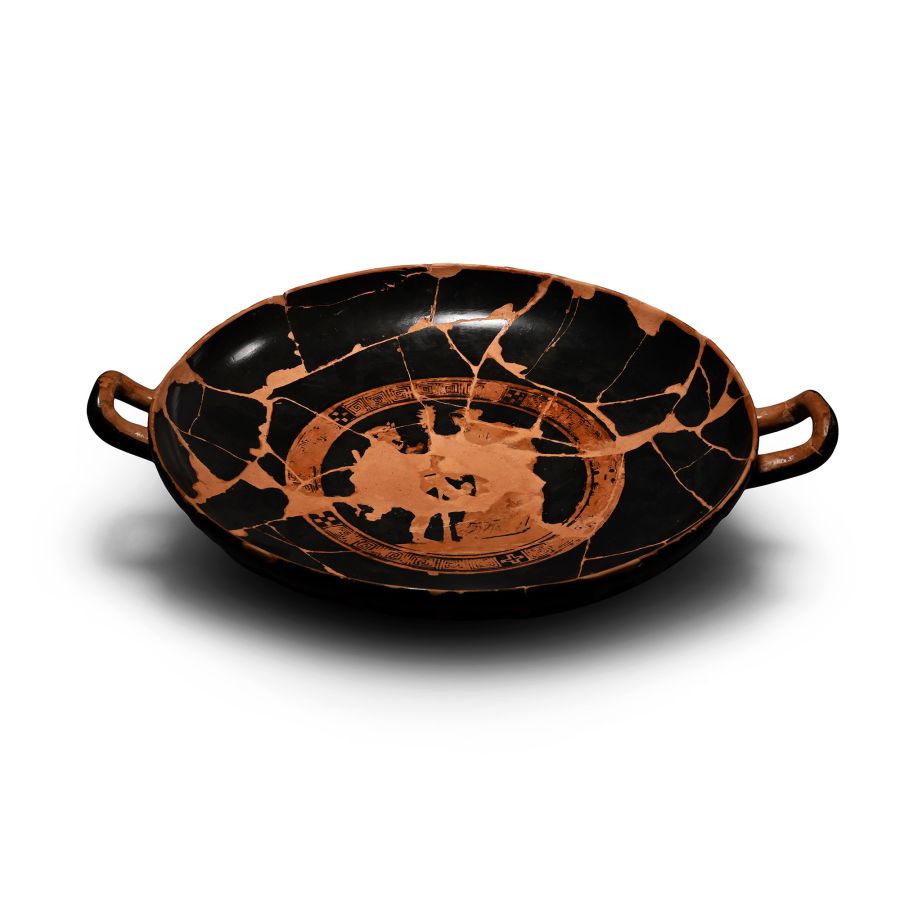
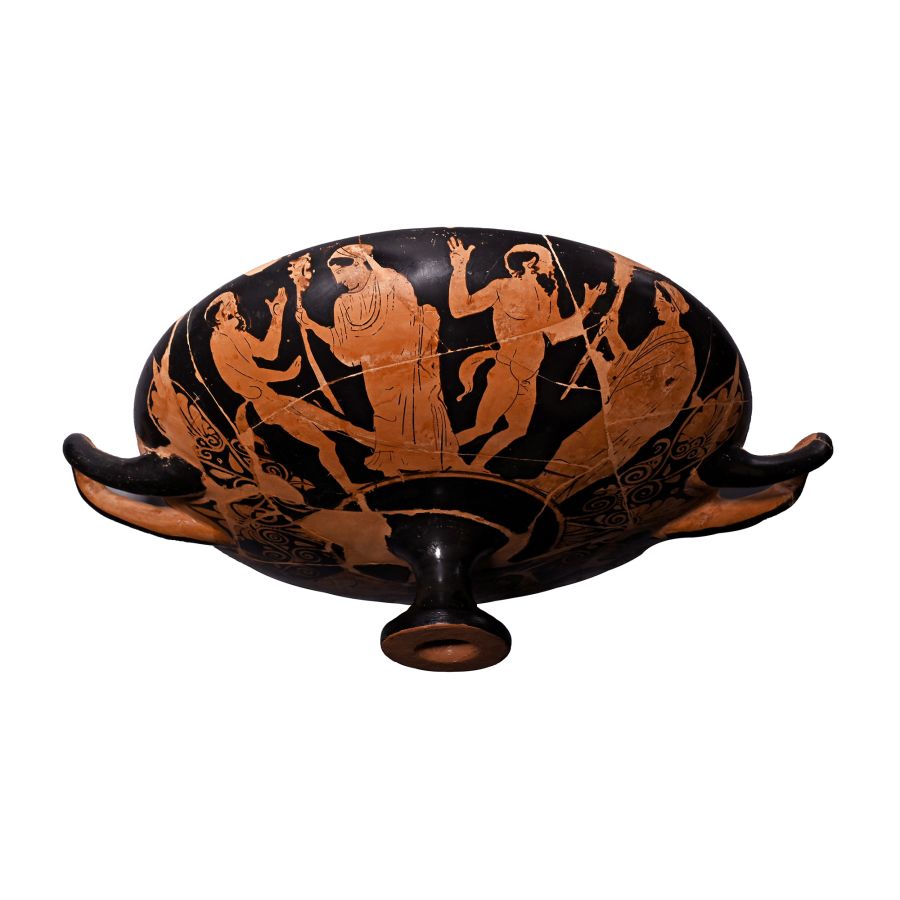
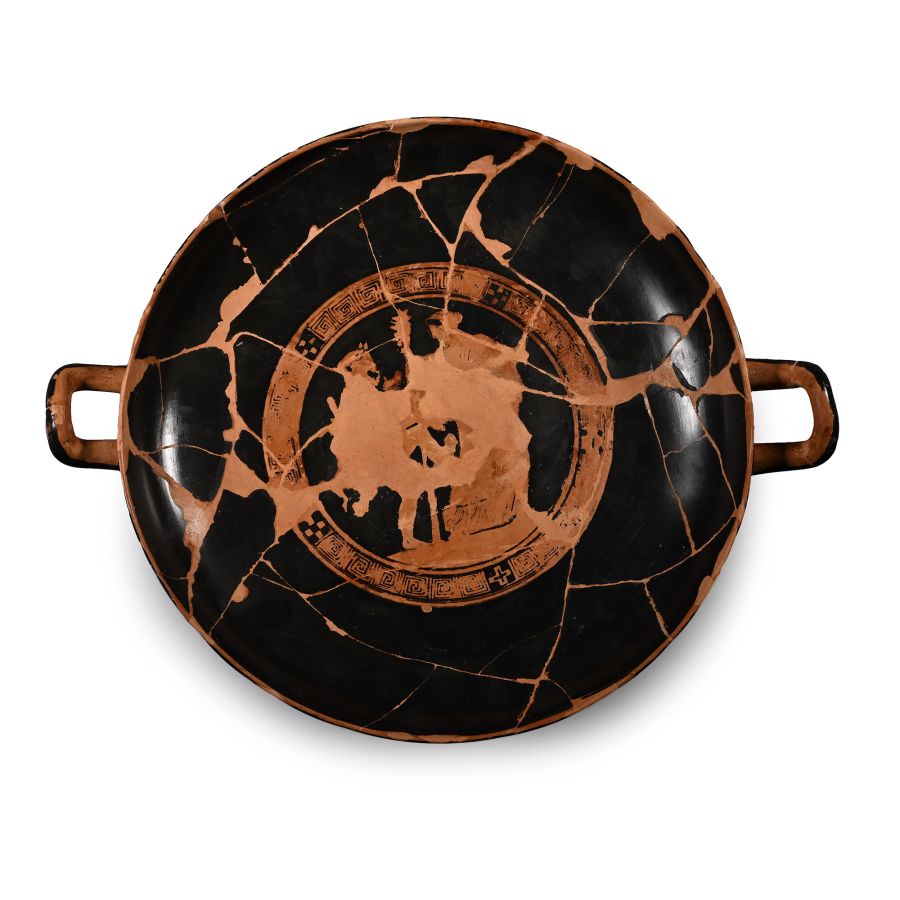
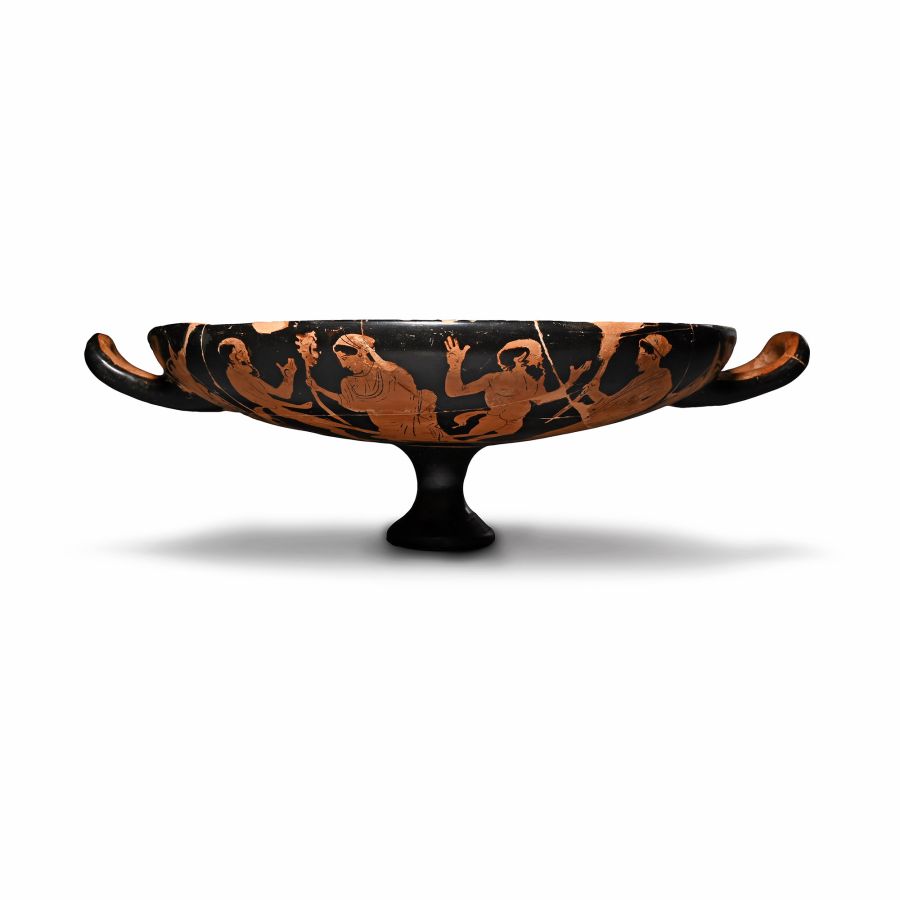
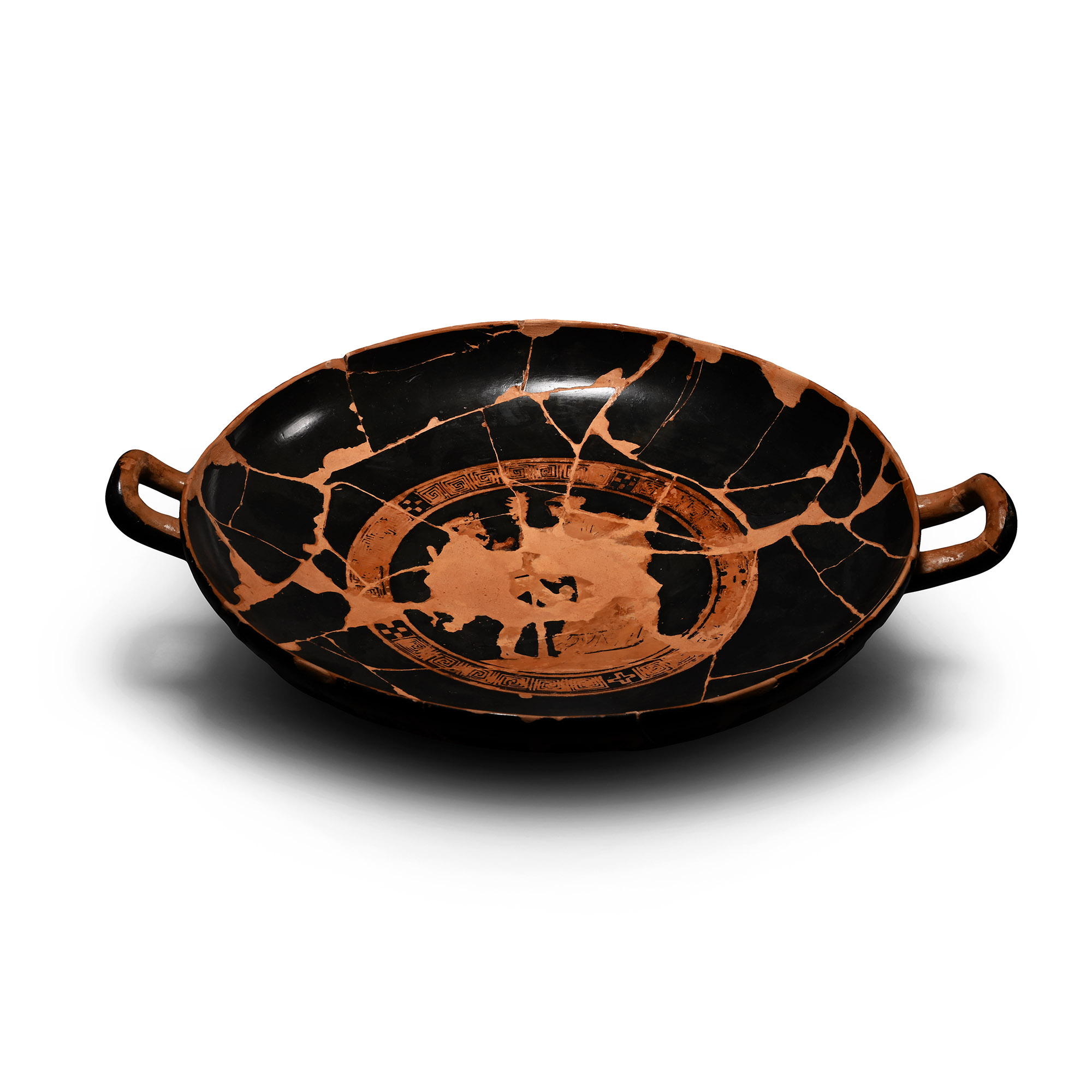
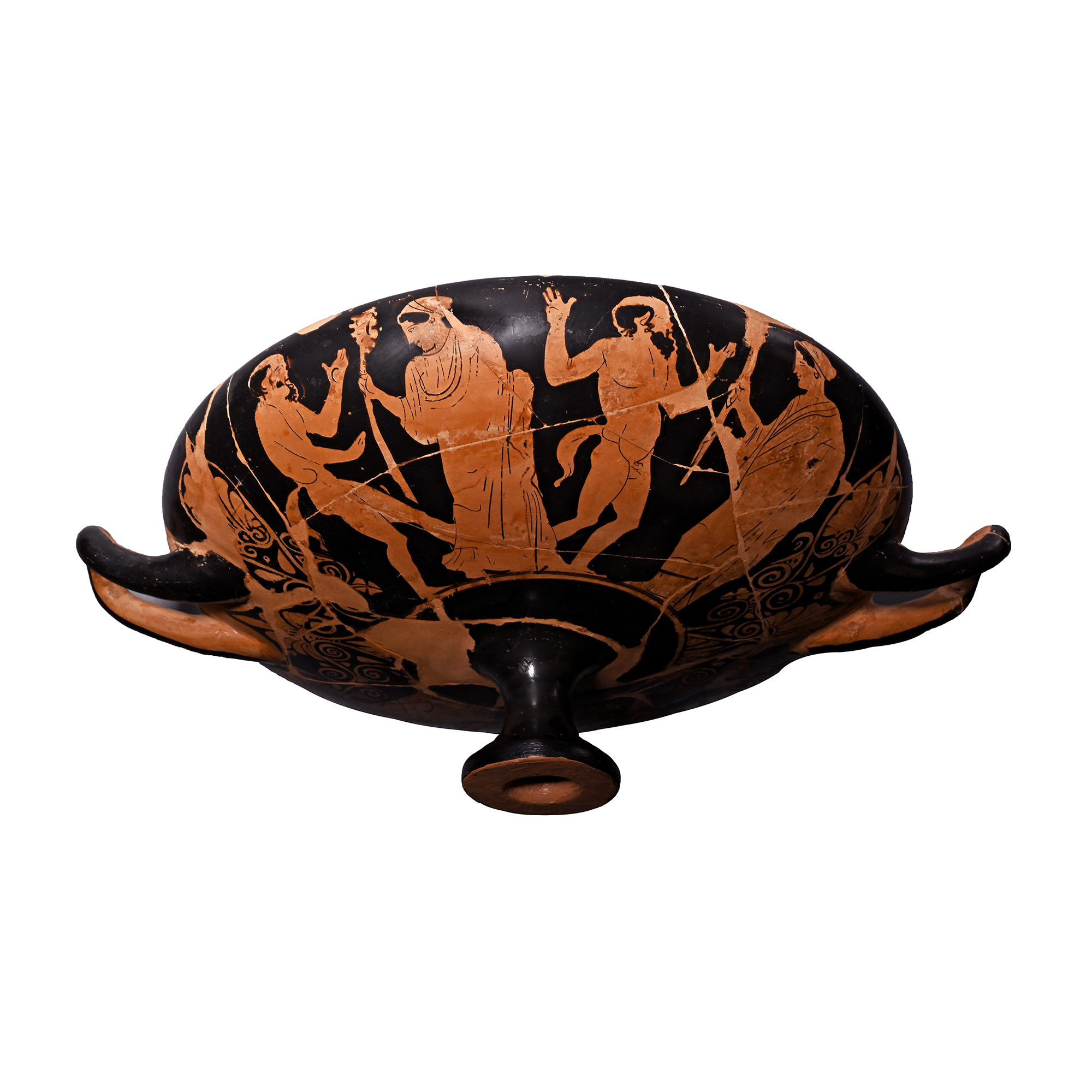
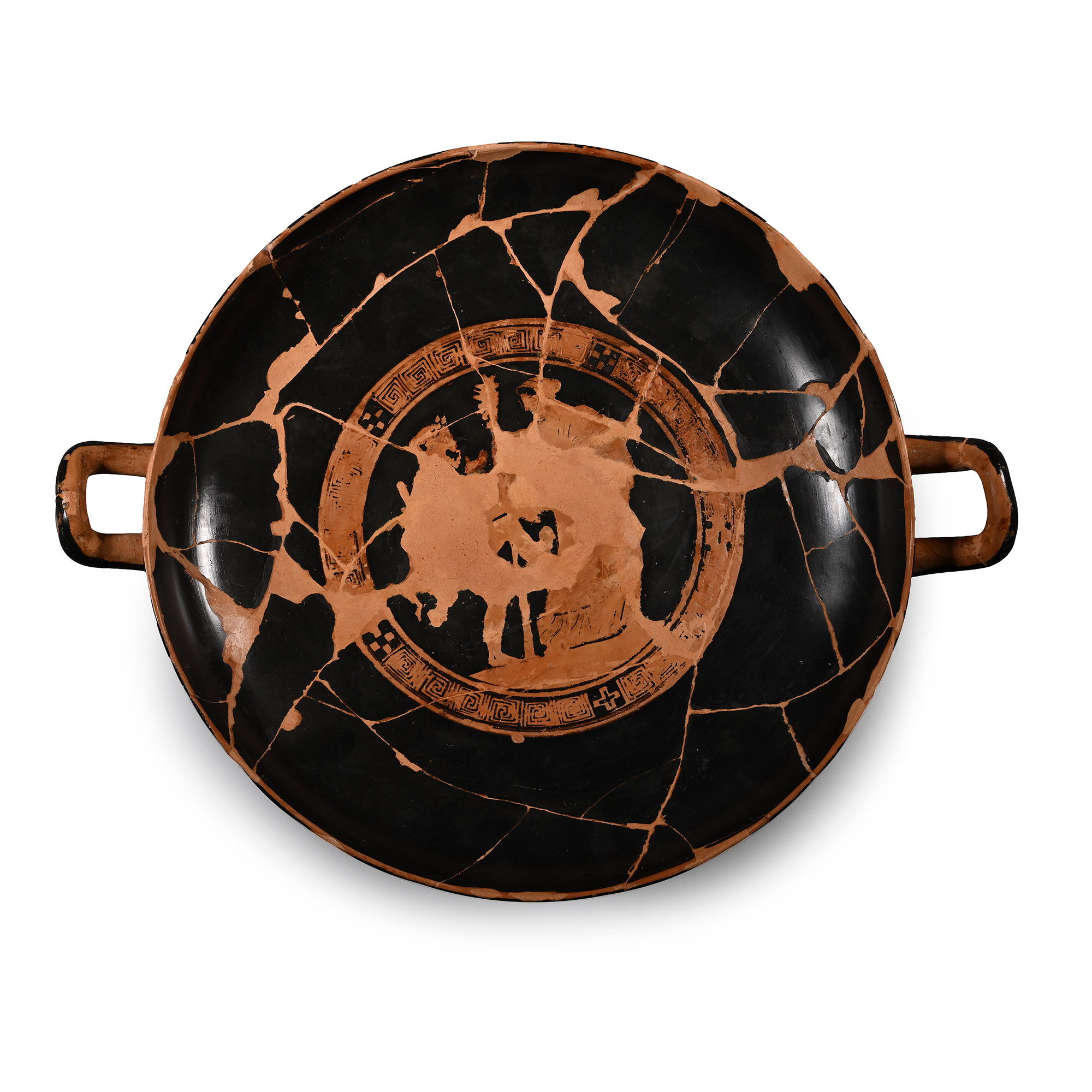
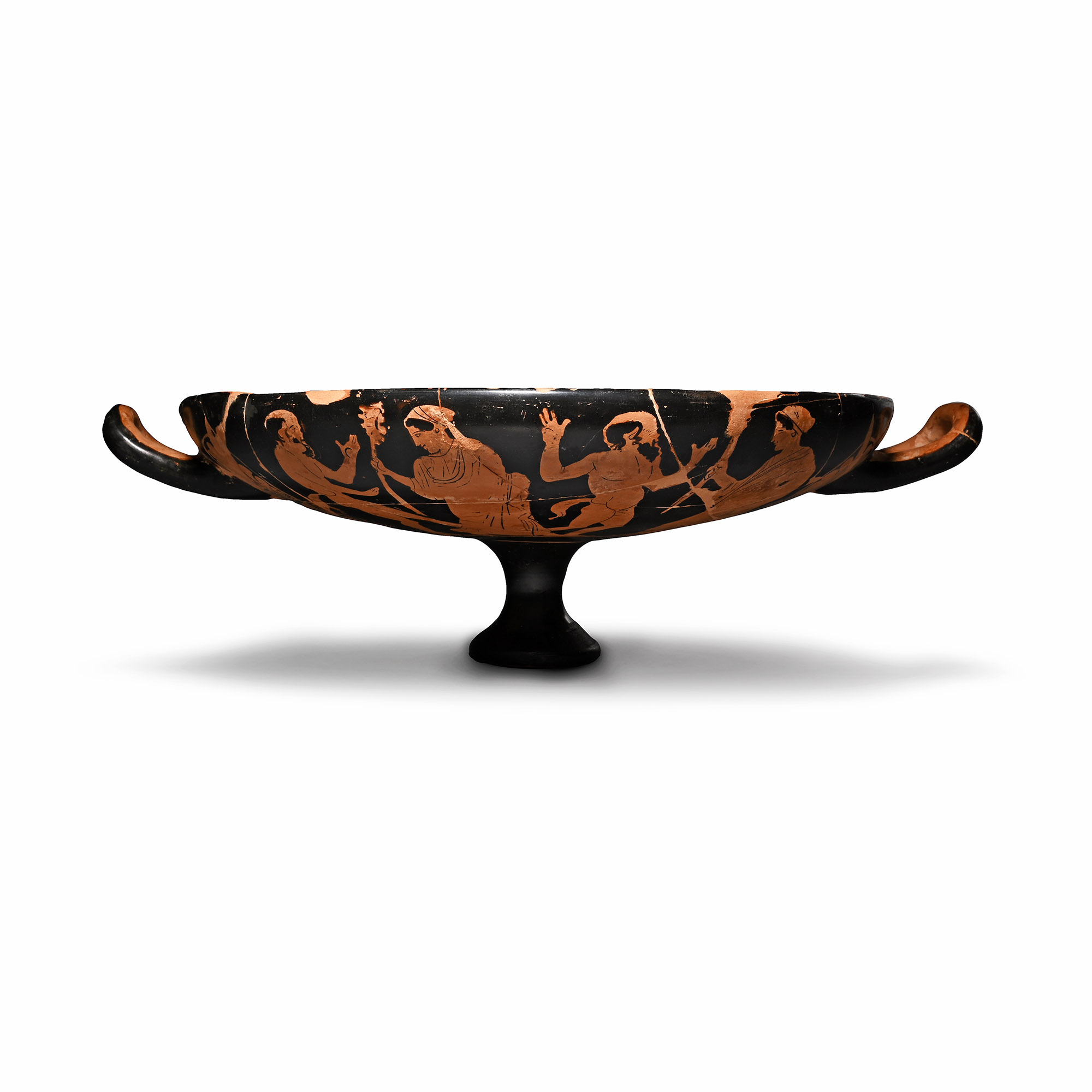
Greek Attic Red-Figure Kylix with Dancing Nymphs and Satyrs
5TH CENTURY B.C.
14 5/8 in. (875 grams, 37 cm wide).
With short stem and broad bowl with carination at the shoulder; two strap handles with an ivy-leaf with tendrils and volutes underneath; the underside of the bowl with a frieze of four satyrs and four maenads performing a dance, the maenads dressed in fancy Ionian dress, long peplos and himation, and a kekrykephalos (hair net) on their heads, and holding a thyrsus in their right hands; the centre of the cup showing dancing Silenus and a nymph, dressed in a similar manner and holding a thyrsus, border of meanders and chequered squares surrounding; restored.
ProvenanceEx Dr Gonik and the late Mr Wirth, 1960-1970s.
Private collection, Switzerland.
Accompanied by an academic report by Dr Raffaele D’Amato.
This lot has been checked against the Interpol Database of stolen works of art and is accompanied by a search certificate number no.12573-232109.
This lot has been cleared against the Art Loss Register database, and is accompanied by an illustrated lot declaration signed by the Head of the Antiquities Department, Dr Raffaele D'Amato.
Cf. the Harvard Art Museums, museum number 1959.124, for a similar kylix in Topper, K., The Imagery of the Athenian Symposium, Cambridge University Press, New York, 2012, p.55, fig. 22; see another similar example of such Attic red-figure deep-bowled kylix in the Cleveland Museum of Art, inv. no.1915.718 (Hinman B. Hurlbut Collection), also representing Satyrs and Maenads; another similar, with a Maenad fighting a Satyr within the tondo, in Yale University Art Gallery, inv. no.2016.147.1.
FootnotesSilenus, the only individualised satyr, was a companion and tutor to the wine god Dionysus, and he is represented here in the place of honour. He is typically older than the satyrs of the Dionysian retinue (thiasos) and his representation on the tondo symbolises respect towards his senior position.
CONDITIONTimeLine Auctions follows a vetting process to ensure the authenticity and legality of all items, reinforcing our commitment to integrity and responsible trading. Each antiquity, antique, and coin lot undergoes thorough examination by a vetting committee of at least ten external specialists, professional trade association members, scientists, and archaeologists: Our Vetting Process
AUCTIONS:
TimeLine is a leading auction house specialising in antiquities, ancient art, collectables, natural history, coins, medals, and books. Our auctions offer museums, collectors, historians, and enthusiasts the opportunity to acquire unique and historically significant pieces.
LOT 0063
Greek Attic Red-Figure Kylix with Dancing Nymphs and Satyrs
Estimate £4,000 - 6,000€4,640 - 6,960 (for guidance only)$5,400 - 8,100 (for guidance only)
-
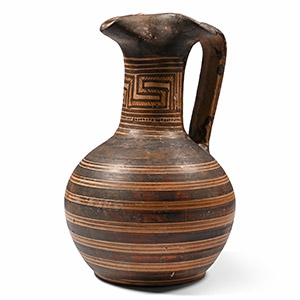
Greek Terracotta Geometric Jug with Handle
Geometric Period, 7th-6th century B.C.Estimate: £2,000 - 3,000 (‡+bp*)
Opening Bid: £1,000
With a bulbous body and low basal ring, tubular neck with pinched trefoil spout and a wide strap handle to the rear; the body decorated with densely arranged circumferential bands, a panel of Greek key motifs on the neck, the handle with horizontal stripes and a central X-motif. 735 grams, 23.7 cm
Swiss private collection, 1980-1990s. Private collection, Bern, Switzerland. This lot has been checked against the Interpol Database of stolen works of art and is accompanied by a search certificate number no.12654-236373. This lot has been cleared against the Art Loss Register database, and is accompanied by an illustrated lot declaration signed by the Head of the Antiquities Department, Dr Raffaele D'Amato. -
.jpg)
Cypriot Terracotta Bull Rhyton
8th century B.C.Sold for (Inc. bp): £6,240
Modelled in the round with bands of hatched texture to the back, rump and horns, pierced lug muzzle, incised detailing. 501 grams, 17 cm long
UK private collection, 1994. European private collection. Accompanied by a thermoluminescence analysis report no.N125e38 from Oxford Authentication. This lot has been checked against the Interpol Database of stolen works of art and is accompanied by a search certificate number no.12656-234662. This lot has been cleared against the Art Loss Register database, and is accompanied by an illustrated lot declaration signed by the Head of the Antiquities Department, Dr Raffaele D'Amato. -
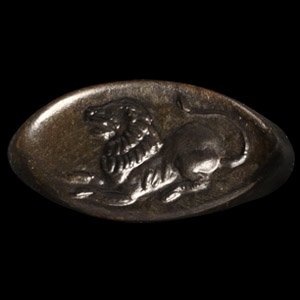
Greek Bronze Seal Ring with Lion
Circa 5th-3rd century B.C.Sold for (Inc. bp): £247
Comprising a D-section hoop with raised bulb to the base, lentoid-shaped bezel with a reclining lion. 5.73 grams, 23.51 mm overall, 20.22 mm internal diameter (approximate size British S 1/2, USA 9 1/4, Europe 20.63, Japan 19)
Ex German art market, 2000s. Acquired from an EU collector living in London. From the collection of a Surrey, UK, gentleman. This lot is accompanied by an illustrated lot declaration signed by the Head of the Antiquities Department, Dr Raffaele D'Amato.
