
Loading, please wait...
_900x900.jpg "Greek Apulian High-Glazed Fluted Cup")
_200x200.jpg "Greek Apulian High-Glazed Fluted Cup")
_900x900.jpg "Greek Apulian High-Glazed Fluted Cup")
_200x200.jpg "Greek Apulian High-Glazed Fluted Cup")
.jpg "Greek Apulian High-Glazed Fluted Cup")
.jpg "Greek Apulian High-Glazed Fluted Cup")
LOT 0559
Greek Apulian High-Glazed Fluted Cup
4TH CENTURY B.C.
3 1/2 in. (174 grams, 90 mm high).
Raised fluting decorating the body, broad c-section neck and everted rim, segmented openwork handle.
ProvenanceAcquired in the 1960s-1970s.
Ex European private collection.
This lot has been checked against the Interpol Database of stolen works of art and is accompanied by search certificate number no.11856-206542.
Cf. The Metropolitan Museum, accession number 1983.571.4, for a very similar example.
CONDITIONTimeLine Auctions follows a vetting process to ensure the authenticity and legality of all items, reinforcing our commitment to integrity and responsible trading. Each antiquity, antique, and coin lot undergoes thorough examination by a vetting committee of at least ten external specialists, professional trade association members, scientists, and archaeologists: Our Vetting Process
AUCTIONS:
TimeLine is a leading auction house specialising in antiquities, ancient art, collectables, natural history, coins, medals, and books. Our auctions offer museums, collectors, historians, and enthusiasts the opportunity to acquire unique and historically significant pieces.
LOT 0559
Greek Apulian High-Glazed Fluted Cup
Estimate £2,000 - 3,000€2,320 - 3,480 (for guidance only)$2,700 - 4,050 (for guidance only)
-
.jpg)
Greek Terracotta Shipwreck Amphora
5th-3rd century B.C.Sold for (Inc. bp): £2,470
Slender in profile with narrow shoulder, short neck, collar to the mouth and two lateral strap handles; stepped conical point to base; part of neck absent, marine encrustation. 5.45 kg, 65 cm
From a collection acquired on the UK art market from various auction houses and collections mostly before 2000. From an important Cambridgeshire estate; thence by descent. -
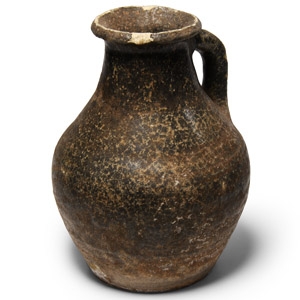
Parthian Glazed Ceramic Jug
1st century B.C.-1st century A.D.Estimate: £150 - 200 (+bp*)
Opening Bid: £80
Speckled glaze; deep shoulder with chamfered rim and strap handle. 776 grams, 16.5 cm high
Acquired by the vendor's father on the UK art market, before 1990. -
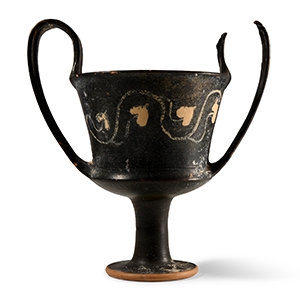
South Italian Blackware Kantharos with Ivy Branch
5th-4th century B.C.Estimate: £1,500 - 2,000 (‡+bp*)
Opening Bid: £750
The high-handled drinking cup with carinated lower body, discoid feet and vines painted to the equator. 525 grams, 22.2 cm
Acquired in the late-1980. Ex S.A. collection.
