
Loading, please wait...
LOT 0613
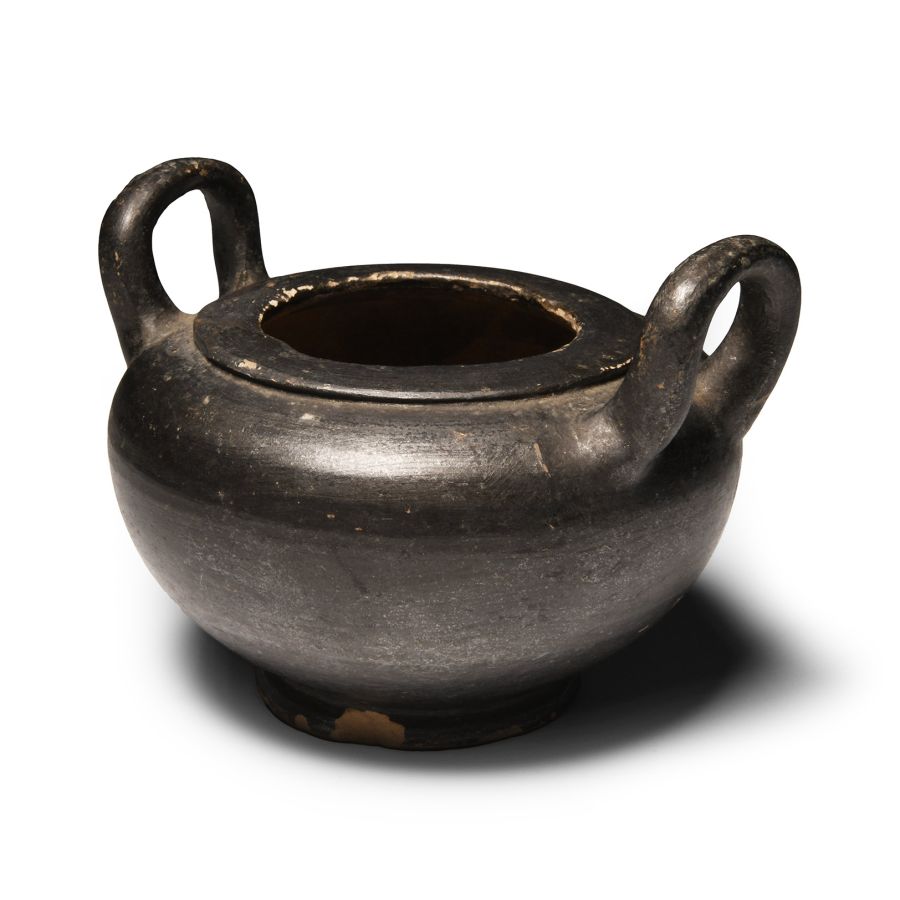
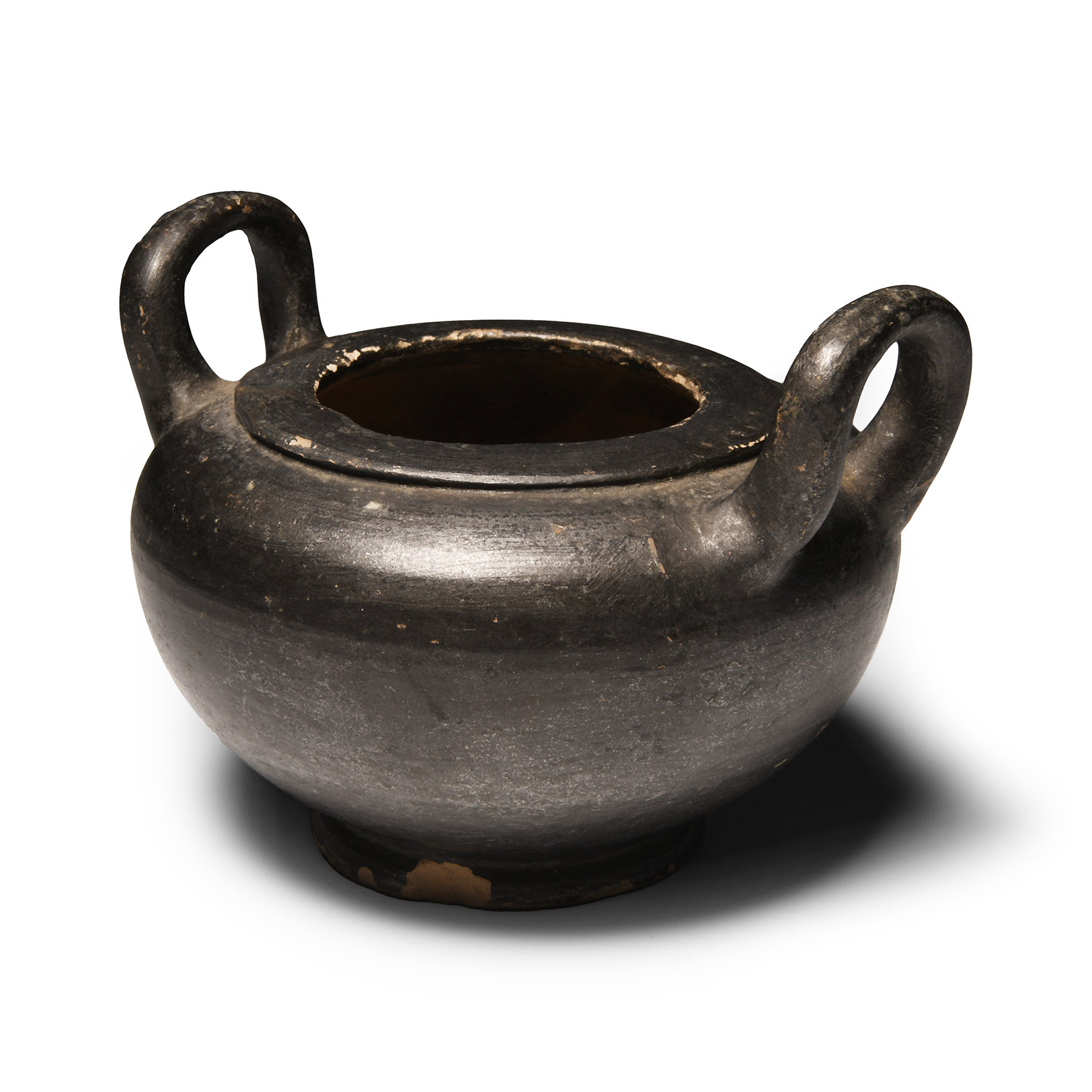
Greek Apulian Blackware Pyxis
CIRCA 4TH-3RD CENTURY B.C.
4 1/4 in. (143 grams, 10.8 cm wide).
Black-glazed rounded body with two upright loop-handles, raised base, keeled edge with a thickened disc rim.
ProvenanceEx P. A., Hertfordshire, UK, specialist collection of Greek art, 1980-1990s.
Accompanied by a copy of an old typed catalogue slip.
Cf. Sparkes, B., Talcott, L., Richter, G.M.A., The Athenian Agora, Vol. 12, Black and Plain Pottery of the 6th, 5th and 4th Centuries B.C., Athens, 1970, pl.43, pp.173 ff. (for various type of Pyxis).
FootnotesThis pyxis was once fitted with a lid for cosmetics, powder or jewellery. Greek pottery from southern Italy is most easily identified by its glossy black finish, as seen here. It was the product of the Magna Graecia, especially in Apulia, a region in southern Italy populated by Greek colonists from the 8th century B.C. onwards, which imitated the artistic workshops of Attica and developed its own style.
CONDITIONTimeLine Auctions follows a vetting process to ensure the authenticity and legality of all items, reinforcing our commitment to integrity and responsible trading. Each antiquity, antique, and coin lot undergoes thorough examination by a vetting committee of at least ten external specialists, professional trade association members, scientists, and archaeologists: Our Vetting Process
AUCTIONS:
TimeLine is a leading auction house specialising in antiquities, ancient art, collectables, natural history, coins, medals, and books. Our auctions offer museums, collectors, historians, and enthusiasts the opportunity to acquire unique and historically significant pieces.
-
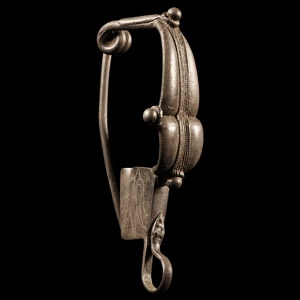
Greek Italic Silver Fibula
5th-4th century B.C.Estimate: £500 - 700 (‡+bp*)
Opening Bid: £250
Segmented body with central filigree wiring, collared knops to three corners, integral coiled pin and trapezoidal catchplate with lotus flower engraved to the outer face, loop with stylised serpentine head to base. 13.5 grams, 63 mm
Acquired in Europe before 1994. European collection. -
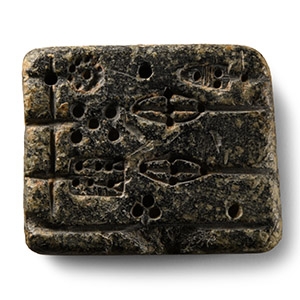
Very Large Greek Stone Jeweller's Mould
Bronze Age, 13th-11th century B.C.Sold for (Inc. bp): £208
Of square shape, used for making various jewellery elements: small circles, ear-drop pendants, rosettes with striated lines and locating holes on the surface. 114 grams, 63 mm
Collected from 1969-1999. From the collection of the late Mr S.M., London, UK.
Plaques of this type were half of a mould for small objects such as ribbed bobbin-shaped or spherical beads or crescent-shaped pendants. They must have been made for casting, judging by the pouring channels and the circular holes for fixing it to another corresponding half. Ribbed globular and ‘grain of wheat’ gold beads were common in Cyprus and Crete. Similar moulds with pouring channels have been found in the Near East, while open moulds intended for glass ornaments with flat backs have been found in the Aegean. -
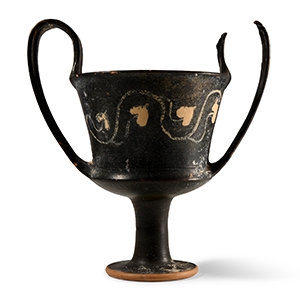
South Italian Blackware Kantharos with Ivy Branch
5th-4th century B.C.Estimate: £1,500 - 2,000 (‡+bp*)
Opening Bid: £750
The high-handled drinking cup with carinated lower body, discoid feet and vines painted to the equator. 525 grams, 22.2 cm
Acquired in the late-1980. Ex S.A. collection.
