
Loading, please wait...
LOT 0636
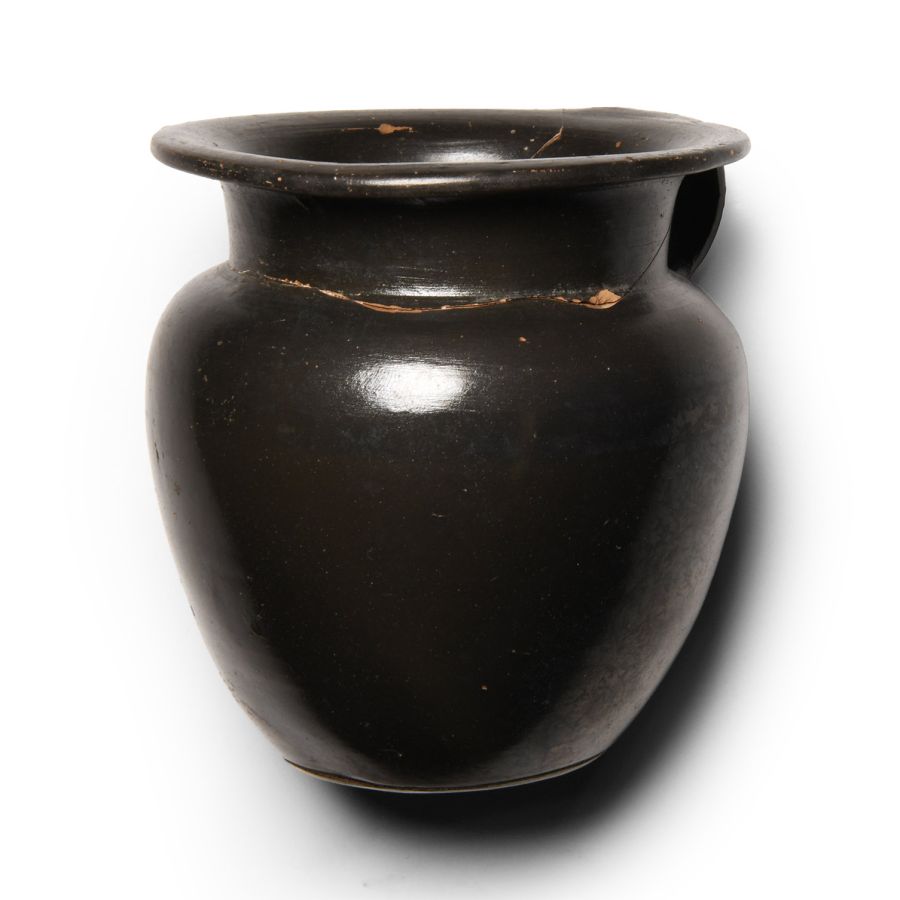
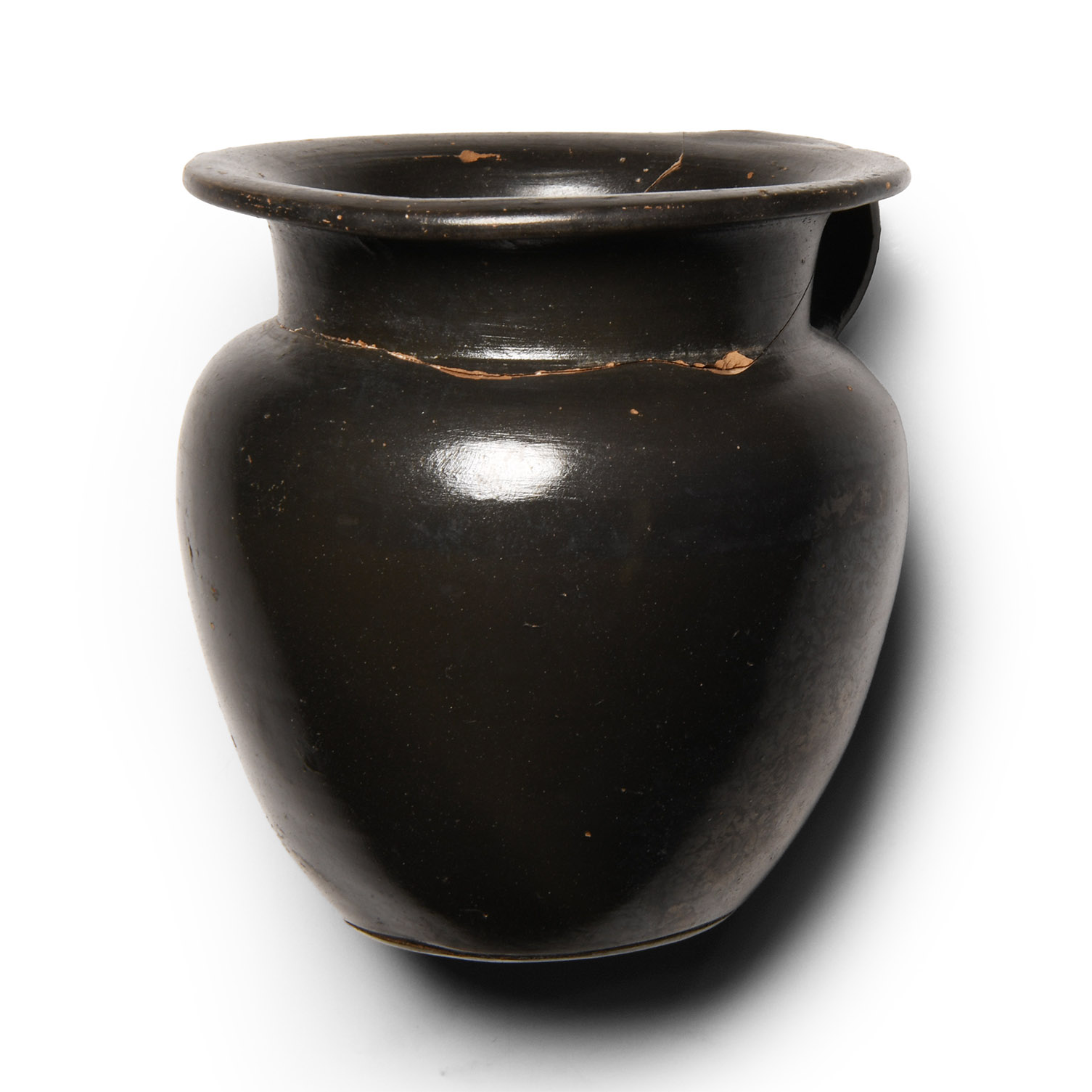
Greek Apulian Black-Glazed Mug
CIRCA 4TH-3RD CENTURY B.C.
3 3/4 in. (144 grams, 95 mm wide).
With a high-gloss black slip, ovoid body and a short wide neck with a flaring rim, a wide strap handle and a flat base.
ProvenanceEx P. A., Hertfordshire, UK, specialist collection of Greek art, 1980-1990s.
LiteratureCf. in Riccardi, A., 'Apulian and Lucanian pottery from coastal Peucetian context' in Carpenter, T.H., Lynch, K.M., E.G.D., The Italic People of Ancient Apulia: New Evidence from Pottery for Workshops, Markets, and Customs, pp.133-181, fig.6.3, p.137, for similar jug.
FootnotesThe black glaze technique uses the same glaze used by the Greeks on the red-figure and black-figure ceramics, but covering the entire piece, without figurative decoration. It was a transparent raw glaze, which took on its characteristic intense, glossy black tone after firing.
CONDITIONTimeLine Auctions follows a vetting process to ensure the authenticity and legality of all items, reinforcing our commitment to integrity and responsible trading. Each antiquity, antique, and coin lot undergoes thorough examination by a vetting committee of at least ten external specialists, professional trade association members, scientists, and archaeologists: Our Vetting Process
AUCTIONS:
TimeLine is a leading auction house specialising in antiquities, ancient art, collectables, natural history, coins, medals, and books. Our auctions offer museums, collectors, historians, and enthusiasts the opportunity to acquire unique and historically significant pieces.
LOT 0636
Greek Apulian Black-Glazed Mug
Estimate £250 - 350€290 - 410 (for guidance only)$340 - 470 (for guidance only)
-
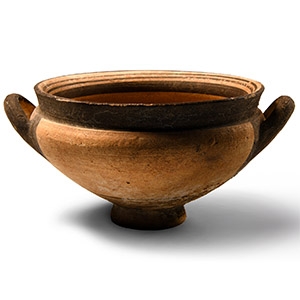
Greek Archaic Painted Terracotta Skyphos
7th-early 6th century B.C.Estimate: £500 - 700 (‡+bp*)
Opening Bid: £250
Conical in form with rounded shoulder, everted rim and two round-section handles; painted with concentric bands around the interior and exterior. 243 grams, 15.5 cm wide
Acquired in Europe before 1992. European collection.
The skyphos was already well known in Greece since the age of the Achaeans. In Homer, Eumaeus, the swineherd, prepares for his guest Ulysses a cyssibium filled with wine which the hero drinks during the meal and, when he is full, Eumaeus makes him drink from the cup in which he himself was using, a skyphos. Ulysses also offers Polyphemus a drink in a skyphos. -
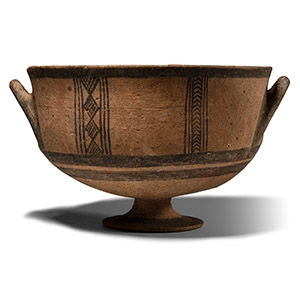
Cypriot Painted Terracotta Chalice
Iron Age, circa 700-600 B.C.Sold for (Inc. bp): £1,235
Broad drum-shaped body with small foot, slightly everted rim, two lateral strap handles; painted bands to the lower body, handles and rim, vertical hatched and herringbone bands to the sidewall. 891 grams, 27.5 cm wide
Ex John Rilling collection, California, acquired prior to 1970. Acquired from Bonhams, London, 23 October 2012, no.1. From an important Cambridgeshire estate; thence by descent. Accompanied by copies of the relevant Bonhams catalogue pages. -
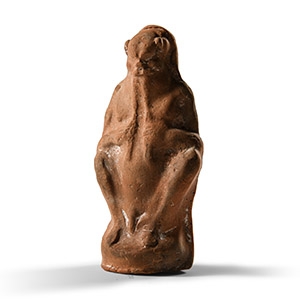
Boeotian Terracotta Figure of Satyr Playing an Aulos
5th-4th century B.C.Sold for (Inc. bp): £416
Modelled in the half-round, hollow to the underside; Satyr shown crouching, nude, playing an aulos, a double-reed musical instrument; plain to the reverse. 66 grams, 88 mm
Private collection of Mr S.A., Switzerland, 1994, thence by descent.
