
Loading, please wait...
LOT 0575
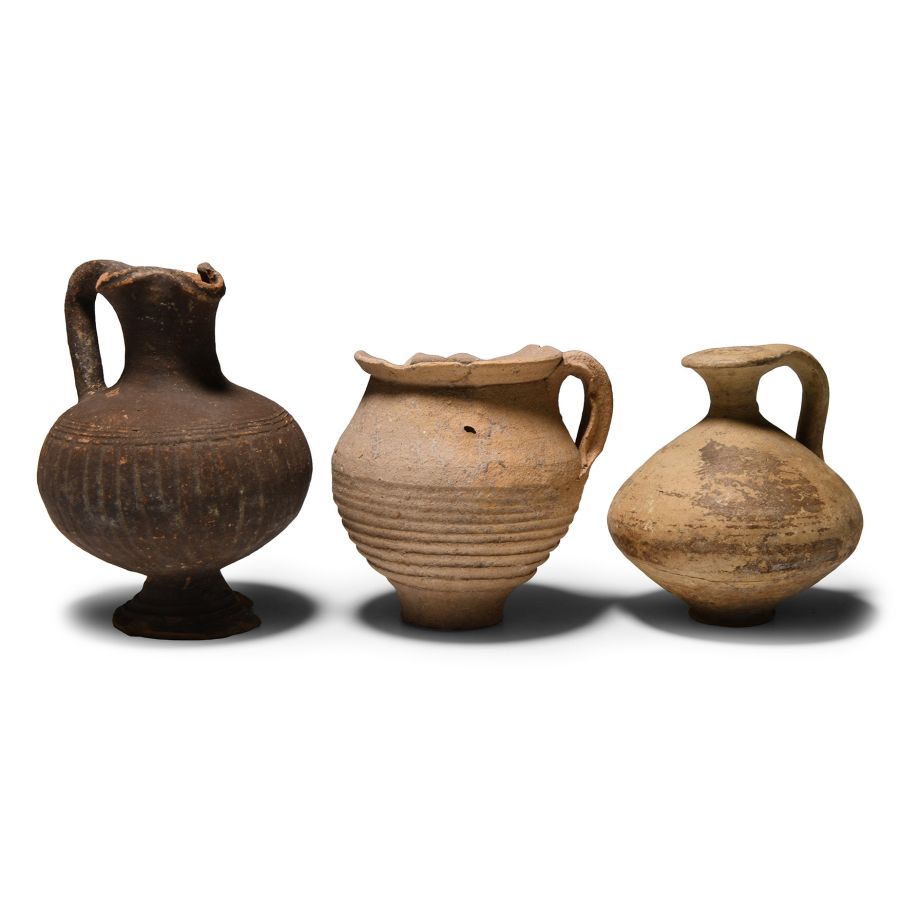
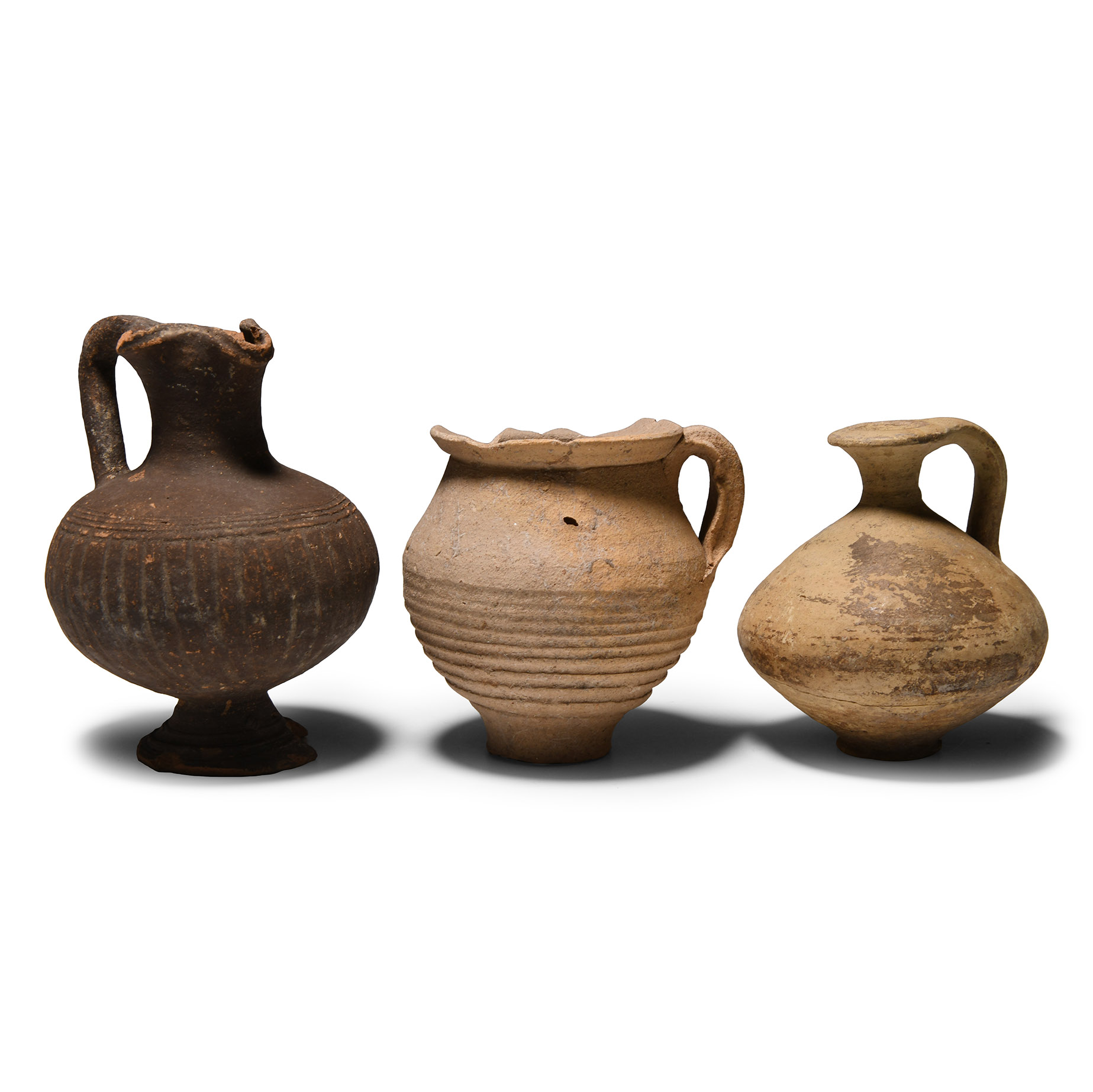
Greek and Roman Terracotta Juglet Group
6TH CENTURY B.C.-5TH CENTURY A.D.
3 - 4 1/8 in. (305 grams total, 7.8-10.5 cm).
Comprising: a biconvex juglet with inched rim; one similar with chamfered rim; bulbous juglet with corrugations to the lower body. [3, No Reserve]
ProvenanceFrom a collection acquired on the UK art market from various auction houses and collections mostly before 2000.
From an important Cambridgeshire estate; thence by descent.
TimeLine Auctions follows a vetting process to ensure the authenticity and legality of all items, reinforcing our commitment to integrity and responsible trading. Each antiquity, antique, and coin lot undergoes thorough examination by a vetting committee of at least ten external specialists, professional trade association members, scientists, and archaeologists: Our Vetting Process
AUCTIONS:
TimeLine is a leading auction house specialising in antiquities, ancient art, collectables, natural history, coins, medals, and books. Our auctions offer museums, collectors, historians, and enthusiasts the opportunity to acquire unique and historically significant pieces.
-
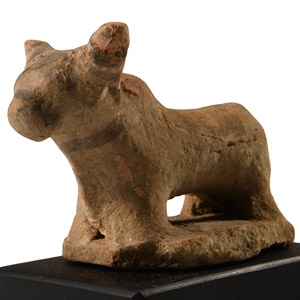
Cypriot Votive Terracotta Bull Statuette
Circa 6th century B.C.Sold for (Inc. bp): £156
Standing on a rectangular base with head erect, painted harness detailing to the head; mounted on a custom-made stand. 291 grams total, 90 mm wide including stand
From a collection acquired on the UK art market from various auction houses and collections mostly before 2000. From an important Cambridgeshire estate; thence by descent. -
.jpg)
Cypriot Terracotta Ram
Early Bronze Age, circa 2500-2000 B.C.Sold for (Inc. bp): £169
Modelled in the round with fleece texture to the back and rump, applied eyes and horns; mounted on a display base with old collector's labels to the underside: 'Cyprus / Early bronze age, 2250-2000 BC. / Ram, red clay, once attached to the rim of a vessel.' and '2517-14/3'. 204 grams total, 11 cm wide including stand
Ex Professor Karl Lunde collection (1931-2009). From a collection acquired on the UK art market from various auction houses and collections mostly before 2000. From an important Cambridgeshire estate; thence by descent. With old label to the base. -
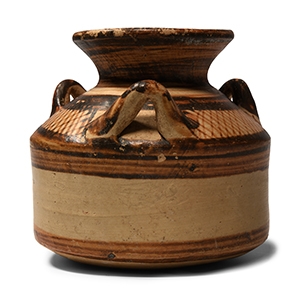
Mycenaean Painted Pottery Alabastron
13th-11th century B.C.Estimate: £1,200 - 1,700 (‡+bp*)
Opening Bid: £667
Drum-shaped with a sloping shoulder, short neck, trumpet-style neck and mouth and a gently rounded base; three loop handles at regular intervals around the shoulder; reddish-brown painted geometric bands and cross-hatching against a cream slip. 190 grams, 93 mm wide
Ex private collection, Holland. Acquired from Royal Athena Gallery, 2003, stock no.LAE07/2500. Accompanied by an original Royal Athena label. This lot has been checked against the Interpol Database of stolen works of art and is accompanied by search certificate number no.11852-206835.
