
Loading, please wait...
LOT 0584
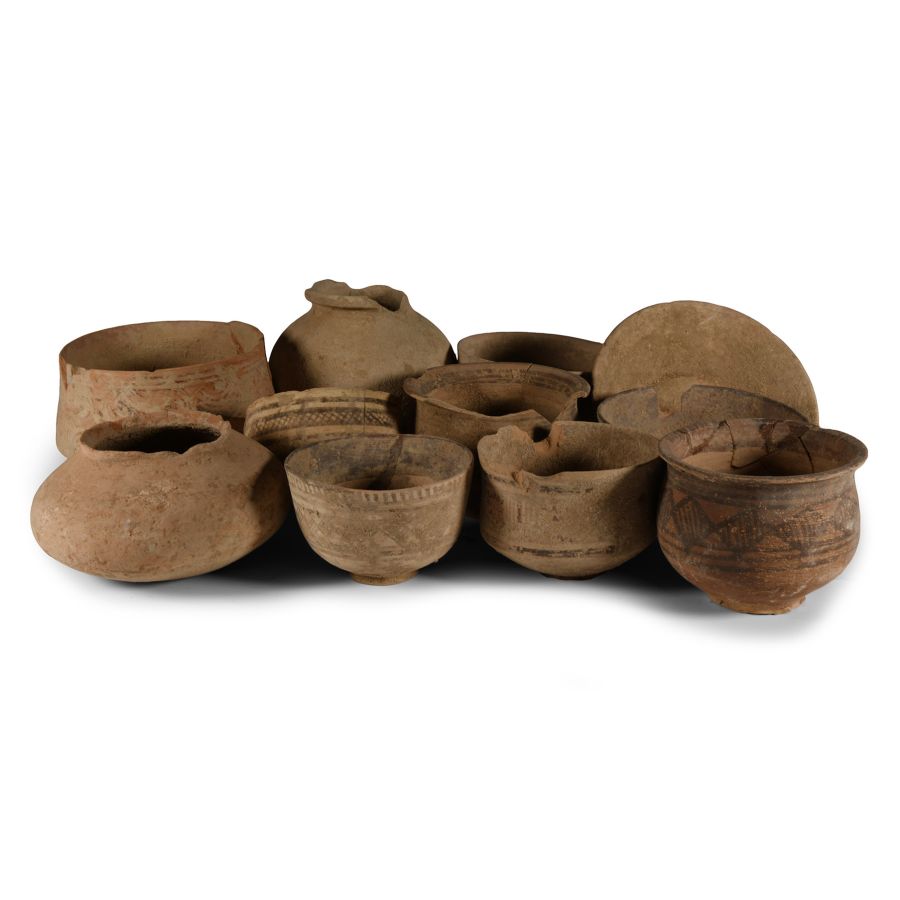
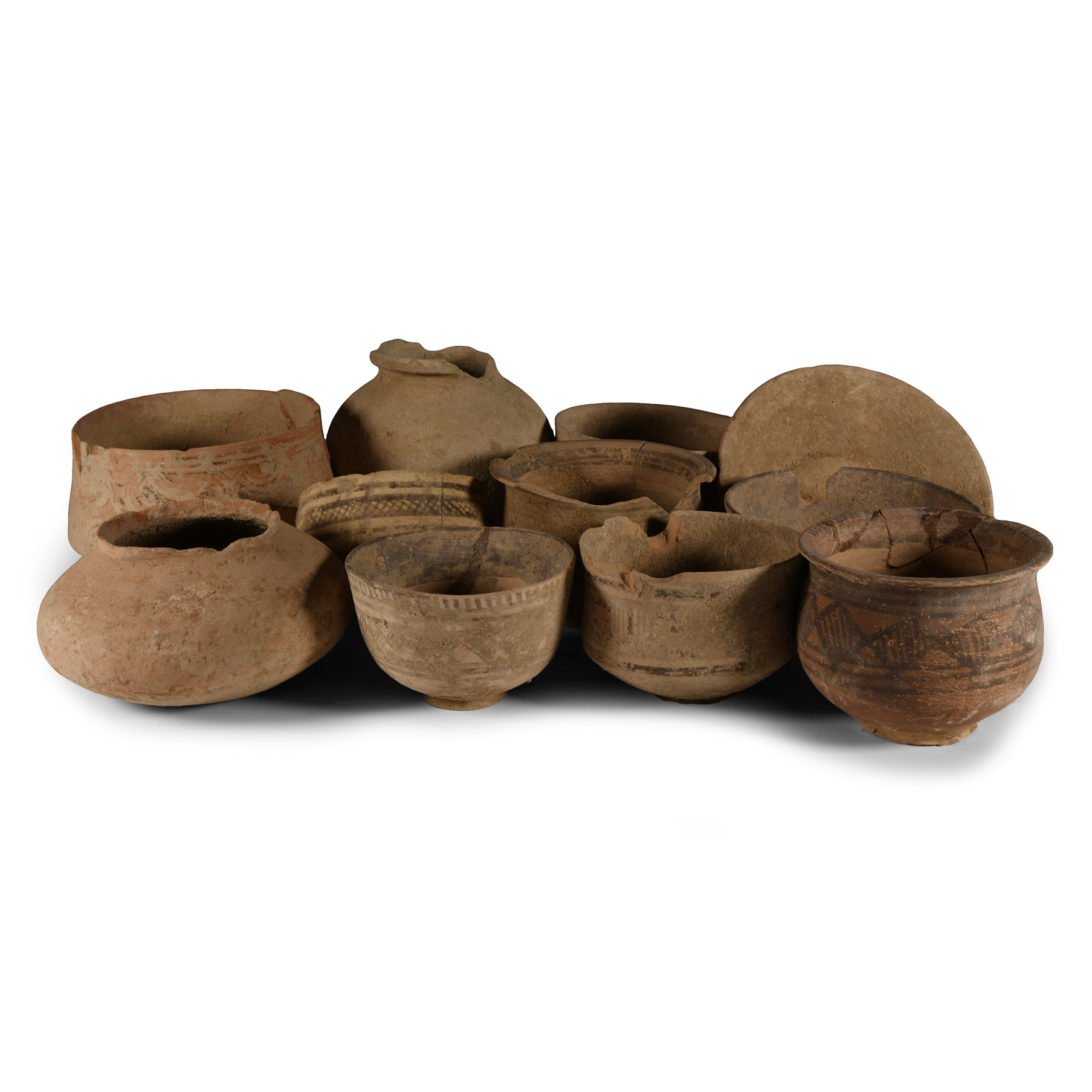
Greek and Other Terracotta Pottery Group
1ST MILLENNIUM B.C. AND EARLIER
3 1/2 - 5 1/2 in. (2.1 kg total, 9-14 cm).
Fragments including carinated bowl with painted frieze to the shoulder, squat jar, cup with everted rim and other types. [11]
ProvenanceAcquired 1980-2015.
Ex Abelita family collection.
TimeLine Auctions follows a vetting process to ensure the authenticity and legality of all items, reinforcing our commitment to integrity and responsible trading. Each antiquity, antique, and coin lot undergoes thorough examination by a vetting committee of at least ten external specialists, professional trade association members, scientists, and archaeologists: Our Vetting Process
AUCTIONS:
TimeLine is a leading auction house specialising in antiquities, ancient art, collectables, natural history, coins, medals, and books. Our auctions offer museums, collectors, historians, and enthusiasts the opportunity to acquire unique and historically significant pieces.
-

Minoan Bronze Statuette of a Lady
Middle Period, circa 1700-1450 B.C.Sold for (Inc. bp): £1,560
With a small, stylised face with detailed eyes, nose and mouth; right hand raised to hold a child; wearing a flounced skirt with double belt; mounted on a custom-made display stand. 499 grams total, 16.5 cm high including stand
British private collection, acquired by 2000. From a collection acquired on the UK art market from various auction houses and collections mostly before 2000. From an important Cambridgeshire estate; thence by descent.
In the Dictean Cave in Greece, many votive statuettes of this type were found. The flounced skirt is characteristic of Minoan women's dress, and it was lavishly decorated in folds of different colours. It could be worn with or without a narrow corselet, but in both cases exposing the breast. The exposed breast was connected to the cult of the mother goddess, and fertility, an element here reinforced by the presence of the suckling child. -
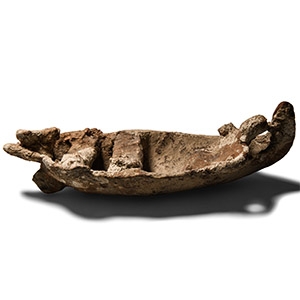
Archaic Greek Ceramic Model Boat
Circa 600-480 B.C.Sold for (Inc. bp): £1,560
Modelled in the round as a miniature flat-bottomed boat with sternpost and three thwarts, one supporting the reclining figure of the boatman; supplied with a custom-made display stand. 728 grams total, 24.5 cm wide including stand
From a collection acquired on the UK art market from various auction houses and collections mostly before 2000. From an important Cambridgeshire estate; thence by descent. Accompanied by an old identification tag. Accompanied by an original thermoluminescence analysis report from Oxford Authentication.
A series of ship models, today preserved in the Metropolitan Museum and in the British Museum, depict in considerable detail the features of contemporary vessels, including the helmsman sitting in the bow, the spurs of the ships and the raised stern. All of the preserved ship models come from Amathus, indicating the importance of the site as a maritime centre. Our model could come from the same area. This clay model shows a man who comfortably sits on the back of the ship: we do not know his role and his activity, but – as observed by professor M.A. Mcintosh, he is part of a theōriā, a state pilgrim (theōros). Certainly, he represents the helmsman, the kubernētēs, i.e. the governor who directs the ship. -
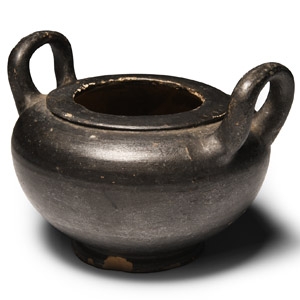
Greek Apulian Blackware Pyxis
Circa 4th-3rd century B.C.Sold for (Inc. bp): £211
Black-glazed rounded body with two upright loop-handles, raised base, keeled edge with a thickened disc rim. 143 grams, 10.8 cm wide
Ex P. A., Hertfordshire, UK, specialist collection of Greek art, 1980-1990s. Accompanied by a copy of an old typed catalogue slip.
This pyxis was once fitted with a lid for cosmetics, powder or jewellery. Greek pottery from southern Italy is most easily identified by its glossy black finish, as seen here. It was the product of the Magna Graecia, especially in Apulia, a region in southern Italy populated by Greek colonists from the 8th century B.C. onwards, which imitated the artistic workshops of Attica and developed its own style.
