
Loading, please wait...
LOT 0639
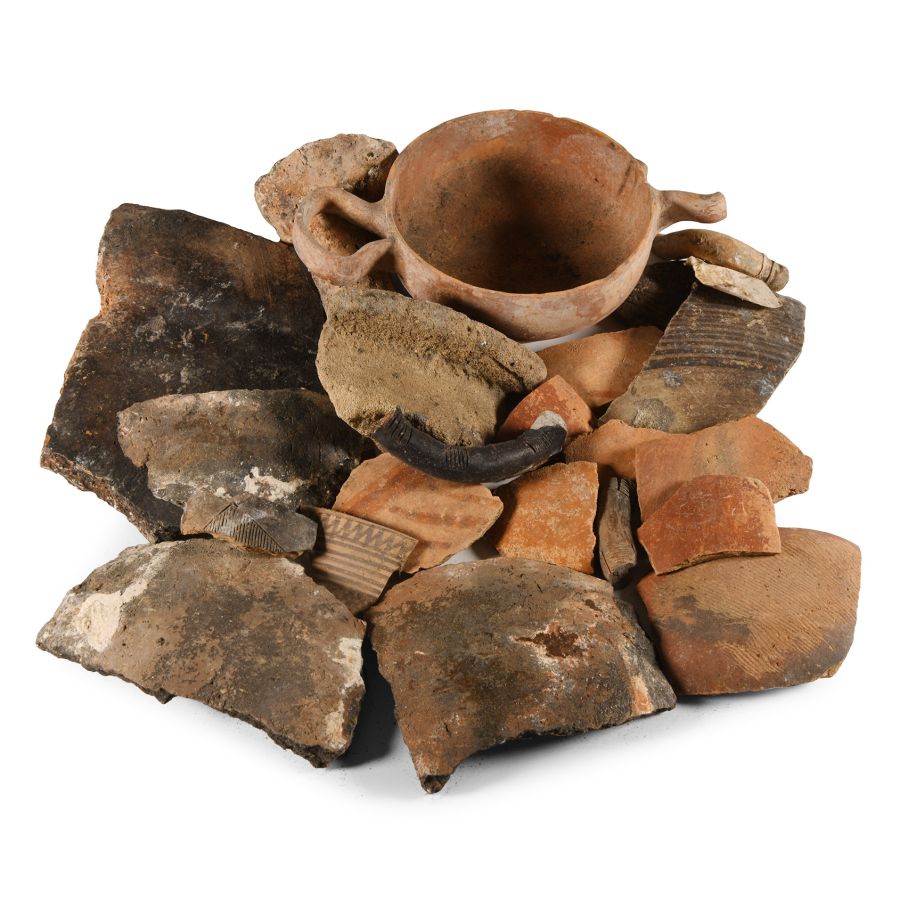
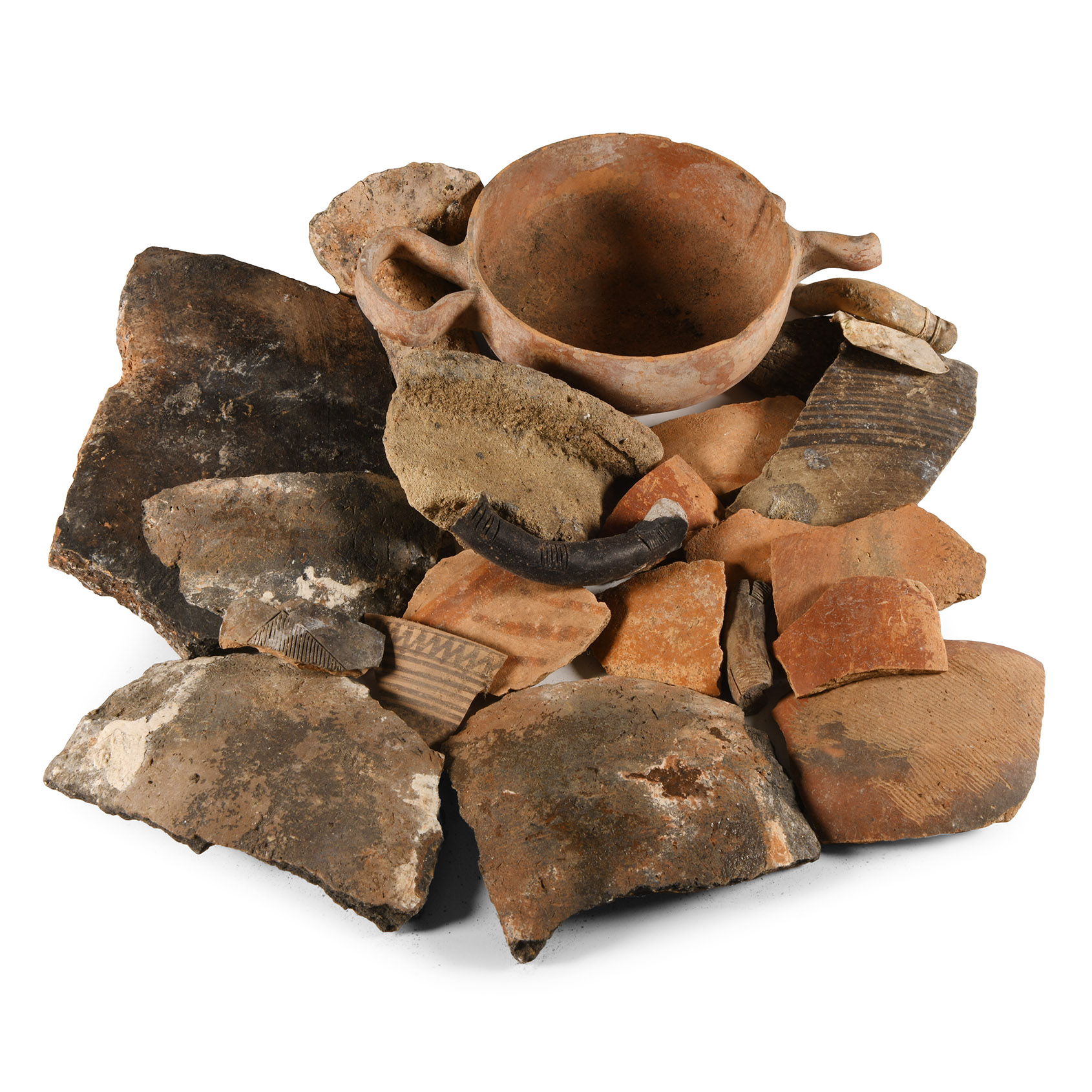
Greek and Other Pottery Sherd Group
CIRCA 1ST MILLENNIUM B.C.
1 1/8 - 5 7/8 in. (1.1 kg total, 3-15 cm).
Including skyphos, chalice, amphora and other fragments. [22, No Reserve]
ProvenanceFrom a collection acquired on the UK art market from various auction houses and collections mostly before 2000.
From an important Cambridgeshire estate; thence by descent.
TimeLine Auctions follows a vetting process to ensure the authenticity and legality of all items, reinforcing our commitment to integrity and responsible trading. Each antiquity, antique, and coin lot undergoes thorough examination by a vetting committee of at least ten external specialists, professional trade association members, scientists, and archaeologists: Our Vetting Process
AUCTIONS:
TimeLine is a leading auction house specialising in antiquities, ancient art, collectables, natural history, coins, medals, and books. Our auctions offer museums, collectors, historians, and enthusiasts the opportunity to acquire unique and historically significant pieces.
-
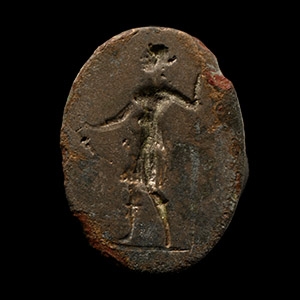
Greek Silver Ring with the Goddess Artemis Standing
4th-3rd century B.C.Sold for (Inc. bp): £416
With ellipsoid bezel, intaglio standing female figure with distaff and bow or staff, possibly Artemis; repaired. 10.36 grams, 20.60 mm overall, 17.50 x 19.12 mm internal diameter (approximate size British Q, USA 8, Europe 17.49, Japan 16)
Formerly in an old collection formed in the 1970s. Ex Dutch gentleman. Property of a London gentleman.
This is classical Greek type ring dating to 4th century B.C., and the bezel shows a goddess standing naked. The position of the goddess recalls that of Hera or Aphrodite, in the Salting Group (Boardman, 2001, no.733), but the simple dress of the figure with the chiton seems to refer to Diana holding a hunting spear. -
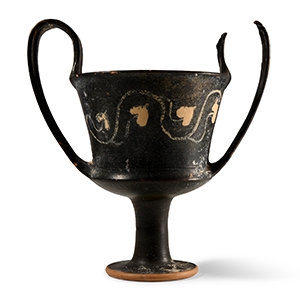
South Italian Blackware Kantharos with Ivy Branch
5th-4th century B.C.Estimate: £1,500 - 2,000 (‡+bp*)
Opening Bid: £750
The high-handled drinking cup with carinated lower body, discoid feet and vines painted to the equator. 525 grams, 22.2 cm
Acquired in the late-1980. Ex S.A. collection. -
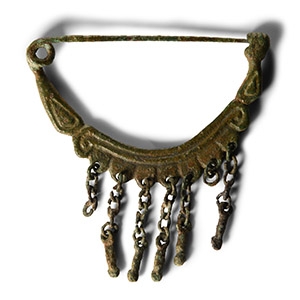
Etruscan Bronze Bow Brooch with Phallic Pendants
Circa 7th century B.C.Sold for (Inc. bp): £143
With integral spring and pin, catched formed as a hand, segmented bow with low-relief detailing, five (of seven) short chains with phallic dangles. 21 grams, 71 mm
From a collection acquired on the UK art market from various auction houses and collections mostly before 2000. From an important Cambridgeshire estate; thence by descent.
