
Loading, please wait...
LOT 0589
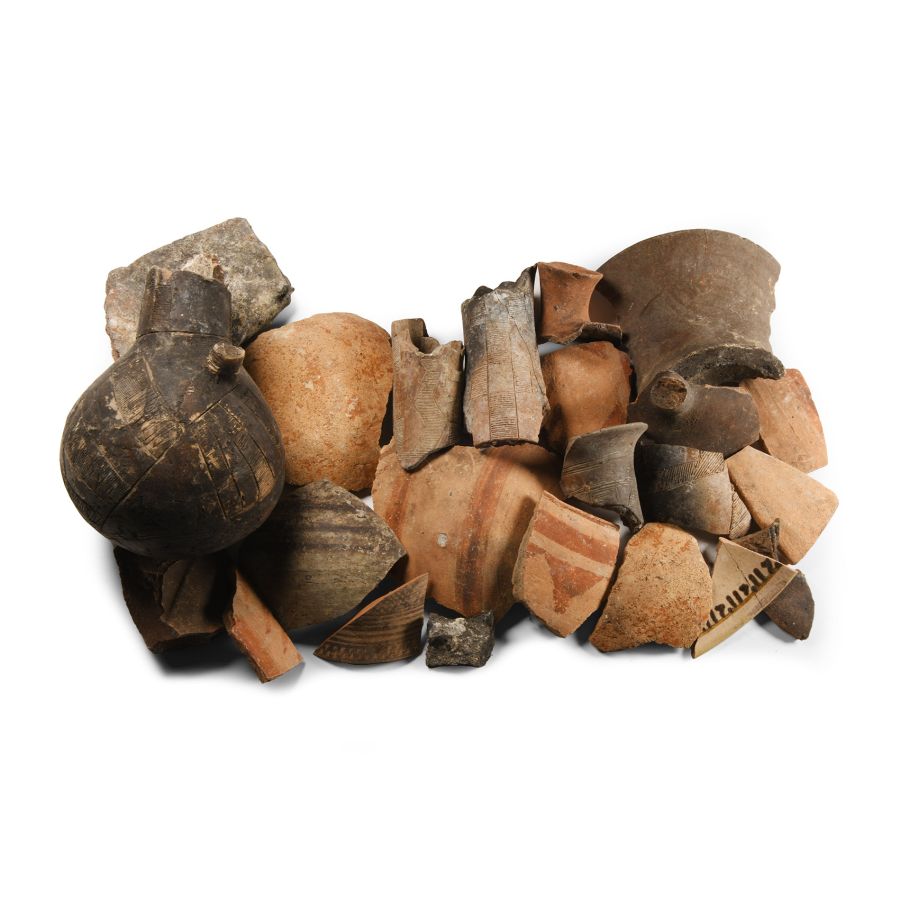
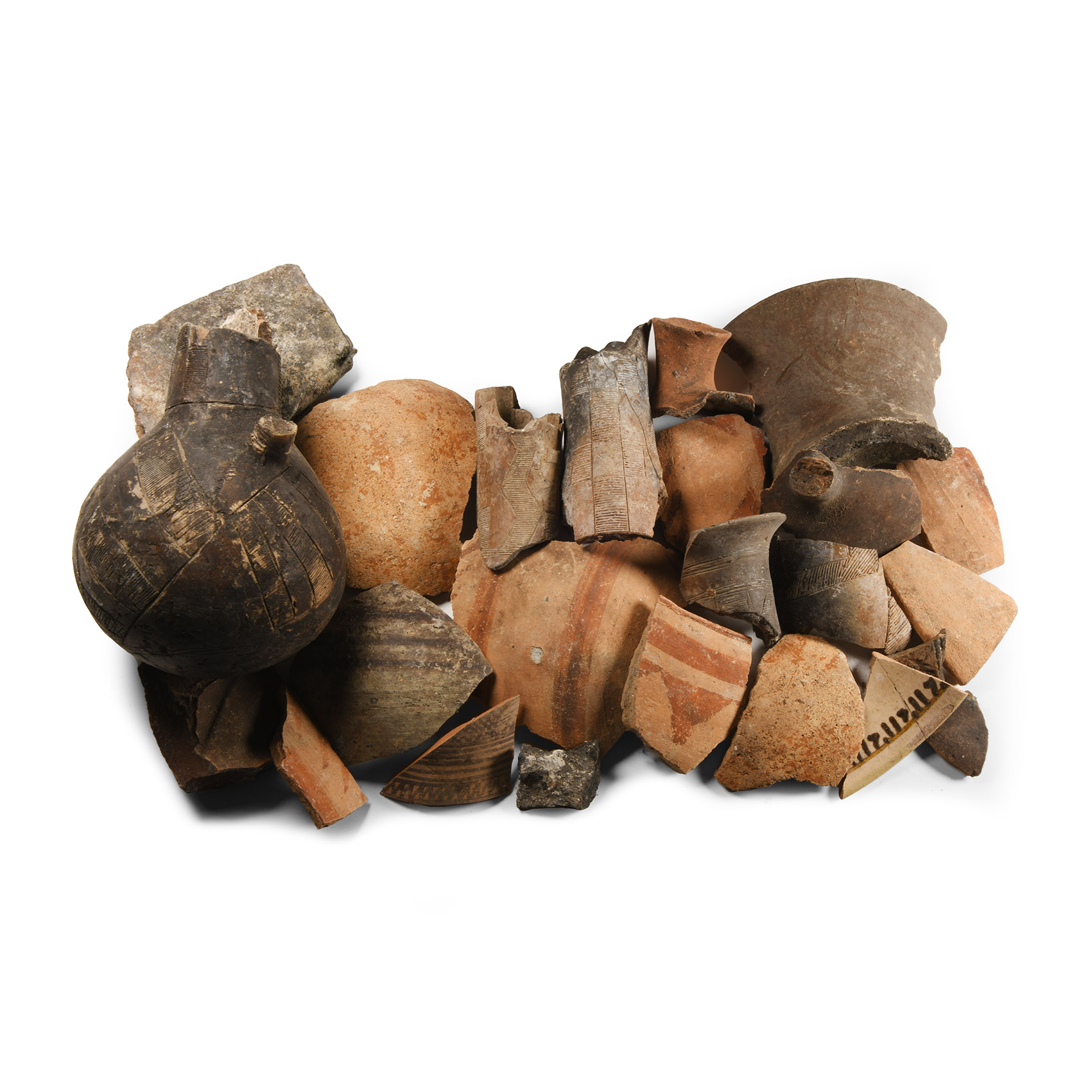
Greek and Other Pottery Sherd Group
CIRCA 1ST MILLENNIUM B.C.
1 1/8 - 5 1/2 in. (1.28 kg total, 3-14.1 cm).
Including fragments of oinochoe, guttus, amphora and other types. [22, No Reserve]
ProvenanceFrom a collection acquired on the UK art market from various auction houses and collections mostly before 2000.
From an important Cambridgeshire estate; thence by descent.
TimeLine Auctions follows a vetting process to ensure the authenticity and legality of all items, reinforcing our commitment to integrity and responsible trading. Each antiquity, antique, and coin lot undergoes thorough examination by a vetting committee of at least ten external specialists, professional trade association members, scientists, and archaeologists: Our Vetting Process
AUCTIONS:
TimeLine is a leading auction house specialising in antiquities, ancient art, collectables, natural history, coins, medals, and books. Our auctions offer museums, collectors, historians, and enthusiasts the opportunity to acquire unique and historically significant pieces.
-
.jpg)
Greek Archaic Laconian Black-Figure Kylix Fragment Group Attributed to the Rider Painter
550-540 B.C.Sold for (Inc. bp): £1,820
Comprising six fragments from a bowl once decorated with concentric circles around a central disc with expanding black rays, remains of palmette to the sides of the handle; the internal base with two facing warriors holding spears and a wreath, the older one depicted with a beard. 67 grams total, 34-89 mm
Acquired in Europe before 1990. Private collection, Europe. Accompanied by an academic report by Dr Raffaele D’Amato. This lot has been checked against the Interpol Database of stolen works of art and is accompanied by search certificate number no.11820-206481.
The Rider Painter was a Laconian vase painter active between 560 and 530 B.C. and is considered to be one of the five great vase painters of Sparta. He painted various forms predominantly kylikes but also lebetes, a form rare in this area. He mainly painted scenes from mythology, such as figures like Cadmos or Heracles, and tales such as the blinding of Polyphemus. In addition, he realised pictures from everyday life. The attribution of these fragments to his workmanship can be supported by the motifs painted on the exterior decoration of the vessel, and by the shape of the birds and figures. The illustrated scene fits within the warrior society of Spartan Laconia. -
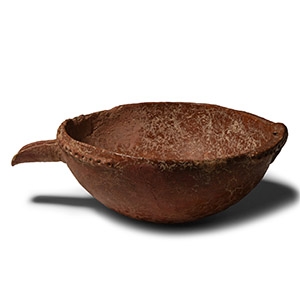
Cypriot Red Polished Ware Bowl with Spout
Early-Middle Bronze Age, circa 2700-1900 B.C.Sold for (Inc. bp): £143
Hemispherical in profile with burnished surface, raised band below the rim with impressed holes to the outer face, pierced rim, short curved spout; repaired. 490 grams, 22 cm
From a collection acquired on the UK art market from various auction houses and collections mostly before 2000. From an important Cambridgeshire estate; thence by descent. -
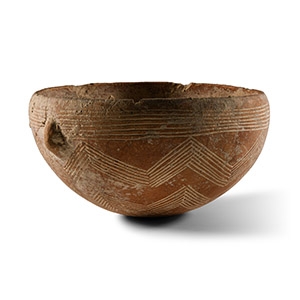
Cypriot Red Polished Ware Bowl
Bronze Age, circa 2000-1600 B.C.Sold for (Inc. bp): £234
Hemispherical in profile with slightly inverted rim, band of circumferential incised lines beneath the rim and concentric zigzags below, roundels to the underside; single small pierced bulb for suspension. 289 grams, 14 cm
Ex Ian Auld collection, 1970s-1990s. Acquired from Bonhams, London, 29 April 2009, no.315 (part). From an important Cambridgeshire estate; thence by descent. Accompanied by copies of the relevant Bonhams catalogue pages.
