
Loading, please wait...
LOT 0569
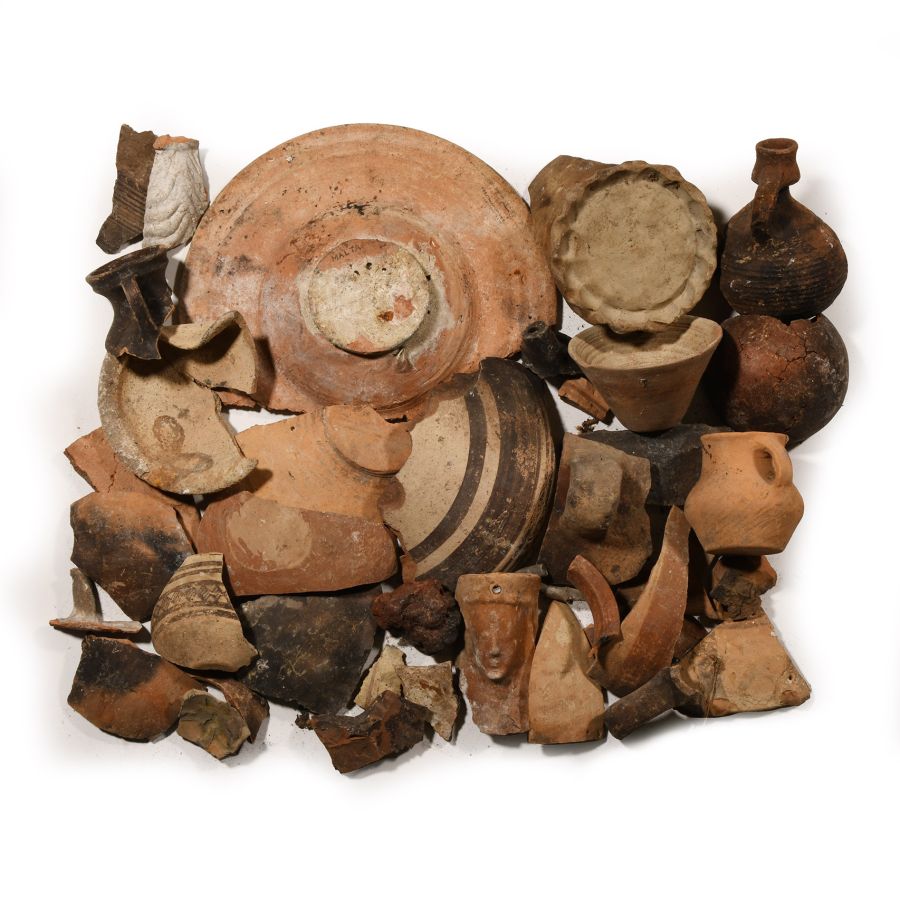
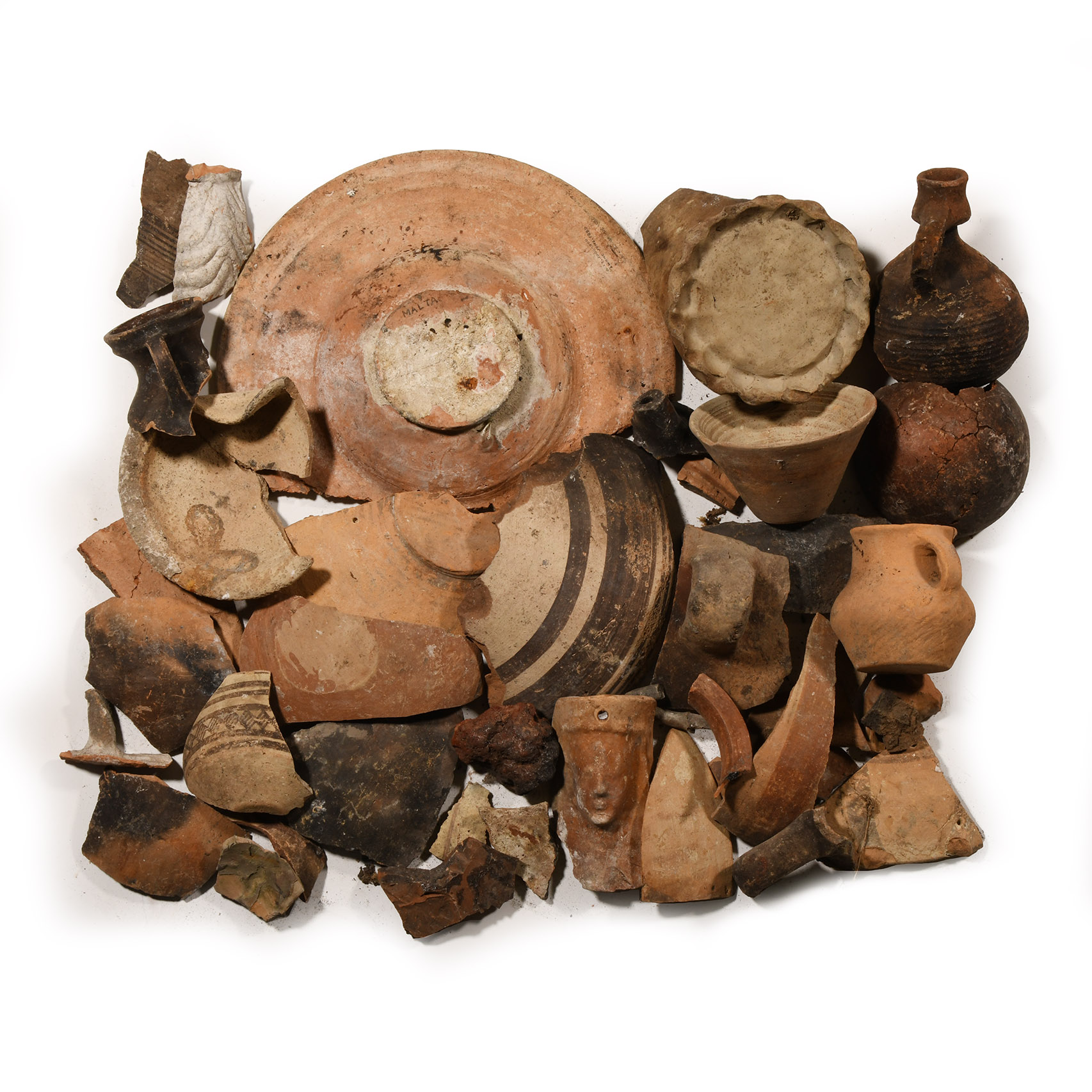
Greek and Other Pottery Fragment Group
CIRCA 1ST MILLENNIUM B.C.
1 3/8 - 10 in. (2.9 kg total, 3.5-25.5 cm).
Including flange-rimmed bowl, piecrust-based bowl, amphora and other types. [44, No Reserve]
ProvenanceFrom a collection acquired on the UK art market from various auction houses and collections mostly before 2000.
From an important Cambridgeshire estate; thence by descent.
TimeLine Auctions follows a vetting process to ensure the authenticity and legality of all items, reinforcing our commitment to integrity and responsible trading. Each antiquity, antique, and coin lot undergoes thorough examination by a vetting committee of at least ten external specialists, professional trade association members, scientists, and archaeologists: Our Vetting Process
AUCTIONS:
TimeLine is a leading auction house specialising in antiquities, ancient art, collectables, natural history, coins, medals, and books. Our auctions offer museums, collectors, historians, and enthusiasts the opportunity to acquire unique and historically significant pieces.
-
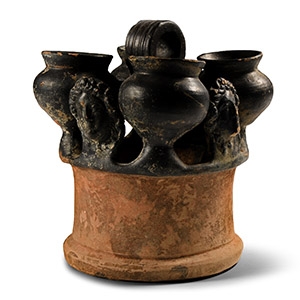
Greek Campanian Black-Glazed Kernos
Late 4th century B.C.Sold for (Inc. bp): £1,560
Comprising a round pedestal supporting four small offering pots, interspersed with four female face protomes; looped handle to the centre with parallel strokes in low-relief. 623 grams, 16 cm high
From the West German collection of H.W. Acquired from the De Mynter, Belgium, in 2011. with Gorny and Mosch, Munich, 3 June 2017, no.52. Private Portuguese R.M. collection. Accompanied by a previous catalogue information slip.
The kernos can be recognised by a series of small cups on the lip, with examples dating back to the Bronze Age. It was used to store offerings made to the gods, specifically in cults pertaining to Demeter and Persephone. The receptacles probably contained foodstuffs, or perhaps flowers, and a lamp was sometimes placed in the centre. Kernoses, such as this, were often carried in processions at the Eleusinian Mysteries (secret initiation rites celebrating the goddesses Demeter and Persephone) and were an important object for Greek religious life. Kernoses are thus closely related to the agrarian cult and to the myth of Persephone and Demeter, the goddess of fertility and agriculture. The myth is recounted in an Homeric Hymn (c. 650 B.C.) according to which Persephone, Demeter’s daughter, was seized by Hades, the king of the underworld, who brought her to his kingdom to make her his wife. Distraught, Demeter caused a terrible drought, which continued until Persephone returned to her mother from the underworld. Having consumed pomegranate seeds whilst she was in the Underworld, she was only able to be with her for a few months of the year. -
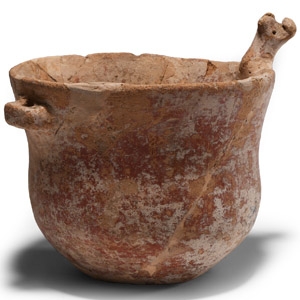
Cypriot Terracotta Vessel with Bull's Head on Rim
Bronze Age, circa 2000 B.C.Sold for (Inc. bp): £78
Bell-shaped jar with pierced lug below the rim, applied bull-head opposite; repaired. 670 grams, 17.1 cm wide
From the private collection of Dick Meijer. From a collection acquired on the UK art market from various auction houses and collections mostly before 2000. From an important Cambridgeshire estate; thence by descent. Accompanied by an old handwritten tag with provenance. -
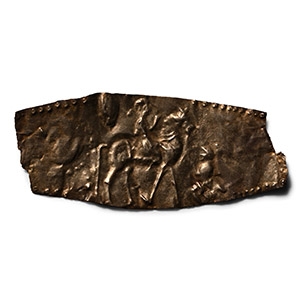
Hellenistic Silver Diadem
4th-3rd century B.C.Sold for (Inc. bp): £124
Leaf-shaped with repoussé frieze of an advancing horseman and kneeling figure; pellets to the border and other ornament. 1.96 grams, 68 mm
From a Northamptonshire collection in early 1990s. Ex Den of Antiquity, Cambridgeshire, UK.
