
Loading, please wait...
LOT 1420
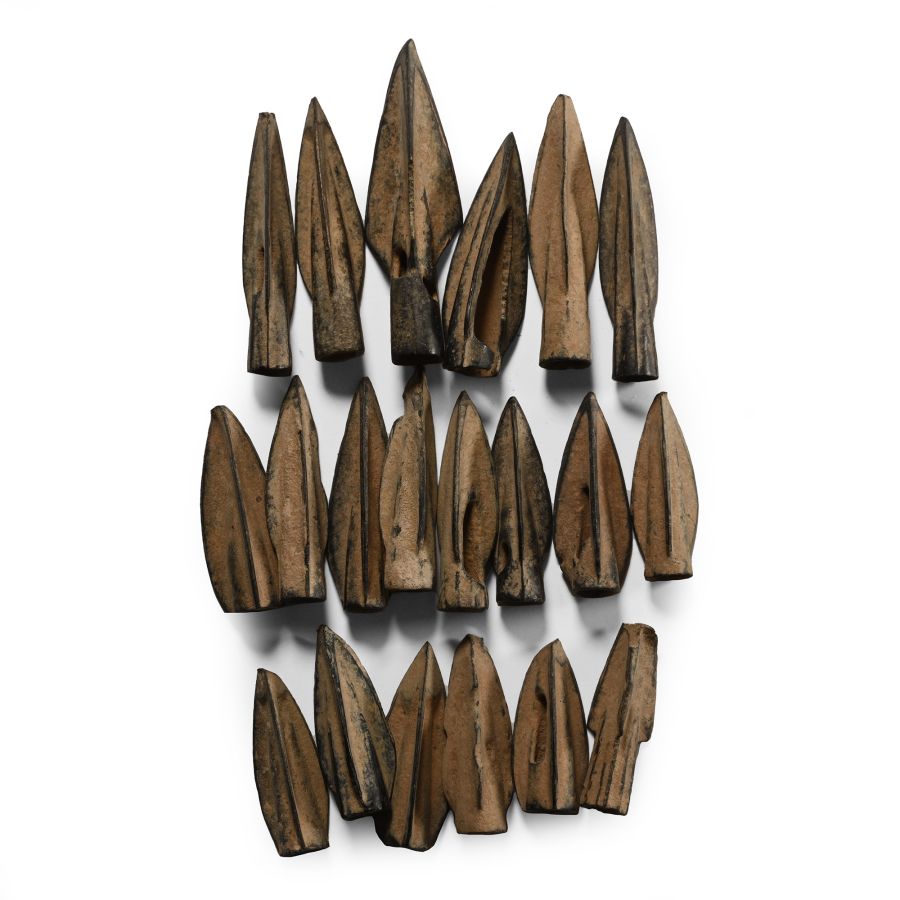
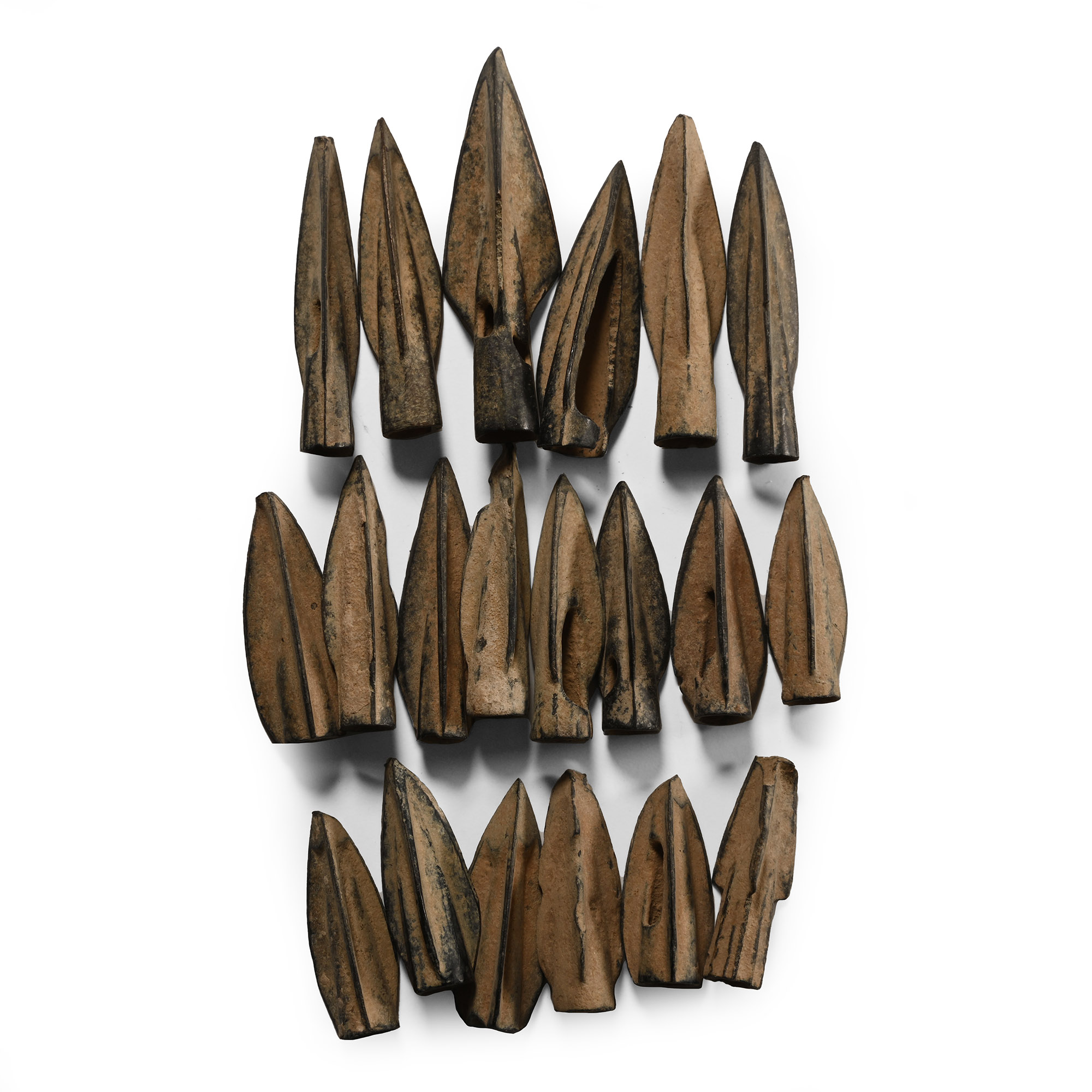
Greek and Other Bronze Arrowhead Collection
CIRCA 5TH-3RD CENTURY B.C.
1 - 1 5/8 in. (63.5 grams total, 24-42 mm).
The group comprising triangular trilobate types, all socketted. [20]
ProvenanceEx London art market, 1980-1990s.
This lot is accompanied by an illustrated lot declaration signed by the Head of the Antiquities Department, Dr Raffaele D'Amato.
Cf. similar Graeco-Persian arrowheads in Head, D., The Achaemenid Persian Army, Stockport, 1992, figs.13,16.
FootnotesIn the Greek warfare, archers were mainly employed by Scythians and Cretans. Both used composite bows made of wood, horn, bone and sinew. This explains the great range of Scythian arrowheads found on the Greek sites.
CONDITIONTimeLine Auctions follows a vetting process to ensure the authenticity and legality of all items, reinforcing our commitment to integrity and responsible trading. Each antiquity, antique, and coin lot undergoes thorough examination by a vetting committee of at least ten external specialists, professional trade association members, scientists, and archaeologists: Our Vetting Process
AUCTIONS:
TimeLine is a leading auction house specialising in antiquities, ancient art, collectables, natural history, coins, medals, and books. Our auctions offer museums, collectors, historians, and enthusiasts the opportunity to acquire unique and historically significant pieces.
-
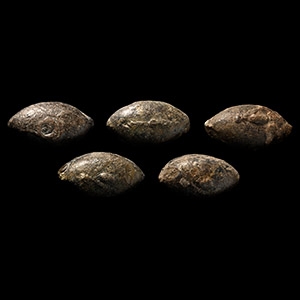
Roman Lead Slingshot Group
1st century B.C.Sold for (Inc. bp): £247
A mixed group of four lentoid-section biconical lead slingshot, three fitted with iconic winged thunderbolts on one side, and one with the Tanit goddess symbol, possibly alluding to a Balearic-Punic origin. 155 grams total, 28-30 mm
From the collection of a Surrey, UK, gentleman; acquired in the 1990s.
The slingshots are belonging to the type IIb of the Völling classification. The practice of inscribing slingshots developed early, in 4th century BC Greece. Most inscriptions are names (in full or abbreviated) of generals or commanders of units of slingers. Some are slogans of the contesting sides. Individual letters occasionally appear, sometimes in conjunction with a name or motif or numbers. -
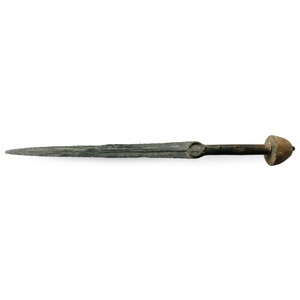
Luristan Bronze Short Sword
2nd-1st millennium B.C. and laterSold for (Inc. bp): £442
With leaf-shaped two-edged blade, crescent guard; restored hilt with columnar grip and stone pommel. 521 grams, 58 cm
From a North West London collection; previously acquired in the 1980s. -
.jpg)
Greek Lead Slingshot
3rd-1st century B.C.Sold for (Inc. bp): £195
Biconical in profile with casting seam and reserved legend 'ΑΛ[EXANΔΡΟ]Υ.', the club of Herakles on the other side. 29.4 grams, 30 mm
Acquired on the German art market before 2000. Private collection, Munich, Germany.
The presence of the club of Hercules connects the slingshot with ruling dynasty of Macedonia. Similar slingshots were found in Miletos.
